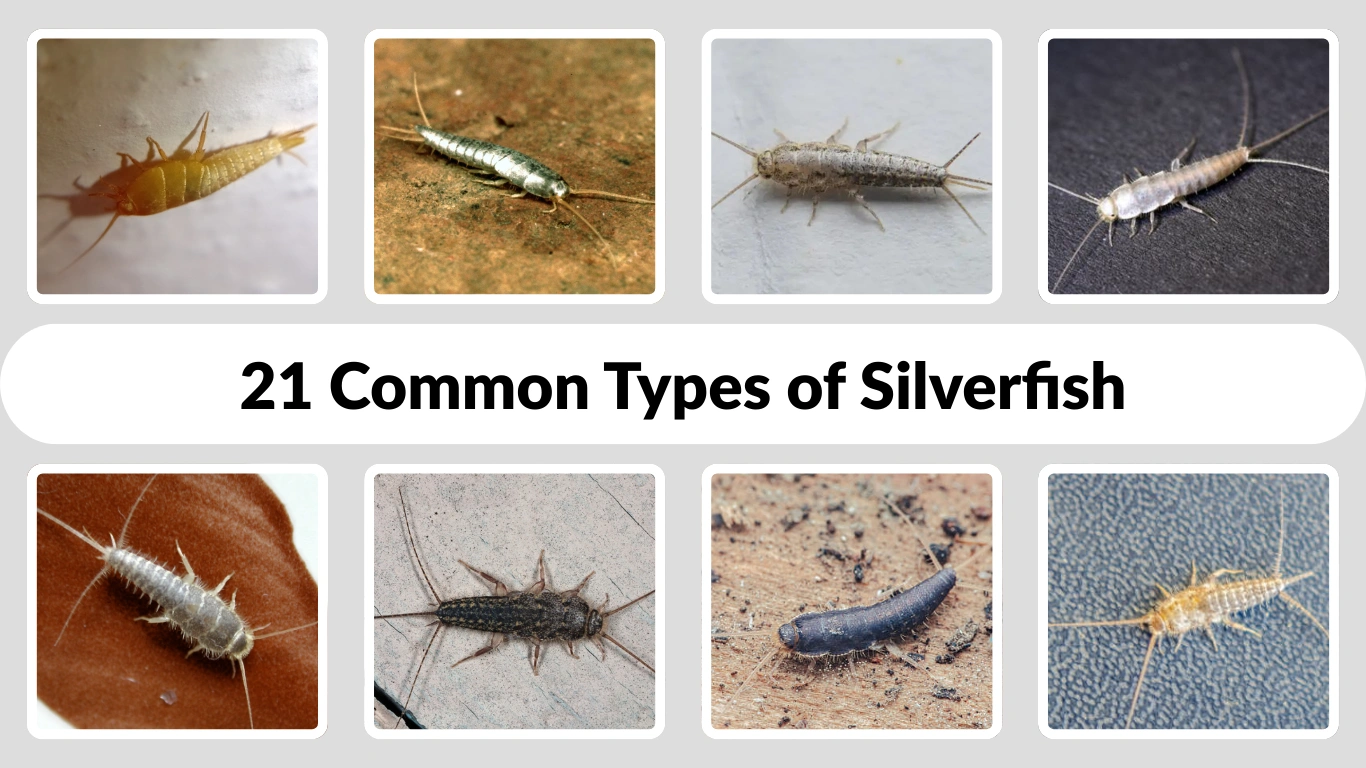
Silverfish are ancient, wingless insects found in homes, libraries, storage areas, and natural environments worldwide. With hundreds of species in the Zygentoma order, only a subset commonly inhabits human spaces. Each species differs slightly in appearance, habitat preference, and behavior. Understanding these differences helps with proper identification, prevention, and control. This guide introduces 21 notable silverfish species and their key characteristics.
1. Common Silverfish

A small, wingless household insect known for its silvery scales, fast movements, and love for humid spaces. Common silverfish thrive in bathrooms, kitchens, and basements, feeding on starches, paper, and fabrics.
Identification
- Slender, carrot-shaped body
- Silvery, metallic scales
- Three tail-like appendages
- Long antennae
- Moves in a quick, fish-like motion
- About 12–19 mm in length
Habitat
Common silverfish prefer warm, humid places with low light. They commonly hide in bathrooms, basements, attics, behind baseboards, inside cupboards, and around old books or cardboard boxes.
Diet
They feed on starchy and sugary materials such as paper, glue, wallpaper paste, cotton, flour, cereals, dandruff, and dead skin, making household items particularly vulnerable.
Behavior
Common silverfish are nocturnal, avoiding light and staying hidden most of the day. They are fast runners, reproduce slowly, and can survive months without food, making infestations persistent if conditions stay humid.
2. Firebrat

A heat-loving household insect often found near ovens, heaters, and boiler rooms. Firebrats thrive in high-temperature, low-light areas and are slightly more heat-tolerant than common silverfish.
Identification
- Shorter and stockier than common silverfish
- Mottled gray-brown body with darker patches
- Three tail-like appendages
- Long, flexible antennae
- Fast, darting movement
- Typically 10–12 mm long
Habitat
Firebrats prefer very warm environments (32–41°C). They commonly live near furnaces, water heaters, ovens, laundry rooms, and hot pipes. They are less likely to be found in bathrooms unless the room stays warm.
Diet
They consume starchy materials like book bindings, wallpaper paste, flour, cereals, and fabrics. They also feed on crumbs, dead insects, and protein residues found around warm appliances.
Behavior
Firebrats are nocturnal, hiding during the day in tight, warm crevices. They reproduce quickly in high heat and can move rapidly to escape light or disturbance, making them difficult to spot despite thriving indoors.
3. Four-lined Silverfish

A household silverfish species recognized by the faint dark lines running along its body. Four-lined silverfish tolerate drier environments than typical silverfish and are often found in attics and storage areas.
Identification
- Slender body with four faint longitudinal dark lines
- Gray to brownish coloration
- Three long tail-like filaments
- Long antennae
- Slightly larger and more robust than common silverfish
- Typically 12–20 mm in length
Habitat
Four-lined silverfish prefer dry, cool, and undisturbed places. They commonly live in attics, storage rooms, old wooden structures, wall voids, and behind insulation. They can survive lower humidity than most other silverfish.
Diet
Their diet includes paper, cardboard, fabrics, book glue, dust, dead skin, and stored items containing starch. They may also feed on old insulation, bindings, and even certain synthetic fibers.
Behavior
They are nocturnal and avoid bright lights. Four-lined silverfish move quickly, reproduce steadily, and can persist for long periods without food. Their ability to tolerate dryness makes them harder to control in attic spaces.
4. Giant Silverfish

A larger, more robust silverfish species commonly found in homes, apartment buildings, and storage areas. Giant silverfish tolerate a wider range of temperatures and humidity levels, allowing them to spread more easily than many other types.
Identification
- Noticeably larger than typical silverfish (up to 20 mm+)
- Gray to dark gray coloration
- Long antennae and three elongated tail filaments
- Slightly flattened, elongated body shape
- Covered in fine scales, giving a matte appearance
- Moves quickly but less “fish-like” than smaller species
Habitat
Giant silverfish thrive in both humid and moderately dry environments. They are commonly found in bathrooms, kitchens, attics, basements, storage boxes, cardboard piles, and behind wall voids. Their adaptability makes them one of the fastest-spreading indoor species.
Diet
Their diet includes paper, cardboard, book bindings, fabrics, starch-rich items, wallpaper adhesive, and crumbs. They may also consume dead insects, dust, and natural fibers found in stored items.
Behavior
Giant silverfish are nocturnal and highly adaptive. They hide deep in cracks, move swiftly when disturbed, and can survive extended periods without food. Their ability to tolerate both warm and cool indoor climates allows them to establish long-lasting infestations.
5. Urban Silverfish

A silverfish species increasingly found in human environments, especially in modern homes and apartment buildings. Urban silverfish are highly adaptable and often spread through cardboard boxes, luggage, and stored items.
Identification
- Slender, elongated body
- Light gray to silvery coloration
- Three long tail filaments
- Long, flexible antennae
- Fine scales covering the body
- Slightly smaller than giant silverfish (10–15 mm)
Habitat
Urban silverfish prefer warm, moderately humid indoor spaces. They commonly live in bathrooms, kitchens, storage rooms, and behind baseboards. They also hide in cardboard boxes, furniture cracks, old papers, and around plumbing fixtures.
Diet
Their diet consists of paper, book glue, wallpaper paste, cotton, flour, sugar residues, and fabrics containing starch. They may also feed on crumbs, dust, and dead insects when other food sources are limited.
Behavior
Urban silverfish are nocturnal and shy, hiding during the day and emerging at night. They reproduce steadily and spread easily between rooms and apartments via plumbing lines, electrical conduits, and transported materials. Their adaptability makes them persistent indoor pests.
6. Ciliated Silverfish

A silverfish species recognized for the fine, hair-like structures (cilia) covering its body, giving it a slightly fuzzy appearance. Ciliated silverfish prefer quiet, undisturbed indoor areas with moderate humidity.
Identification
- Slender, elongated body with fine hair-like cilia
- Gray or silvery coloration
- Three long tail filaments
- Long antennae with visible segmentation
- Slightly fuzzy or “bristled” appearance
- Typically 10–15 mm long
Habitat
Ciliated silverfish tend to live in attics, basements, storage spaces, cardboard boxes, and behind furniture. They prefer moderately humid environments but can tolerate slightly drier conditions compared to common silverfish.
Diet
Their diet includes starchy household materials such as paper, cardboard, wallpaper glue, book bindings, cotton fabrics, cereal products, and stored dust or skin particles found in quiet areas.
Behavior
Ciliated silverfish are nocturnal and avoid bright lights. They move quickly when disturbed and prefer to hide in tight crevices. They spread slowly but steadily, especially in areas with abundant paper-based materials.
7. Almeria Silverfish

A less common silverfish species named after the Almería region. It prefers warm, dry indoor spaces and is often found in older buildings, storage rooms, and undisturbed structural gaps.
Identification
- Slender, elongated body
- Light gray to brownish coloration
- Three long tail filaments
- Long, thin antennae
- Slightly rough, scaled surface texture
- Typically 10–14 mm in length
Habitat
Almeria silverfish are often found in dry, warm environments such as attics, wall voids, wooden structures, and storage areas. They favor older buildings where cracks, gaps, and aged materials provide ideal hiding places.
Diet
They feed on starchy materials like book bindings, paper, cardboard, cotton fabrics, wallpaper paste, and stored grains. They may also consume dust, dead insects, and organic debris found in hidden structural spaces.
Behavior
Almeria silverfish are nocturnal, hiding during the day and emerging quietly at night. They reproduce slowly but steadily and tend to stay hidden deep within wooden crevices or insulation, making them difficult to detect until populations grow.
8. Rothschild’s Silverfish

A silverfish species known for its association with older structures and collections. Rothschild’s silverfish often inhabit dry, quiet areas where paper, textiles, and stored materials are abundant.
Identification
- Slender, elongated body
- Light gray to yellowish-gray coloration
- Three long tail filaments
- Long, narrow antennae
- Fine, smooth scales covering the body
- Around 10–15 mm in length
Habitat
Rothschild’s silverfish prefer dry indoor areas such as attics, libraries, storage rooms, wooden beams, and behind wall voids. They are often found in historical buildings, archives, and places with long-stored materials.
Diet
Their diet includes paper, cardboard, book glue, fabrics, wallpaper paste, and organic debris. They may also feed on dust, skin particles, and dead insects when starchy materials are limited.
Behavior
These insects are nocturnal and remain hidden during the day. They move quickly when disturbed and tend to stay deep in cracks or structural gaps. Their presence is often unnoticed until damage to stored books or papers becomes visible.
9. Targioni Silverfish

A lesser-known silverfish species commonly found in dry, undisturbed environments. Targioni silverfish tend to live deep inside crevices and structural gaps, making them difficult to spot.
Identification
- Slender, elongated body structure
- Pale gray to brownish coloration
- Three long tail filaments
- Long, thin antennae
- Smooth, scale-covered appearance
- Typically around 10–14 mm long
Habitat
Targioni silverfish prefer dry indoor spaces such as attics, crawl spaces, wall voids, and older wooden structures. They thrive in areas with minimal disturbance and low light, often residing in deep cracks or gaps.
Diet
Their diet includes paper, cardboard, book bindings, starchy residues, wallpaper paste, fabric fibers, and stored organic materials. They may also feed on dust, skin flakes, and dead insects in low-food environments.
Behavior
Targioni silverfish are nocturnal and shy, staying hidden throughout the day. They move quickly when disturbed and reproduce at a moderate rate. Their discreet lifestyle and preference for deep crevices make infestations hard to detect until damage appears.
10. Island Silverfish

A silverfish species often associated with warm, sheltered indoor environments. Island silverfish are resilient and capable of living in areas with low human activity and minimal light.
Identification
- Slender, elongated body
- Light gray to silvery-brown coloration
- Three long tail filaments
- Long, thin antennae
- Fine scales creating a slightly glossy look
- Typically 10–15 mm in length
Habitat
Island silverfish prefer warm, dry indoor environments such as attics, storage rooms, wall voids, and old wooden structures. They are often found in buildings with stable temperatures and plenty of hiding spots.
Diet
Their diet includes paper, cardboard, book glue, wallpaper paste, stored grains, cotton fabrics, and other starch-rich materials. They may also feed on organic dust, dead insects, and debris found in quiet corners.
Behavior
Island silverfish are nocturnal and secretive. They remain hidden during the day and emerge only at night to feed. Their ability to survive in warm, dry conditions makes them adaptable and capable of living unnoticed for long periods.
11. Four-banded Silverfish

A silverfish species recognized for the subtle band-like markings on its elongated body. Four-banded silverfish inhabit quiet, undisturbed indoor spaces and tend to avoid high-humidity areas more than typical silverfish.
Identification
- Elongated body with four faint, dark band-like markings
- Gray to brownish-gray coloration
- Three long tail filaments
- Long, thin antennae
- Slightly more robust build than common silverfish
- Usually 12–18 mm in length
Habitat
Four-banded silverfish prefer dry or moderately dry environments such as attics, old wooden structures, wall gaps, and storage spaces. They are particularly common in areas with aged materials or low human activity.
Diet
They feed on paper, cardboard, wallpaper adhesive, fabrics, book bindings, stored grains, and starch-rich household materials. They may also consume dust, skin particles, and dead insects if other food sources are limited.
Behavior
Four-banded silverfish are nocturnal and remain hidden during daytime. They move quickly and quietly, often staying deep within wall voids or structural gaps. Their ability to adapt to drier conditions makes them difficult to eliminate once established.
12. Armenian Silverfish

A silverfish species commonly associated with dry indoor environments and older buildings. Armenian silverfish prefer quiet, hidden spaces where they can live undisturbed for long periods.
Identification
- Slender, elongated body
- Pale gray to light brown coloration
- Three long tail filaments
- Long, narrow antennae
- Smooth, scale-covered surface
- Typically 10–14 mm in length
Habitat
Armenian silverfish inhabit dry, warm indoor spaces such as attics, wall voids, wooden beams, storage boxes, and old structural areas. They thrive in buildings with many cracks, crevices, and aged materials.
Diet
Their diet includes paper, cardboard, book bindings, wallpaper paste, cotton fabrics, stored grains, and starchy residues. They may also consume dust, skin flakes, and dead insects when food is scarce.
Behavior
Armenian silverfish are nocturnal and extremely secretive. They remain hidden during the day and move quickly when disturbed. Because they prefer deep cracks and structural gaps, infestations often go unnoticed until damage is discovered.
13. Michaelsen’s Silverfish

A discreet silverfish species found in dry, sheltered indoor spaces. Michaelsen’s silverfish often inhabit older buildings, wooden structures, and areas with long-stored materials.
Identification
- Slender, elongated body shape
- Pale gray to brownish-gray coloration
- Three long tail filaments
- Long, thin, flexible antennae
- Smooth body with fine scales
- Typically 10–15 mm in length
Habitat
Michaelsen’s silverfish prefer dry, warm, undisturbed areas such as attics, storage rooms, wooden beams, and deep wall voids. They thrive in structures where cracks, gaps, and aged materials provide reliable hiding spots.
Diet
Their diet includes paper, cardboard, wallpaper paste, book glue, fabrics, and other starchy materials. They may also consume dust, dead insects, and skin particles found inside old storage spaces.
Behavior
They are nocturnal, avoiding light and emerging only during nighttime hours. Michaelsen’s silverfish move quickly when startled and tend to stay deep within structural crevices. Their hidden lifestyle means infestations often remain unnoticed for long periods.
14. Ghost Silverfish

A small, pale silverfish species known for its almost translucent appearance. Ghost silverfish are increasingly found in modern homes due to their ability to survive with lower humidity levels compared to many other species.
Identification
- Very pale, almost translucent body
- Slender and elongated shape
- Three long tail filaments
- Long, thin antennae
- Smooth, fine scales that give a faint silvery sheen
- Typically 7–12 mm in length (smaller than most species)
Habitat
Ghost silverfish thrive in dry or moderately dry indoor environments such as bedrooms, living rooms, offices, bookshelves, storage cabinets, electrical conduits, and wall voids. They adapt well to modern, climate-controlled buildings.
Diet
Their diet includes paper, cardboard, wallpaper paste, book bindings, cotton fabrics, dry foods, and dust particles. They can also feed on synthetic materials with starch-based coatings found in packaged goods or stored items.
Behavior
Ghost silverfish are nocturnal, quiet, and extremely stealthy. They move quickly but remain well hidden during daytime. Their ability to tolerate low humidity, unlike many other species, allows them to spread easily throughout modern homes and workplaces.
15. Guadiana Silverfish

A regional silverfish species named after the Guadiana area. Guadiana silverfish prefer warm, dry indoor spaces and are commonly found in older structures with abundant cracks, gaps, and stored materials.
Identification
- Slender, elongated body
- Light gray to brownish-gray coloration
- Three long tail filaments
- Fine scales giving a matte texture
- Long, thin antennae
- Typically 10–14 mm in length
Habitat
Guadiana silverfish inhabit dry indoor environments such as attics, storage rooms, wall voids, wooden structures, and undisturbed corners. They thrive especially in older buildings with aged materials and deep crevices.
Diet
Their diet includes paper, cardboard, book bindings, wallpaper adhesive, cotton fabrics, stored grains, and starch-containing household items. They may also feed on dust, skin flakes, and dead insects when necessary.
Behavior
Guadiana silverfish are nocturnal and avoid light. They typically remain hidden during the day and emerge at night to search for food. Their ability to live in dry, sheltered areas makes them discreet and difficult to detect until damage becomes visible.
16. Hispania Silverfish

A silverfish species associated with warm, dry regions and older indoor structures. Hispania silverfish prefer sheltered spaces with minimal disturbance and plenty of cracks or storage materials to hide within.
Identification
- Slender, elongated body
- Pale gray to light brown coloration
- Three long tail filaments
- Long, narrow antennae
- Smooth scales giving a soft matte appearance
- Typically 10–15 mm in length
Habitat
Hispania silverfish prefer dry indoor areas such as attics, old wooden structures, storage rooms, wall voids, and undisturbed corners. They are especially common in older homes or buildings with aging materials.
Diet
Their diet includes paper, cardboard, wallpaper paste, cotton fabrics, book bindings, and starchy residues. They may also feed on dust, skin flakes, and dried organic particles found in long-unused areas.
Behavior
Hispania silverfish are nocturnal and avoid all forms of light. They hide deeply within cracks or gaps, emerging only at night to feed. Their discreet habits and ability to live in dry environments make them persistent and difficult to notice early.
17. Schaeffer’s Silverfish

A silverfish species commonly found in dry, undisturbed environments. Schaeffer’s silverfish tend to live deep inside structural gaps, making them difficult to detect until populations increase.
Identification
- Slender, elongated body
- Pale gray to brownish-gray color
- Three long tail filaments
- Long, thin antennae
- Smooth scales with a subtle matte finish
- Typically 10–15 mm in length
Habitat
Schaeffer’s silverfish prefer dry indoor areas such as attics, wall voids, storage rooms, wooden beams, and cracks in older structures. They thrive in places with minimal disturbance and stable temperatures.
Diet
Their diet includes paper, cardboard, book bindings, wallpaper glue, cotton fabrics, and starchy household materials. They can also feed on dust, skin flakes, and dead insects when typical food sources are limited.
Behavior
These insects are nocturnal and shy, avoiding light and emerging only at night. Schaeffer’s silverfish move quickly when disturbed and often stay deep within crevices. This reclusive lifestyle makes their presence difficult to notice until damage appears.
18. Esfahan Silverfish

A regional silverfish species named after the Esfahan area. Esfahan silverfish typically inhabit dry, warm indoor spaces where they can remain hidden and undisturbed for long periods.
Identification
- Slender, elongated body
- Pale gray to sandy-brown coloration
- Three long tail filaments
- Long, thin antennae
- Smooth scales with a slightly matte finish
- Typically 10–14 mm in length
Habitat
Esfahan silverfish prefer warm, dry spaces such as attics, wall voids, wooden structures, storage rooms, and old buildings. They thrive in environments with cracks, gaps, and low human activity.
Diet
Their diet includes paper, cardboard, wallpaper paste, book glue, cotton fabrics, stored grains, and starch-based materials. They may also feed on dust, dead insects, and skin flakes when food sources are scarce.
Behavior
Esfahan silverfish are nocturnal and avoid all light. They remain hidden deep within crevices and rarely come out during the day. Their quiet, secretive nature makes them hard to detect until noticeable damage appears in stored materials.
19. Unexpected Silverfish

A rare silverfish species named for its surprising discovery during field studies. Unexpected silverfish prefer secluded indoor locations with minimal disturbance.
Identification
- Slender, elongated body
- Pale gray to dull brown coloration
- Three long tail filaments
- Long, thin, flexible antennae
- Fine scales creating a soft matte texture
- Typically 10–14 mm in length
Habitat
Unexpected silverfish inhabit dry, sheltered indoor environments such as attics, storage rooms, wall voids, and wooden structures. They tend to live in older buildings or places with long-stored materials and tight hiding spaces.
Diet
Their diet includes paper, cardboard, wallpaper paste, book bindings, cotton fabrics, and starch-based materials. They may also consume dust, skin flakes, and dead insects when food is limited.
Behavior
Unexpected silverfish are nocturnal, emerging only at night to feed. They remain hidden deep inside cracks during the day, moving quickly when disturbed. Their quiet, elusive nature means infestations often remain unnoticed for long periods.
20. Collared Silverfish

A distinctive silverfish species known for the subtle “collar-like” pattern near the base of its head. Collared silverfish prefer warm indoor spaces with plenty of hiding spots.
Identification
- Slender, elongated body
- Gray to brownish-gray coloration
- Subtle dark collar-like marking near the head
- Long, thin antennae
- Three long tail filaments
- Typically 10–15 mm in length
Habitat
Collared silverfish inhabit warm, undisturbed indoor areas such as attics, storage rooms, wall voids, wooden beams, and old furniture. They thrive particularly well in dry to moderately dry conditions.
Diet
Their diet includes starchy household materials like paper, cardboard, wallpaper paste, book bindings, cotton fabrics, and stored dried foods. They may also consume dust, skin flakes, and dead insects when other food is scarce.
Behavior
Collared silverfish are nocturnal and highly elusive. They stay hidden deep in cracks during daytime and come out at night to feed. Their ability to tolerate dryness and their rapid movement make them difficult to detect early in an infestation.
21. Golden Silverfish

A striking silverfish species known for its subtle golden or yellowish sheen. Golden silverfish are less common indoors but may be found in warm, sheltered spaces with stored materials.
Identification
- Elongated, slender body
- Light gray to golden or yellowish-silver coloration
- Three long tail filaments
- Long, narrow antennae
- Smooth, glossy scales
- Typically 10–15 mm in length
Habitat
Golden silverfish prefer warm, dry environments such as attics, storage rooms, wooden structures, and undisturbed corners of older buildings. They may inhabit areas with low humidity but plenty of hiding spots.
Diet
Their diet includes paper, cardboard, book bindings, wallpaper adhesive, cotton fabrics, starchy debris, and organic dust. They may also consume dead insects and skin particles when food sources are limited.
Behavior
Golden silverfish are nocturnal and avoid light entirely. They remain hidden during the day, emerging quietly at night to search for food. Their distinct coloration and secretive movement make them uncommon to spot unless populations grow.