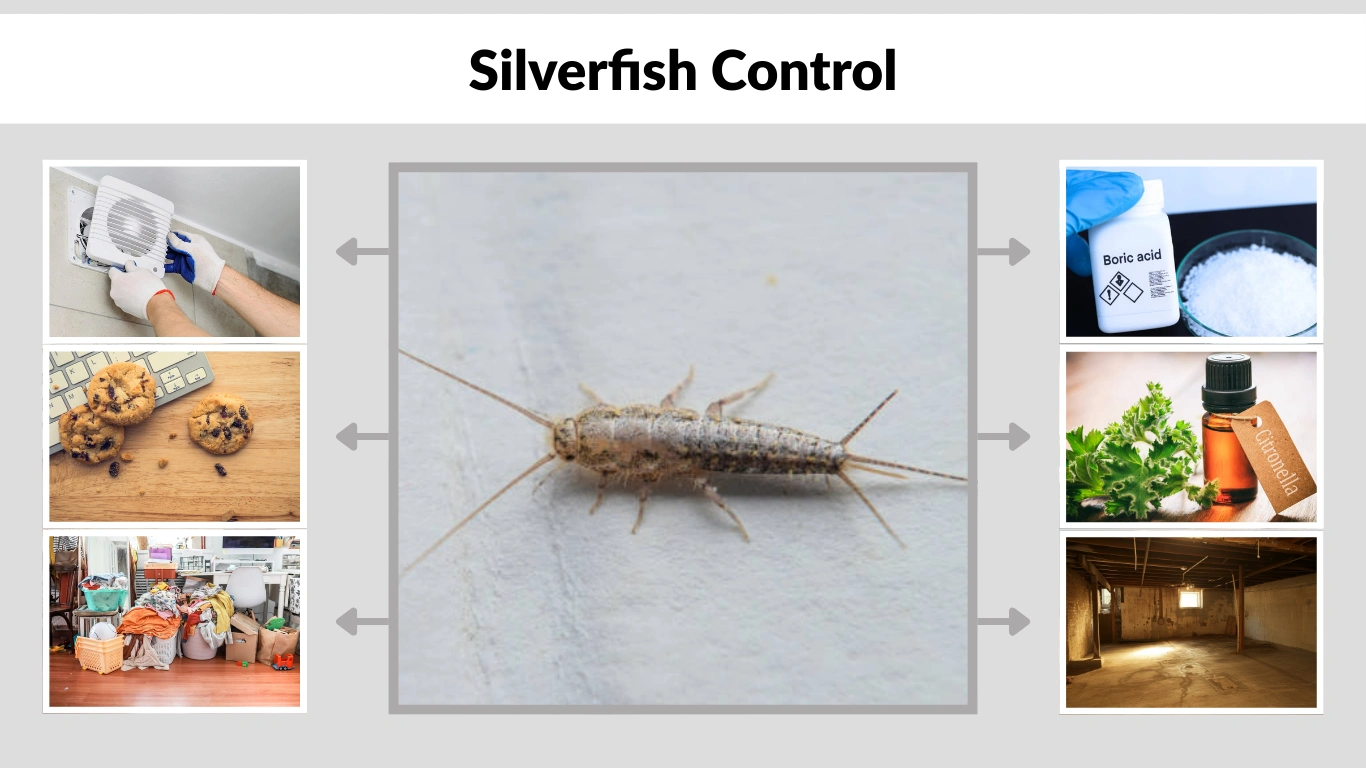
Silverfish are among the most persistent household pests, known for damaging books, paper documents, clothing, and even pantry goods. Their ability to thrive in dark, humid spaces makes them difficult to spot and harder to eliminate. Fortunately, identifying them early and using the right control methods can stop the infestation from spreading. This guide walks you through what silverfish look like, where they hide, the damage they cause, and the 7 best ways to control and prevent them effectively.
Identification
- Appearance: Silverfish are ½–1 inch long, with a flattened, teardrop-shaped body that glistens with a silver-gray sheen.
- Movement: They move in a fast, wriggling, fish-like motion, which makes them easily recognizable.
- Body Structure: Three long, tail-like bristles extend from the rear, paired with long, thin antennae at the front.
- Common Signs: Tiny droppings resembling pepper-like pellets, yellow stains, scales shed from their bodies, and small irregular holes in paper or fabrics.
These features make silverfish one of the easiest pests to identify once you know what to look for. Early identification prevents larger infestations from taking hold deep inside your home.
Behavior, Habitat & Range

Silverfish are nocturnal, meaning they hide during the day and come out at night to search for food. This makes it difficult to catch them in action, but you’ll notice the damage they leave behind. Their primary diet consists of starches, sugars, adhesives, and natural fibers—everything from wallpaper glue to old photographs and flour.
These pests prefer humid, warm environments, typically between 70–80°F with humidity levels above 75%. This is why they congregate in bathrooms, basements, laundry rooms, attics, and storage closets. Areas with poor ventilation, moisture leaks, or clutter provide perfect shelter.
Silverfish are also surprisingly resilient. They can survive long periods without food—sometimes up to a year—allowing them to endure in harsh conditions until resources become available. Their wide geographic range includes most temperate regions across the world, meaning they’re a common household nuisance virtually everywhere. Understanding their habits is key to stopping them before they spread.
Damage Caused
Silverfish feed on carbohydrates, so anything containing starch or sugar becomes vulnerable. This includes books, magazines, cardboard boxes, and wallpaper. The pests can cause:
- Holes in paper materials, including documents and book pages
- Damage to photograph edges and artwork
- Chewed areas on wallpaper or peeling sections
- Contamination of dry foods stored improperly
- Damage to clothing made from cotton, linen, or silk
Over time, an untreated silverfish infestation can ruin sentimental items such as diaries, vintage books, and family photos. The longer they remain, the more likely they’ll spread to other areas of the home, especially humid spaces. Their damage is subtle but accumulates quickly, making early intervention essential.
7 Best Ways for Silverfish Control

Below are the first three methods, written in detailed paragraphs as part of the first half of the article.
1. Reduce Humidity Levels
Humidity control is the most effective and foundational method for stopping silverfish infestations. Because these pests depend on moisture to survive and reproduce, lowering humidity disrupts their environment and forces them out of their hiding places. A household humidity level below 50% is ideal for eliminating their breeding grounds.
Using a dehumidifier in damp spaces—such as basements, crawlspaces, and bathrooms—helps maintain a dry environment. If you live in a climate prone to moisture, running the dehumidifier consistently can make a significant difference. Pair it with proper ventilation by opening windows regularly or installing exhaust fans in bathrooms and laundry rooms.
Fixing leaks is also crucial. Small plumbing issues behind walls, under sinks, or around washing machines can create perfect micro-habitats for silverfish. Repairing these moisture sources stops pests from colonizing those areas. The combination of airflow, dehumidification, and leak repair often leads to a noticeable reduction in silverfish activity within a few weeks.
2. Remove Available Food Sources
Silverfish infest homes primarily because they find abundant food in hidden areas. Reducing these food sources forces them to move elsewhere or die off naturally. Start by organizing paper items—books, magazines, receipts, old mail—and storing them in sealed plastic bins rather than cardboard, which silverfish can easily chew through.
Pantry items such as cereals, flour, rice, sugar, and pet food should be transferred to airtight containers made of hard plastic or glass. This not only keeps food fresher but prevents silverfish from contaminating or feeding on your supplies. They are also attracted to crumbs and food residues, so regular sweeping and wiping of counters helps limit access.
Adhesive-rich items like wallpaper paste, old photo albums, and envelopes can also attract silverfish. Keeping these items in cool, dry storage reduces risk. The goal is to eliminate the food trails that allow silverfish to survive undetected for months. With fewer resources available, infestations typically decline rapidly.
3. Declutter & Clean Regularly
Silverfish thrive in cluttered spaces because the piles of papers, storage boxes, and fabrics create hiding spots that stay dark and humid. Decluttering is one of the most underrated methods for controlling these pests. Start by sorting through old books, documents, and cardboard stored in basements or attics. If items are no longer needed, recycle or dispose of them properly.
Regular cleaning also reduces dust, which silverfish find appealing as it contains food particles and organic debris. Vacuuming along baseboards, under furniture, and inside closets helps remove eggs and skin sheds. Focus on corners, cracks, and crevices where moisture and dust tend to collect.
Organizing storage areas with plastic bins instead of cardboard reduces potential feeding and nesting sites. Additionally, rotating stored items ensures no area becomes a long-term hiding spot. Maintaining a clutter-free home makes it much harder for silverfish to build sustainable populations.
4. Use Natural Repellents
Natural repellents are an excellent option for homeowners who prefer a chemical-free approach to pest control. Several organic substances repel or kill silverfish, making them a valuable addition to long-term prevention. One of the most effective natural solutions is diatomaceous earth (DE), a powder made from fossilized algae. When silverfish crawl through it, the abrasive particles damage their outer shell, causing dehydration. Sprinkle DE behind appliances, inside cabinets, and along baseboards.
Herbal repellents also help reduce silverfish activity. Cedar shavings and chips are well-known for their insect-repelling properties and work best inside closets, drawers, and storage containers. Silverfish avoid cedar’s natural scent, making it a practical, low-cost solution. Similarly, strong-smelling substances like cloves, citrus peels, peppermint oil, lavender oil, and eucalyptus oil can discourage silverfish from settling in specific areas.
To use essential oils effectively, mix 15–20 drops with a cup of water and spray the solution around cracks, baseboards, and humid corners. Reapply weekly for best results. While natural repellents won’t eliminate a severe infestation on their own, they significantly reduce activity when used consistently and combined with moisture control and cleanliness.
5. Apply Chemical Treatments
When natural remedies aren’t enough, chemical treatments provide stronger and faster results. These products should be used carefully, especially around pets and children, but they remain highly effective for heavy infestations. Boric acid is one of the most widely recommended treatments. Applied in thin layers along baseboards, behind toilets, and inside cupboards, it kills silverfish by disrupting their digestive system when ingested.
Another powerful solution is insecticidal dust, often containing silica or synthetic pyrethroids. The dust penetrates cracks and crevices where silverfish nest, killing them on contact. Unlike liquid sprays, dust remains active longer and continues to protect treated areas for weeks or even months. For widespread infestations, perimeter sprays can be applied around baseboards and foundation edges to create a barrier that prevents silverfish from entering new areas.
Always follow safety directions on product labels, ventilate treated rooms, and avoid overapplication. Chemical treatments work best when paired with humidity reduction and good sanitation, ensuring silverfish don’t return once they’re eliminated.
6. Set Silverfish Traps
Traps offer an easy, non-toxic way to monitor and reduce silverfish populations. Commercial sticky traps capture silverfish as they move across floors and baseboards. Place them behind furniture, under sinks, and in closets—areas where silverfish frequently travel. Monitoring trap activity over time can help you determine whether the population is increasing, decreasing, or shifting toward new locations.
Homemade traps are also effective. A simple jar trap can be made by placing a small amount of flour or breadcrumbs inside a glass jar and wrapping the outer surface with masking tape. The tape gives silverfish traction to crawl in, but the smooth interior prevents escape. These traps work best at night when silverfish are most active.
Traps alone won’t eradicate a large infestation, but they’re extremely valuable for early detection and ongoing control. Combined with humidity management and sealant work, traps help prevent silverfish from repopulating hidden areas of your home.
7. Seal Entry Points
Sealing entry points is one of the most important long-term silverfish control strategies. These pests enter homes through gaps, cracks, and crevices around doors, windows, plumbing pipes, and baseboards. Because they are thin and flexible, even small openings provide easy access.
Inspect your home thoroughly for cracks in walls, foundation gaps, damaged caulking, missing weatherstripping, or loose tiles. Use silicone-based caulk or expanding foam to seal vulnerable areas. Pay particular attention to bathrooms, kitchens, and laundry rooms because the moist environment naturally attracts silverfish.
Sealing entry points also prevents other pests—such as ants, cockroaches, and firebrats—from invading your home. This final step ensures that all previous control efforts (cleaning, traps, food protection, and humidity reduction) remain effective long term.
Silverfish vs. Other Household Pests

| Feature | Silverfish | Firebrat | Booklice | Carpet Beetle Larvae |
| Appearance | Silvery, teardrop-shaped | Mottled gray-brown | Very small & pale | Hairy, worm-like |
| Preferred Habitat | Humid areas | Hot & dry spaces | Damp paper | Fabrics & carpets |
| Diet | Starches, paper, glue | Paper & debris | Mold & mildew | Wool, leather, fabrics |
| Type of Damage | Books, photos, fabrics | Paper goods | Book damage | Holes in clothing |
| Activity Level | Nocturnal | Nocturnal | Active in moist areas | Slow-moving feeders |
This table helps homeowners distinguish silverfish from other pests that cause similar damage. Proper identification ensures the right treatment method is used from the start.
Prevention Tips
Prevention is the most effective way to avoid recurring silverfish infestations. Once your home is treated, maintaining a clean, dry environment will keep pests from returning. Here are some of the strongest silverfish prevention habits:
- Keep indoor humidity under 50%
- Store books, documents, and photographs in airtight bins
- Replace cardboard storage boxes with plastic containers
- Fix all plumbing leaks promptly
- Use bathroom exhaust fans during and after showers
- Clean behind furniture and appliances regularly
- Seal all cracks and entry points around your home
These actions reduce moisture, eliminate food sources, and remove hiding spots—creating an environment where silverfish can’t survive. Consistency is key; even a brief return of humidity can encourage pests to re-establish themselves.
When to Call a Professional
In some cases, DIY solutions may not be enough. Silverfish are incredibly resilient, and large infestations can spread through walls, insulation, or hidden storage areas. If you continue to see activity after several weeks of treatment, it may be time to contact a licensed pest control professional.
Professionals use advanced techniques like residual dust applications, crack-and-crevice injections, and moisture mapping to identify infestation hotspots. They can access areas that homeowners typically can’t reach, such as wall voids, crawlspaces, and ducting systems. This allows them to target nesting sites directly and apply long-lasting treatments.
Additionally, professionals can evaluate your home’s layout and identify structural issues that contribute to recurring moisture problems. Their integrated pest management (IPM) strategies focus not just on killing pests but also on preventing future infestations. This comprehensive approach ensures long-term protection and peace of mind.
FAQ
Are silverfish harmful to humans?
Silverfish do not bite or transmit diseases, so they are not dangerous to people or pets. However, they can trigger allergies in sensitive individuals and cause damage to belongings like clothing, books, and wallpaper. Their presence often indicates excess humidity, which may contribute to mold or other moisture-related issues in the home.
How long do silverfish live?
Silverfish have surprisingly long lifespans for insects—typically between 2 to 8 years. Their slow growth and extended lifespan make infestations harder to eliminate if left untreated. They reproduce gradually, which means populations can build up silently over time before you notice obvious signs of damage or activity.
What instantly kills silverfish?
Diatomaceous earth, boric acid, and certain insecticidal dusts kill silverfish quickly by dehydrating or poisoning them. For fast results, apply a thin layer in high-activity areas such as bathrooms, basements, and behind appliances. Always follow safety precautions and keep powders away from pets and children.
Do silverfish mean my house is dirty?
A silverfish infestation doesn’t necessarily mean your home is dirty. These pests are attracted primarily to moisture, not filth. However, clutter, cardboard, and dust can make infestations worse by providing food and hiding spots. Maintaining dryness and proper ventilation is far more important than cleanliness alone.
Can silverfish crawl into beds?
Silverfish rarely climb into beds intentionally. They prefer dark, humid areas rather than dry bedding. However, they may accidentally appear near mattresses if the surrounding area has moisture problems or clutter. Keeping the bedroom dry, reducing humidity, and sealing cracks will help ensure they stay away from sleeping areas.