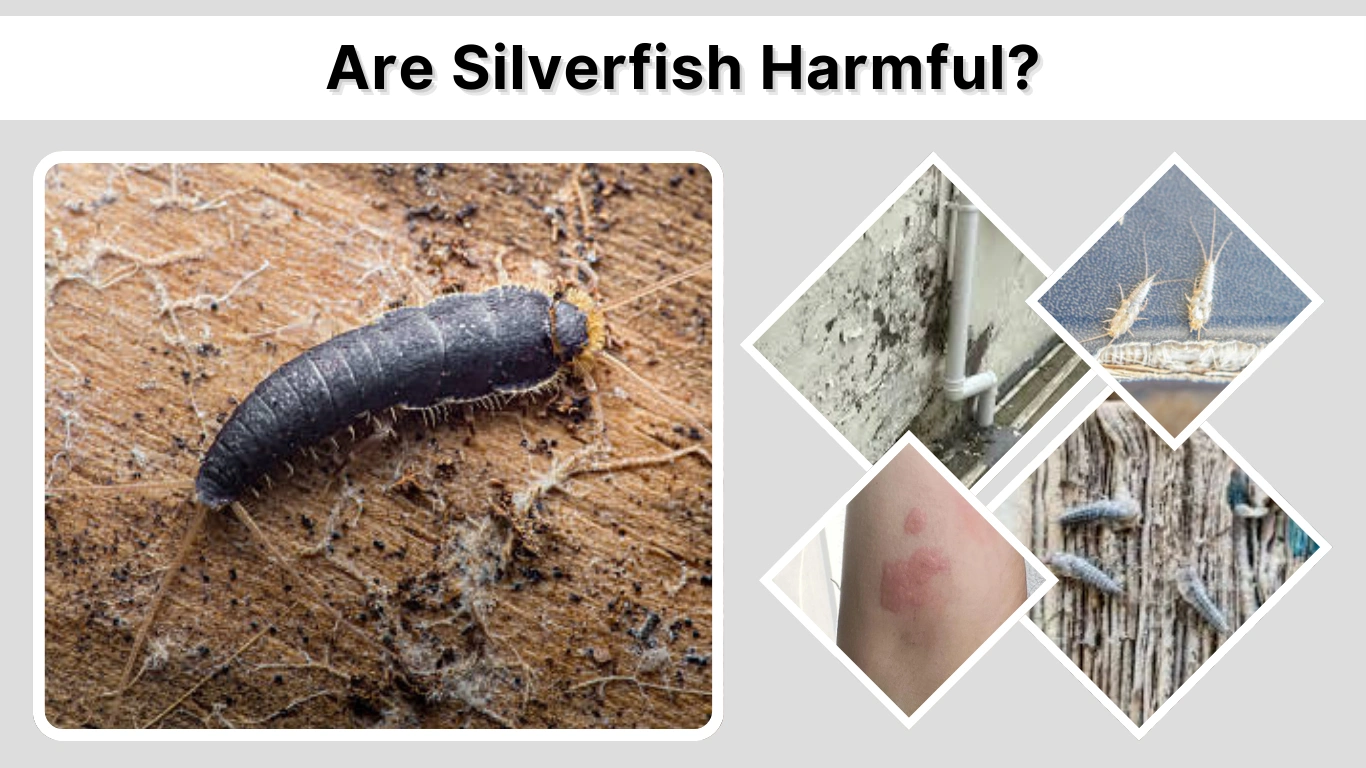
Silverfish are small, fast-moving insects that often appear in bathrooms, basements, kitchens, and storage areas. Their sudden movements and shiny, fish-like bodies can be unsettling, leading many homeowners to wonder: are silverfish harmful? While silverfish are not dangerous in the same way as stinging insects or disease-carrying pests, they are far from harmless. Their presence can signal moisture problems, they can damage valuable belongings, and they may contribute to indoor air and allergy concerns. Understanding what silverfish actually do—and what they don’t do—helps put the real risks into perspective.
What Are Silverfish?
Silverfish (Lepisma saccharina) are wingless insects belonging to the order Zygentoma. They are considered “primitive insects” because they have existed in nearly the same form for hundreds of millions of years. Silverfish are nocturnal, avoid light, and hide in cracks, wall voids, and storage areas.
They thrive in warm, humid environments and feed primarily on carbohydrates. This includes paper, glue, wallpaper paste, fabrics, book bindings, crumbs, and microscopic mold. Because they are excellent at hiding and can live several years, silverfish often establish long-term populations before homeowners realize they are present.
Are Silverfish Harmful to Humans?

Do Silverfish Bite?
Silverfish do not bite humans. Their mouthparts are designed for scraping soft materials like paper and starch, not for piercing skin. They are shy insects that avoid confrontation and quickly flee when disturbed. There are no verified reports of silverfish actively attacking people.
Do Silverfish Spread Diseases?
Silverfish are not known to transmit diseases to humans. Unlike mosquitoes, cockroaches, or rodents, they are not recognized as vectors of human pathogens. This means they are not considered a direct medical threat in the traditional sense.
Can Silverfish Cause Allergies?
While silverfish do not inject venom or carry specific diseases, they can contribute indirectly to allergy issues. Their shed skins, droppings, and body fragments become part of household dust. In sensitive individuals, this debris may trigger allergic reactions or worsen asthma symptoms, especially in already humid environments where mold may also be present.
Are Silverfish Harmful to Homes and Belongings?
Although silverfish pose little direct physical danger to people, they can be very harmful to property.
Damage to Paper and Books
Silverfish are notorious for feeding on books, magazines, documents, photographs, and wallpaper. They eat the starches and glues used in paper products, leaving irregular holes, surface etching, and yellow stains. Over time, infestations can destroy valuable books, personal records, and archival materials.
Damage to Clothing and Fabrics
Natural fibers such as cotton, linen, silk, and rayon are vulnerable to silverfish. They often attack clothing stored in dark, humid closets or boxes. While they do not eat fabric as aggressively as clothes moths, their slow but persistent feeding can ruin garments and upholstery.
Contamination of Food and Surfaces
Silverfish may invade pantries and contaminate flour, cereals, pet food, and sugar. They shed skins and leave droppings, making stored food unsanitary. Although not proven to spread disease, contamination still requires disposal of affected items.
Hidden Structural and Decorative Damage
Silverfish often feed on wallpaper paste, drywall paper backing, and bookbinding glue. Over time, this can loosen wallpaper, damage framed artwork, and contribute to deterioration of stored materials.
Are Silverfish a Sign of a Bigger Problem?

In many cases, silverfish are less of a primary problem and more of a warning sign.
Moisture and Humidity Issues
Silverfish require high humidity to survive. Their presence often indicates hidden moisture problems such as leaking pipes, condensation, damp basements, poor ventilation, or water intrusion. These same conditions also encourage mold growth, wood decay, and other pests.
Long-Term Infestations
Because silverfish live several years and reproduce slowly but steadily, their presence usually means conditions have been favorable for a long time. An active population suggests that eggs, nymphs, and adults are established in hidden areas.
In this way, silverfish are harmful not only for what they eat, but for what they reveal about a building’s environment.
Psychological and Quality-of-Life Impact
For many people, silverfish are deeply unpleasant. Their sudden movements, nighttime activity, and association with bathrooms and bedding can cause significant stress and discomfort. Persistent sightings often disrupt sleep and create anxiety about cleanliness and home safety.
While psychological impact is not physical harm, it is a real and common reason homeowners seek professional control.
Are Silverfish Harmful to Pets?
Silverfish are not known to be toxic to cats, dogs, or other household pets. Pets may occasionally eat silverfish without harm. However, pest control products used to treat infestations can be hazardous if misused, making safe application important.
When Do Silverfish Become a Serious Problem?

Silverfish become a serious concern when:
- Sightings are frequent or in multiple rooms
- Books, clothing, or papers are being damaged
- Shed skins and droppings are accumulating
- Humidity problems remain unresolved
- Infestations persist despite basic cleaning
In these cases, the harm is cumulative. Damage builds slowly but can become extensive before the source is addressed.
How to Reduce the Harm from Silverfish
The most effective way to reduce the harm silverfish cause is to remove what they need to survive.
Control Moisture
Lowering indoor humidity below 50 percent dramatically reduces silverfish survival. Dehumidifiers, exhaust fans, fixing leaks, and improving airflow are foundational steps.
Protect Belongings
Store books, documents, clothing, and food in sealed containers. Avoid cardboard boxes in damp areas. Regularly clean storage spaces.
Seal and Declutter
Caulk cracks, seal gaps around plumbing, and reduce clutter. This limits hiding and egg-laying sites.
Targeted Control
Desiccant dusts, insect growth regulators, and monitoring traps can reduce populations. In large or persistent infestations, professional pest control is often needed.
So, Are Silverfish Harmful or Not?
Silverfish are not dangerous in the sense of biting, stinging, or spreading known diseases. However, they are harmful in more subtle but significant ways. They damage valuable property, contaminate stored items, contribute to indoor allergen loads, and often indicate moisture conditions linked to mold and structural problems. Over time, unchecked silverfish infestations can become costly and stressful.
In short, silverfish may not threaten your health directly, but they are not harmless house guests. Their presence deserves attention.
FAQs
Are silverfish dangerous to humans?
Silverfish are not dangerous in a medical sense. They do not bite, sting, or transmit known human diseases. However, their shed skins and droppings can contribute to indoor allergens, and their presence often signals moisture conditions that may support mold growth.
Can silverfish damage a house?
Silverfish do not chew wood or structural materials, but they can damage wallpaper, books, stored papers, and fabrics. Over time, this can result in significant loss of personal property and deterioration of decorative surfaces.
Is it bad to have silverfish in your home?
Yes. While not medically dangerous, silverfish indicate damp conditions, can damage belongings, contaminate stored food, and often persist for years if untreated. Their presence should not be ignored.
Do silverfish mean my house is dirty?
No. Silverfish are attracted mainly to moisture and hidden food sources, not general dirt. Even very clean homes can have infestations if humidity is high and there are cracks, storage areas, or paper products available.
Should silverfish be eliminated?
Yes. Eliminating silverfish protects your belongings and helps uncover and correct moisture problems. Long-term control improves indoor conditions and prevents ongoing damage and nuisance.