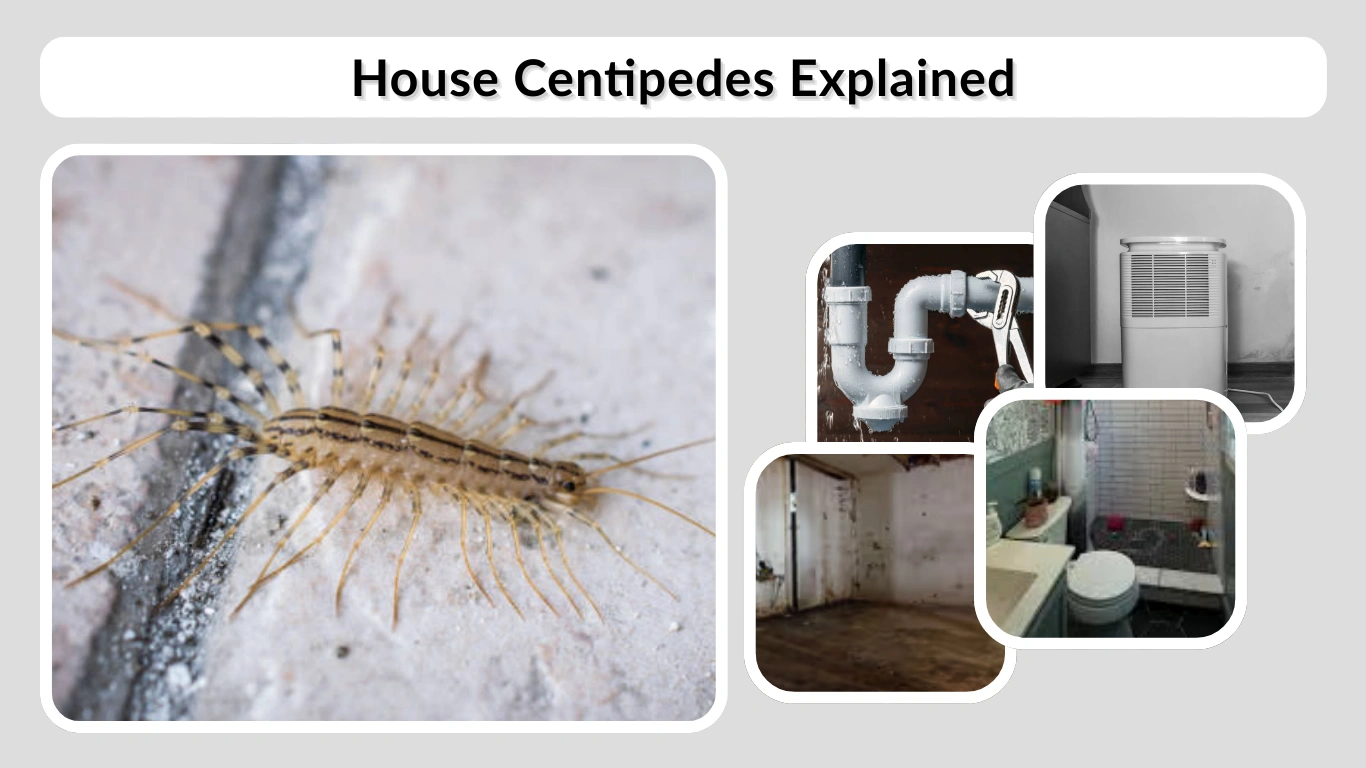
The house centipede is one of the most unsettling insects people encounter indoors. With its long legs, fast movements, and sudden appearances on walls or floors, it often triggers fear and confusion. Many homeowners wonder whether house centipedes are dangerous, why they show up inside, and if their presence signals a serious pest problem. Despite their frightening look, house centipedes are more complex than they seem. Understanding what they are, why they live in homes, and how they behave can help reduce unnecessary panic and lead to better control decisions.
What Is a House Centipede?

The house centipede, scientifically known as Scutigera coleoptrata, is a type of centipede commonly found in homes, especially in damp or dark areas. Unlike outdoor centipedes that live in soil or under rocks, house centipedes have adapted well to indoor environments. They are nocturnal arthropods, meaning they are most active at night and usually hide during the day.
House centipedes are native to the Mediterranean region but have spread widely across North America, Europe, and parts of Asia. Their ability to survive indoors year-round has made them one of the most common household centipedes encountered by humans.
Physical Characteristics
- Yellowish-gray body with dark longitudinal stripes
- Flattened, elongated body shape
- 15 pairs of long, delicate legs
- Legs increase in length toward the rear
- Long antennae used for sensing movement
- Adult length around 1–1.5 inches (appears larger due to legs)
- Extremely fast movement across floors and walls
House Centipede Lifespan
Compared to many other household insects, house centipedes have a relatively long lifespan. On average, they can live between three and seven years under favorable indoor conditions. Warm temperatures, access to moisture, and a steady food supply can significantly extend their lifespan. This long life cycle is one reason they may reappear repeatedly in the same home.
Why Do House Centipedes Live Indoors?

House centipedes enter homes because indoor environments often provide everything they need to survive. Unlike seasonal insects that wander inside by accident, house centipedes actively seek out indoor shelter.
Moisture and Humidity
One of the main reasons house centipedes thrive indoors is moisture. They prefer humid environments and are commonly found in basements, bathrooms, laundry rooms, and kitchens. Leaky pipes, poor ventilation, and damp crawl spaces create ideal conditions for them.
Homes with high humidity levels are more likely to experience frequent sightings. Reducing moisture often leads to a noticeable decrease in house centipede activity.
Availability of Prey
House centipedes are predators, not scavengers. They feed on a variety of household pests, including cockroaches, silverfish, spiders, ants, termites, and flies. If a home has an underlying insect problem, it becomes attractive to house centipedes as a hunting ground.
In this sense, seeing a house centipede may indicate the presence of other insects rather than a centipede infestation itself.
Are House Centipedes Dangerous to Humans?
Despite their alarming appearance, house centipedes are generally not dangerous to humans. They do possess venom, which they use to subdue prey, but it is not considered medically significant for people or pets. Most encounters end with the centipede fleeing rather than attacking.
House centipedes are shy and avoid human contact whenever possible. Their speed is primarily a defense mechanism, allowing them to escape perceived threats quickly.
Do House Centipedes Bite?
House centipede bites are rare. They typically occur only if the centipede is handled or trapped against the skin. When bites do happen, they are usually mild and comparable to a bee sting, causing temporary redness, slight swelling, or minor pain.
Severe reactions are uncommon, though individuals with allergies or sensitive skin may experience stronger symptoms. In most cases, basic first aid such as washing the area and applying a cold compress is sufficient.
Are House Centipedes Good or Bad?

The presence of house centipedes can be both beneficial and unpleasant, depending on perspective. While many people dislike seeing them, they play a useful role in controlling other pests inside the home.
Insects House Centipedes Eat
House centipedes feed on many insects that are far more harmful or difficult to eliminate, including cockroaches, silverfish, bed bugs, and spiders. By hunting these pests, they act as a form of natural pest control.
When They Become a Problem
Although house centipedes can help reduce other insect populations, they are not always welcome guests. Frequent sightings, especially during daylight hours, may indicate a larger underlying issue such as excessive moisture or a heavy presence of prey insects. For many homeowners, the primary concern is psychological discomfort rather than physical harm. Their sudden movements and unusual appearance can cause anxiety, particularly in living spaces like bedrooms or bathrooms.
When house centipedes are consistently visible, it often signals that conditions inside the home are favorable for them. Addressing these conditions is usually more effective than focusing solely on eliminating the centipedes themselves.
How to Get Rid of House Centipedes

The most effective way to reduce house centipedes is through prevention. Eliminating the factors that attract them will naturally limit their presence over time.
Natural and Preventive Methods
Reducing indoor humidity is one of the most important steps. Using dehumidifiers in basements, repairing leaky pipes, and improving ventilation in bathrooms and kitchens can make the environment less appealing. Sealing cracks around doors, windows, and foundations helps prevent centipedes from entering in the first place.
Removing food sources is equally important. Since house centipedes feed on other insects, controlling pests like silverfish, ants, and cockroaches will reduce their motivation to stay. Regular cleaning, vacuuming, and proper food storage can significantly decrease insect activity.
Chemical and Professional Treatments
Chemical treatments are rarely necessary unless house centipede activity becomes severe. Insecticides can be effective but should be used carefully, especially in homes with children or pets. Targeted applications in entry points and damp areas are more effective than widespread spraying.
Professional pest control may be appropriate if centipedes persist despite preventive measures. A professional can identify moisture issues, entry points, and underlying infestations that may not be obvious.
House Centipede vs Similar Household Bugs
House centipedes are often mistaken for other crawling insects, leading to confusion about identification and treatment.
House Centipede vs Silverfish
Silverfish are wingless insects with a smooth, teardrop-shaped body and three tail-like appendages. Unlike house centipedes, silverfish feed on paper, glue, and fabrics rather than other insects. They move quickly but lack the long legs and predatory behavior of centipedes.
House Centipede vs Millipede
Millipedes have short legs, move slowly, and usually curl into a coil when threatened. They feed on decaying organic matter rather than live prey. House centipedes, in contrast, are fast-moving hunters with long legs and a flattened body.
Common Myths About House Centipedes
Many misconceptions surround house centipedes, often increasing unnecessary fear. One common myth is that they are highly poisonous to humans. In reality, their venom is weak and rarely affects people. Another myth is that their presence means a home is dirty, but even clean homes can attract centipedes if moisture and prey are present.
Some people also believe that house centipedes crawl on humans while sleeping. This behavior is extremely unlikely, as centipedes actively avoid large animals and prefer to stay hidden.
FAQs
How fast can a house centipede move?
House centipedes are among the fastest household insects and can move at speeds of over one foot per second.
How many legs do house centipedes have?
Adult house centipedes have 15 pairs of legs, totaling 30 legs.
Do house centipedes reproduce indoors?
Yes, they can reproduce indoors if conditions remain favorable, though populations usually stay low.
Should you kill a house centipede or leave it?
If you can tolerate them, leaving them alone may help control other pests. However, frequent sightings suggest a need for preventive measures.
Conclusion
House centipedes may look alarming, but they pose little risk to humans and can even provide benefits by controlling other household pests. Their presence usually points to moisture issues or hidden insect populations rather than a serious threat. By reducing humidity, sealing entry points, and managing other pests, homeowners can effectively limit house centipede activity without resorting to aggressive treatments. Understanding their behavior makes it easier to respond calmly and maintain a more comfortable living environment.