
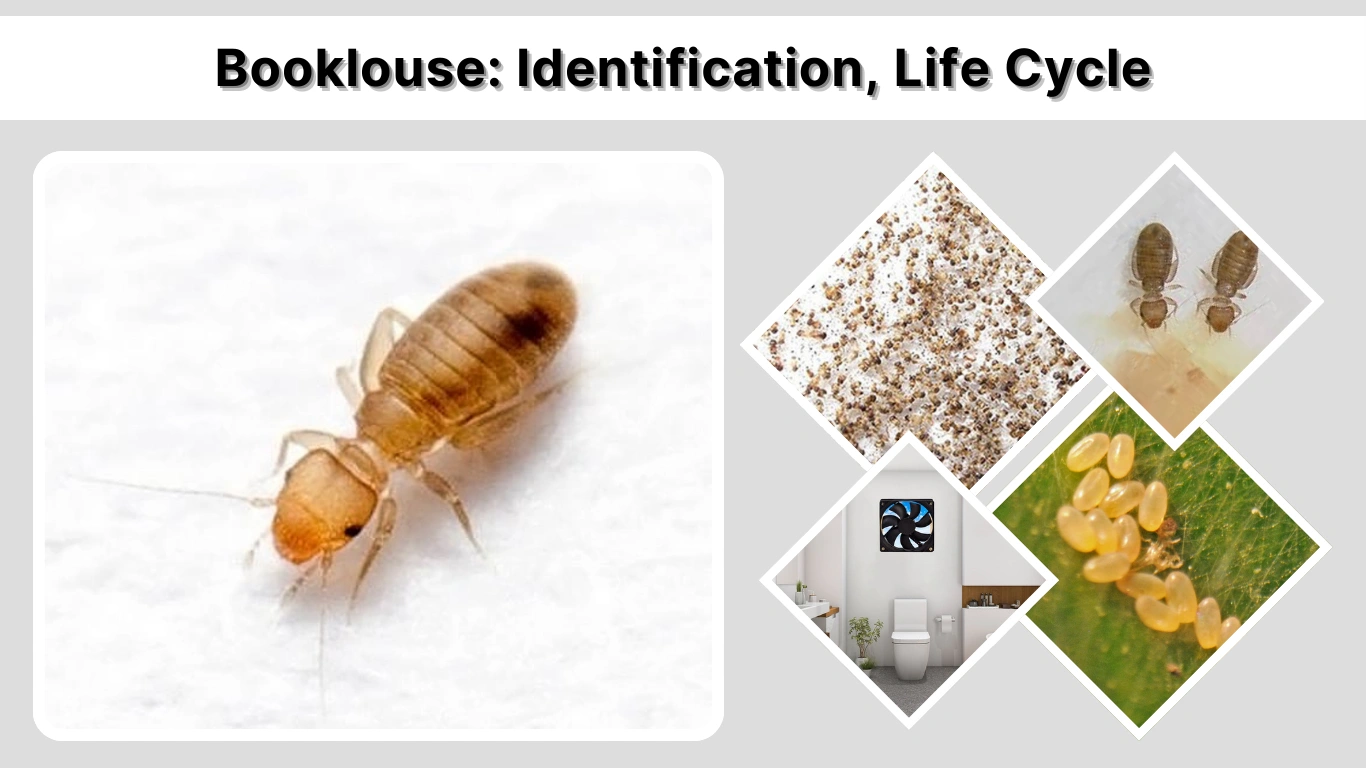
A booklouse is a tiny, soft-bodied insect commonly found in damp areas of homes. Despite the name, it is not a true louse and does not live on humans or animals. These insects are often spotted crawling on books, paper, walls, or stored food products. The booklouse nymph, the immature stage of the insect, plays a key role in how quickly infestations grow indoors. Understanding their appearance, life cycle, and environmental needs is essential for proper identification and effective control.
What Is a Booklouse?
A booklouse (also called a psocid) is a small insect belonging to the order Psocoptera. They thrive in warm, humid environments where mold is present. The name “booklouse” comes from their habit of feeding on microscopic mold that grows on paper, book bindings, cardboard, and other organic materials.
Unlike parasitic lice, booklice do not bite humans or animals. They are not blood feeders and are not known to spread diseases. Instead, they feed on mold, fungi, starches, and occasionally stored food particles. Their presence usually indicates a moisture problem rather than a sanitation issue.
Booklice are considered nuisance pests. While they can be unsettling to find in large numbers, they are generally harmless to people and pets.
What Does a Booklouse Look Like?
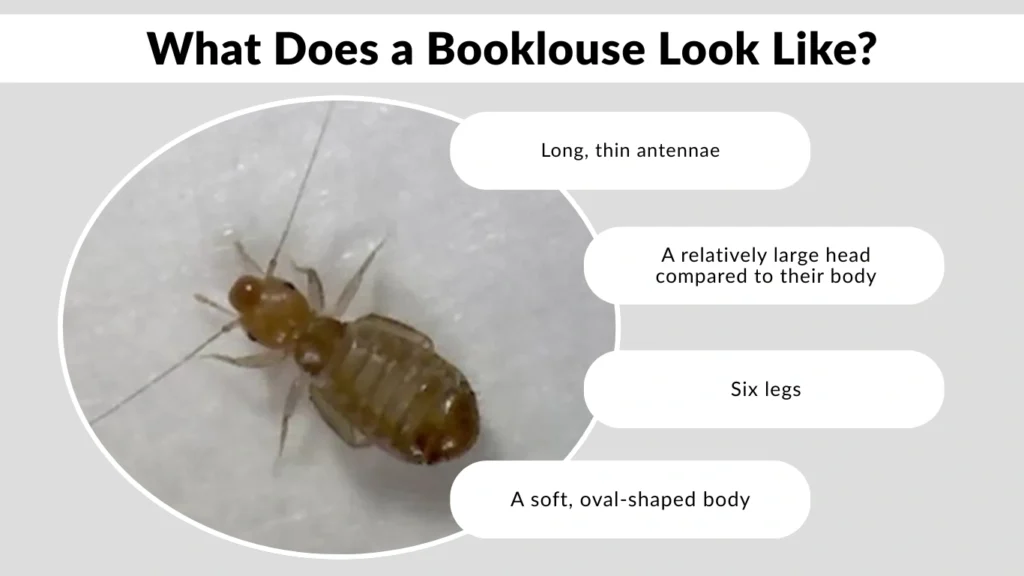
Booklice are extremely small, typically measuring about 1–2 millimeters in length. Their bodies are soft and pale, often appearing translucent, cream-colored, or light gray. Some species may have a slightly brown tint.
They have:
- Long, thin antennae
- A relatively large head compared to their body
- Six legs
- A soft, oval-shaped body
Indoor booklice are usually wingless, although some outdoor species may have wings. Because of their small size and pale color, they can easily go unnoticed until their population increases.
They are often mistaken for:
- Baby termites
- Dust mites
- Springtails
- Head lice
However, unlike termites, booklice do not chew wood, and unlike lice, they do not infest hair or skin.
What Is a Booklouse Nymph?
A booklouse nymph is the immature stage of a booklouse. After hatching from an egg, the insect enters the nymph stage before developing into an adult.
Booklouse nymphs look very similar to adults but are smaller and slightly lighter in color. They do not have wings (even in winged species, wings develop later). As they grow, they molt several times, shedding their outer skin before reaching adulthood.
Because nymphs are so tiny, they are often harder to detect. However, seeing multiple booklouse nymphs indoors usually signals an active and growing infestation. Since they mature quickly in humid conditions, a small unnoticed population can expand rapidly.
The presence of nymphs indicates that the insects are breeding within the home, not just wandering in from outside.
Booklouse Life Cycle
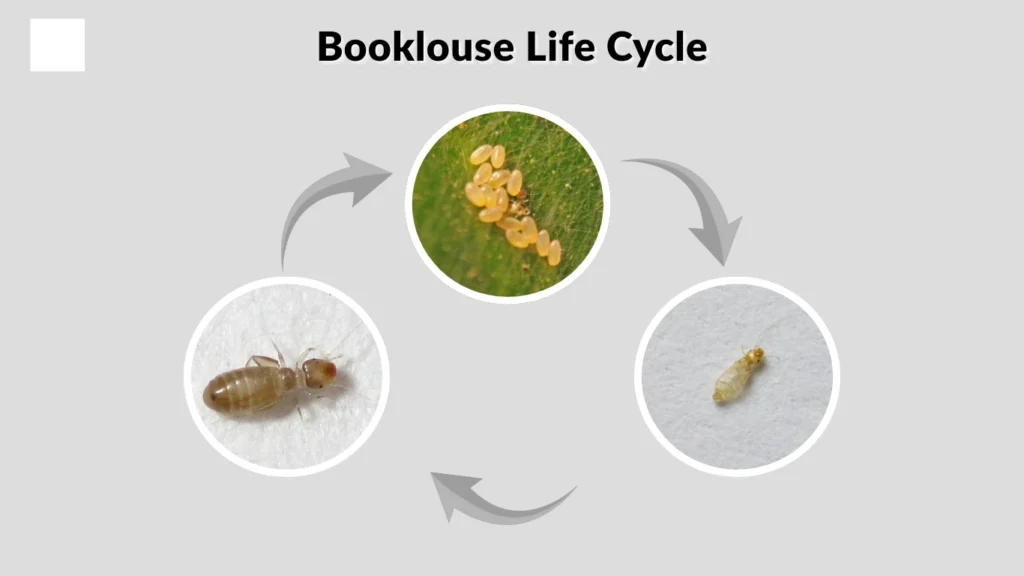
Understanding the booklouse life cycle is essential for controlling them effectively.
Egg Stage
Female booklice lay tiny, oval-shaped eggs in cracks, crevices, or directly on surfaces with mold growth. Eggs are extremely small and difficult to see without magnification. In warm and humid environments, eggs hatch within a few weeks.
Nymph Stage
After hatching, the booklouse enters the nymph stage. Booklouse nymphs resemble miniature adults and begin feeding immediately on mold and organic debris. They pass through several molts (usually 4–6 stages) before becoming fully developed adults.
High humidity significantly speeds up this process. In ideal conditions, development from egg to adult can occur in about one month.
Adult Stage
Adult booklice live for several months. Females can lay dozens of eggs during their lifetime, especially when humidity levels remain above 60%. In damp homes, this rapid reproduction can lead to noticeable infestations.
Moisture is the most important factor in their life cycle. Without adequate humidity, eggs fail to hatch, nymphs struggle to develop, and adults eventually die off.
Where Do Booklice Live?
Booklice prefer environments that provide both moisture and a food source. Since they feed primarily on mold, they are commonly found in damp or poorly ventilated areas.
Common locations include:
- Old books and magazines
- Cardboard boxes
- Wallpaper and drywall
- Window frames with condensation
- Bathrooms and kitchens
- Stored grains, flour, and cereal products
- Newly constructed homes with residual moisture
New buildings are especially prone to booklice because construction materials often retain moisture. Similarly, homes with water leaks or high indoor humidity create ideal breeding conditions.
If you find booklice near books or paper, the real issue is usually excess moisture encouraging mold growth.
Signs of a Booklouse Infestation
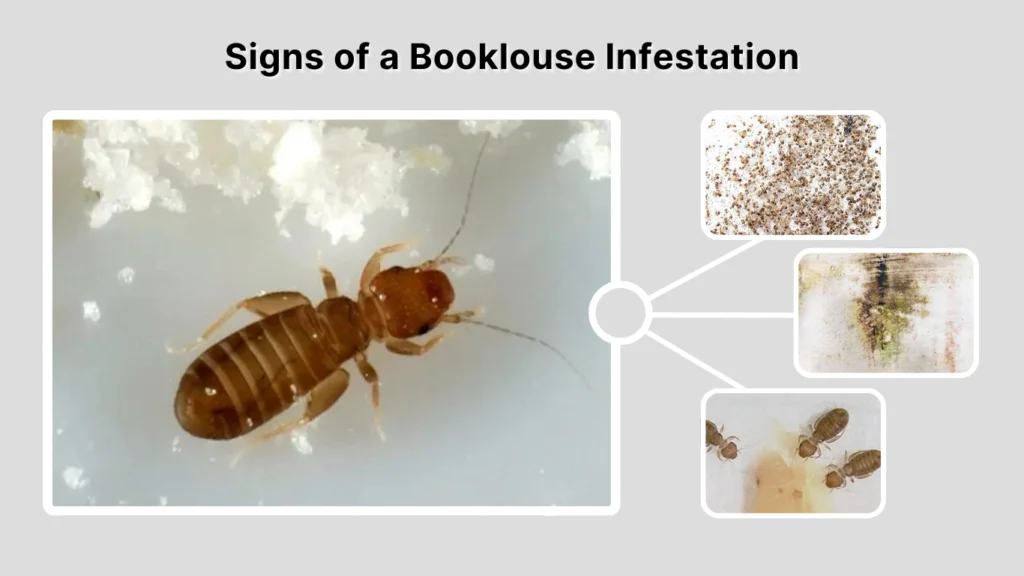
Booklice are small and quiet, so infestations often go unnoticed at first. However, there are several clear signs that indicate their presence.
One of the most common signs is spotting tiny, pale insects crawling on bookshelves, walls, windowsills, or stored food containers. They may also gather near light sources or areas with condensation.
Other indicators include:
- Clusters of insects in damp areas
- A musty smell caused by mold growth
- Visible mold on paper, cardboard, or walls
- Spotting multiple booklouse nymphs in bathrooms or kitchens
Unlike termites or ants, booklice do not cause structural damage. However, large populations can become a nuisance and signal an underlying moisture problem that needs attention.
What Causes Booklice in Homes?
Booklice are strongly attracted to environments with high humidity and mold. Their presence almost always points to excess moisture rather than poor hygiene.
Common causes include:
- Indoor humidity levels above 60%
- Poor ventilation in bathrooms or kitchens
- Leaking pipes or roofs
- Condensation on windows
- Damp basements
- Recently completed construction with drying materials
- Storing paper goods in humid conditions
Because booklouse nymphs require moisture to survive and develop, controlling humidity is the most effective way to eliminate an infestation.
Are Booklice Dangerous?
Booklice are not considered dangerous to humans or pets. They do not bite, sting, or transmit diseases. Unlike parasitic lice, they do not live on the body or feed on blood.
However, they can become a nuisance when present in large numbers. In rare cases, they may contaminate stored food products such as flour or cereal, though they do not intentionally infest food the way pantry pests do.
Their main “damage” involves minor surface feeding on mold found on paper or cardboard. Books may show slight surface grazing if mold is present, but booklice do not consume clean, dry paper.
Overall, they are harmless insects whose presence signals excess moisture rather than a serious pest threat.
How to Get Rid of Booklice
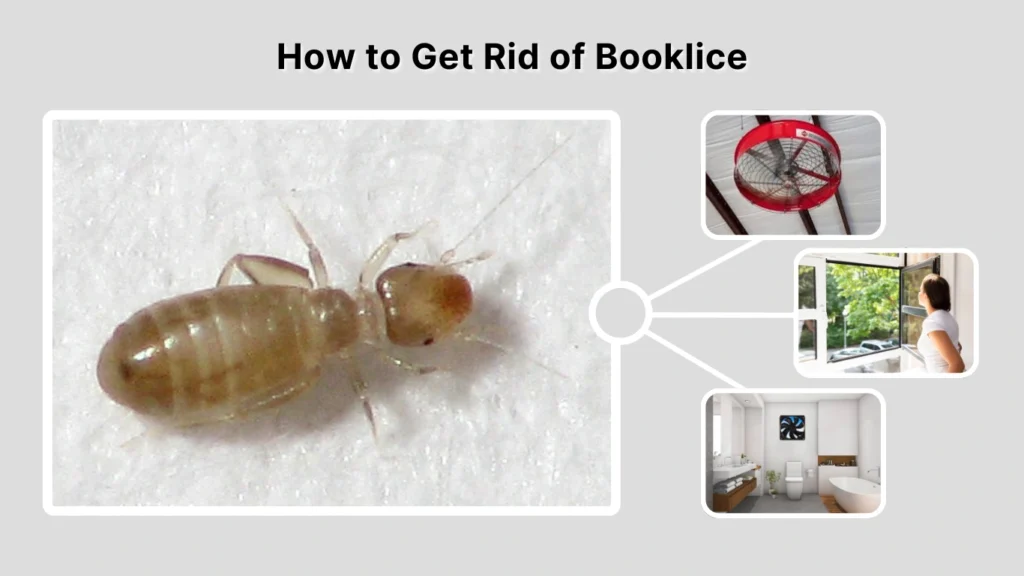
Eliminating booklice requires addressing the environmental conditions that allow them to thrive.
Reduce Humidity
Lowering indoor humidity is the most important step.
- Use a dehumidifier to maintain humidity below 50%
- Improve air circulation with fans
- Open windows when weather permits
- Run exhaust fans in bathrooms and kitchens
When humidity drops, booklouse nymphs cannot develop properly, and adults eventually die off.
Remove Mold Sources
Since booklice feed on mold, eliminating mold removes their food supply.
- Clean moldy surfaces with appropriate cleaners
- Discard heavily infested cardboard or paper items
- Fix water leaks promptly
- Ensure proper ventilation in damp areas
Without mold, booklice cannot survive long-term.
Clean and Vacuum
Regular cleaning helps reduce populations.
- Vacuum bookshelves, baseboards, and cracks
- Wipe down damp surfaces
- Store books and papers in dry containers
- Keep pantry items sealed in airtight containers
Vacuuming also removes eggs and booklouse nymphs hiding in small crevices.
Use Insecticides (If Necessary)
In most cases, chemical treatment is unnecessary. Once moisture is controlled, booklice usually disappears naturally.
However, in severe infestations, a light application of an indoor-safe insecticide may help reduce adult populations. Always follow product instructions carefully and prioritize moisture control as the primary solution.
How to Prevent Booklouse Nymphs and Future Infestations
Prevention focuses on maintaining a dry indoor environment.
To reduce the risk of future infestations:
- Keep indoor humidity between 30–50%
- Use dehumidifiers in basements
- Repair plumbing leaks immediately
- Avoid storing books in damp areas
- Allow new construction materials to dry thoroughly
- Increase airflow in closets and storage rooms
Monitoring humidity levels with a hygrometer can help prevent conditions that allow booklouse nymphs to develop.
Booklouse vs. Other Common Pests
Booklice are often confused with other small household insects.
Booklouse vs. Lice:
True lice live on humans or animals and feed on blood. Booklice live in the environment and feed on mold.
Booklouse vs. Termites:
Termites damage wood structures and are much more destructive. Booklice do not chew wood or cause structural damage.
Booklouse vs. Springtails:
Springtails can jump when disturbed, while booklice crawl slowly and do not jump.
Correct identification ensures that homeowners address the actual issue — moisture — rather than assuming a more serious infestation.
FAQs
What is a booklouse nymph?
A booklouse nymph is the immature stage of a booklouse. After hatching from an egg, it resembles a smaller, lighter-colored version of the adult. Nymphs molt several times before reaching maturity and can develop quickly in humid environments.
Do booklice bite humans?
No, booklice do not bite humans or animals. They are not parasitic and do not feed on blood. They survive by eating mold, fungi, and organic debris found in damp indoor environments.
How long does a booklouse live?
A booklouse can live for several months under ideal conditions. The full life cycle—from egg to adult—can take about one month in warm, humid environments, allowing populations to grow quickly if moisture levels remain high.
Why am I seeing booklouse nymphs in my bathroom?
Bathrooms often have high humidity due to showers and poor ventilation. This moisture encourages mold growth, which provides food for booklice. Seeing nymphs usually indicates that breeding is occurring in the damp environment.
Can booklice damage books?
Booklice do not eat clean, dry paper. However, they may feed on mold growing on books stored in humid conditions. While damage is usually minor, controlling moisture is essential to protect books and prevent infestations.
Conclusion
Booklice are tiny, moisture-loving insects that thrive in humid indoor environments. Although harmless to humans and pets, their presence signals excess moisture and possible mold growth. The booklouse nymph stage plays a critical role in rapid population growth, especially when humidity remains high. The most effective way to eliminate and prevent body lice is by reducing moisture, improving ventilation, and removing mold sources. With proper humidity control, infestations typically resolve without the need for chemical treatments.