
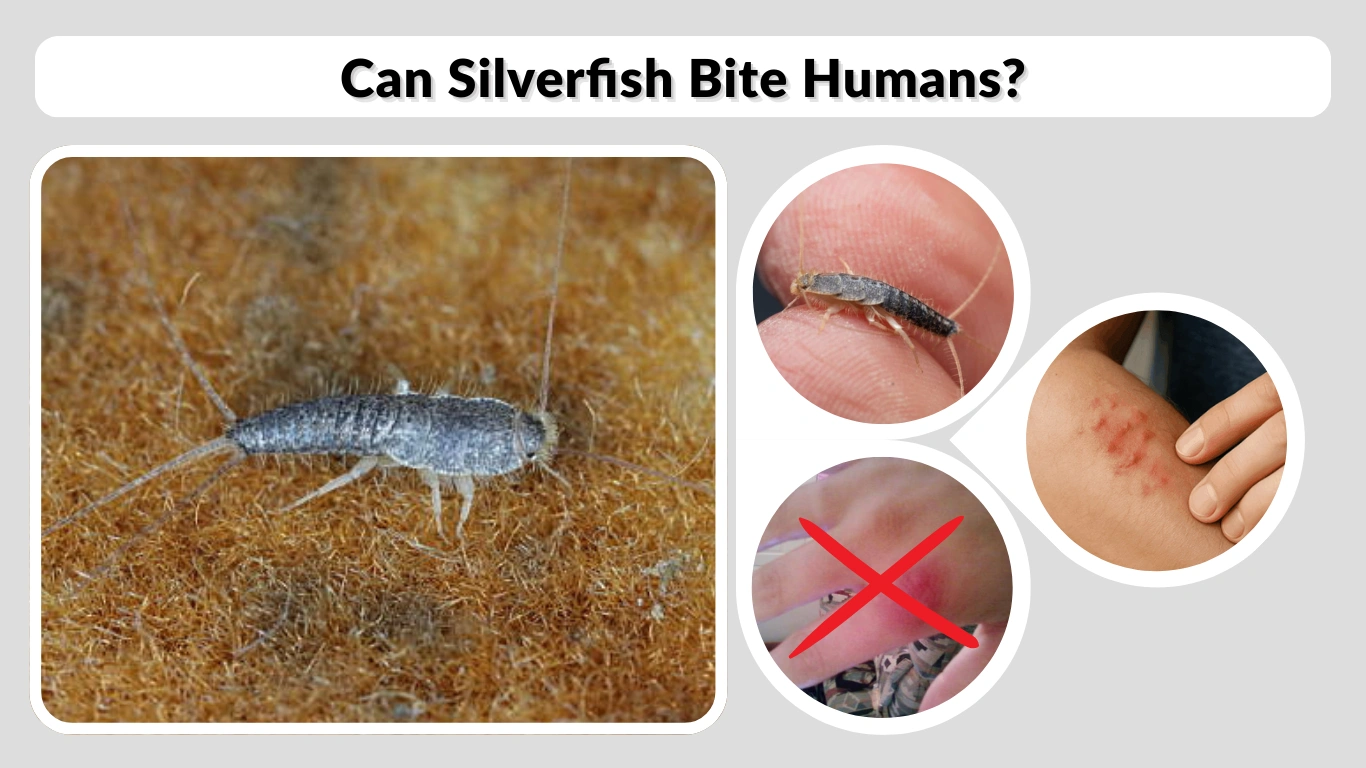
Silverfish are small, fast-moving insects that often appear suddenly in bathrooms, kitchens, and dark storage areas. Because they move quickly and are usually seen at night, many people panic and search questions like “can silverfish bite humans?” or “can a silverfish bite you?” Although silverfish look unsettling, their actual relationship with human skin is widely misunderstood. This guide explains whether silverfish can truly bite, why people think they do, and what really happens when silverfish are found in homes.
What Are Silverfish Insects?
Silverfish are wingless insects belonging to the order Zygentoma. They are known for their flat, carrot-shaped bodies, metallic gray or silver scales, and rapid, fish-like movements. These insects have existed for millions of years and are considered some of the most primitive household pests still living today.
Silverfish prefer dark, damp, and undisturbed environments. Inside homes, they are most commonly found in bathrooms, basements, laundry rooms, kitchens, and storage boxes. They hide in cracks, wall gaps, book stacks, and under sinks, coming out mostly at night to search for food.
Their diet consists mainly of carbohydrates and proteins such as starch, glue, mold, paper, book bindings, fabric fibers, and food crumbs. Unlike blood-feeding insects, silverfish are scavengers. They are attracted to moisture and materials, not people.
Can Silverfish Bite Humans?
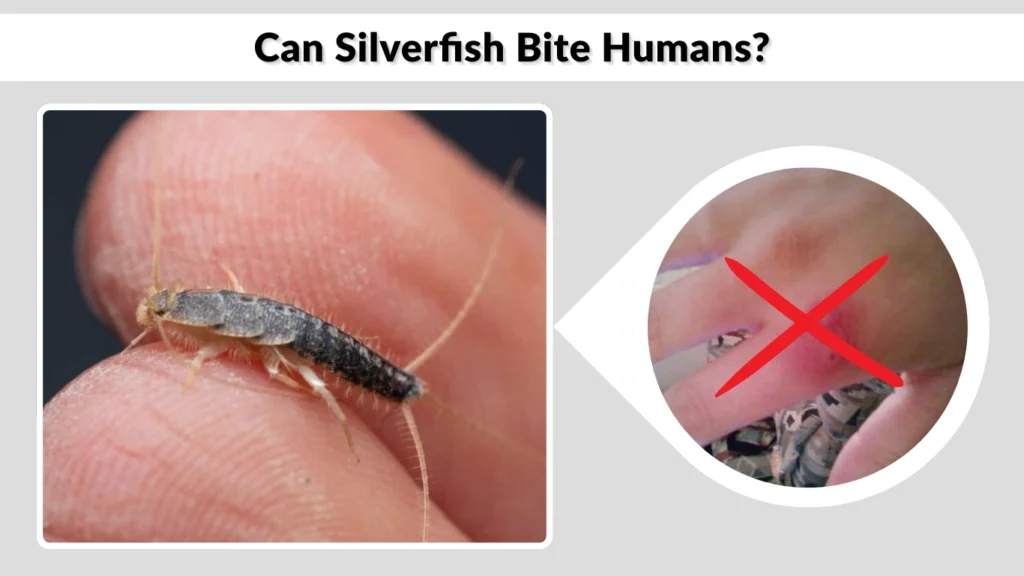
Can silverfish physically bite people?
Silverfish do have small mouthparts designed for chewing soft materials like paper, starch, and microscopic organic matter. However, these mouthparts are weak and not built to pierce human skin. They are not predators and do not hunt or attack living creatures.
From a biological standpoint, silverfish are not equipped to bite humans in any meaningful way. Their jaws function more like scrapers than piercing tools, making them unsuitable for breaking skin.
Are silverfish aggressive toward humans?
Silverfish are extremely shy insects. When exposed to light or movement, their first instinct is to run and hide. They do not defend territory, swarm people, or act aggressively. Humans are seen as threats, not food sources.
Because of this behavior, silverfish actively avoid contact with people. Any interaction is accidental, such as when one is surprised in a sink, bathtub, or on a bedroom wall.
Do silverfish ever break human skin?
There is no verified scientific evidence that silverfish bite humans and break the skin. Reports of “silverfish bites” are almost always misidentified reactions caused by other insects or skin conditions. In extremely rare cases, a silverfish may nibble dead skin or food residue, but this does not result in true bites or wounds.
Identification of Silverfish
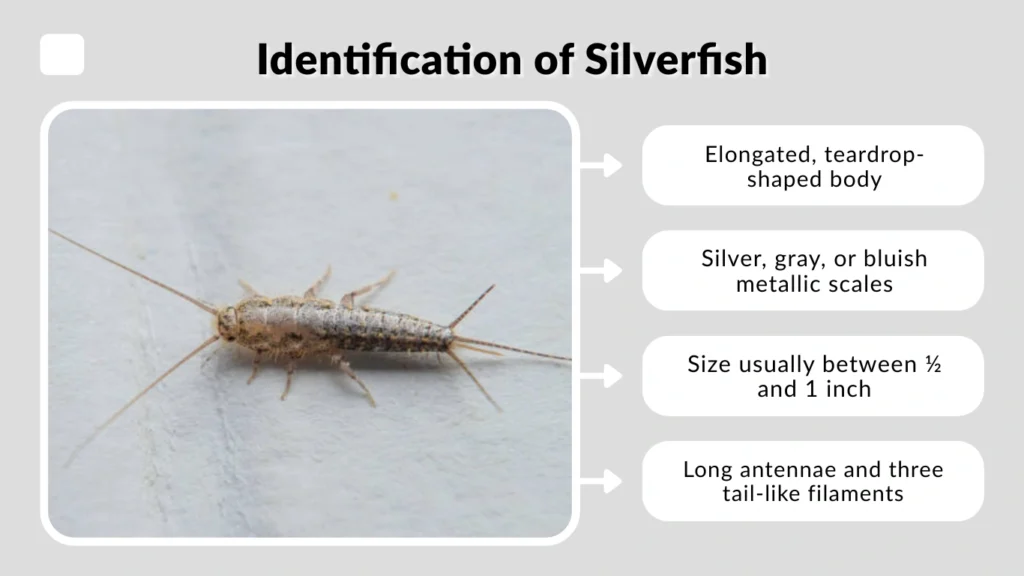
Before assuming an insect can bite, it is important to correctly identify it. Many biting pests are mistaken for silverfish.
- Elongated, teardrop-shaped body
- Silver, gray, or bluish metallic scales
- Size usually between ½ and 1 inch
- Long antennae and three tail-like filaments
- Fast, wriggling, fish-like movement
- Found in dark, humid areas such as bathrooms, basements, and storage spaces
Correct identification helps prevent confusion with bed bugs, fleas, cockroach nymphs, or mites, which are far more likely to bite.
Can Silverfish Bite or Sting?
Silverfish cannot sting because they do not possess stingers, venom glands, or injection mechanisms. They also lack fangs or hollow mouthparts capable of delivering toxins. Unlike bees, wasps, spiders, or mosquitoes, silverfish have no biological system designed to harm animals or humans.
They are classified as nuisance pests rather than medically significant insects. Their survival strategy depends on hiding and feeding on materials, not defending themselves or attacking. When people describe “stings” or “sharp bites,” it is almost always the result of another insect species present in the same environment.
Why Do People Think Silverfish Bite?
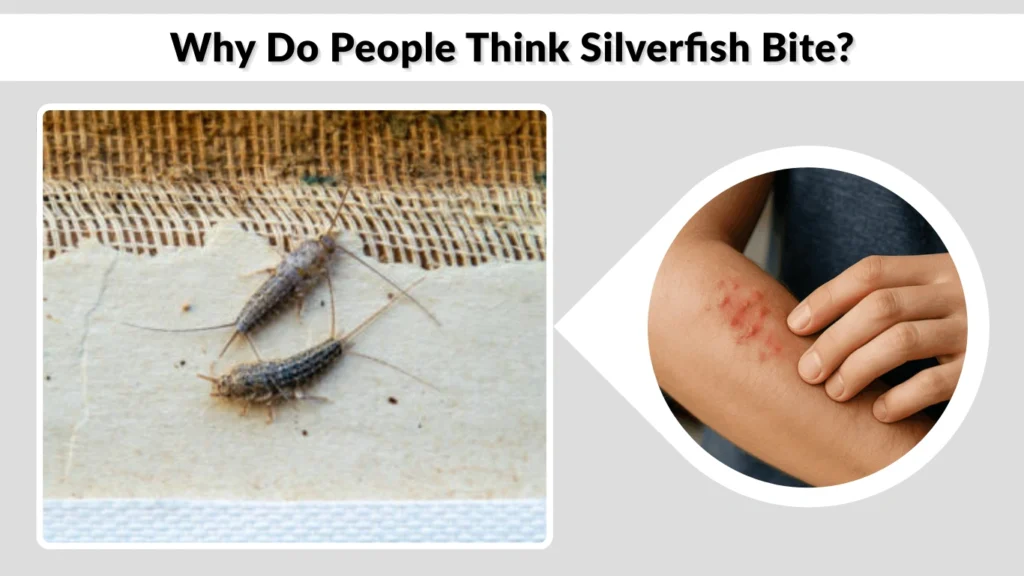
Skin irritation and false “bite” marks
Rashes, small bumps, or itchy patches on the skin are often blamed on silverfish. In reality, these reactions usually come from allergies, dust mites, fleas, bed bugs, mites, or even chemical irritation from detergents and fabrics.
Confusion with other household pests
Silverfish often live in the same humid environments as other insects. Bed bugs, ants, spiders, and fleas may go unnoticed while silverfish receive the blame because they are more visible. This leads to incorrect assumptions about the source of bites.
Fear response and crawling sensation
Seeing a silverfish suddenly dart across skin or bedding can cause a strong psychological reaction. The sensation of something crawling may continue even after the insect is gone, making people believe they were bitten when no bite actually occurred.
What Happens If a Silverfish Crawls on You
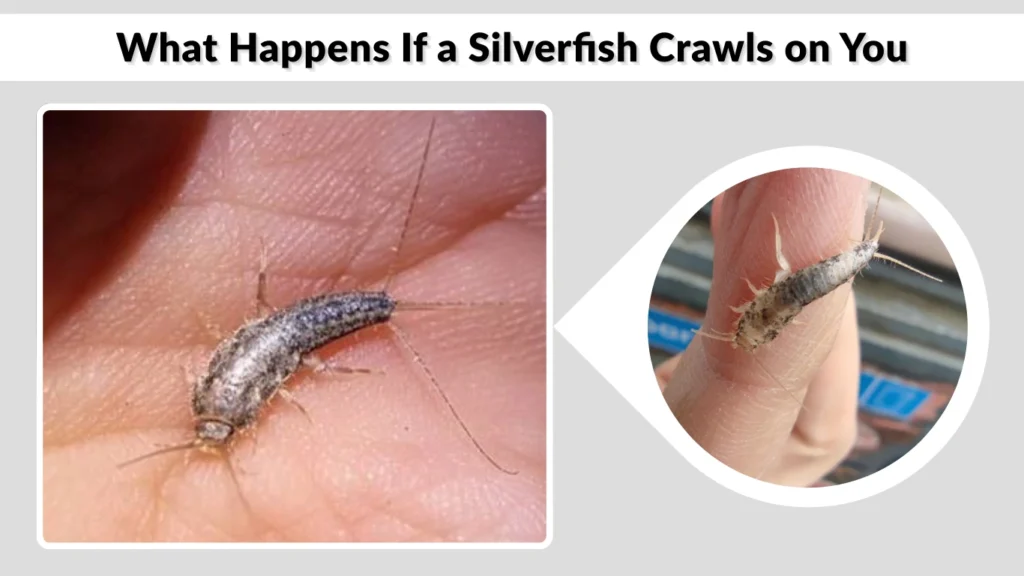
If a silverfish comes into contact with your skin, the experience is usually harmless.
- A light tickling or crawling feeling
- No venom, puncture wounds, or bleeding
- No intentional biting behavior
- Possible mild irritation in very sensitive skin
- Rare allergic reactions to shed scales or dust
- Emotional discomfort or fear rather than physical harm
Silverfish do not stay on the body, feed on skin, or return repeatedly to people.
Are Silverfish Dangerous to Humans?
Silverfish are not considered dangerous to humans. They do not carry venom, are not known to transmit infectious diseases, and do not feed on blood or skin. Unlike mosquitoes, ticks, or bed bugs, silverfish have no biological need to interact with people.
However, in some homes, silverfish populations can contribute indirectly to minor health concerns. Their shed skins, droppings, and scales may become airborne and can trigger allergies in sensitive individuals. People with asthma or respiratory sensitivities may notice increased irritation in heavily infested environments, although this is uncommon.
From a medical standpoint, silverfish are classified as nuisance pests rather than health threats. Their main impact is psychological discomfort and damage to property, not harm to the human body.
Can Silverfish Bite Babies, Pets, or Sleeping People?
Silverfish and sleeping humans
A common fear is that silverfish crawl onto beds and bite people while they sleep. In reality, silverfish do not seek out humans, warmth, or carbon dioxide like blood-feeding insects do. If a silverfish is found on bedding, it is usually because of moisture, paper, or fabric, not because of the person.
There is no scientific evidence showing silverfish biting sleeping humans. Any unexplained bite marks are far more likely to be caused by bed bugs, mites, fleas, or mosquitoes.
Silverfish around babies and children
Silverfish are not attracted to babies or children and do not pose a direct physical threat. They may appear in nurseries if humidity is high or if cardboard, books, or fabric items are stored nearby. The main concern is contamination of stored items, not injury to the child.
Silverfish and household pets
Silverfish do not bite cats, dogs, birds, or reptiles. Pets may occasionally chase or eat them. While ingesting a silverfish is generally harmless, large infestations should still be controlled to maintain a clean and healthy indoor environment.
What Silverfish Actually Damage
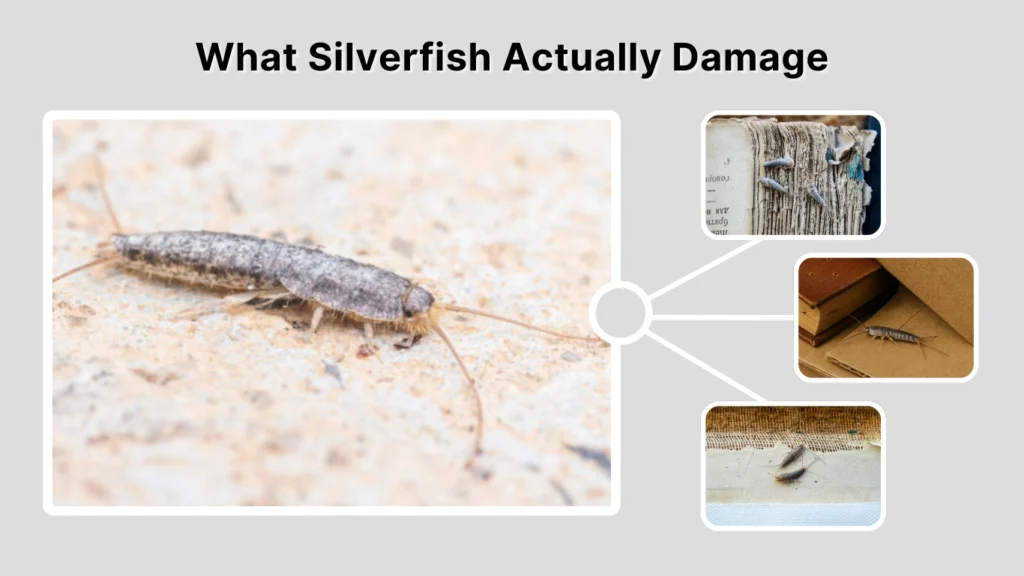
Although silverfish do not bite people, they are capable of damaging many household items.
- Books, paper, and important documents
- Clothing made of cotton, silk, or linen
- Wallpaper, glue, and book bindings
- Cereal boxes, flour packaging, and stored foods
- Cardboard boxes and organic debris
Their feeding habits focus on starches, sugars, and proteins found in everyday materials. Over time, an infestation can cause noticeable destruction, especially in libraries, closets, and storage rooms.
What to Do If You’re Worried About Silverfish Bites
If you believe silverfish are biting you, the first step is to confirm the insect responsible. Inspect mattresses, bedding seams, baseboards, and cracks for signs of bed bugs, fleas, or mites, which are much more likely to cause bites.
Reducing indoor humidity is one of the most effective silverfish control strategies. Dehumidifiers, proper ventilation, and repairing leaks remove the moist conditions silverfish need to survive. Regular vacuuming, decluttering, and sealing cracks help eliminate hiding places and food sources.
If skin irritation continues, it is wise to consult a medical professional to rule out allergic or dermatological causes. Persistent insect activity may require professional pest control to accurately identify and eliminate the true source.
How to Prevent Silverfish in the House
Moisture and humidity control
Silverfish thrive in damp environments. Using exhaust fans, fixing plumbing leaks, drying wet areas, and running dehumidifiers can dramatically reduce their survival rate.
Cleaning and storage habits
Store books, clothing, and food in sealed containers. Remove old papers, vacuum carpets and baseboards regularly, and avoid leaving cardboard in humid spaces.
Sealing and home maintenance
Caulk cracks, seal wall gaps, repair loose baseboards, and cover drains. Reducing entry points and hiding places prevents silverfish from establishing colonies.
FAQs
Can silverfish bite humans?
Silverfish do not bite humans in any medically meaningful way. Their mouthparts are designed to scrape and chew soft materials such as paper, glue, and starch, not skin. They avoid people and are physically incapable of producing true bites or injecting venom.
Can a silverfish bite you while sleeping?
There is no scientific evidence that silverfish bite sleeping humans. They are not attracted to body heat or blood and do not seek out people. Bite-like marks found after sleeping are almost always caused by other insects such as bed bugs, mites, fleas, or mosquitoes.
Can silverfish bite or sting like other insects?
Silverfish cannot sting and do not have venom, stingers, or piercing mouthparts. Unlike bees, wasps, spiders, or mosquitoes, they lack any biological mechanism to harm humans. They are nuisance pests rather than medically significant insects.
Why do I feel itchy when I see silverfish?
Itching is usually caused by allergies, dry skin, dust mites, or other biting insects. In rare cases, silverfish scales or droppings may contribute to mild allergic reactions. Psychological discomfort can also make normal sensations feel like bites.
Are silverfish dangerous to humans?
Silverfish are not dangerous to human health. They do not spread known diseases and do not attack people. Their real impact is damage to household items such as books, wallpaper, and clothing rather than harm to the body.