
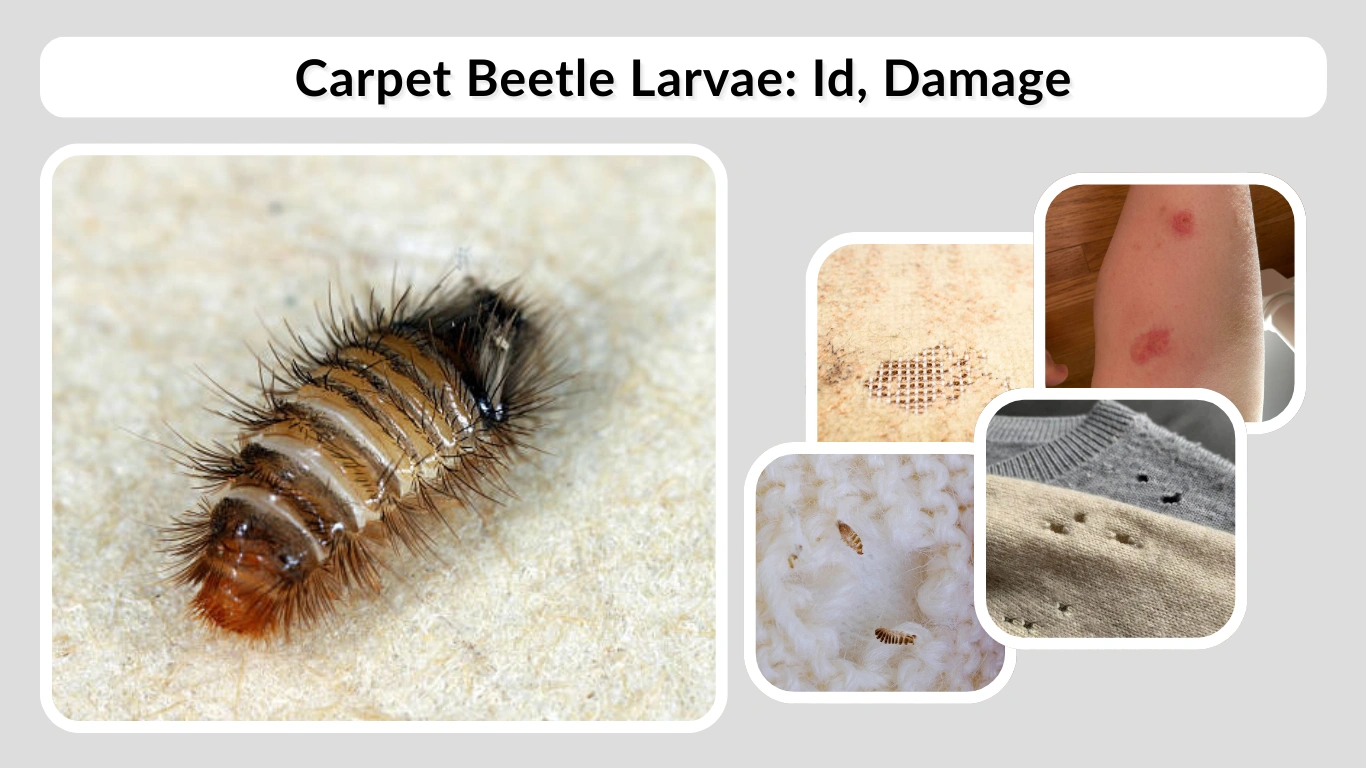
Carpet beetle larvae are small but highly destructive household pests that often go unnoticed until damage appears. While adult carpet beetles are mostly harmless, their larvae can ruin carpets, clothing, upholstery, and other natural fabrics. Many homeowners mistake them for bed bugs due to skin irritation or their presence in bedrooms. Understanding how to identify carpet beetle larvae, recognize the signs of an infestation, and know what causes them is the first step toward protecting your home from costly damage.
What Are Carpet Beetle Larvae?
Carpet beetle larvae are the immature stage of carpet beetles, a common household insect found worldwide. Unlike adult beetles that primarily feed on pollen outdoors, the larvae feed on natural fibers and organic materials inside homes.
The Carpet Beetle Life Cycle
Carpet beetles go through four stages of development:
- Egg stage: Adult females lay eggs in dark, hidden areas such as carpets, closets, or air vents.
- Larval stage: Once hatched, larvae begin feeding immediately. This is the longest and most destructive stage.
- Pupal stage: After several molts, larvae form pupae before becoming adults.
- Adult stage: Adults emerge and typically move outdoors to feed on pollen, starting the cycle again.
The larval stage can last anywhere from two months to over a year, depending on environmental conditions like temperature and food availability.
Why the Larval Stage Causes the Most Damage
Carpet beetle larvae are constantly feeding. Unlike adults, which are mostly attracted to light and flowers, larvae seek out dark, undisturbed areas where natural fibers are present. They consume:
- Wool
- Silk
- Leather
- Fur
- Feathers
- Pet hair
- Lint and dust containing organic matter
Because they grow slowly and molt several times, they continue feeding for extended periods. This prolonged feeding is what causes noticeable holes and thinning fabrics in homes.
What Do Carpet Beetle Larvae Look Like?
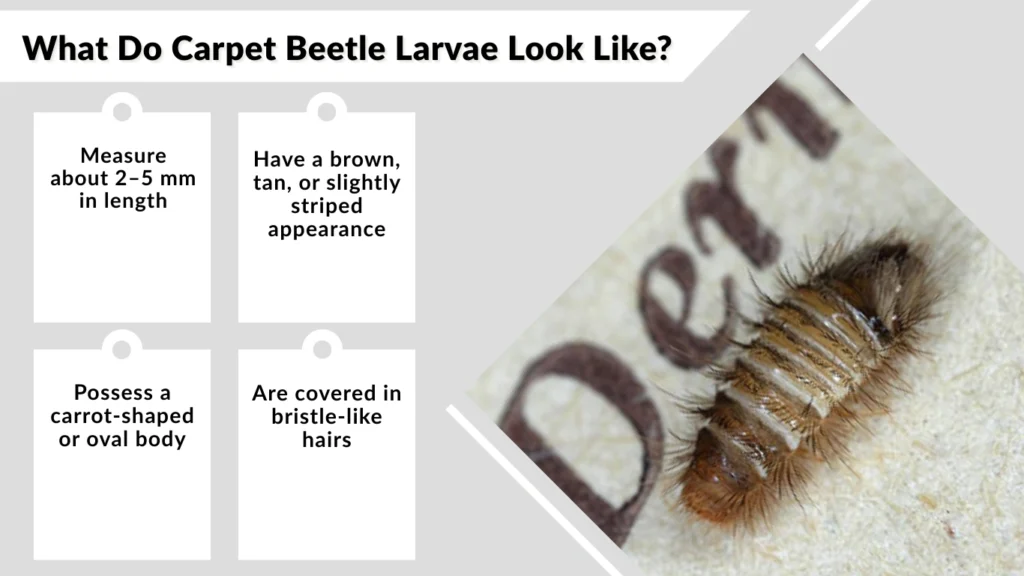
Correct identification is essential since carpet beetle larvae are often confused with other pests.
Typically, carpet beetle larvae:
- Measure about 2–5 mm in length
- Have a brown, tan, or slightly striped appearance
- Possess a carrot-shaped or oval body
- Are covered in bristle-like hairs
- Move slowly compared to other insects
Their hairy bodies are one of their most distinctive features. These tiny bristles can sometimes cause skin irritation in sensitive individuals.
Carpet Beetle Larvae vs Bed Bugs
Carpet beetle larvae are frequently mistaken for bed bugs, but there are key differences:
Body Shape:
Bed bugs are flat and oval-shaped, while carpet beetle larvae are elongated and slightly tapered.
Movement:
Bed bugs move quickly and hide in mattress seams. Carpet beetle larvae crawl slowly and are more often found in closets or under carpets.
Damage Pattern:
Bed bugs feed on blood and leave bite marks. Carpet beetle larvae damage fabrics and leave holes but do not feed on blood.
Understanding these differences can prevent unnecessary panic and ensure proper treatment.
Signs of Carpet Beetle Larvae in Your Home
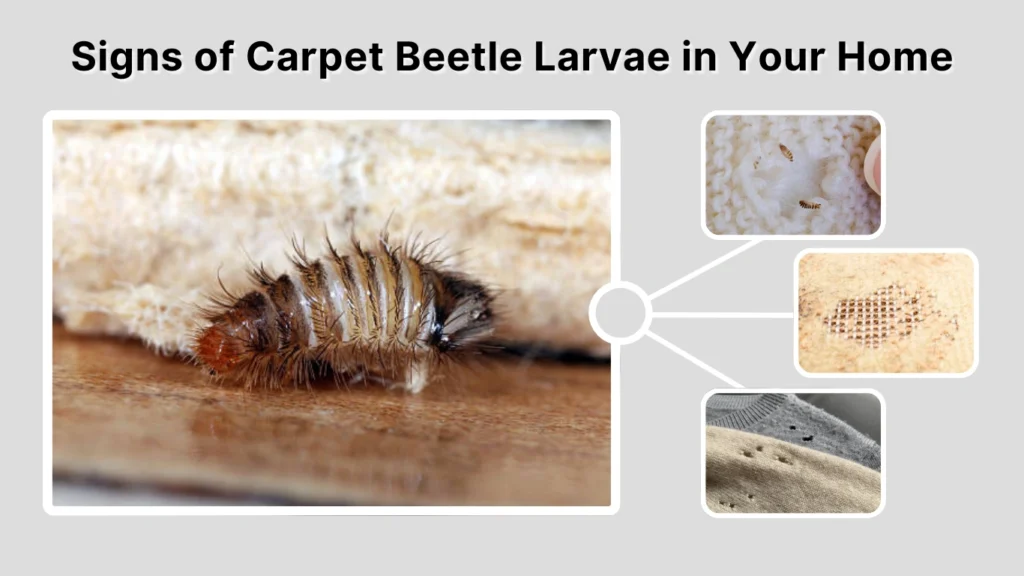
Carpet beetle larvae are secretive and avoid light, making them harder to detect early on. However, there are clear signs that indicate their presence.
Fabric and Carpet Damage
The most noticeable sign is unexplained damage to fabrics. You may find:
- Small, irregular holes in wool sweaters or blankets
- Thinning patches in carpets
- Damaged upholstery
- Holes in stored clothing
Unlike moth damage, which may appear in larger sections, carpet beetle damage often looks scattered and irregular.
Shed Skins and Debris
As larvae grow, they shed their skins multiple times. These shed skins resemble small, brown, hollow shells. Finding these near baseboards, inside closets, or under furniture is a strong indicator of infestation.
You may also notice tiny fecal pellets or debris mixed into damaged fabric areas.
Carpet Beetle Larvae in Bed
Discovering larvae in your bed can be alarming. However, they are not there to bite you. Bedrooms attract them because of:
- Natural fiber bedding
- Wool blankets
- Feather pillows
- Accumulated skin flakes
Their presence in beds often leads homeowners to suspect bed bugs, but carpet beetle larvae are typically feeding on organic debris rather than people.
Do Carpet Beetle Larvae Bite?
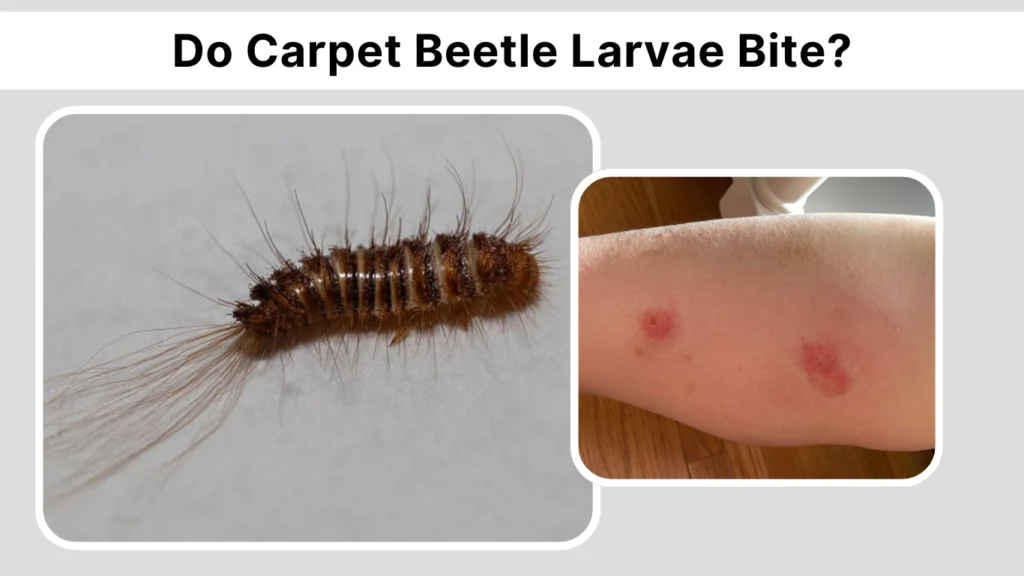
Carpet beetle larvae do not bite humans. They do not feed on blood and are not aggressive toward people. However, some individuals experience skin irritation after contact with the tiny hairs on the larvae’s bodies.
This reaction is sometimes referred to as “carpet beetle rash.” Symptoms may include:
- Red, itchy bumps
- Mild swelling
- Skin irritation similar to insect bites
Unlike bed bug bites, these reactions are caused by an allergic response rather than actual biting. If irritation occurs, washing the affected area and avoiding further exposure usually resolves the issue.
What Causes Carpet Beetle Larvae Infestations?
Understanding what attracts carpet beetle larvae can help prevent future problems.
How They Get Inside
Carpet beetles typically enter homes as adults. Once inside, they lay eggs in suitable locations. Common entry points include:
- Open windows and doors
- Gaps in window screens
- Cut flowers brought indoors
- Secondhand furniture or clothing
Once eggs hatch, larvae begin searching for food sources in dark, hidden spaces.
Conditions That Attract Them
Carpet beetle larvae thrive in environments that provide food and shelter. Factors that increase risk include:
- Stored natural-fiber clothing
- Dust and lint buildup
- Pet hair accumulation
- Rarely cleaned closets
- Undisturbed carpets and rugs
Homes with wool rugs, antique furniture, or heavy fabric storage are particularly vulnerable.
Where Do Carpet Beetle Larvae Hide?
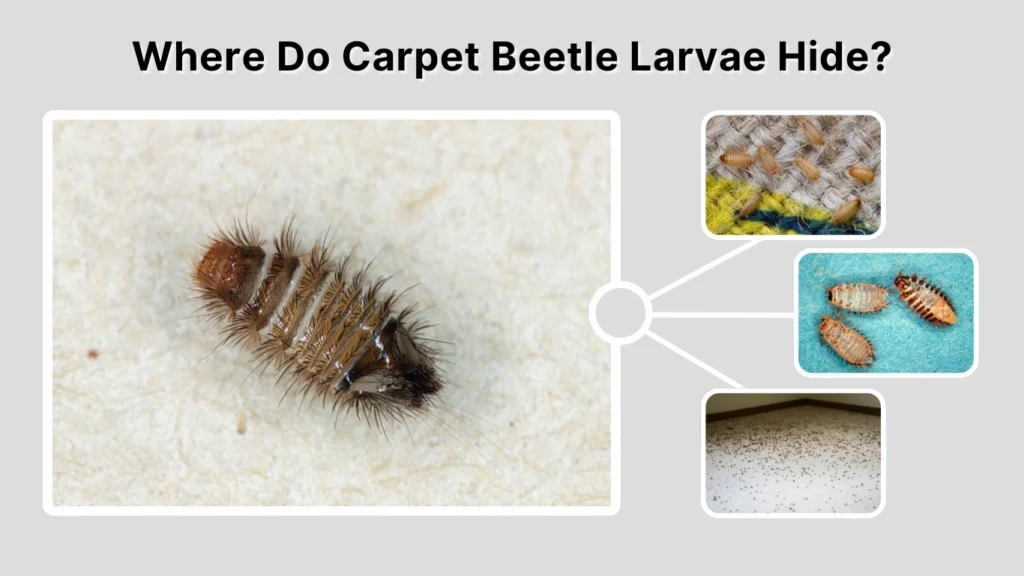
Carpet beetle larvae prefer dark, quiet areas where they can feed undisturbed. Because they avoid light, infestations often grow for months before homeowners notice visible damage.
Common hiding spots include:
- Under carpets and area rugs
- Along baseboards and edges of rooms
- Inside closets and storage bins
- Beneath upholstered furniture
- Inside air vents and ducts
- Around pet bedding areas
They are especially drawn to places where dust, lint, and pet hair accumulate. Seasonal clothing stored in boxes without airtight seals is another frequent target. Inspecting these areas carefully can help you locate the source of the infestation.
How to Get Rid of Carpet Beetle Larvae
Eliminating carpet beetle larvae requires a combination of thorough cleaning and targeted treatment. Acting quickly reduces damage and prevents the life cycle from continuing.
Step 1 – Deep Cleaning
The first and most important step is an intensive cleaning process.
- Vacuum carpets, rugs, baseboards, and upholstery thoroughly
- Pay special attention to corners and edges
- Clean air vents and under heavy furniture
- Immediately dispose of vacuum bags in sealed trash
Vacuuming removes larvae, eggs, shed skins, and food sources. Repeating this process several times over a few weeks improves effectiveness.
Step 2 – Wash and Treat Fabrics
All potentially infested fabrics should be cleaned properly.
- Wash clothing, bedding, and linens in hot water
- Use high-heat drying cycles to kill larvae and eggs
- Dry-clean delicate fabrics
- Freeze delicate items (at least 72 hours) if washing isn’t possible
Heat is particularly effective because larvae cannot survive high temperatures.
Step 3 – Natural Remedies
For mild infestations, natural treatments may help.
- Diatomaceous earth: Sprinkle lightly in affected areas to dehydrate larvae
- Vinegar solutions: Clean shelves and storage spaces
- Cedar products: Use cedar blocks or sachets in closets
These methods work best when combined with consistent cleaning.
Step 4 – Chemical Treatment
For severe infestations, insecticides may be necessary.
- Apply residual insecticides along baseboards and cracks
- Use boric acid lightly in carpeted areas
- Follow label instructions carefully
If the infestation continues or spreads to multiple rooms, contacting a professional pest control service may be the safest and most effective option.
How Long Do Carpet Beetle Larvae Live?
Carpet beetle larvae can live anywhere from two months to over a year. Their development speed depends on:
- Temperature
- Humidity levels
- Food availability
In cooler environments, larvae develop more slowly, which can prolong infestations. Because they molt multiple times during growth, they remain destructive for an extended period before becoming adults. This long larval phase is why infestations sometimes seem to persist despite initial cleaning efforts.
Are Carpet Beetle Larvae Dangerous?
Carpet beetle larvae are not dangerous in the traditional sense, but they can cause significant problems.
Property Damage:
They can destroy clothing, carpets, upholstery, and stored fabrics, leading to costly replacements.
Allergic Reactions:
Their tiny hairs may trigger skin irritation in sensitive individuals.
Pet Concerns:
While they do not attack pets, they may feed on pet hair and dander around sleeping areas.
Unlike some pests, carpet beetle larvae do not spread diseases and do not bite humans intentionally. Their main impact is material damage rather than health risks.
How to Prevent Carpet Beetle Larvae
Prevention is far easier than eliminating a full infestation. A consistent maintenance routine significantly reduces the risk.
Cleaning and Maintenance Tips
- Vacuum carpets and upholstered furniture weekly
- Clean baseboards and corners regularly
- Wash stored clothing before storage
- Inspect closets every few months
- Remove lint and pet hair buildup
Keeping living spaces clean removes both food sources and hiding places.
Long-Term Prevention Strategies
- Store seasonal clothing in airtight containers
- Use garment bags for delicate fabrics
- Seal cracks and repair damaged window screens
- Reduce clutter in storage areas
- Expose stored fabrics to sunlight occasionally
Regular inspections, especially in spring and summer when adult beetles are most active, can help you catch problems early.
Conclusion
Carpet beetle larvae may be small, but the damage they cause can be significant if left untreated. Recognizing their appearance, understanding the signs of infestation, and acting quickly with proper cleaning and treatment methods are essential steps in protecting your home. Although they do not bite or spread disease, their ability to destroy natural fabrics makes them a serious household nuisance. With consistent maintenance and preventive measures, you can keep carpet beetle larvae from becoming a recurring problem.