
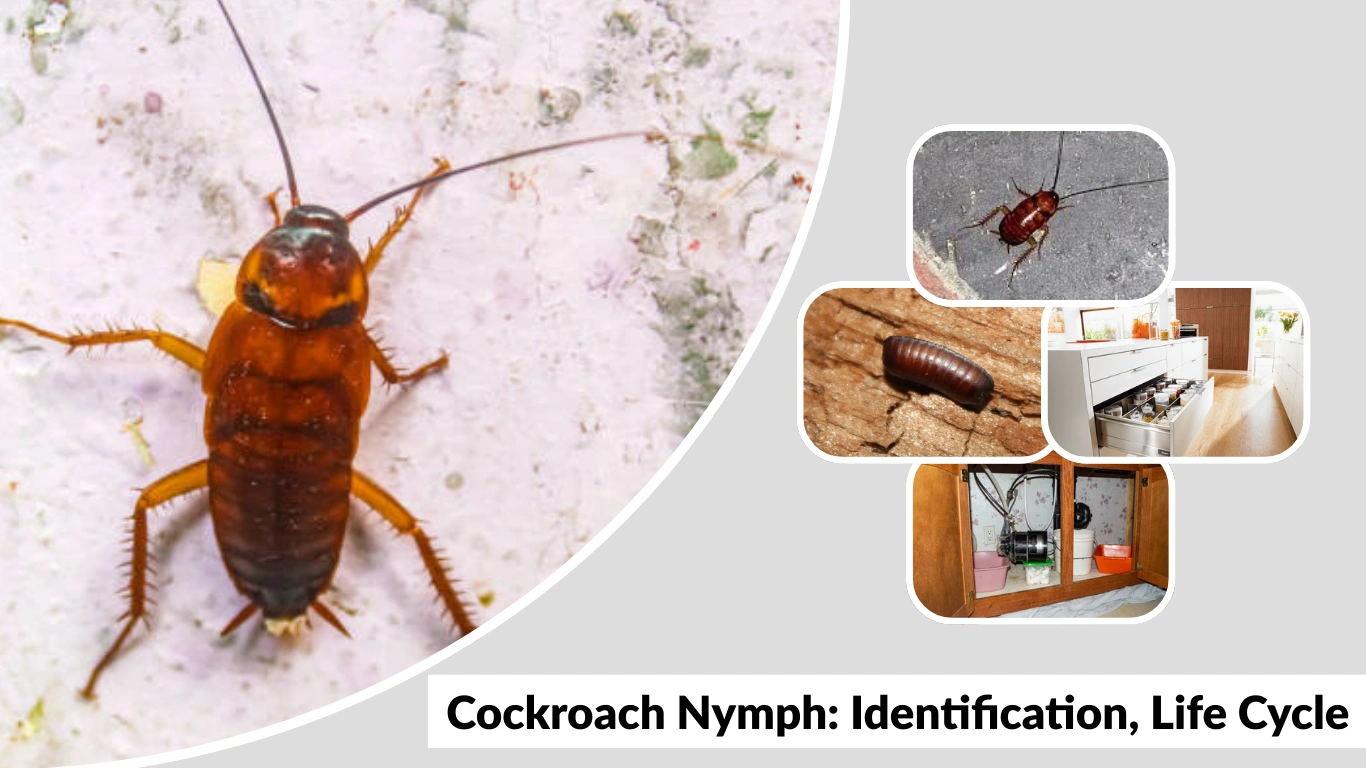
A cockroach nymph is the immature stage of a cockroach, often referred to as a “baby roach.” While smaller in size, nymphs look very similar to adult cockroaches, which can make them alarming to spot inside your home. In many cases, seeing cockroach nymphs is an early warning sign of an active infestation. Understanding how to identify them, how they grow, and why they appear indoors is essential for controlling the problem before it spreads. This guide explains everything you need to know about cockroach nymphs.
What Is a Cockroach Nymph?
Definition and Development Stage
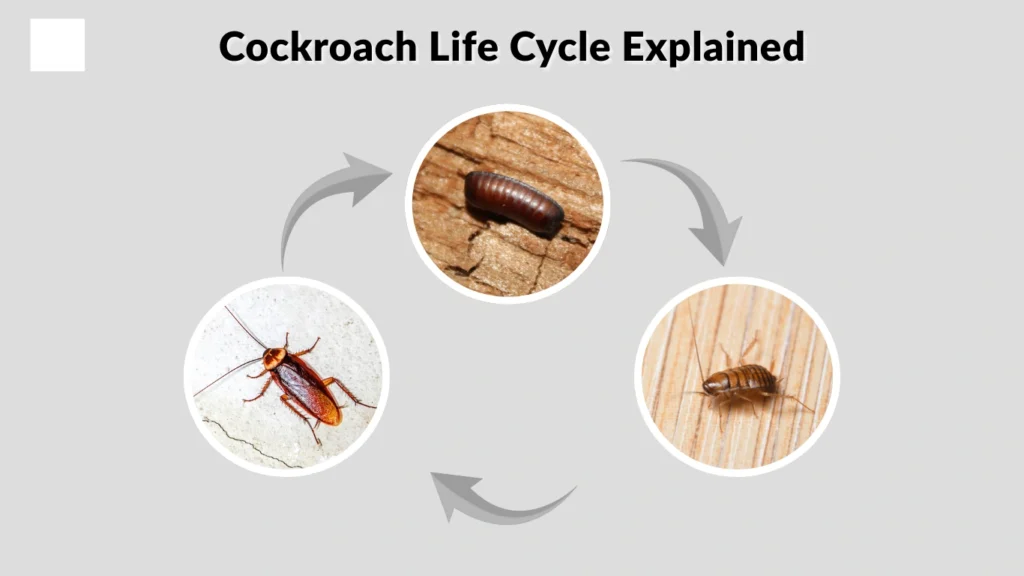
A cockroach nymph is the juvenile stage in a cockroach’s life cycle. Cockroaches undergo what is called incomplete metamorphosis, which includes three stages: egg, nymph, and adult. Unlike butterflies or beetles, they do not have a pupal stage.
When a cockroach hatches from its egg case (known as an ootheca), it emerges as a tiny nymph. At this stage, it already resembles an adult cockroach in shape and structure, but it is much smaller and does not have fully developed wings. As the nymph grows, it sheds its outer shell multiple times in a process called molting. With each molt, it becomes larger and more developed.
Why They Are Often Mistaken for Other Bugs
Because of their small size, cockroach nymphs are sometimes mistaken for other household pests such as beetles or even bed bugs. However, there are key differences. Nymphs have long, thin antennae, flat oval bodies, and fast-moving behavior. Bed bugs, for example, are rounder and slower, while beetles often have harder, more rounded wing covers.
Correct identification is important because treatment methods differ depending on the pest.
What Does a Cockroach Nymph Look Like?
Size and Color
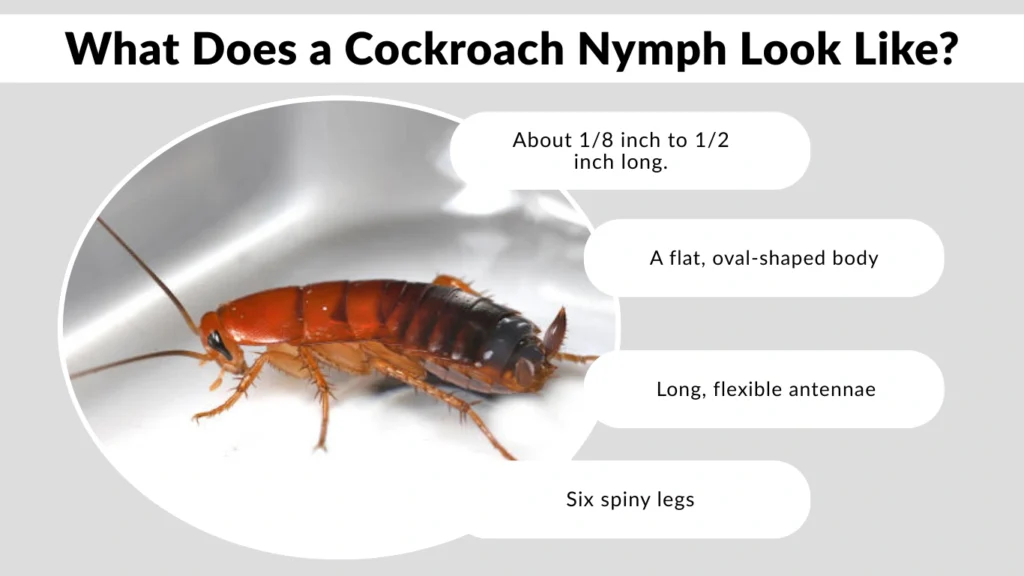
Cockroach nymphs are significantly smaller than adult cockroaches. Depending on the species and age, they can range from about 1/8 inch to 1/2 inch long. Newly hatched nymphs are especially tiny and may go unnoticed at first.
In terms of color, nymphs are usually dark brown, reddish-brown, or nearly black. Interestingly, after molting, their bodies may appear lighter or even whitish for a short period before darkening again. This temporary color change is normal and part of their growth process.
Body Structure and Features
Despite their size, cockroach nymphs have the same general body structure as adults. They have:
- A flat, oval-shaped body
- Long, flexible antennae
- Six spiny legs
- A segmented abdomen
- No fully developed wings
The lack of wings is one of the main differences between a cockroach nymph and an adult. While adult cockroaches of many species have wings (even if they rarely fly), nymphs are completely wingless.
Differences Between Species
Different cockroach species produce nymphs with slightly different appearances.
German cockroach nymphs are among the most common in homes. They are small, dark brown, and often have a lighter stripe running down their back.
American cockroach nymphs are larger and reddish-brown. As they grow, they gradually become the large reddish adults commonly found in basements and sewer systems.
Oriental cockroach nymphs tend to be darker and almost black. They are often found in damp areas like drains or crawl spaces.
Recognizing the species can help determine the source of the infestation and the most effective control method.
Cockroach Life Cycle Explained
Egg Stage (Ootheca)
The cockroach life cycle begins with an egg case called an ootheca. Female cockroaches produce these protective capsules, which can contain dozens of eggs depending on the species.
For example, a German cockroach ootheca may contain 30 to 40 eggs. Some species carry the egg case with them until just before hatching, while others deposit it in hidden, protected areas such as cracks, cabinets, or behind appliances.
The egg stage typically lasts a few weeks, though temperature and humidity can affect development time.
Nymph Stage
Once the eggs hatch, nymphs emerge and begin feeding immediately. This stage is focused on growth. Nymphs molt several times — typically between five and thirteen molts depending on the species — before reaching adulthood.
Each molt allows the cockroach nymph to grow larger and develop more mature features. The entire nymph stage can last anywhere from a few weeks to several months. Warm environments with easy access to food and water accelerate growth.
Because multiple nymphs hatch at once from a single egg case, infestations can expand quickly if left untreated.
Adult Stage
After completing the final molt, the cockroach becomes an adult. At this stage, wings (if the species has them) are fully developed, and the insect becomes capable of reproduction.
Adult cockroaches can live for several months to over a year, depending on the species. During that time, females can produce multiple egg cases, continuing the cycle and increasing the infestation size.
How Long Do Cockroach Nymphs Take to Grow?
The time it takes for a cockroach nymph to become an adult varies by species. German cockroach nymphs typically mature within 1 to 3 months, while American cockroach nymphs may take 6 months or longer.
Environmental conditions play a major role in development speed. Warm temperatures, high humidity, and abundant food sources allow nymphs to grow faster. In cooler or drier conditions, development slows significantly.
Because of their rapid growth and high reproduction rates, even a small number of cockroach nymphs can turn into a large infestation within a short period. Early detection and action are key to preventing population explosions.
Are Cockroach Nymphs Dangerous?
Health Risks
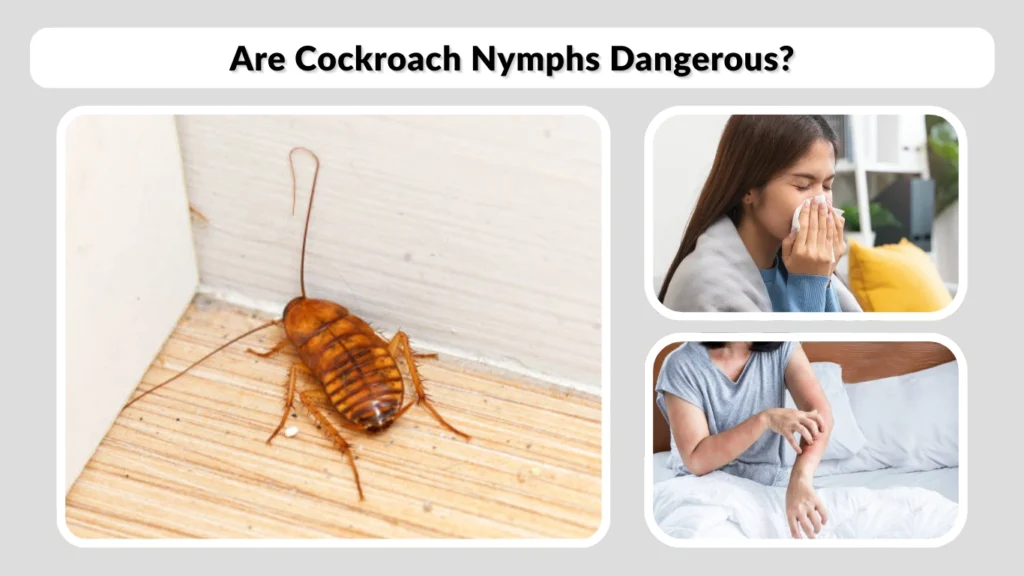
Even though cockroach nymphs are smaller than adults, they pose the same health risks. Like mature cockroaches, nymphs crawl through garbage, drains, and contaminated surfaces before moving across kitchen counters, dishes, and food storage areas. In doing so, they can spread harmful bacteria such as Salmonella and E. coli.
Cockroaches also produce allergens found in their droppings, saliva, and shed skins. These allergens can trigger asthma attacks and allergic reactions, especially in children and sensitive individuals. In heavily infested homes, airborne particles from cockroach debris may significantly affect indoor air quality.
Do Nymphs Bite or Fly?
Cockroach nymphs do not have wings, so they cannot fly. Biting is extremely rare and typically only occurs in severe infestations where food sources are limited. However, even without biting or flying, they remain a serious hygiene concern due to contamination and rapid reproduction.
Signs You Have Cockroach Nymphs in Your Home
Physical Evidence
One of the first signs of cockroach nymphs is the presence of small droppings. These resemble black pepper or coffee grounds and are often found in drawers, cabinets, or along baseboards.
You may also notice shed skins. As nymphs grow, they molt several times, leaving behind light brown exoskeletons. Egg cases (oothecae) are another strong indicator of an active breeding population.
Behavioral Signs
Cockroach nymphs are primarily nocturnal. If you turn on the kitchen light at night and see small roaches scattering quickly, you are likely dealing with nymphs.
Daytime sightings can signal a larger infestation. When hiding areas become overcrowded, cockroaches venture out even during daylight hours. A persistent musty odor in enclosed spaces may also indicate a well-established population.
Where Do Cockroach Nymphs Hide?
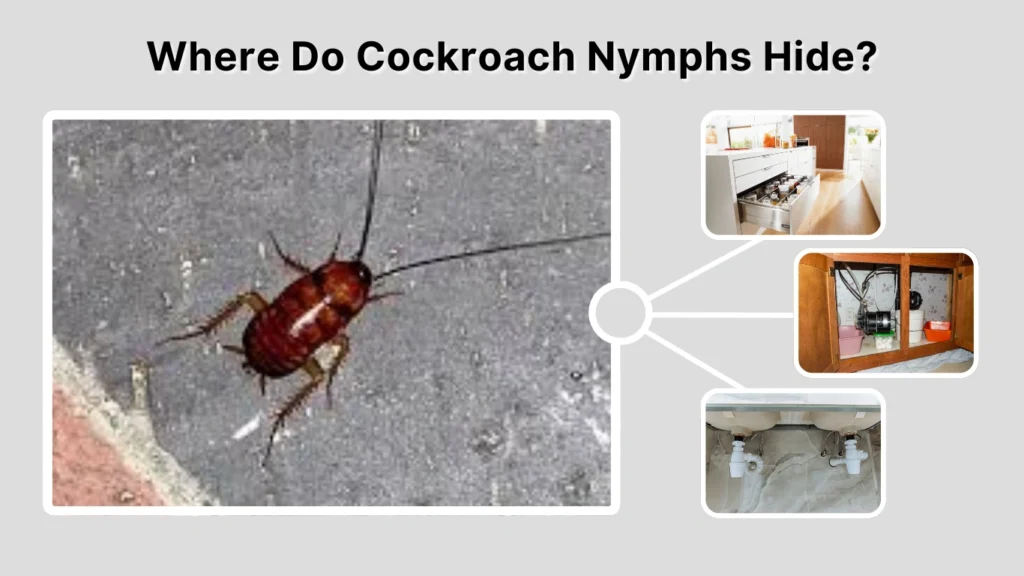
Cockroach nymphs prefer dark, warm, and moist environments. Because of their small size, they can hide in extremely narrow cracks and crevices.
Common hiding spots include:
- Kitchen cabinets and drawers
- Under sinks and around plumbing lines
- Behind refrigerators and stoves
- Inside wall voids
- Bathroom drains and cabinets
- Electrical outlets and appliance motors
Nymphs often stay close to food and water sources. Even small leaks under sinks or crumbs left on counters can attract them. Their ability to squeeze into tight spaces makes them difficult to eliminate without targeted treatment.
How to Get Rid of Cockroach Nymphs
Immediate Treatment Options
Effective control requires addressing both visible nymphs and hidden nests. Some of the most effective treatment options include:
Gel baits: These attract cockroaches, which then carry poison back to their hiding places, spreading it to others.
Insect growth regulators (IGRs): These products disrupt the development cycle, preventing nymphs from reaching adulthood and reproducing.
Sticky traps: Useful for monitoring activity and identifying infestation areas.
Boric acid: A common and affordable powder that damages the cockroach’s digestive system when ingested.
Combining these methods often produces better results than relying on a single solution.
Long-Term Prevention Strategies
Eliminating cockroach nymphs is only part of the solution. Preventing re-infestation is equally important.
- Seal cracks and gaps around doors, windows, and plumbing
- Store food in airtight containers
- Clean spills and crumbs immediately
- Take trash out regularly
- Fix leaking pipes and reduce moisture buildup
Maintaining a clean and dry environment makes your home far less attractive to cockroaches.
When to Call a Professional
If you continue to see cockroach nymphs despite treatment, or if you notice multiple egg cases, professional pest control may be necessary. Severe infestations require specialized tools and treatments that target hidden colonies behind walls and appliances.
FAQs
Are cockroach nymphs a sign of infestation?
Yes. Seeing cockroach nymphs usually indicates active breeding nearby. Because they hatch in groups from egg cases, even spotting a few often means more are hidden in cracks, walls, or cabinets. Immediate action can prevent the infestation from growing rapidly.
How fast do cockroach nymphs multiply?
Cockroach nymphs themselves do not reproduce until adulthood, but they mature quickly. Some species, like German cockroaches, can reach adulthood in as little as one to three months. Since females produce dozens of eggs at a time, populations can expand very quickly.
What kills cockroach nymphs instantly?
Direct contact insecticide sprays can kill cockroach nymphs on contact. However, sprays alone are not enough to eliminate an infestation. Baits and insect growth regulators are more effective for long-term control because they target hidden populations and disrupt reproduction.
Can cockroach nymphs survive without food?
Cockroach nymphs can survive for several days to a few weeks without food, depending on environmental conditions. However, they need water more urgently than food. Reducing moisture sources in your home is one of the most effective ways to limit their survival.
Conclusion
Cockroach nymphs may be small, but they are a serious warning sign of a developing infestation. Because they resemble adult cockroaches and grow quickly, early identification is critical. Understanding their appearance, life cycle, hiding spots, and risks allows you to act before the problem worsens.
By combining proper sanitation, targeted treatments, and preventive measures, you can eliminate cockroach nymphs and reduce the likelihood of future infestations. Acting quickly is the key to keeping your home clean, safe, and pest-free.