
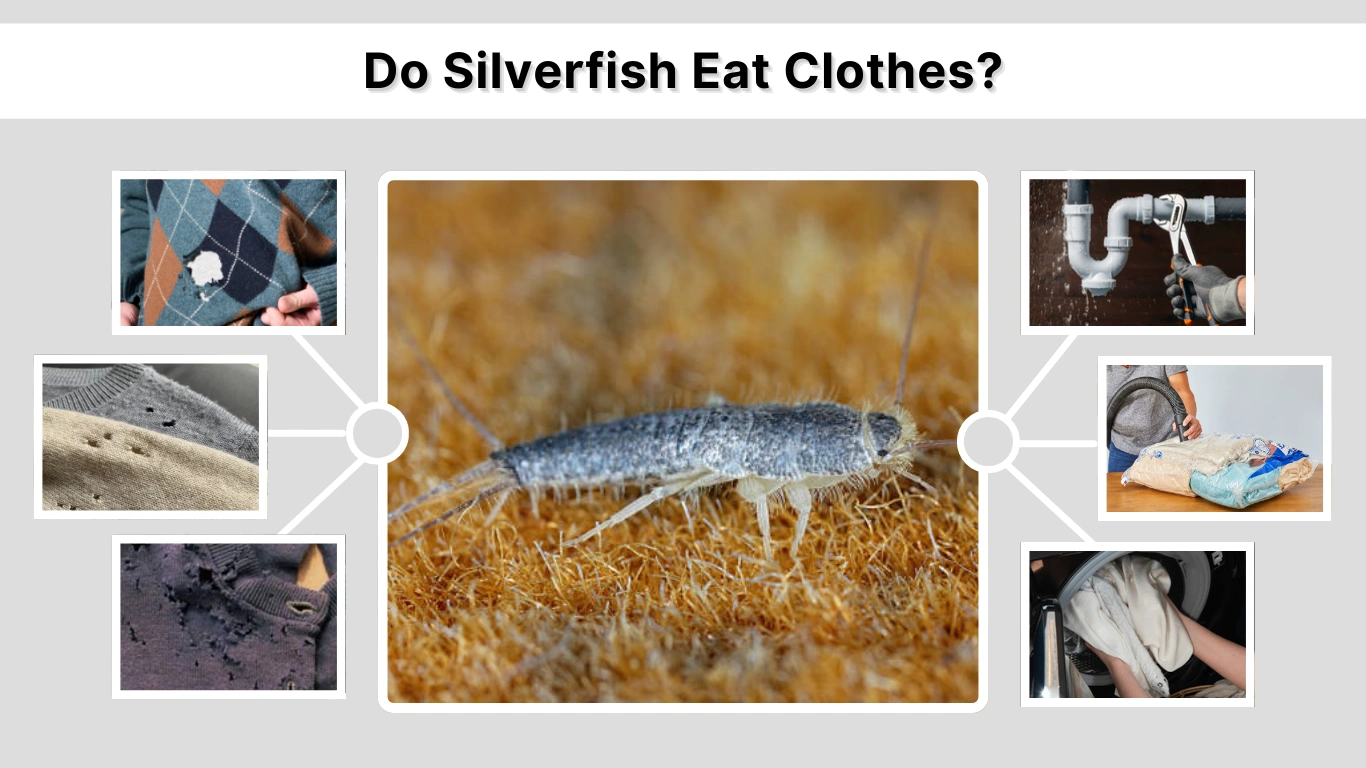
Silverfish are small, fast-moving insects that often appear in bathrooms, kitchens, and dark storage areas. Many homeowners become concerned after discovering tiny holes in clothes, damaged fabrics, or yellow stains on stored garments. This leads to a common question: do silverfish actually eat clothes, or are they just living nearby? Understanding how silverfish feed, why they target clothing, and what kind of damage they cause is essential for protecting wardrobes, closets, and valuable fabrics from long-term destruction.
What Are Silverfish?
Silverfish are wingless insects known for their shiny, silver-gray appearance and quick, fish-like movements. They usually grow between half an inch and one inch long and prefer dark, humid environments. Because they avoid light and hide in cracks, drawers, and storage boxes, infestations often go unnoticed for long periods.
Inside homes, silverfish are commonly found in closets, basements, bathrooms, attics, and laundry areas. They thrive in places where moisture is present and food sources are readily available. Their flat bodies allow them to slip into tiny spaces, making wardrobes, cardboard boxes, and folded clothes ideal hiding spots.
Silverfish are not dangerous to humans, but they are well-known for damaging household items. Books, wallpaper, and clothing are especially vulnerable when conditions allow silverfish populations to grow without control.
Do Silverfish Eat Clothes?
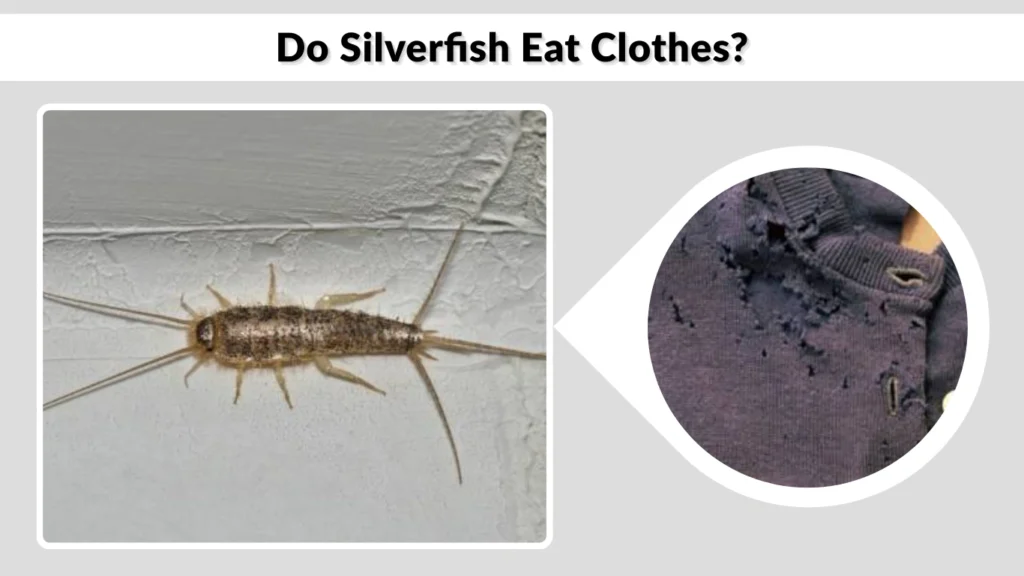
Silverfish do not eat fabric in the same way they eat food scraps, but they do chew on clothes when those materials contain substances they can digest. Their main diet consists of carbohydrates such as starches, sugars, and cellulose. Many fabrics, especially natural ones, contain these components either in their fibers or in residues left behind.
When silverfish are found in closets, they are often feeding on sweat, skin cells, food stains, or starch-based finishes rather than the textile itself. However, in the process of reaching these materials, they scrape and chew the fibers, which leads to visible holes and surface damage.
This is why people often associate silverfish with clothing destruction. Over time, repeated feeding weakens fabric, causing thinning areas, small holes, and frayed patches. Stored clothes are especially vulnerable because they remain undisturbed and can quietly become feeding sites.
Why Do Silverfish Eat Clothes?
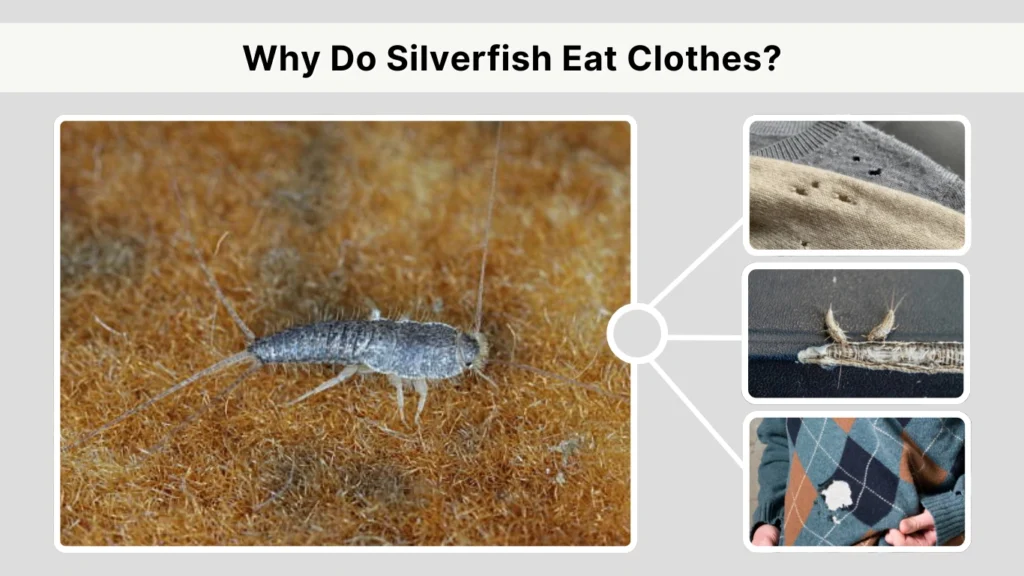
Silverfish are attracted to clothing for specific reasons. Clothes provide both food sources and shelter, especially when stored for long periods.
- Starch in fabrics and finishes – Many clothes contain starch from manufacturing processes, laundry products, or ironing sprays, which silverfish readily consume.
- Sweat, skin cells, and food residue – Worn clothes often carry organic material that becomes an ideal food source.
- Natural fibers containing cellulose – Cotton, linen, rayon, and paper tags are rich in cellulose, a major part of a silverfish diet.
- Humid, dark storage conditions – Closets, drawers, and storage boxes provide the moisture and darkness silverfish prefer.
- Undisturbed environments – Clothing that sits untouched for months creates a safe feeding and breeding area.
Because of this combination, wardrobes can easily become long-term silverfish habitats.
Do Silverfish Eat Holes in Clothes?
How Silverfish Damage Fabric
Silverfish do not bite chunks out of fabric the way rodents do. Instead, they scrape and chew the surface fibers while feeding on starches and residues. Over time, this slow feeding weakens the textile structure, eventually creating thin spots and holes.
This process is gradual, which is why many people only notice damage after it becomes clearly visible. The longer silverfish remain in a closet, the more extensive the destruction can become.
What Silverfish Damage Looks Like
Damage caused by silverfish is usually irregular and scattered. Holes may be small and uneven, sometimes accompanied by scraped-looking areas on the fabric surface. You may also see yellow stains, tiny black droppings, or shed skins nearby.
Silverfish often target folds, seams, collars, and areas where oils and residues build up, making certain sections of clothing more vulnerable than others.
Silverfish vs Moth Damage
Silverfish holes are typically smaller and less uniform than moth holes. While moth larvae often eat deeper into fabrics, silverfish damage tends to look like surface scraping combined with scattered pinholes. Silverfish may also damage books, cardboard, and wallpaper in the same area, which helps distinguish them from clothing moths.
Do Silverfish Eat Wool Clothes?
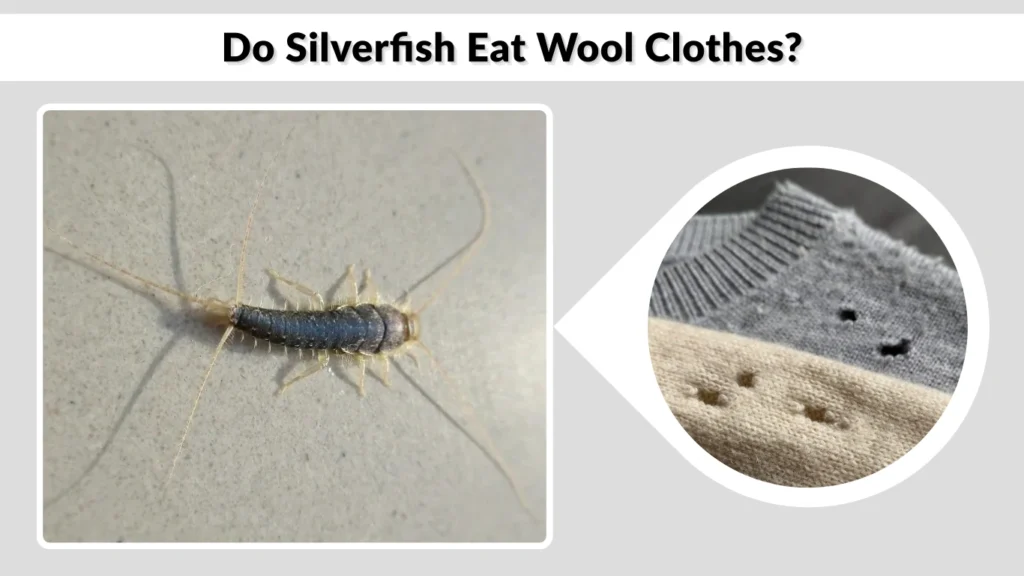
Natural fabrics are far more attractive to silverfish than purely synthetic ones.
- Wool and cashmere are frequently targeted because they trap oils, sweat, and organic debris.
- Cotton and linen contain cellulose, a preferred silverfish food source.
- Silk and rayon are also vulnerable, especially when stored in humid conditions.
- Starched or treated fabrics attract silverfish even more strongly.
- Blended garments are at risk if they include natural fibers or carry food residues.
Wool clothing stored in dark, damp closets is one of the most common victims of silverfish-related fabric damage.
Do Silverfish Eat Synthetic Clothing?
Silverfish are far less attracted to fully synthetic fabrics such as polyester, nylon, and acrylic because these materials do not contain cellulose or natural starches. On their own, synthetic fibers provide little nutritional value. However, this does not mean synthetic clothes are completely safe.
If synthetic clothing is stained with sweat, food, body oils, or sugary substances, silverfish may still feed on those residues. In doing so, they may scrape or weaken the surrounding fibers, creating the appearance of fabric damage. Blended fabrics that mix synthetic and natural fibers are at a higher risk, especially when stored in dark and humid spaces.
Sportswear, uniforms, and stored seasonal clothing are commonly affected, not because silverfish eat the fabric itself, but because they are drawn to what is on it.
Signs Silverfish Are Eating Your Clothes
One of the first signs of silverfish activity is the appearance of small, irregular holes in stored clothing. Unlike clean cuts, these holes often look scattered and uneven. You may also notice scraped or thinning areas on the surface of fabrics.
Other warning signs include yellow stains, tiny black droppings resembling pepper, and shed silvery skins inside drawers, boxes, or along closet shelves. In some cases, live silverfish may be seen darting across the floor or walls when lights are switched on, particularly at night.
Finding damage alongside paper products, books, or cardboard boxes strongly suggests silverfish presence, as they often feed on these items in the same area.
Where Silverfish Hide in Closets and Wardrobes
Silverfish prefer to remain hidden close to both moisture and food. Inside wardrobes, they often nest within folded clothing, under fabric stacks, and along seams of storage boxes. Shoe racks, handbags, and cloth storage bins also provide excellent shelter.
They are frequently found behind baseboards, under carpets near closets, and in cracks along walls where humidity is slightly higher. Cardboard boxes are a major attraction because they supply both shelter and cellulose, encouraging silverfish to stay close to stored clothes.
Because they are nocturnal and avoid light, silverfish infestations may grow significantly before becoming obvious.
How to Stop Silverfish From Eating Clothes
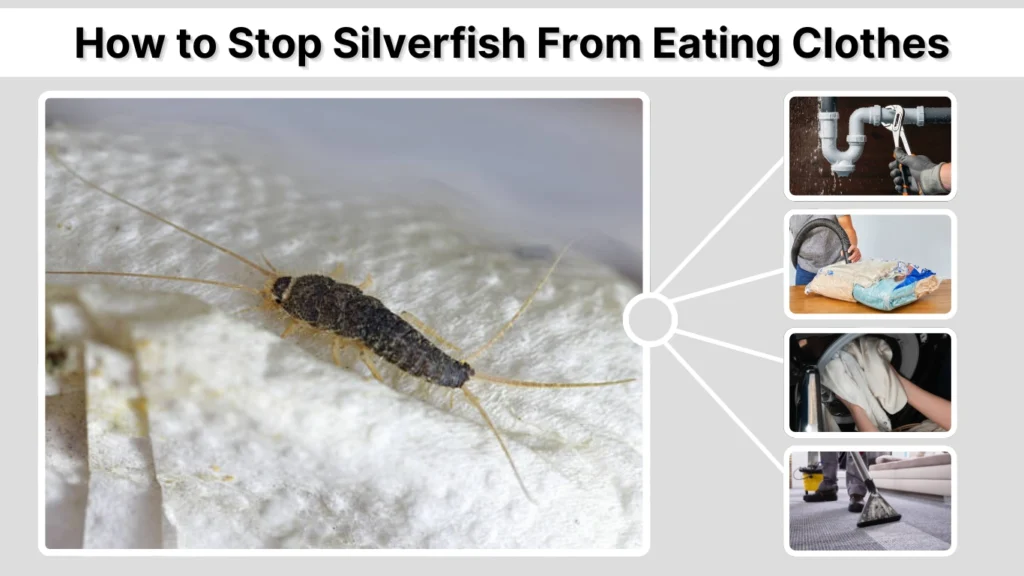
Preventing silverfish damage requires changing the environment that allows them to survive.
- Reduce indoor humidity by using dehumidifiers, improving ventilation, and fixing leaks.
- Store clothes in sealed containers such as plastic bins or vacuum-sealed bags instead of cardboard boxes.
- Wash clothing before long-term storage to remove sweat, oils, and food residues.
- Vacuum closets and drawers regularly to remove eggs, skins, and potential food sources.
- Use natural deterrents or traps such as cedar products, silica gel packs, or silverfish traps to monitor activity.
Consistent cleaning and moisture control are the most effective long-term strategies.
Can Silverfish Ruin an Entire Wardrobe?
Silverfish damage usually begins slowly, but an unchecked infestation can spread throughout a home. As populations grow, they expand their feeding areas, moving from paper goods to clothing, upholstery, and stored fabrics.
Over months, repeated feeding can significantly weaken garments, especially delicate or natural-fiber clothing. Heirloom fabrics, wool coats, silk garments, and stored linens are particularly vulnerable. Ignoring early signs often results in widespread damage that becomes costly to replace.
If silverfish continue to appear despite basic prevention, professional pest control may be necessary to eliminate hidden nests and reduce moisture problems.
Are Silverfish Dangerous to Humans?
Silverfish do not bite, sting, or transmit diseases. They are not physically harmful to people or pets. However, they are considered household pests because of the damage they cause to personal property.
In some individuals, silverfish scales and droppings may contribute to allergies or respiratory irritation, especially in heavily infested environments. More commonly, their presence causes discomfort, stress, and hygiene concerns.
The real threat from silverfish lies in their ability to quietly destroy books, clothing, documents, and fabrics if left unmanaged.
FAQs
Do silverfish really eat clothes or just damage them?
Silverfish do not consume fabric as food in the traditional sense. Instead, they chew clothing to reach starches, cellulose, and organic residues. This feeding behavior weakens fibers and creates holes, making it appear as though they are eating the clothes themselves.
Why are silverfish attracted to clothing in closets?
Silverfish are attracted to closets because clothes often contain sweat, skin cells, starch finishes, and food traces. Dark, undisturbed storage spaces with moderate humidity provide both food and shelter, making wardrobes ideal environments for silverfish to survive and reproduce.
Do silverfish eat wool more than cotton?
Silverfish commonly target both wool and cotton. Wool attracts them because it traps oils and organic debris, while cotton contains cellulose, a primary silverfish food source. Any natural fabric stored in humid, dark conditions can become vulnerable.
What kind of holes do silverfish make in clothes?
Silverfish create small, irregular holes and scraped patches rather than clean cuts. Damage often appears scattered across fabric surfaces, seams, or folded areas and may be accompanied by yellow stains, droppings, or shed skins.
How can I permanently protect clothes from silverfish?
Permanent protection involves lowering humidity, storing clothes in airtight containers, cleaning closets regularly, and washing garments before storage. Removing cardboard, sealing cracks, and monitoring with traps greatly reduces the chance of silverfish returning.