
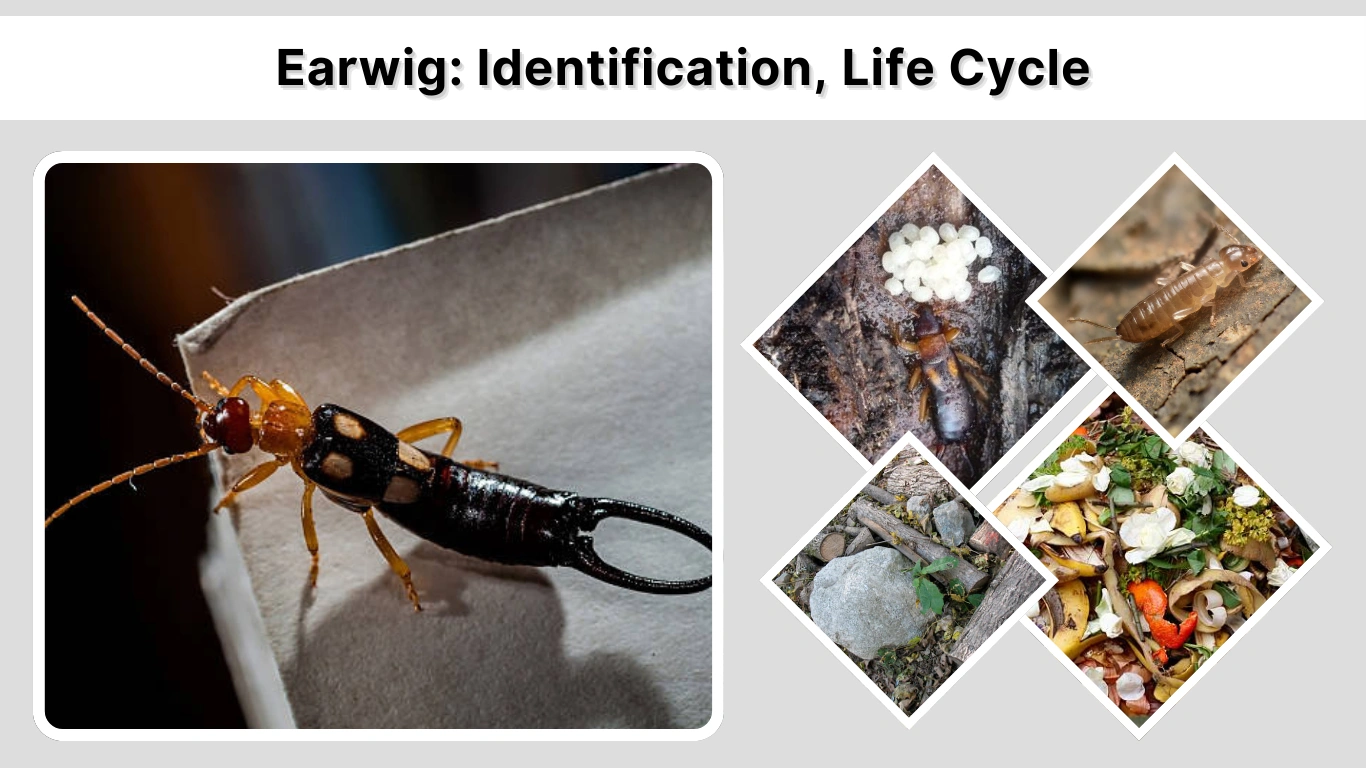
Earwigs are small, fast-moving insects often recognized by the pincers at the end of their bodies. While they may look intimidating, especially because of persistent myths about earwig bites, they are generally harmless to humans. These insects are commonly found in gardens and occasionally inside homes, particularly in damp areas. Understanding earwig species, habitat, life cycle, and behavior can help you prevent an earwig infestation in house and manage them effectively if they appear.
What Is an Earwig?
An earwig is a slender, brownish insect belonging to the order Dermaptera. There are over 2,000 earwig species worldwide, though only a few commonly interact with humans. They are mostly nocturnal and prefer dark, moist environments.
Key Physical Features
Earwigs are typically about ½ to 1 inch long, with elongated, flat bodies that allow them to hide in narrow cracks and crevices. Their most distinctive feature is the pair of forceps-like pincers, called cerci, located at the rear of the abdomen.
Male earwigs usually have more curved pincers, while females have straighter ones. Although some species have wings, they rarely fly and prefer to crawl.
Interesting Earwig Facts
Despite the common myth, earwigs do not crawl into human ears to lay eggs. The name likely comes from old folklore rather than real behavior.
Some other notable earwig facts include:
- They are mostly active at night.
- They hide during the day in damp, shaded areas.
- Female earwigs display unusual maternal care by guarding and cleaning their eggs.
- They play a role in the ecosystem by feeding on decaying plant matter and small insects.
Common Earwig Species
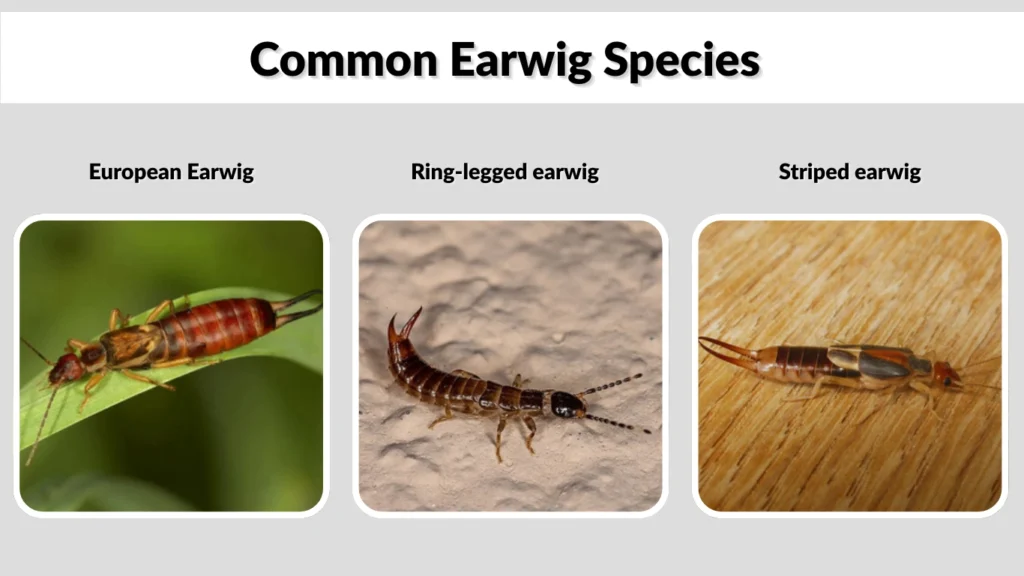
There are thousands of earwig species worldwide, but only a few are commonly found around homes and gardens.
European Earwig
The European earwig (Forficula auricularia) is the most widespread and commonly encountered species. It is typically reddish-brown with well-developed pincers and is frequently associated with gardens and residential areas. This species is most often responsible for an earwig infestation in house situations.
Other Notable Earwig Species
Other species include:
- Ring-legged earwig – recognizable by lighter-colored legs.
- Striped earwig – slightly smaller and sometimes found in warmer climates.
Different earwig species may vary slightly in size and coloration, but their behavior and habitat preferences are generally similar. Most prefer moist outdoor environments and only move indoors when conditions outside become unfavorable.
Earwig Habitat and Nesting Behavior
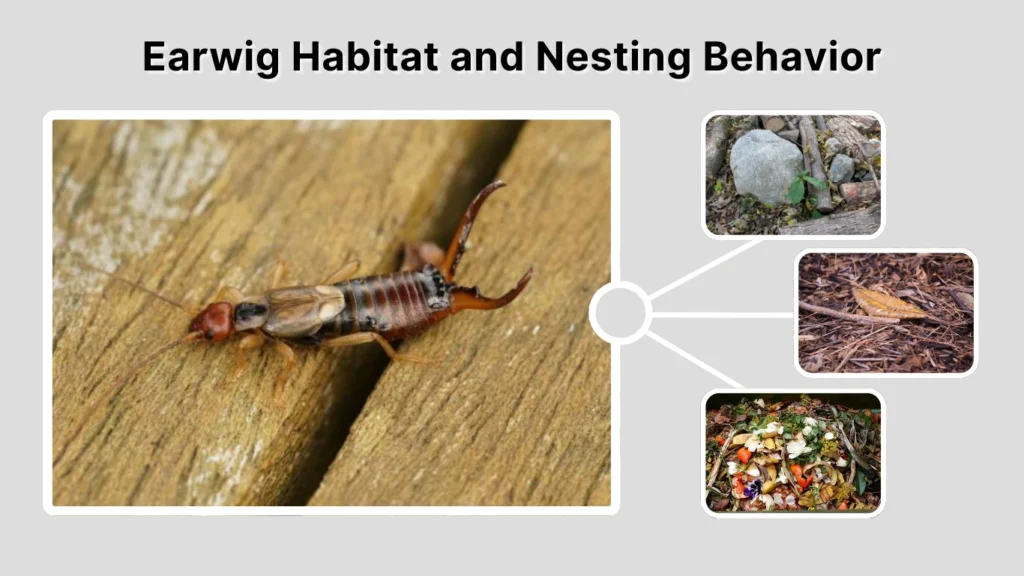
Understanding earwig habitat preferences is key to preventing infestations.
Natural Earwig Habitat
Earwigs thrive in moist, dark environments. Outdoors, they are commonly found:
- Under rocks and logs
- Beneath mulch and leaf litter
- In compost piles
- Within garden beds
- Under damp soil near foundations
They avoid dry, sunny areas and are highly sensitive to dehydration, which is why moisture plays a major role in their survival.
Earwig Nest – Where Do They Lay Eggs?
An earwig nest is typically built underground in damp soil. Female earwigs dig small burrows where they lay clusters of eggs. These nests are often hidden beneath debris, stones, or garden mulch.
Unlike many insects, female earwigs guard their eggs until they hatch. They clean the eggs to prevent fungal growth and protect them from predators. After hatching, the young nymphs remain in the nest for a short time before dispersing.
Earwig Life Cycle and Lifespan
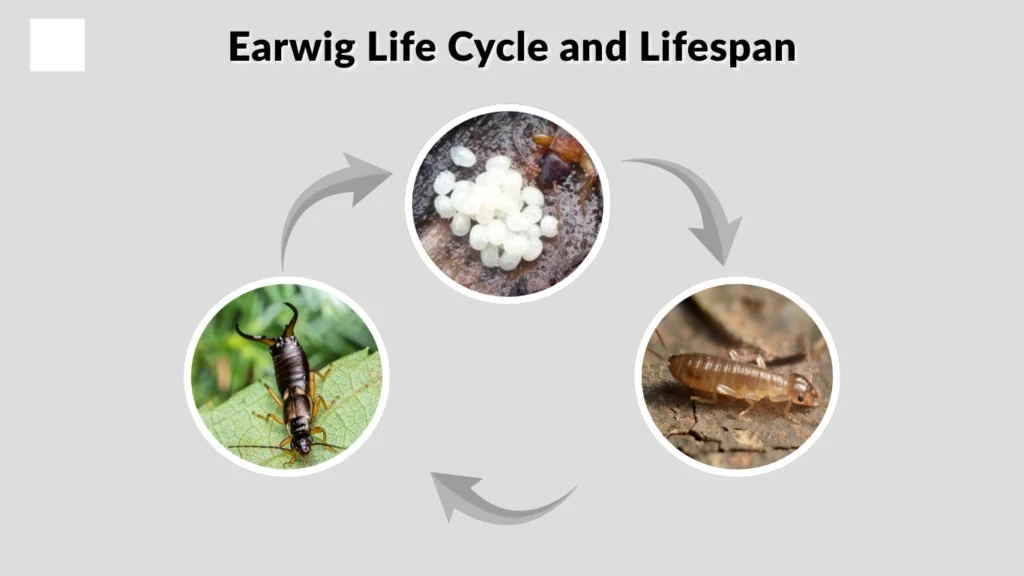
The earwig life cycle consists of three main stages: egg, nymph, and adult.
Stages of the Earwig Life Cycle
Egg Stage:
Females lay eggs in late winter or early spring inside underground nests. The eggs hatch within about one week to two months, depending on temperature and environmental conditions.
Nymph Stage:
After hatching, young earwigs (nymphs) resemble smaller versions of adults but lack fully developed pincers and wings. They go through several molts as they grow.
Adult Stage:
By late spring or summer, earwigs reach adulthood. At this stage, they are fully formed and capable of reproduction.
Earwig Lifespan
The average earwig lifespan is about one year. Most earwigs overwinter in soil or protected outdoor areas. They are most active during warm, humid months and tend to seek shelter indoors when outdoor conditions become too dry or too wet.
Earwig Diet – What Do Earwigs Eat?
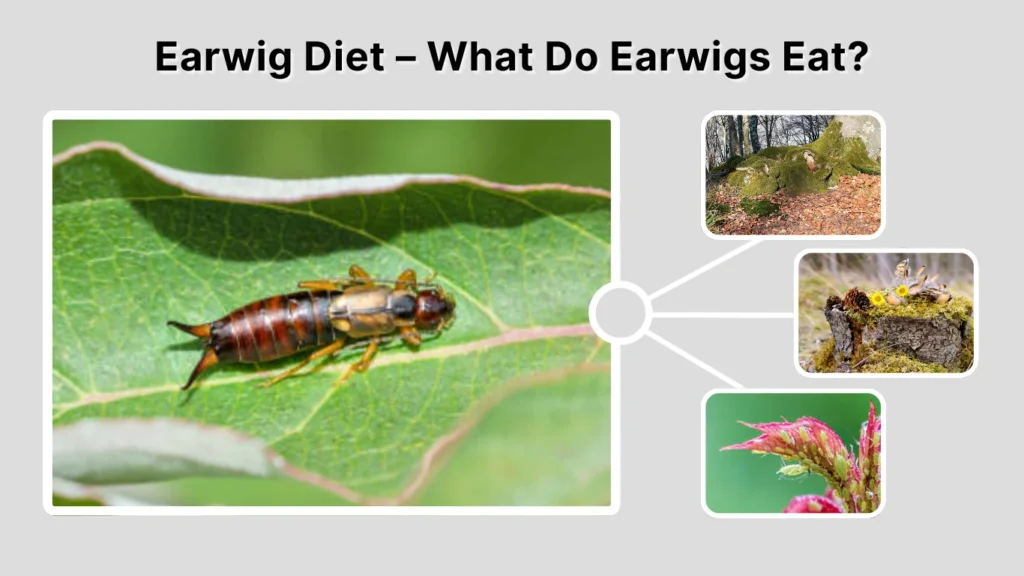
The earwig diet is quite diverse. Earwigs are omnivores, meaning they eat both plant and animal material.
They commonly feed on:
- Decaying leaves and plant matter
- Fresh garden plants and seedlings
- Soft fruits
- Aphids and other small insects
- Organic debris
Because of this varied diet, earwigs can be both beneficial and problematic.
Are Earwigs Beneficial or Harmful?
In gardens, earwigs may help control pests like aphids, mites, and insect larvae. However, when populations grow large, they can damage flowers, vegetables, and young plants by chewing irregular holes in leaves.
Indoors, earwigs do not usually cause structural damage, but their presence can be unsettling. Large numbers may indicate excess moisture problems around the home.
Earwig Infestation in House
An earwig infestation in house settings usually begins when outdoor conditions push these insects indoors. Heavy rain, drought, or sudden temperature changes often drive earwigs to seek stable, moist shelter inside.
Earwigs do not typically reproduce indoors, but they can gather in noticeable numbers if the environment suits them.
Why Earwigs Enter Homes
Common reasons include:
- Excess moisture around foundations
- Poor drainage systems
- Cracks and gaps in walls or doors
- Outdoor lighting that attracts insects (their food source)
- Mulch or plant debris placed too close to the house
Bathrooms, basements, kitchens, and laundry rooms are especially attractive because of their humidity levels.
Signs of an Earwig Infestation
You may notice:
- Earwigs appearing at night on walls or floors
- Insects found in sinks, bathtubs, or near drains
- Clusters in damp storage boxes or under piles of laundry
- Increased sightings after rain
While they do not usually cause structural damage, consistent sightings suggest moisture issues that should be addressed.
Earwig Bite – Should You Be Concerned?
One of the most common fears involves the idea of an earwig bite. In reality, earwigs do not bite in the traditional sense.
They use their pincers primarily for defense and mating. If handled or threatened, they may pinch the skin.
The pinch is generally:
- Mild
- Not venomous
- Unlikely to break the skin
Earwigs do not transmit diseases and are not considered dangerous to humans. Any redness or minor irritation usually fades quickly without medical treatment.
In rare cases where skin irritation persists, basic cleaning and monitoring are sufficient. Medical attention is almost never necessary.
Earwig vs Silverfish
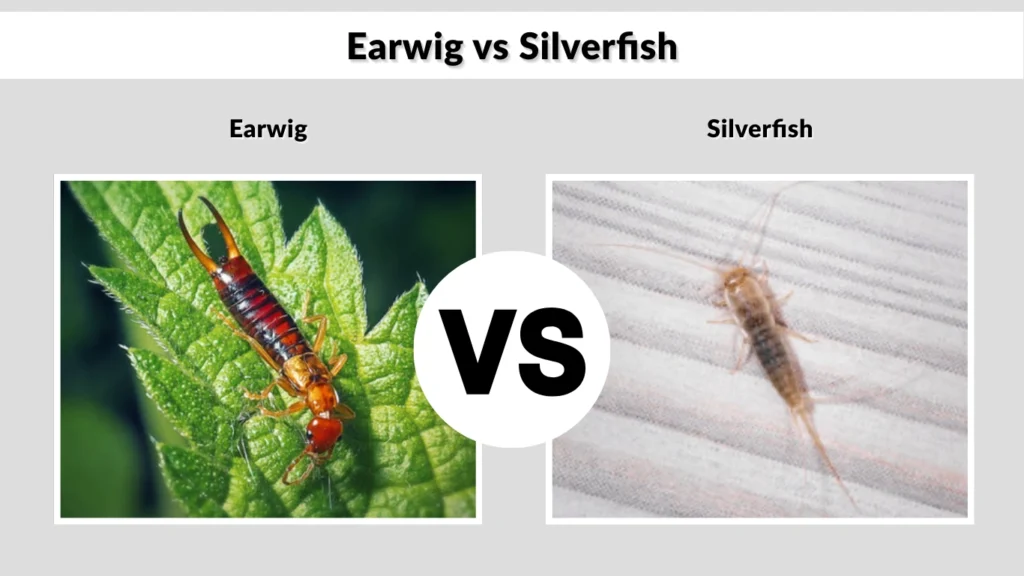
Earwigs are sometimes confused with silverfish because both insects prefer dark, damp environments and are active at night. However, they are very different pests.
Appearance Differences:
- Earwigs have visible pincers at the rear.
- Silverfish have three long tail-like appendages and a teardrop-shaped body.
- Silverfish are typically silvery-gray and scale-covered.
Behavior Differences:
- Earwigs are omnivores and may feed on plants or small insects.
- Silverfish primarily feed on paper, glue, fabric, and starchy materials.
Damage Comparison:
- Earwigs may damage garden plants.
- Silverfish damage books, wallpaper, clothing, and stored documents.
How to Identify Which Pest You Have
To determine whether you’re dealing with earwigs or silverfish:
- Check for pincers (earwigs only).
- Observe movement—silverfish move in a fast, fish-like wriggle.
- Look at the damaged materials. Plant damage suggests earwigs; paper damage suggests silverfish.
Correct identification is important before choosing control methods.
Earwig Control and Prevention
Effective earwig control focuses primarily on moisture reduction and habitat modification rather than chemical treatment.
Natural Earwig Control Methods
You can reduce earwig populations by:
- Removing mulch and leaf litter near the foundation
- Fixing leaky pipes and improving drainage
- Reducing outdoor lighting that attracts insects
- Setting up simple oil traps (shallow containers with vegetable oil and soy sauce)
These traps attract earwigs and prevent them from escaping.
Preventing Earwig Infestation in House
Prevention strategies include:
- Sealing cracks around doors, windows, and foundations
- Installing door sweeps and weather stripping
- Using dehumidifiers in damp areas
- Ensuring gutters direct water away from the home
- Storing firewood away from exterior walls
Maintaining a dry environment is the most effective long-term solution.
When to Call Professional Pest Control
Professional help may be necessary if:
- Large numbers continue to appear indoors
- Moisture problems are structural
- DIY control methods fail
A pest control specialist can identify entry points and recommend targeted treatments if needed.
FAQs
What attracts earwigs into a house?
Earwigs are mainly attracted to moisture, darkness, and food sources. Damp basements, bathrooms, kitchens, and areas with plumbing leaks create ideal conditions. Outdoor factors like mulch piled near foundations, clogged gutters, and heavy rain can also drive earwigs indoors in search of shelter.
Do earwigs bite humans while sleeping?
Earwigs do not bite humans, and they are not interested in sleeping people. They may pinch if handled or trapped against the skin, but this is rare and usually mild. They prefer damp hiding spots rather than beds or dry sleeping areas.
How do you find an earwig nest?
An earwig nest is typically located outdoors in moist soil, under rocks, mulch, logs, or leaf litter. Indoors, they do not usually build nests but may gather in damp cracks or crevices. Finding the nest often requires checking shaded, humid areas around the home’s foundation.
How long do earwigs live?
The average earwig lifespan is about one year. They overwinter in protected soil or debris and become active in warmer months. Their life cycle includes egg, nymph, and adult stages, usually completing within a single year.
Are earwigs harmful to gardens?
Earwigs can be both helpful and harmful in gardens. They feed on aphids and other small pests, which can benefit plants. However, in large numbers, they may chew holes in leaves, flowers, and soft fruits, especially in damp conditions.
Conclusion
Earwigs may look intimidating because of their pincers, but they are generally harmless insects that prefer moist outdoor environments. Understanding earwig species, habitat, diet, life cycle, and lifespan helps reduce unnecessary fear and improves prevention efforts. While an earwig infestation in house settings can be unsettling, it is usually a sign of moisture issues rather than a serious pest problem. With proper home maintenance and simple earwig control strategies, these insects can be effectively managed and kept outdoors where they belong.