
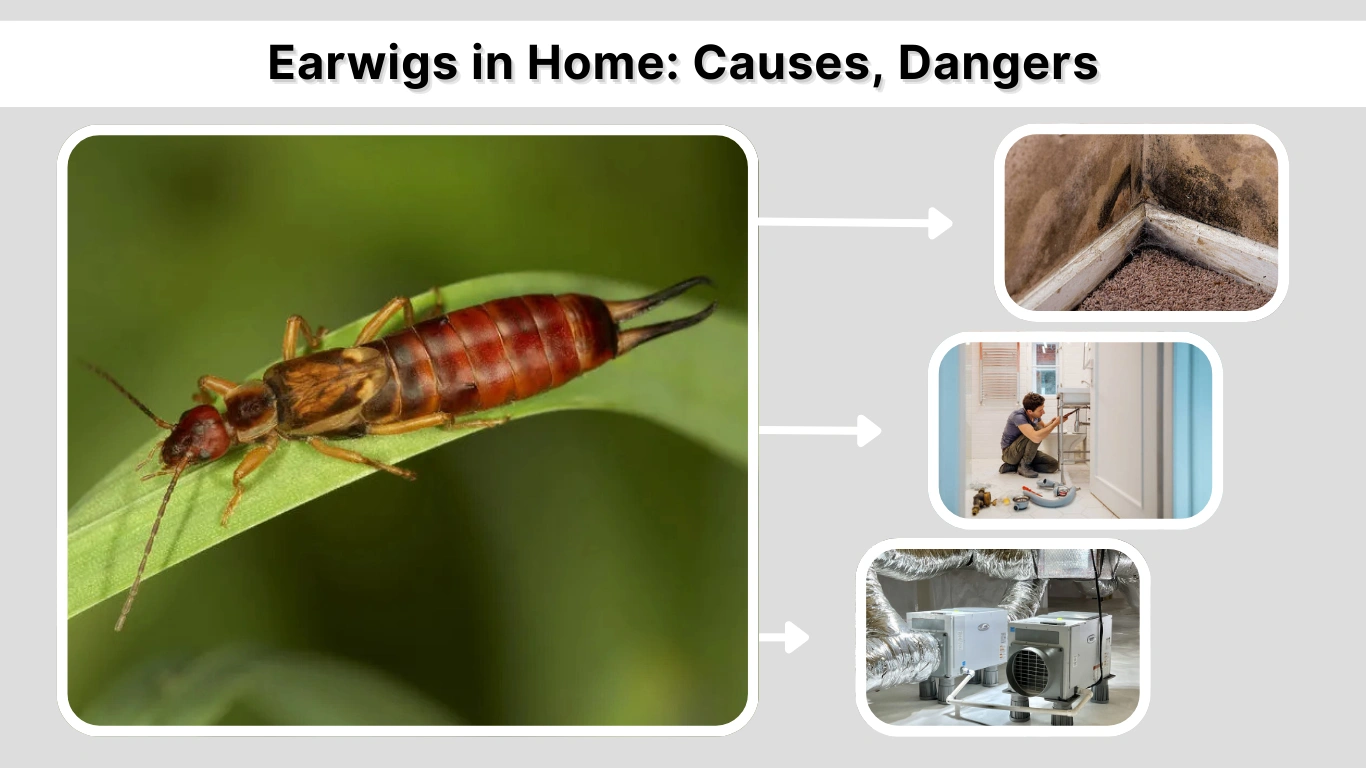
Finding earwigs in your home can be unsettling, especially when you spot them crawling across the bathroom floor or hiding near a sink. Their long bodies and noticeable pincers often make them look more dangerous than they actually are. In most cases, earwigs enter homes searching for moisture, shelter, or relief from changing weather conditions. While they are generally harmless, repeated sightings may signal an underlying moisture issue. In this guide, you’ll learn why earwigs come indoors, where they hide, whether they pose any risk, and how to start addressing the problem effectively.
What Are Earwigs?
Earwigs are small, slender insects commonly found in gardens, mulch, and damp outdoor environments. Although they occasionally wander indoors, they are not considered typical indoor pests like ants or cockroaches.
Physical Appearance and Identification
Earwigs are usually brown to reddish-brown and measure about ½ to 1 inch long. Their bodies are flat and elongated, which allows them to squeeze into tight cracks and crevices. The most recognizable feature is the pair of curved pincers at the end of their abdomen, known as cerci. Males typically have more curved pincers, while females have straighter ones.
Some earwigs have wings, but they rarely fly. Instead, they prefer crawling and hiding in dark, damp spaces during the day. They are mostly active at night, which is why many homeowners notice them after sunset.
Common Types Found in Homes
The most common species found inside homes is the European earwig. This species thrives in moist soil, mulch, and leaf litter. When outdoor conditions become too wet, too dry, or too hot, they may migrate indoors temporarily in search of better shelter.
The Myth About Earwigs Crawling Into Ears
Despite their name, earwigs do not intentionally crawl into people’s ears. The myth dates back centuries and has no scientific basis. While it is technically possible for any small insect to wander into an ear accidentally, it is extremely rare and not a behavior specific to earwigs.
Why Are There Earwigs in My House?
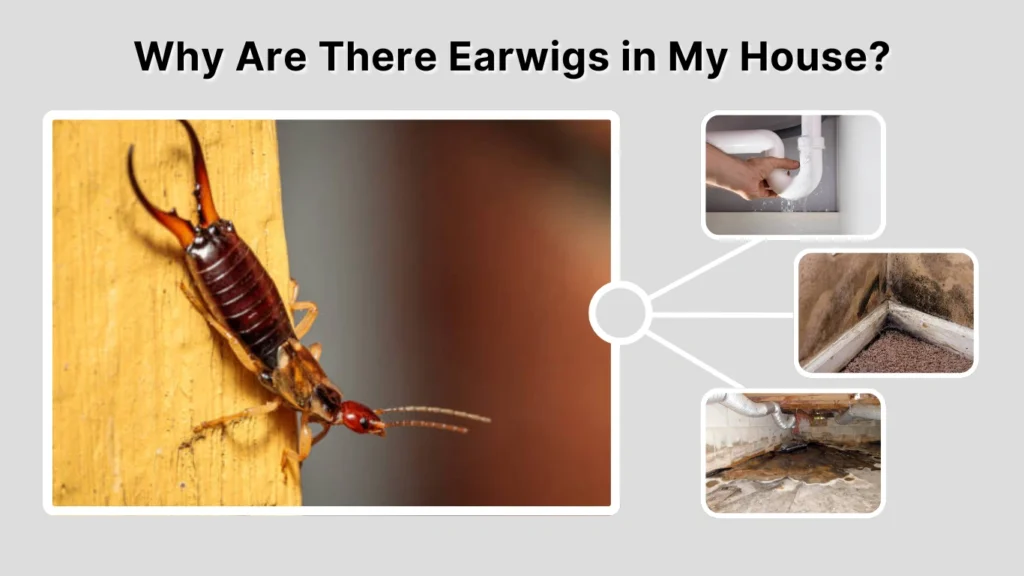
If you are seeing earwigs indoors, there is usually a clear environmental reason. They do not invade homes to reproduce in large colonies like some other pests. Instead, they are typically drawn inside by moisture, weather changes, or easy access points.
Moisture and Humidity Problems
Earwigs are highly attracted to damp environments. Areas with excess moisture create ideal hiding spots for them. Common indoor problem areas include:
- Bathrooms with poor ventilation
- Leaky pipes under sinks
- Damp basements
- Crawl spaces with high humidity
- Laundry rooms with condensation buildup
If your home has consistent moisture issues, it becomes more inviting to earwigs. Even small plumbing leaks can provide enough humidity to attract them.
Weather Changes
Sudden weather shifts often drive earwigs indoors. Heavy rain can flood their outdoor hiding spots, forcing them to seek dry shelter. On the other hand, extreme heat or drought may push them inside in search of moisture.
Many homeowners notice an increase in earwigs during spring and summer. These seasons provide ideal breeding and feeding conditions outdoors, which can lead to higher populations near the home.
Easy Entry Points
Earwigs do not need large openings to get inside. Their flat bodies allow them to slip through small cracks and gaps, such as:
- Foundation cracks
- Gaps under doors
- Damaged weather stripping
- Broken window screens
- Utility line openings
Even tiny openings around pipes or vents can serve as entry points. Once inside, they quickly look for dark, damp hiding spots.
Outdoor Conditions Around Your Home
Your yard may be contributing to the problem. Earwigs thrive in moist organic material. Conditions that increase their population outdoors include:
- Thick mulch placed against the foundation
- Leaf piles near exterior walls
- Overwatered flower beds
- Clogged gutters that overflow near the foundation
When earwig populations grow outside, the chances of them wandering indoors increase significantly.
Where Do Earwigs Hide Inside the Home?
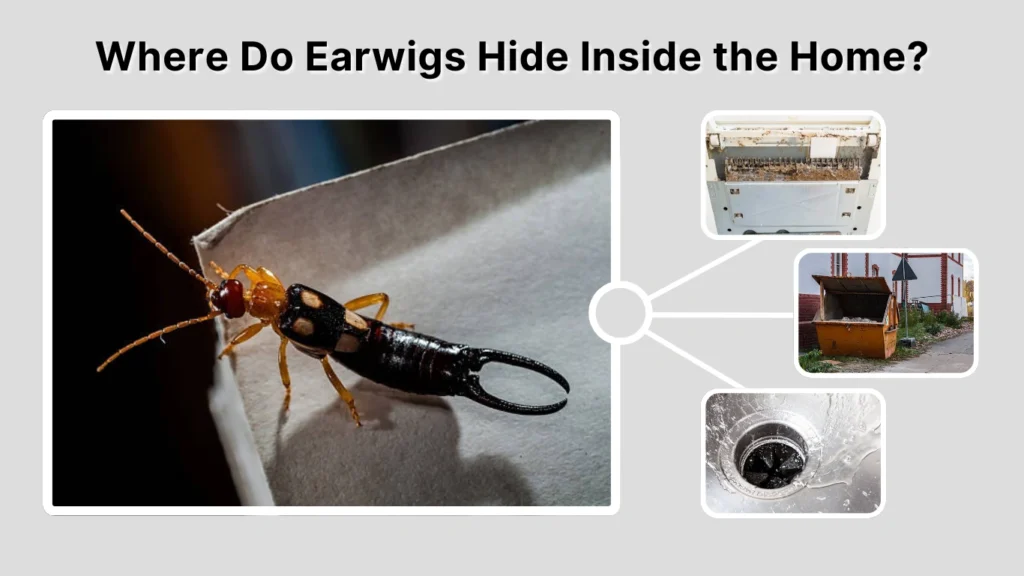
Once earwigs enter a home, they immediately search for dark, quiet places with moisture. They are nocturnal insects, meaning they hide during the day and become active at night.
Earwigs in Bathroom
Bathrooms are one of the most common indoor locations for earwigs. They are often found:
- Around drains
- Under sinks
- Behind toilets
- Along bathtub edges
The consistent humidity and occasional water leaks make bathrooms especially attractive to them.
Earwigs in Kitchen
Kitchens also provide moisture and food sources. Earwigs may hide:
- Under refrigerators or dishwashers
- Inside lower cabinets
- Near trash bins
- Around sink plumbing
Crumbs and organic debris can also attract them, although moisture remains the main factor.
Earwigs in Bedroom or Living Areas
Although less common, earwigs can wander into bedrooms or living rooms, especially if there are cracks along baseboards or nearby moisture sources. They may hide:
- Along baseboards
- Inside closets
- Under piles of laundry
- In dark corners
Finding one occasionally does not necessarily indicate a full infestation, but repeated sightings suggest a nearby moisture issue.
Are Earwigs Dangerous?
Seeing earwigs inside your home can be alarming, but the good news is that they are mostly harmless. They are considered nuisance pests rather than dangerous insects.
Do Earwigs Bite?
Earwigs do not bite in the traditional sense. Their pincers may look intimidating, but they are mainly used for defense and mating. If handled or threatened, an earwig might pinch with its cerci. In most cases, the pinch is mild and does not break the skin. They are not aggressive and usually try to run away rather than confront humans.
Are Earwigs Harmful to Humans or Pets?
Earwigs are not venomous and are not known to transmit diseases to humans or pets. Unlike mosquitoes or ticks, they do not feed on blood. Their primary diet consists of decaying plant material, fungi, and small insects. Indoors, they may nibble on crumbs or organic debris, but they do not pose a health threat.
Can Earwigs Damage Property?
Earwigs rarely cause structural damage to homes. They do not chew wood, wires, or fabric like some other pests. Outdoors, however, they may damage garden plants by feeding on leaves and flowers. Inside the home, their presence is more of an annoyance than a destructive problem.
Signs of an Earwig Infestation
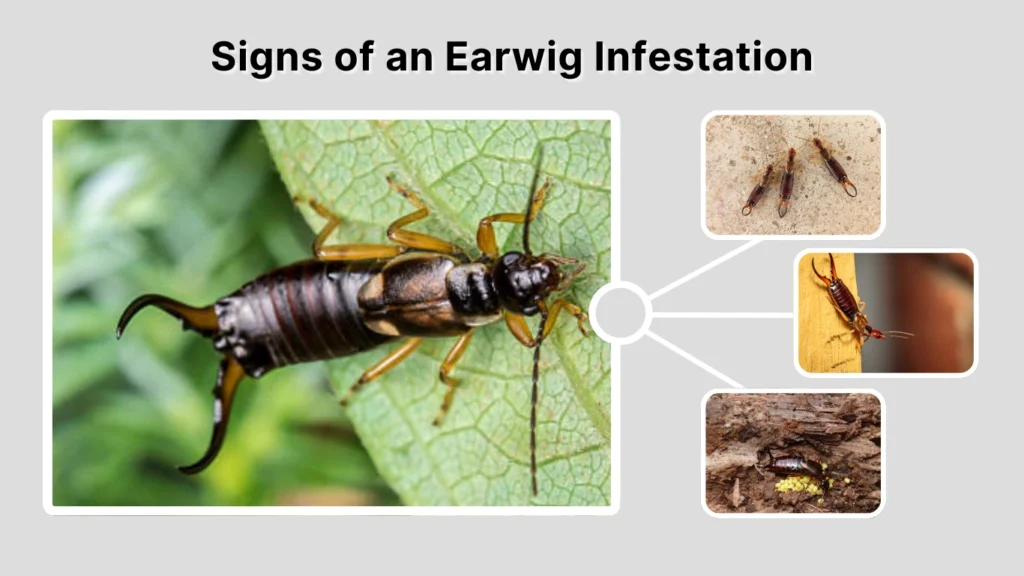
A single earwig in your home is usually not a cause for concern. However, repeated sightings may indicate a larger issue nearby.
Common signs of an earwig infestation include:
- Frequent nighttime sightings in bathrooms or kitchens
- Finding multiple earwigs over several days
- Dead earwigs near windows, doors, or light sources
- Increased earwig activity around the home’s exterior
- Persistent damp or musty smells in certain rooms
Because earwigs are nocturnal, you may notice them most often in the evening when lights are turned on. If you consistently see several indoors, it likely means outdoor populations are high or there is an indoor moisture problem attracting them.
How to Get Rid of Earwigs in Home
If earwigs have started appearing regularly, taking action quickly can help prevent the problem from worsening. The most effective approach combines immediate removal with long-term moisture control.
Immediate Removal Methods
For small numbers of earwigs, simple removal techniques work well:
- Vacuuming: Use a vacuum to remove visible earwigs and dispose of the bag immediately.
- Soapy water spray: A mixture of dish soap and water can kill earwigs on contact.
- Sticky traps: Place glue traps along baseboards or near suspected hiding spots to monitor activity.
These methods are helpful for controlling visible insects but do not address the root cause.
Natural Remedies for Earwigs
If you prefer chemical-free solutions, several natural options may help reduce earwig activity:
- Diatomaceous earth: Sprinkle food-grade diatomaceous earth in cracks and entry points. It dehydrates insects over time.
- Oil traps: A shallow container filled with vegetable oil and a small amount of soy sauce can attract and trap earwigs.
- Essential oil sprays: Peppermint or eucalyptus oil mixed with water may act as a mild deterrent.
While natural remedies can reduce numbers, they are most effective when combined with moisture control.
Chemical Control Options
For larger infestations, insecticide treatments may be necessary. Options include:
- Indoor insecticide sprays labeled for crawling insects
- Outdoor perimeter treatments around the foundation
- Granular products applied to soil near entry points
Always follow label instructions carefully. In many cases, treating the exterior perimeter of the home is more effective than spraying indoors.
When to Call a Professional
If earwig activity continues despite your efforts, it may be time to contact a pest control professional. This is especially important if:
- You are seeing large numbers daily
- The problem returns repeatedly
- There are unresolved moisture or drainage issues
Professionals can identify entry points and recommend targeted treatments.
How to Prevent Earwigs from Entering Your Home

Prevention is the most effective long-term solution. Since earwigs are attracted to moisture, reducing damp conditions should be your first priority.
Reduce Indoor Moisture
- Use dehumidifiers in basements and crawl spaces
- Fix leaking pipes promptly
- Improve bathroom ventilation with exhaust fans
- Wipe up standing water quickly
Keeping humidity levels low makes your home less appealing to earwigs.
Seal Entry Points
Inspect your home’s exterior and seal potential openings:
- Caulk foundation cracks
- Install door sweeps
- Replace damaged weather stripping
- Repair torn window screens
Blocking entry points significantly reduces the chance of insects getting inside.
Improve Outdoor Drainage
Outdoor conditions often play a major role in earwig problems. You can help by:
- Cleaning gutters regularly
- Redirecting downspouts away from the foundation
- Adjusting sprinkler systems to avoid oversaturation
- Moving mulch and soil several inches away from exterior walls
Drying out the area around your home reduces the outdoor population and limits migration indoors.
Smart Landscaping Tips
- Trim shrubs and plants away from siding
- Remove leaf piles and yard debris
- Store firewood off the ground and away from the house
Maintaining a dry perimeter around your home creates a natural barrier against earwigs.
Seasonal Earwig Activity: When Are They Most Active?
Earwigs are most active during spring and summer, especially in warm, damp climates. Their numbers often increase after rainfall when their outdoor hiding places become flooded. Because they are nocturnal, they tend to emerge at night to search for food and moisture. This nighttime activity can make the problem seem worse than it is, since you are more likely to see them after dark.
FAQs
Why do I suddenly have earwigs in my house?
Earwigs usually enter homes because of moisture, weather changes, or easy entry points. Heavy rain can flood their outdoor hiding spots, while drought pushes them indoors searching for humidity. If you suddenly notice several earwigs, check for plumbing leaks, damp basements, or cracks around doors and windows.
Do earwigs crawl into your ears while sleeping?
No, this is a long-standing myth. Earwigs do not intentionally crawl into human ears. While it is technically possible for any small insect to wander into an ear accidentally, it is extremely rare. Earwigs prefer damp, dark hiding places and generally avoid human contact whenever possible.
How do I get rid of earwigs permanently?
Permanent control focuses on eliminating moisture and sealing entry points. Fix leaks, use dehumidifiers, improve ventilation, and caulk cracks around your home’s exterior. Outdoor maintenance, such as moving mulch away from the foundation and improving drainage, also reduces the likelihood of earwigs returning.
Are earwigs a sign of a bigger problem?
In many cases, yes. Earwigs are strongly attracted to damp conditions, so their presence may indicate excess moisture, poor drainage, or ventilation problems. Addressing these issues not only helps eliminate earwigs but can also prevent mold growth and other moisture-related concerns.
What smells repel earwigs?
Strong scents like peppermint, eucalyptus, and tea tree oil may help deter earwigs. Mixing a few drops of essential oil with water and spraying it near entry points can provide mild repellency. However, scent-based solutions work best when combined with moisture control and proper home sealing.