
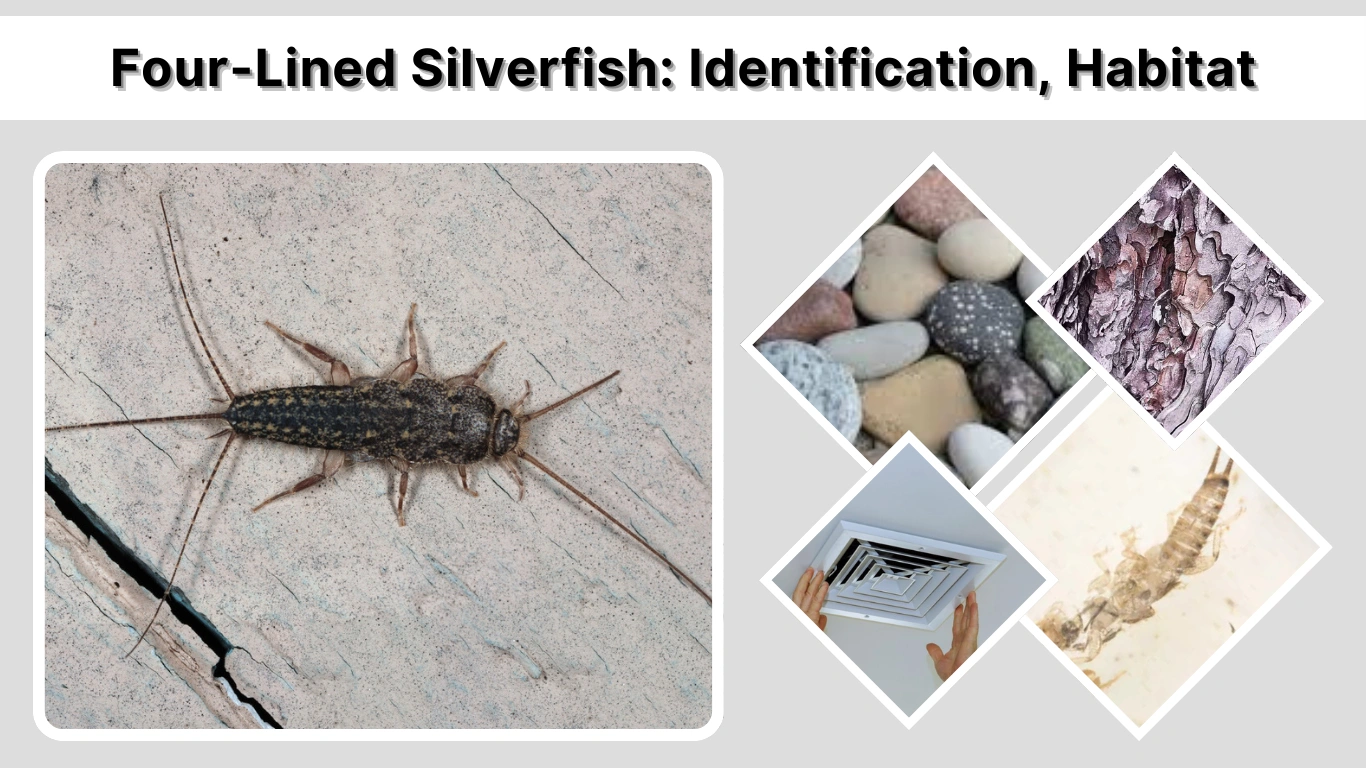
The four-lined silverfish is a small, fast-moving insect that often surprises homeowners when it darts across a bathroom floor or basement wall at night. Scientifically known as Ctenolepisma lineata, this primitive, wingless insect belongs to the same group as common silverfish and firebrats. While they may look unsettling, four-lined silverfish are not dangerous to humans. However, they can become nuisance pests indoors, especially in damp environments. In this guide, you’ll learn how to identify them, where they live, and what attracts them into homes.
What Is a Four-Lined Silverfish?
The four-lined silverfish (Ctenolepisma lineata) is a nocturnal, wingless insect in the order Zygentoma. These insects are considered primitive because their body structure has changed very little over millions of years. Like other silverfish species, they have flattened, carrot-shaped bodies covered in tiny scales that give them a slightly shiny appearance.
What sets this species apart is the presence of four distinct dark stripes running lengthwise down its back. These stripes make identification easier compared to the plain silvery-gray appearance of common household silverfish.
Four-lined silverfish are quick and agile, often moving in a wriggling, fish-like motion—hence the name “silverfish.” They are most active at night and prefer dark, humid environments. Although more commonly found outdoors, they may enter homes when conditions are favorable.
How to Identify a Four-Lined Silverfish
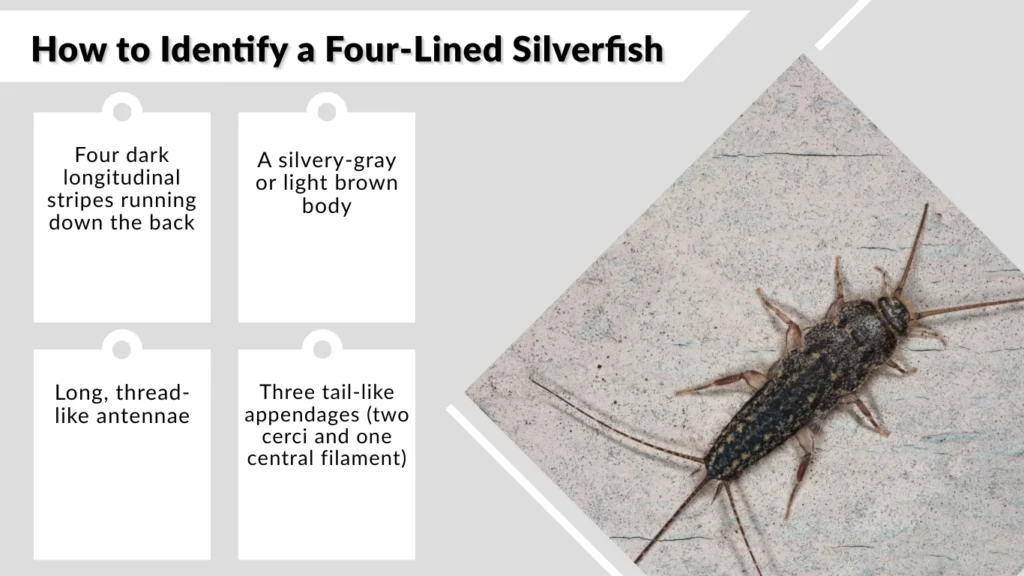
Correct identification is important, especially since several silverfish species look similar. Paying attention to physical details and behavior can help you determine whether you’re dealing with a four-lined silverfish.
Physical Characteristics
Four-lined silverfish are typically about 10–15 mm (roughly half an inch) in length. Their bodies are elongated and taper toward the rear, giving them a carrot-like shape.
Key identification features include:
- Four dark longitudinal stripes running down the back
- A silvery-gray or light brown body
- Long, thread-like antennae
- Three tail-like appendages (two cerci and one central filament)
- A flattened body covered in fine scales
The stripes are the most distinctive feature. While common silverfish tend to have a more uniform silvery color, four-lined silverfish clearly display these darker markings.
Behavior and Movement
Behavior can also help with identification. Four-lined silverfish:
- Move very quickly when disturbed
- Prefer darkness and avoid bright light
- Are primarily active at night
- Hide in cracks, crevices, and under objects during the day
If you turn on a light in a damp room and see a small striped insect quickly scurry away, there’s a good chance it could be a four-lined silverfish.
Four-Lined Silverfish vs Common Silverfish
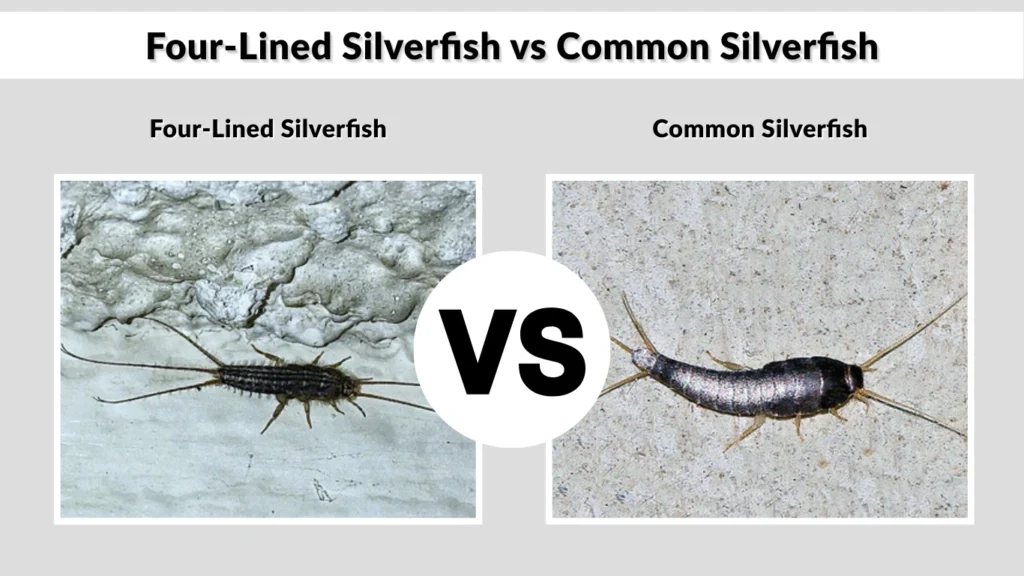
Many homeowners confuse four-lined silverfish with common silverfish (Lepisma saccharinum) or firebrats (Thermobia domestica). While they share similarities, there are some noticeable differences.
The most obvious difference is the stripe pattern. Four-lined silverfish have four visible dark stripes along their backs. Common silverfish typically lack these defined stripes and appear more uniformly silver or gray.
Firebrats, on the other hand, tend to have mottled or speckled patterns rather than clean longitudinal lines. They also prefer warmer areas, such as near furnaces or water heaters.
Habitat preferences can also vary slightly. While all three species are attracted to moisture, four-lined silverfish are often found outdoors under rocks, bark, or leaf litter and may wander indoors when humidity is high.
Understanding these differences helps ensure accurate identification and proper control measures.
Where Do Four-Lined Silverfish Live?
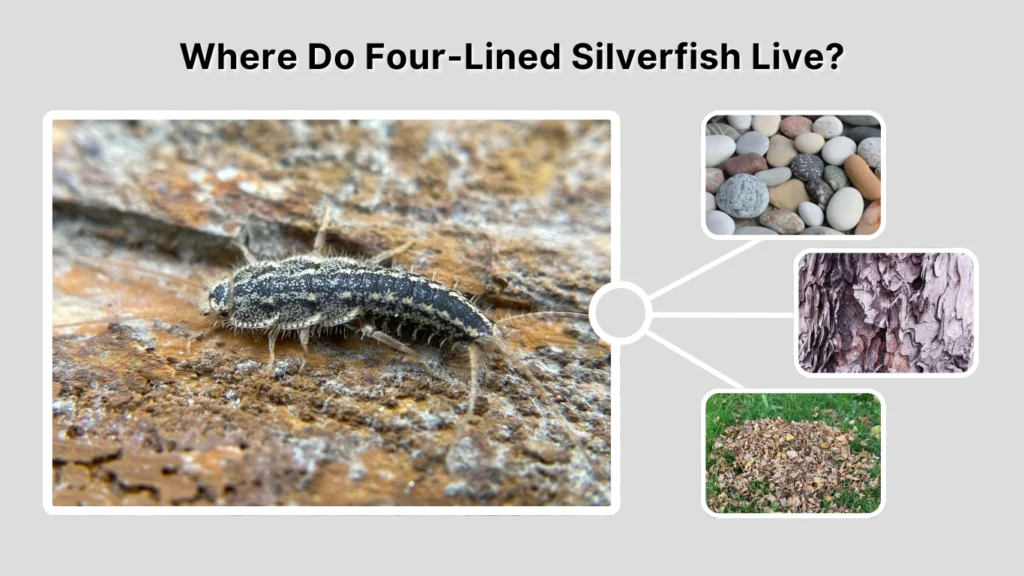
Four-lined silverfish can survive both outdoors and indoors, depending on environmental conditions. Moisture plays a major role in determining where they settle.
Outdoor Habitat
Outdoors, four-lined silverfish thrive in damp, sheltered environments. Common locations include:
- Under stones and rocks
- Beneath tree bark
- In leaf litter
- Compost piles
- Mulch beds
- Moist garden soil
These environments provide protection from predators and maintain the humidity they need to survive.
Indoor Habitat
When they enter homes, four-lined silverfish typically seek out areas with high humidity and limited light. Indoors, they are commonly found in:
- Bathrooms
- Basements
- Kitchens
- Attics
- Laundry rooms
- Storage areas with cardboard boxes
- Around plumbing leaks
They often hide in cracks, behind baseboards, under sinks, or inside wall voids. If indoor humidity levels remain high, they may establish a stable population inside the home.
What Attracts Four-Lined Silverfish?
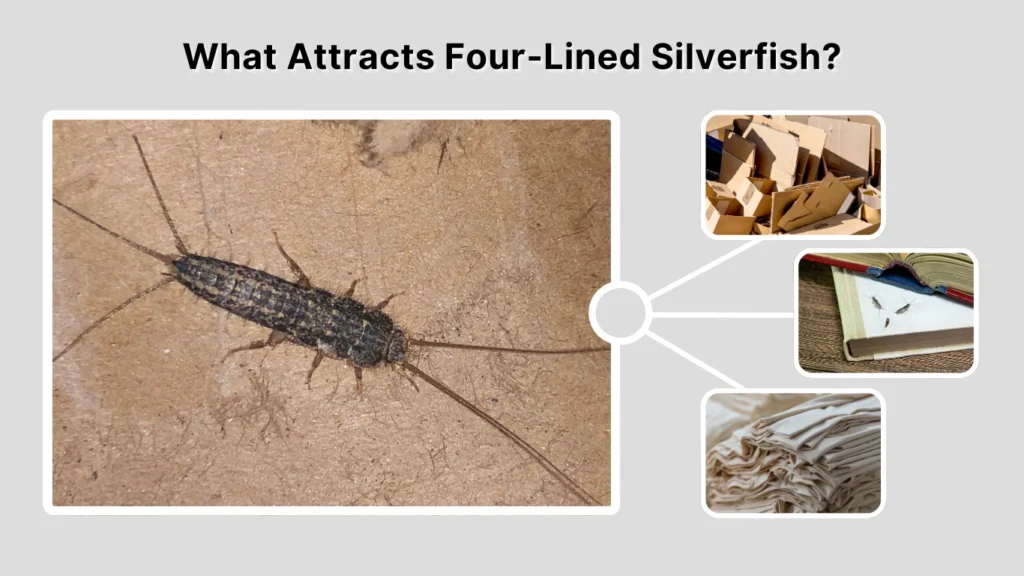
Moisture is the primary factor that attracts four-lined silverfish. They require humid conditions to survive and reproduce. Homes with poor ventilation, plumbing leaks, or consistently damp areas create ideal environments.
Beyond moisture, they are drawn to materials that contain starches and carbohydrates. This includes:
- Paper and cardboard
- Book bindings
- Wallpaper glue
- Fabric and clothing
- Stored documents
- Food crumbs
Cluttered storage areas, especially in basements or attics, provide both food sources and hiding places. When humidity rises above 50–60%, the risk of silverfish activity increases significantly.
Reducing moisture and eliminating accessible food sources are key steps in preventing an infestation.
Are Four-Lined Silverfish Harmful?
One of the most common concerns homeowners have is whether four-lined silverfish are dangerous. Fortunately, these insects are not harmful to people or pets.
They do not bite, sting, or transmit diseases. They are not venomous, and they do not infest human skin or hair. In most cases, their presence is more unsettling than threatening.
However, they can cause minor property damage over time. Four-lined silverfish feed on materials rich in starches and cellulose. This means they may damage:
- Books and important documents
- Wallpaper and wallpaper glue
- Cardboard boxes
- Stored paper products
- Clothing made from natural fibers
The damage usually appears as small, irregular holes, scraped surfaces, or yellowish stains. While the destruction is typically slow and minor, it can become frustrating if valuable books or archived documents are affected.
For this reason, they are considered nuisance pests rather than dangerous insects.
Signs of a Four-Lined Silverfish Infestation
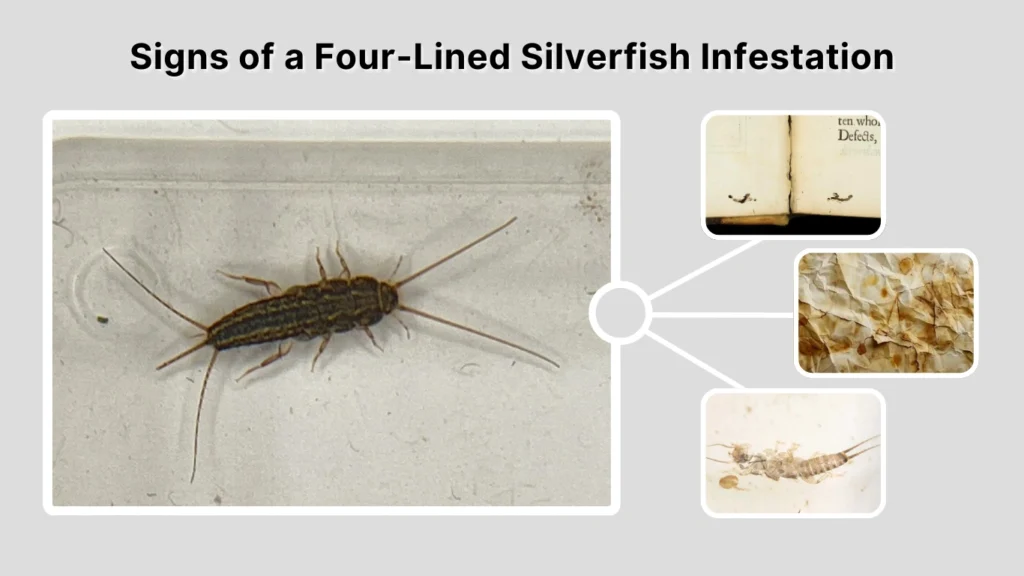
Because these insects are nocturnal and secretive, infestations can go unnoticed for some time. However, there are several signs that may indicate their presence.
Common signs include:
- Small holes in paper, books, or fabric
- Yellowish stains on paper materials
- Shed skins (silverfish molt multiple times throughout their lives)
- Tiny droppings that resemble black pepper
- Live sightings at night, especially in bathrooms or basements
You may also notice them quickly retreating into cracks or behind baseboards when lights are turned on.
If sightings become frequent or damage increases, it may indicate that humidity levels are high enough to support a growing population indoors.
How to Get Rid of Four-Lined Silverfish
Eliminating four-lined silverfish requires addressing both the insects themselves and the environmental conditions that support them. Since moisture is their primary requirement, control efforts should focus heavily on reducing humidity.
Reduce Moisture
Lowering humidity is the most effective long-term solution. Consider the following steps:
- Use a dehumidifier in basements and damp rooms
- Repair leaking pipes and faucets
- Improve ventilation in bathrooms and kitchens
- Use exhaust fans regularly
- Seal foundation cracks that allow moisture entry
Keeping indoor humidity below 50% makes the environment far less suitable for silverfish survival.
DIY Control Methods
If activity is limited, simple home remedies may help reduce the population:
- Sprinkle diatomaceous earth in cracks and crevices
- Place sticky traps along baseboards or under sinks
- Seal gaps around windows, doors, and pipes
- Store books and documents in airtight plastic containers
- Declutter storage areas to eliminate hiding spots
Diatomaceous earth works by damaging the insect’s outer layer, causing dehydration. Sticky traps help monitor activity and reduce numbers.
Professional Pest Control
If the infestation becomes widespread or persistent, professional pest control may be necessary. Pest control experts can:
- Identify hidden breeding areas
- Apply targeted treatments
- Recommend structural moisture solutions
- Provide long-term monitoring
Professional intervention is especially helpful when silverfish are spreading throughout multiple rooms.
How to Prevent Four-Lined Silverfish
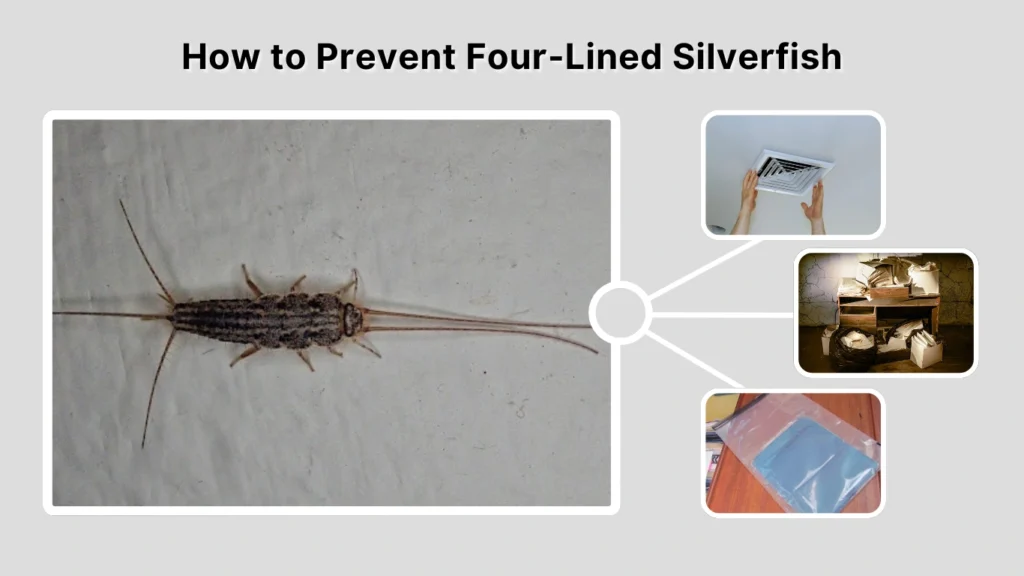
Prevention focuses on maintaining a dry, clean, and well-ventilated home. Since these insects thrive in humid conditions, moisture control remains the most important factor.
To prevent future problems:
- Keep indoor humidity below 50%
- Fix leaks promptly
- Use proper ventilation in high-moisture areas
- Avoid storing paper items in damp basements
- Store important documents in sealed containers
- Vacuum regularly along baseboards and cracks
- Remove cardboard clutter when possible
Routine home maintenance significantly reduces the likelihood of silverfish establishing themselves indoors.
FAQs
What does a four-lined silverfish look like?
A four-lined silverfish is a small, wingless insect about 10–15 mm long with a silvery-gray body and four dark stripes running lengthwise along its back. It has long antennae and three tail-like appendages. It moves quickly and prefers dark, humid areas.
Are four-lined silverfish dangerous?
No, four-lined silverfish are not dangerous. They do not bite, sting, or spread diseases. They are considered nuisance pests because they may damage paper, books, and other starchy materials in humid environments.
Why do I see four-lined silverfish in my bathroom?
Bathrooms often have high humidity and moisture from showers and plumbing. Four-lined silverfish are attracted to these damp conditions, especially if ventilation is limited or small leaks are present.
Do four-lined silverfish damage books?
Yes, they can damage books. They feed on starches and cellulose found in paper and glue. Over time, this may result in small holes, surface scraping, or yellowish stains on pages.
How do you permanently get rid of four-lined silverfish?
Permanent control requires reducing indoor humidity, sealing cracks and entry points, removing clutter, and storing paper materials properly. In severe cases, professional pest control may be necessary to eliminate hidden populations.