
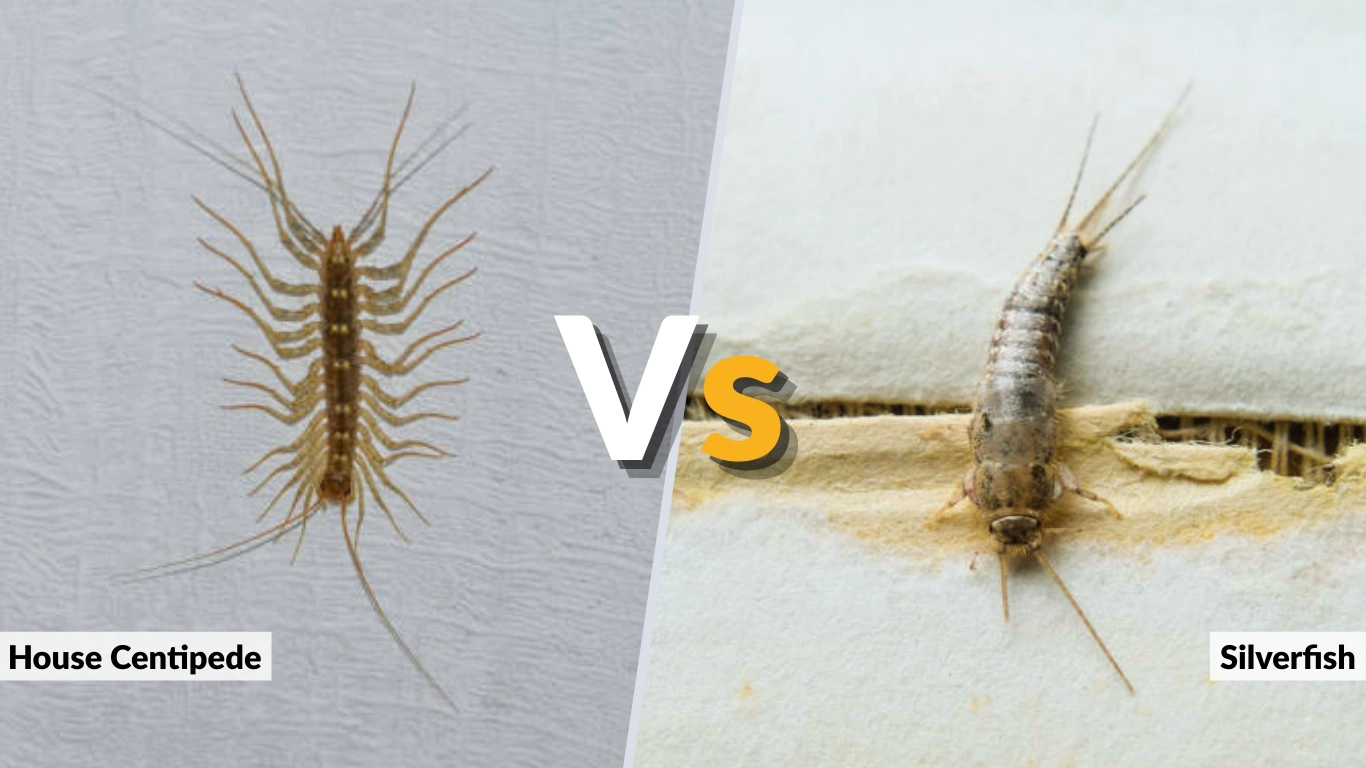
House centipedes and silverfish are two of the most commonly misidentified household pests. Both tend to appear suddenly, move quickly, and prefer dark, damp areas of the home, which often causes confusion and alarm. While neither insect is typically dangerous to humans, they differ greatly in appearance, behavior, and the type of problems they cause indoors. Understanding which pest you are dealing with is important because house centipedes are mostly harmless predators, while silverfish can damage personal belongings over time. This article explains the key differences between house centipedes and silverfish, how to identify them, why they enter homes, and what risks they pose.
What Is a House Centipede?
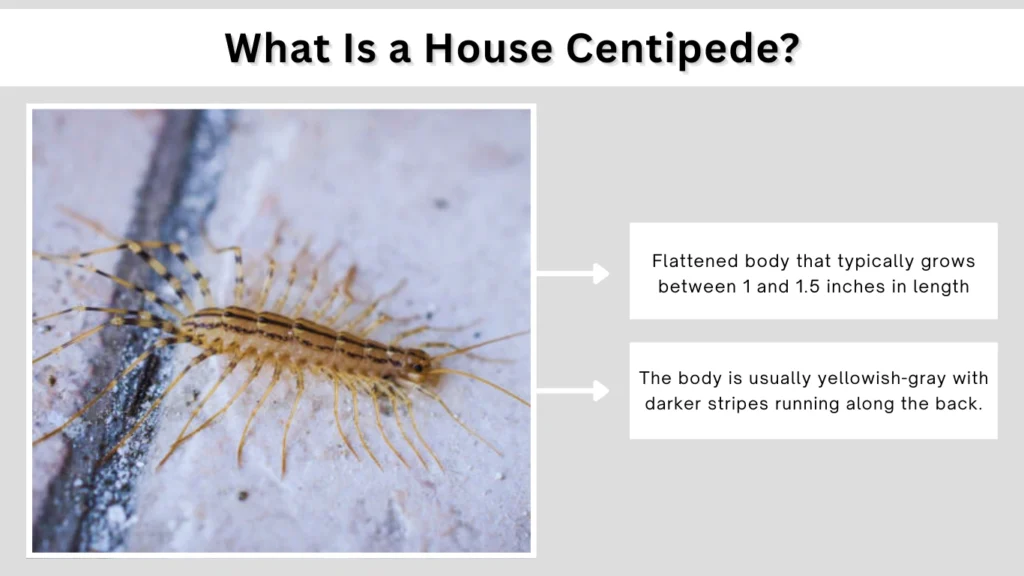
House centipedes (Scutigera coleoptrata) are fast-moving arthropods that often frighten homeowners due to their unusual appearance. Despite their intimidating look, they play a unique role in the indoor ecosystem.
Physical Appearance
A house centipede has a long, flattened body that typically grows between 1 and 1.5 inches in length, not including its legs. It has 15 pairs of extremely long, thin legs that extend outward, making it appear much larger than it actually is. The body is usually yellowish-gray with darker stripes running along the back. Long antennae extend from the head, while the rear legs are often mistaken for a second set of antennae due to their length.
Behavior and Activity Patterns
House centipedes are nocturnal and are rarely seen during the day. They are known for their speed and erratic movement, often darting across floors or walls when disturbed. Unlike many household pests, centipedes are solitary hunters and do not form nests or colonies. Their quick movements and sudden appearances are the main reasons people find them unsettling.
Typical Habitat Inside Homes
House centipedes prefer moist, dark environments. Common indoor locations include basements, crawl spaces, bathrooms, laundry rooms, and areas near drains. They are especially common in older homes with higher humidity levels. Their presence often indicates other insects are nearby, as centipedes rely on them for food.
What Is a Silverfish?
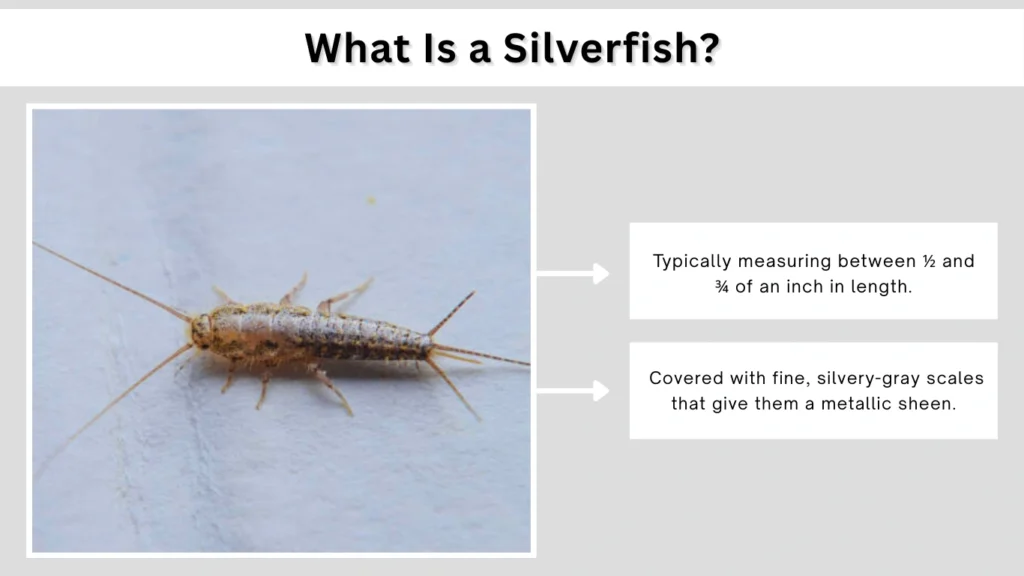
Silverfish (Lepisma saccharina) are small, wingless insects that are more likely to cause property damage than fear. They are known for their destructive feeding habits and ability to survive long periods without food.
Physical Appearance
Silverfish are small, typically measuring between ½ and ¾ of an inch in length. Their bodies are teardrop-shaped and covered with fine, silvery-gray scales that give them a metallic sheen. They have two long antennae on the head and three distinct tail-like bristles at the rear. Unlike house centipedes, silverfish have no visible legs extending from their sides, giving them a smoother appearance.
Behavior and Activity Patterns
Silverfish are nocturnal and prefer to remain hidden during daylight hours. They move with a smooth, fish-like wriggling motion, which is how they earned their name. Silverfish reproduce slowly but can live for several years, allowing infestations to persist unnoticed. They are particularly active in warm, humid conditions.
Common Indoor Hiding Spots
Silverfish are often found in places where food sources are readily available. These include bookshelves, cardboard boxes, closets, drawers, and storage areas containing paper or fabric. Bathrooms and kitchens are also common hiding spots due to higher moisture levels.
House Centipede vs Silverfish: Key Differences
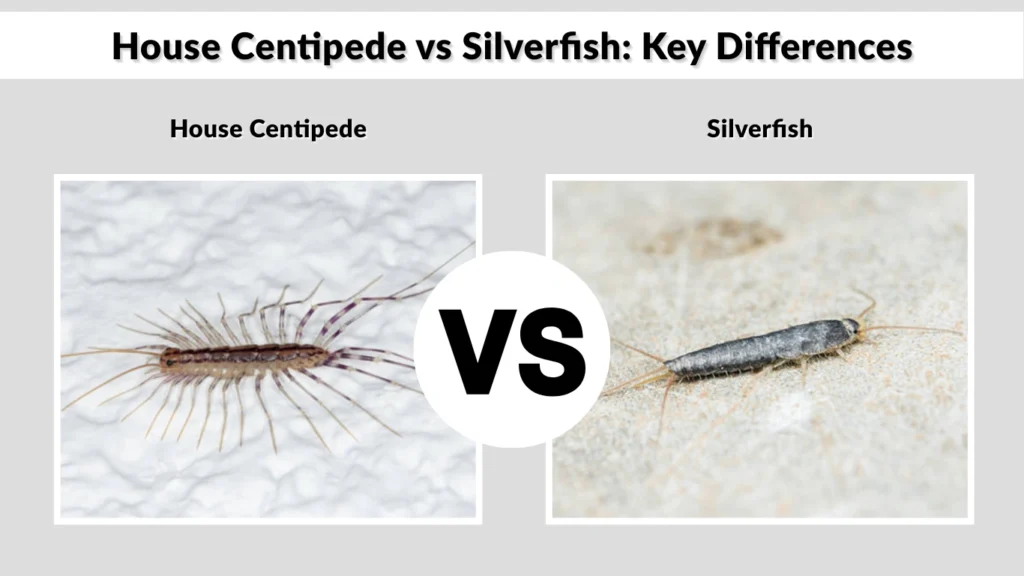
| Feature | House Centipede | Silverfish |
| Scientific Name | Scutigera coleoptrata | Lepisma saccharina |
| Body Shape | Long, flattened body with segmented appearance | Teardrop-shaped, smooth body |
| Legs | 15 pairs of long, thin legs | Short legs, not easily visible |
| Color | Yellowish-gray with dark stripes | Silvery-gray, metallic sheen |
| Movement Style | Very fast, erratic, sudden bursts | Smooth, fish-like gliding motion |
| Activity Time | Nocturnal | Nocturnal |
| Common Hiding Places | Basements, bathrooms, crawl spaces | Bookshelves, closets, drawers |
| Diet | Spiders, ants, cockroaches, and other insects | Paper, glue, fabric, starches |
| Damage to Home | Does not damage property | Can damage books, wallpaper, clothing |
| Risk to Humans | Rarely bites; bite is mild | Does not bite or sting |
| Infestation Risk | Usually appears alone | Can infest in larger numbers |
| Benefit or Harm | Beneficial predator indoors | Considered a destructive pest |
| Best Control Method | Reduce moisture and prey insects | Remove food sources and control humidity |
Why Do House Centipedes and Silverfish Enter Homes?
House centipedes and silverfish are attracted to indoor environments that provide shelter, moisture, and food. Homes often offer ideal conditions that allow these pests to survive year-round, especially when outdoor temperatures become unfavorable.
Moisture and Humidity Issues
Both pests thrive in damp environments. High humidity, water leaks, poor ventilation, and condensation create perfect conditions for survival. Bathrooms, basements, crawl spaces, and laundry rooms are common problem areas. Seasonal changes, such as heavy rainfall or colder weather, can also drive these pests indoors in search of stable moisture levels.
Food Availability
Food sources play a major role in infestations. House centipedes are drawn to homes with other insects, since they rely on them for food. Silverfish, however, feed on starch-based materials, including paper, glue, wallpaper paste, book bindings, and certain fabrics. Even small amounts of food residue or stored items can support silverfish populations.
Entry Points and Shelter
Cracks in walls, gaps around windows and doors, floor drains, and foundation openings provide easy entry points. Once inside, cluttered or undisturbed areas offer shelter, allowing these pests to remain hidden for long periods.
Are House Centipedes or Silverfish Harmful to Humans?

Neither house centipedes nor silverfish pose serious health risks to humans, but they can still be problematic.
House centipedes rarely bite, and when they do, the bite is typically mild and comparable to a bee sting. They are not aggressive and usually flee when disturbed. Silverfish do not bite or sting at all. However, both pests can trigger discomfort, stress, or anxiety, especially for individuals with insect phobias. Silverfish infestations can also lead to property damage, which becomes more costly over time if left untreated.
How to Get Rid of House Centipedes
Eliminating house centipedes involves addressing the conditions that attract them rather than focusing solely on killing individual insects.
Natural and Preventive Methods
Reducing humidity is the most effective step. Using dehumidifiers, fixing leaks, and improving ventilation can make the environment less appealing. Sealing cracks, gaps, and entry points helps prevent access. Removing other insects from the home also reduces the centipede’s food supply, encouraging them to leave naturally.
Traps and Professional Treatment
Sticky traps placed along baseboards or in damp areas can help monitor and reduce populations. In severe infestations, professional pest control may be necessary to identify hidden moisture issues and apply targeted treatments.
How to Get Rid of Silverfish
Silverfish require a more direct control approach due to their destructive feeding habits.
Natural Remedies
Diatomaceous earth is commonly used to control silverfish by damaging their exoskeletons. Essential oils such as cedarwood or lavender may help repel them. Reducing clutter and storing paper items in sealed containers can also limit food sources.
Long-Term Control Strategies
Maintaining low humidity levels is essential for long-term control. Regular cleaning, proper food storage, and repairing leaks can prevent reinfestation. In cases of widespread infestation, professional pest control may be the most effective solution.
Prevention Tips for Keeping Both Pests Away
Preventing both house centipedes and silverfish starts with moisture control. Keep indoor humidity low, clean regularly, seal entry points, and reduce clutter. Routine home maintenance can significantly lower the chances of future infestations.
Conclusion: House Centipede or Silverfish—What Should You Do?
While house centipedes and silverfish may look unsettling, understanding their differences makes them easier to manage. House centipedes are mostly harmless and even beneficial, while silverfish can cause lasting damage if ignored. Early identification, moisture control, and preventive steps are key to keeping both pests out of your home and maintaining a comfortable living environment.
FAQs
Can house centipedes and silverfish live in the same home?
Yes, house centipedes and silverfish can live in the same home, especially in environments with high humidity. While they prefer similar conditions, house centipedes may actually prey on silverfish if they share the same space. However, seeing both usually indicates moisture problems that need to be addressed.
Do house centipedes eat silverfish?
House centipedes can eat silverfish, as they are natural predators of many small insects. If silverfish are present, they may attract house centipedes looking for food. While this can reduce silverfish numbers, it does not eliminate the underlying cause of the infestation.
Are silverfish a sign of mold or water damage?
Silverfish are often associated with moisture, but they are not a direct sign of mold. Their presence can indicate high humidity, leaks, or poor ventilation, which are conditions that may also allow mold to develop if left untreated.
Should I kill house centipedes or leave them alone?
House centipedes are generally harmless and can help control other pests in the home. If only a few are present, many homeowners choose to leave them alone. However, frequent sightings may indicate excess moisture or an insect infestation that should be addressed.
How can I tell if I have a silverfish infestation?
Signs of a silverfish infestation include frequent sightings at night, damage to books or paper, holes in clothing, and yellow stains or shed skins in hidden areas. Because silverfish hide well, damage is often noticed before the insects themselves.