
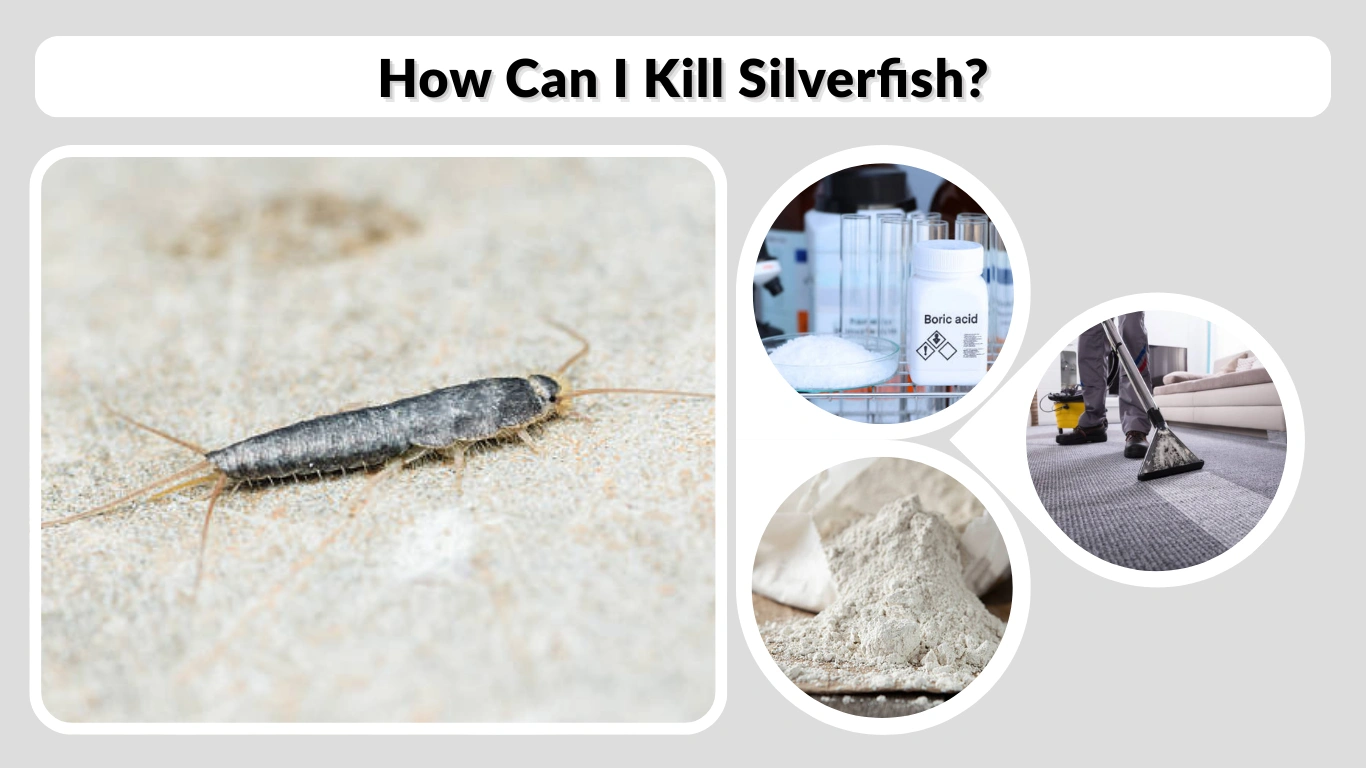
Silverfish are fast-moving, wingless insects that often hide in dark, damp parts of the home. Many people notice them in bathrooms, kitchens, closets, or basements and immediately want to know how to kill silverfish before they damage clothes, books, or stored items. Because silverfish reproduce quietly and avoid light, infestations can grow without being seen. Understanding how silverfish survive indoors and which methods actually kill them is the first step toward eliminating them completely and keeping your home silverfish-free.
What Are Silverfish and Why Are They in Your House?
Silverfish are small insects with a metallic silver or gray appearance and fish-like movements. They usually grow up to one inch long and prefer warm, humid, and dark environments. Their flattened bodies allow them to hide easily in cracks, under baseboards, inside drawers, and behind stored items.
Homes provide ideal conditions for silverfish. Moisture from bathrooms, kitchens, laundry rooms, and basements creates the humidity they need to survive. They feed on starches, sugars, cellulose, and organic debris, which are commonly found in paper products, wallpaper glue, book bindings, clothing residues, and cardboard boxes.
Silverfish often enter houses through tiny gaps around doors, pipes, and foundations. Once inside, they spread quietly because they are nocturnal and rarely seen during the day. This hidden behavior allows populations to increase before homeowners realize a problem exists.
How Can I Kill Silverfish in My House?
Killing silverfish effectively requires more than simply crushing the ones you see. While direct contact sprays and traps can eliminate visible insects, true control means targeting their hiding places, food sources, and breeding areas.
Silverfish thrive where moisture and shelter are available. If humidity is not reduced and nesting areas are not treated, new silverfish will continue to appear. Successful control involves a combination of killing methods, environmental changes, and ongoing prevention.
Natural remedies can help reduce small infestations, while chemical treatments may be necessary for larger or long-standing problems. Understanding how each method works allows you to choose the safest and most effective approach for your home.
Best Ways to Kill Silverfish Naturally
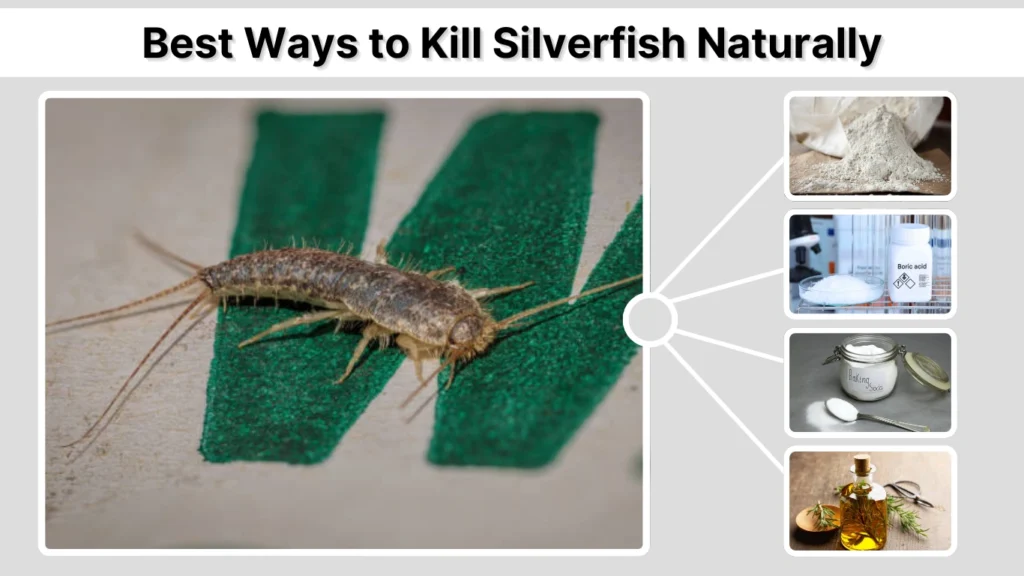
Natural methods are often the first choice for homeowners who want to avoid harsh chemicals, especially in living spaces.
- Diatomaceous earth kills silverfish by damaging their outer coating and dehydrating them. When lightly dusted into cracks, under sinks, and behind appliances, it can be very effective over time.
- Boric acid powder is another powerful natural insecticide. Silverfish walk through it, ingest it while grooming, and eventually die. It works best in dry areas where it will not clump.
- Baking soda mixed with sugar attracts silverfish and disrupts their digestive system when eaten. This mixture can be placed in shallow lids near known activity zones.
- Essential oils and cedar products such as lavender, citrus, or cedarwood act as deterrents and mild killers. They are useful for closets, drawers, and wardrobes.
- Sticky traps do not eliminate infestations alone, but they capture silverfish, reduce numbers, and help identify where activity is highest.
These methods are most effective when combined with cleaning and moisture control.
Chemical Methods to Kill Silverfish
Insecticide Sprays and Dusts
Chemical insecticides provide faster and stronger results when silverfish infestations are well established. Residual sprays are designed to kill silverfish on contact and continue working for weeks after application. These products are usually applied along baseboards, behind toilets, under sinks, and in closet corners.
Insecticidal dusts are especially useful for wall voids, floor cracks, and hidden gaps. When silverfish move through treated areas, the dust sticks to their bodies and kills them gradually. Proper application is important to avoid overuse and unnecessary exposure.
Silverfish Baits and Traps
Silverfish baits attract insects to poisoned food sources that they carry back to their hiding places. This can help reduce unseen populations. Traps also allow homeowners to monitor infestation levels and track whether treatments are working.
Professional Pest Control
Professional exterminators use a combination of industrial-grade insecticides, targeted dusts, and environmental treatments. They also locate hidden moisture problems and nesting zones that homeowners may miss. Professional help is often the most effective solution for severe or recurring infestations.
Where to Apply Treatments to Kill Silverfish
Silverfish are most often found near moisture and stored materials. Bathrooms, kitchens, and laundry rooms should be treated around sinks, drains, cabinets, and behind appliances. Closets and wardrobes require attention along shelves, baseboards, and corners, especially where cardboard or fabric is stored.
Basements, attics, and storage rooms are common nesting sites because they offer darkness, warmth, and undisturbed shelter. Cracks in walls, floor gaps, pipe openings, and spaces behind baseboards should be treated thoroughly, as these are the main travel routes for silverfish.
How to Kill Silverfish Eggs and Nests
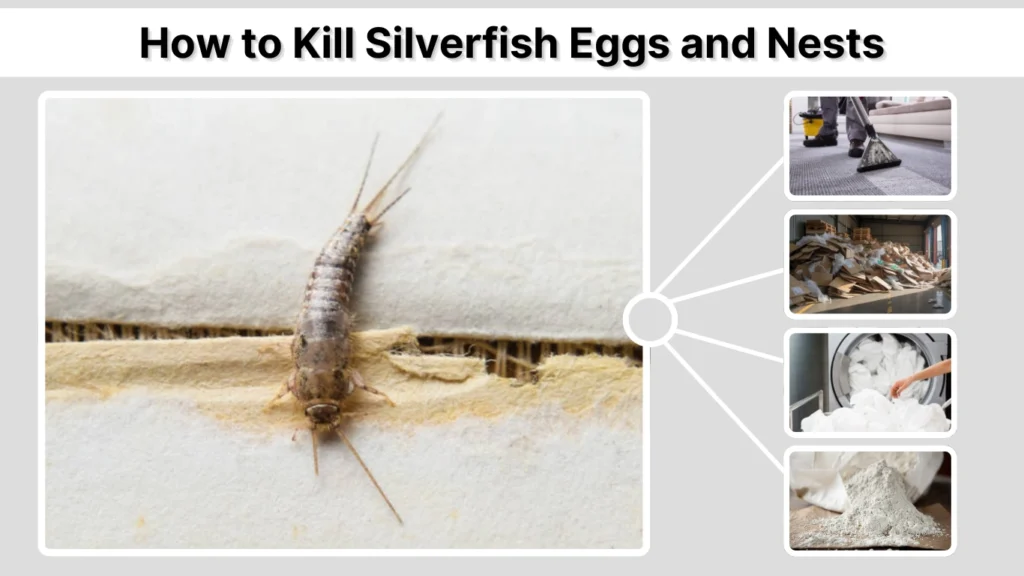
Eliminating adult silverfish is only part of the solution. To stop an infestation permanently, you must also destroy eggs and hidden nesting areas. Silverfish lay eggs in small cracks, behind baseboards, under flooring, and inside wall voids. These eggs hatch quietly, allowing infestations to return even after adults are killed.
- Vacuum infested zones thoroughly, especially cracks, carpet edges, closet corners, and behind furniture. Immediately seal and discard the vacuum bag.
- Remove cardboard, paper stacks, and fabric clutter, which provide both shelter and food for developing silverfish.
- Wash and heat-treat fabrics, including stored clothing, rugs, and linens. Heat kills eggs and immature insects.
- Apply residual powders such as diatomaceous earth or boric acid into wall gaps and under baseboards to kill newly hatched silverfish.
- Dehumidify rooms to prevent eggs from surviving, since silverfish need moisture to reproduce.
Targeting eggs is essential for long-term control.
How to Stop Silverfish From Coming Back
Once silverfish numbers are reduced, prevention becomes the most important step. Moisture control is the foundation of long-term success. Use dehumidifiers in damp rooms, improve airflow, and repair leaking pipes or faucets. Even small water sources can sustain silverfish populations.
Seal cracks around windows, doors, baseboards, and plumbing openings to block entry points and nesting areas. Store clothing, books, and important papers in airtight plastic containers rather than cardboard boxes. Regular vacuuming and decluttering remove food sources and reduce hiding spots.
Routine inspections of closets, bathrooms, and basements help detect early activity before infestations grow again.
Common Mistakes When Trying to Kill Silverfish
A common mistake is only killing the silverfish that are visible. Because most silverfish hide during the day, this approach never reaches the main population. Another frequent error is ignoring humidity. Without moisture control, silverfish will continue to survive regardless of how many are killed.
Overusing sprays is also problematic. Excessive chemical use may push silverfish deeper into walls instead of eliminating them. Skipping follow-up treatments allows eggs to hatch and infestations to rebuild.
Long-term success requires consistency, targeted treatment, and environmental management.
Are Silverfish Dangerous to Humans?

Silverfish do not bite, sting, or transmit diseases to humans. They are not considered medically dangerous. However, their presence can be distressing, especially when they appear in bedrooms, bathrooms, and kitchens.
In heavily infested homes, silverfish scales and droppings may contribute to allergies or respiratory irritation. More importantly, silverfish cause property damage by destroying books, wallpaper, clothing, and stored materials. Their economic and cleanliness impact is the main reason they should be controlled.
When Should You Call a Professional?
If silverfish continue appearing after multiple treatments, professional pest control may be necessary. Large infestations often involve hidden nests inside walls, under floors, or in structural voids that are difficult to reach without specialized tools.
Widespread sightings across several rooms, recurring damage to books or clothes, and persistent moisture problems are strong signs that professional intervention is needed. Exterminators can identify nesting zones, apply industrial-grade products, and create long-term control plans to stop reinfestation.
FAQs
How can I kill silverfish instantly?
Silverfish can be killed instantly using direct-contact insecticide sprays, crushed manually, or vacuumed. Aerosol sprays formulated for crawling insects work quickly when applied directly. However, instant methods only remove visible silverfish and must be combined with nest treatment for lasting control.
What is the best home remedy to kill silverfish?
Diatomaceous earth and boric acid are among the most effective home remedies. They kill silverfish by dehydrating them or disrupting their digestive system. These powders work best when applied to cracks, baseboards, and hidden travel routes where silverfish move at night.
Can vacuuming really kill silverfish?
Vacuuming removes adult silverfish, eggs, shed skins, and food sources, making it a powerful control step. While it will not solve infestations alone, frequent vacuuming combined with moisture control and residual treatments greatly reduces silverfish populations.
Why do silverfish keep coming back after I kill them?
Silverfish usually return because eggs and hidden nests remain untouched. High humidity, cardboard storage, and untreated wall gaps allow new silverfish to hatch and survive. Killing adults without changing environmental conditions leads to repeated infestations.
What permanently kills silverfish in a house?
Permanent control comes from combining killing methods with moisture reduction, sealed storage, and nest treatment. Eliminating humidity, removing food sources, and applying long-lasting powders or professional treatments are the most reliable ways to stop silverfish permanently.