
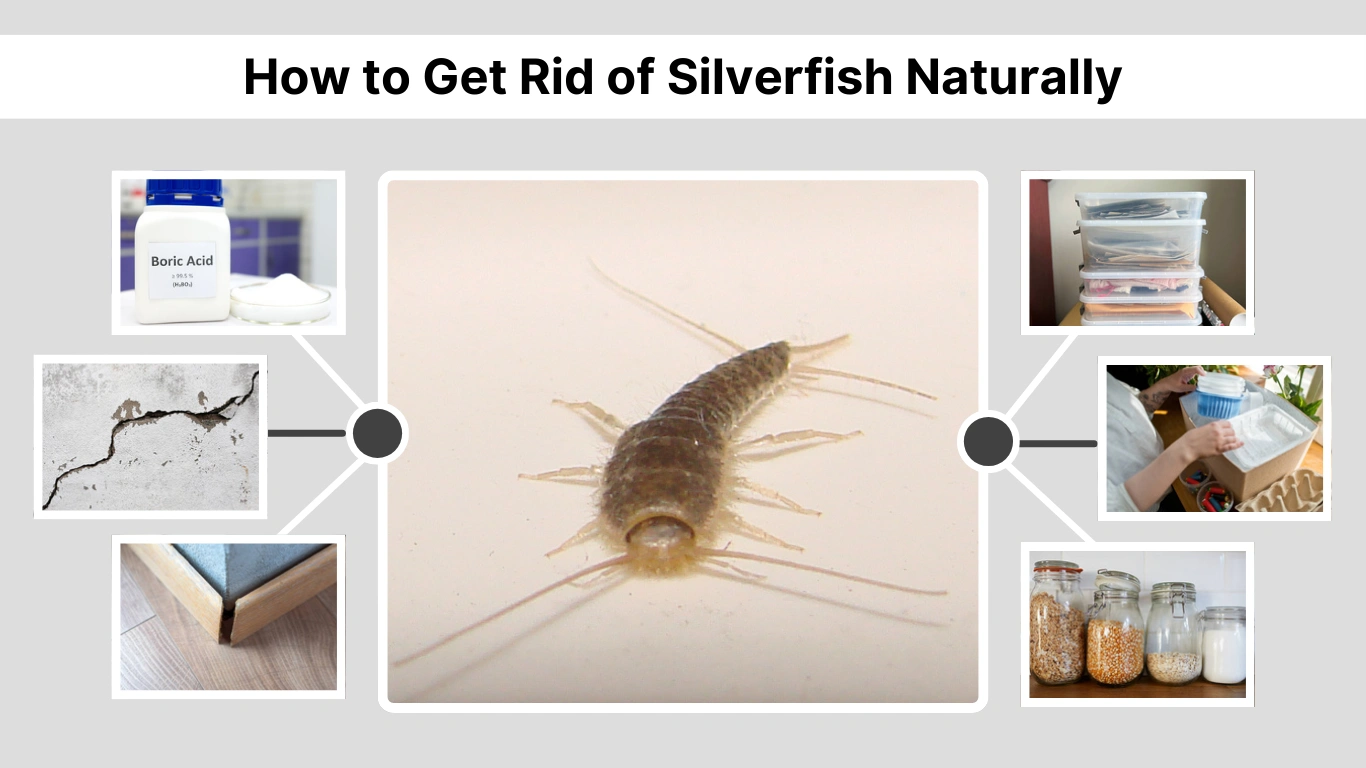
Silverfish are persistent moisture-loving insects that often invade bathrooms, kitchens, bedrooms, and closets. Although they don’t bite or spread disease, they cause costly damage to books, clothes, paper, wallpaper, and pantry items. Their quick movement and ability to hide in tiny gaps make them hard to eliminate unless you use the right combination of strategies. This guide explains exactly how to get rid of silverfish naturally, permanently, and effectively—whether you’re dealing with a mild nuisance or a full infestation.
How to Identify Silverfish
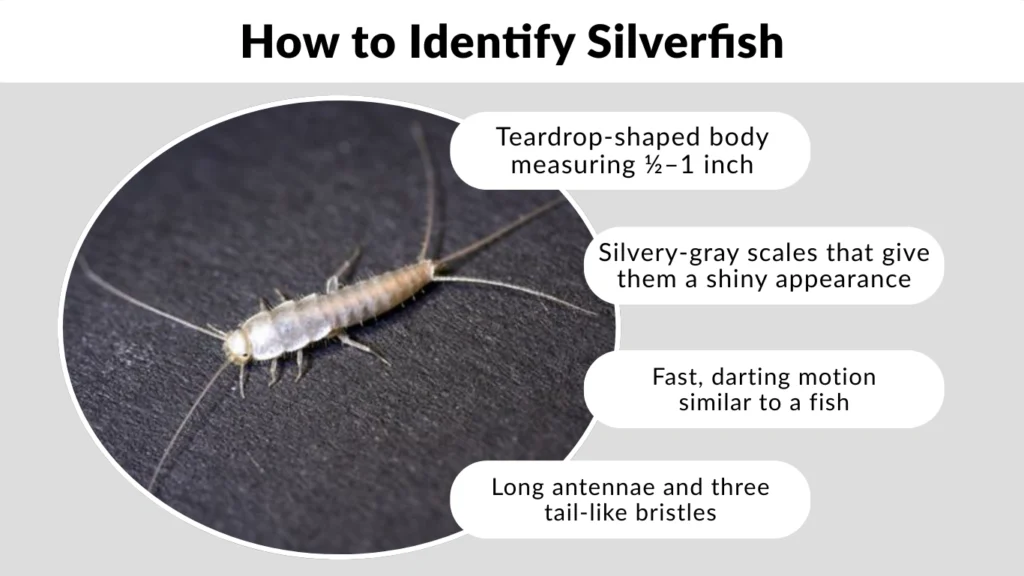
- Teardrop-shaped body measuring ½–1 inch
- Silvery-gray scales that give them a shiny appearance
- Fast, darting motion similar to a fish
- Long antennae and three tail-like bristles
- Commonly found in damp, dark places such as bathrooms, sinks, basements, attics, and closets
Silverfish Behavior, Habitat & Why They Invade Homes
Silverfish thrive in high-humidity environments, making bathrooms, laundry rooms, and basements ideal for them. They prefer temperatures between 70–90°F and hide inside wall gaps, behind baseboards, and inside cabinets during the day. Their nocturnal nature means most activity goes unnoticed until you find damage—holes in clothes, chewed book pages, or yellow stains on paper products.
These insects survive on a wide range of starchy and sugary materials, including cardboard, glue, flour, cereal, cotton, wallpaper paste, and even dandruff. Because they can live months without food and reproduce steadily, an untreated infestation can spread throughout the house. Regions with humid climates, such as Florida, coastal regions, and older damp apartments, see silverfish population spikes year-round.
7 Effective Methods to Get Rid of Silverfish
Below are the most reliable ways to eliminate silverfish from bathrooms, kitchens, closets, attics, and the entire home. These methods combine moisture control, natural remedies, and long-term prevention.
1. Reduce Moisture at the Source
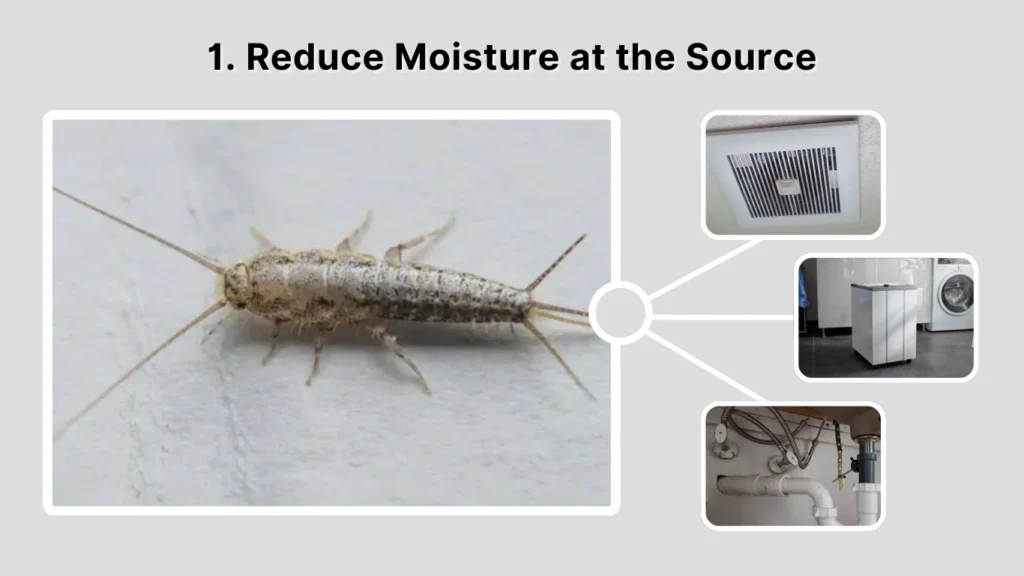
Silverfish cannot survive long-term in dry environments. This makes moisture control the single most important step in the removal process.
Ways to reduce humidity include:
- Run bathroom exhaust fans during and after showers
- Use a dehumidifier in basements, laundry rooms, and damp bedrooms
- Repair plumbing leaks under sinks, around toilets, or behind walls
- Replace damp bath mats and regularly wash fabric items
- Improve airflow in closets by leaving doors slightly open
Lowering humidity to below 50% makes your home far less appealing to silverfish and slows down their reproduction.
2. Seal Cracks, Gaps, and Entry Points
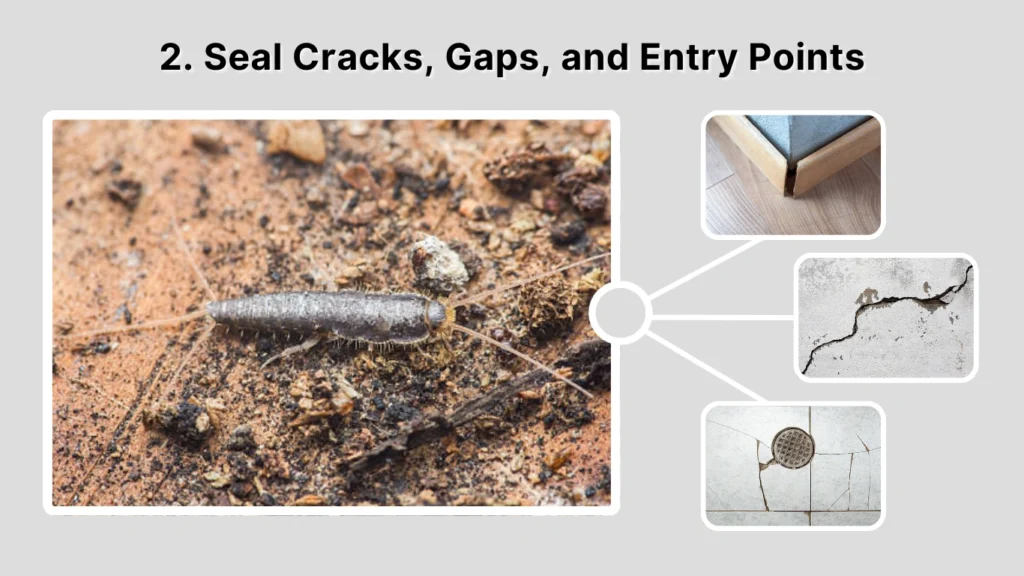
Silverfish hide in narrow cracks, behind baseboards, and around plumbing fixtures. Blocking their hiding places reduces breeding areas and improves the effectiveness of traps and powders.
Focus on sealing:
- Baseboard gaps
- Wall cracks
- Tile seams in bathrooms
- Spaces around sinks and shower pipes
- Cabinet wall openings
- Door frames and closet interiors
For bathrooms, sealing gaps around the toilet base and bathtub rim prevents silverfish from accessing moisture-heavy zones where they commonly breed.
3. Use Diatomaceous Earth (DE) — Natural & Highly Effective
Food-grade diatomaceous earth is one of the safest and most effective natural silverfish killers. It works by dehydrating insects upon contact.
Where to apply DE:
- Behind toilets
- Under bathroom and kitchen sinks
- Along wall edges and baseboards
- Inside closets or under shelving
- Around boxes in attics and basements
Lightly dust the powder in thin lines so silverfish must walk through it. Unlike chemical sprays, DE continues working as long as it stays dry. It’s also pet-friendly when applied in out-of-reach areas.
4. Apply Borax or Boric Acid for Strong DIY Control
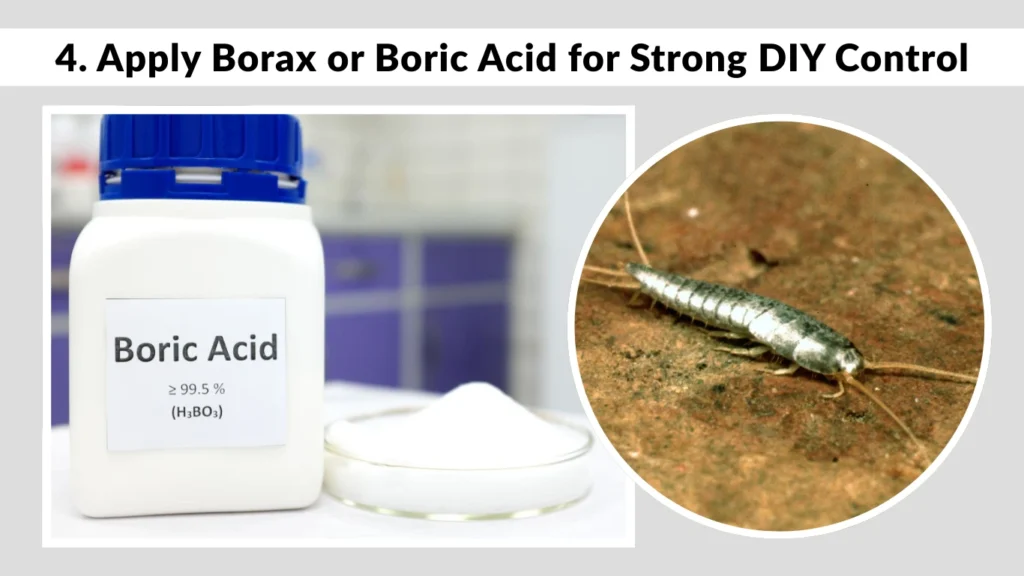
Borax and boric acid are powerful silverfish control agents that kill both adults and nymphs. When mixed with a small amount of sugar or flour, they form an irresistible bait.
Best places to use borax:
- In attic corners
- Under appliances
- Behind washers and dryers
- Inside wall gaps
- Under sinks and around bathroom flooring edges
Because borax is slightly toxic to pets and children, it should be applied only in locations that are inaccessible but still active with pests. When used correctly, it can drastically reduce infestations within days.
5. Set Traps and Baits for Faster Results
Sticky traps, jar traps, and commercial baits help quickly reduce populations, especially when you’re trying to get rid of silverfish once and for all.
Types of traps that work well:
- Sticky glue traps placed behind toilets, in kitchen cabinets, and inside closets
- DIY glass jar traps lined with tape on the outside and baited with bread or flour inside
- Commercial silverfish baits for severe infestations
Traps are especially effective in bathrooms, bedrooms, and kitchens where silverfish come out at night to feed. Combined with moisture control and sealing gaps, traps can significantly reduce the number of insects within the first week.
6. Declutter & Remove Food Sources
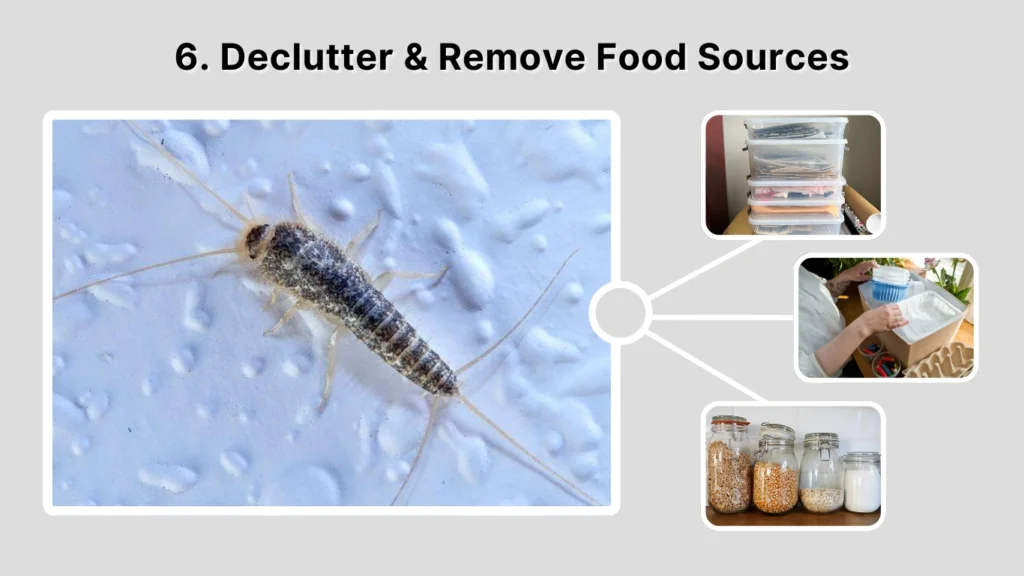
Silverfish thrive in cluttered, undisturbed spaces filled with books, paper, fabric, and cardboard. Reducing these food sources forces them to relocate and makes treatment far more effective.
Ways to remove attractants:
- Use airtight bins to store clothing, papers, books, and craft supplies
- Replace cardboard boxes with plastic containers
- Keep pantry staples like flour, cereal, and sugar in sealed jars
- Vacuum carpets, baseboards, and corners weekly
- Avoid leaving damp towels or laundry on floors
This strategy is especially important in closets, attics, and basements where silverfish often establish long-term nesting sites.
7. Use Natural Repellents for Long-Term Prevention
Once you eliminate an active infestation, natural repellents help keep silverfish from returning. These plant-based options work without harsh chemicals and can be safely used around the home.
Effective natural repellents include:
- Cedar oil or cedar blocks in closets and dresser drawers
- Bay leaves inside kitchen cabinets and food storage areas
- Clove oil applied to cotton balls and placed behind furniture
- Citrus sprays along baseboards and wall edges
- Lavender sachets in clothing storage
While these remedies won’t kill large numbers of silverfish, they significantly reduce the likelihood of reinfestation when combined with moisture control and cleaning.
Silverfish vs Firebrats, Earwigs, and Centipedes (Comparison Table)
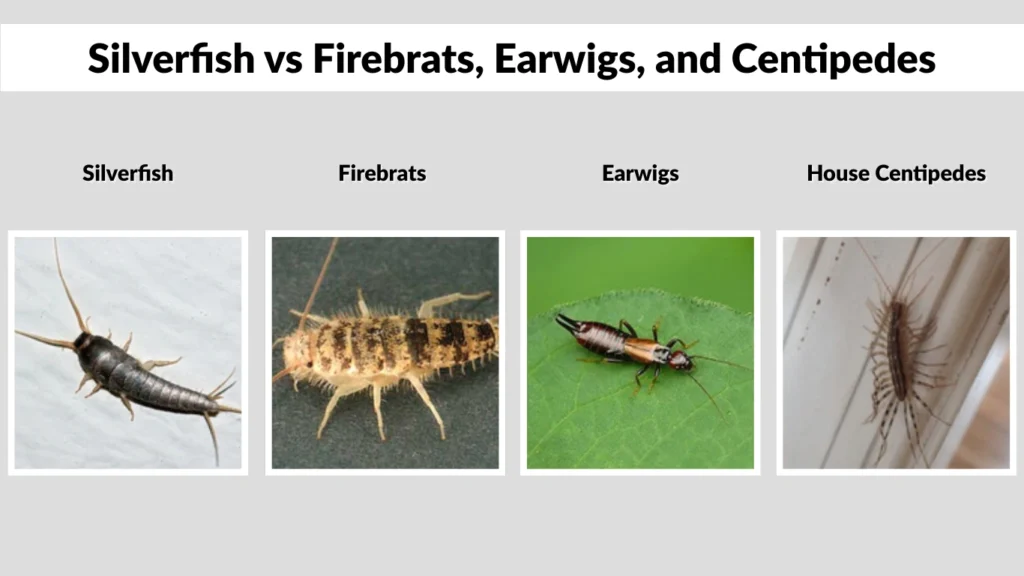
| Feature | Silverfish | Firebrats | Earwigs | House Centipedes |
| Color | Silver/gray | Mottled brown | Brown/red | Yellow-gray |
| Habitat | Damp areas | Hot, dry areas | Moist soil | Damp indoors |
| Threat | Damages items | Similar damage | Mild pinch | Eats pests |
| Behavior | Nocturnal | Nocturnal | Outdoor/indoor | Fast hunters |
| Control | Moisture + bait | Heat + bait | Outdoor cleanup | Reduce insects |
How to Get Rid of Silverfish in Specific Locations
Bathrooms
Bathrooms are the most common silverfish hotspots due to constant moisture. Use a dehumidifier or run exhaust fans after showers, fix leaks under the sink, and dry wet bath mats. Apply diatomaceous earth around toilets, shower bases, and under cabinets. Removing clutter and sealing cracks helps eliminate breeding sites inside tile crevices and plumbing voids.
Kitchens
In kitchens, silverfish are drawn to sugar, flour, cereal, pet food, and cardboard packaging. Store food in airtight containers, clean crumbs from floors, and regularly wipe cabinets. Bay leaves or citrus sprays help deter them naturally. Place sticky traps behind appliances, under sinks, and inside cabinets to catch nighttime activity.
Bedrooms & Closets
Silverfish hide in clothing piles, old papers, cardboard boxes, and dark corners. Keep clothing dry and store delicate fabrics in sealed bins. Cedarwood blocks or lavender sachets provide natural long-term deterrence. Vacuum under beds and dressers often, and avoid stacking books or storage items directly against walls.
Attics & Basements
These areas commonly have poor airflow. Use a dehumidifier, seal wall cracks, and store belongings in plastic rather than cardboard. Dust diatomaceous earth in corners and under shelving. Removing clutter and improving ventilation is crucial, as silverfish eggs often survive undisturbed in these zones for months.
Apartments
Apartment silverfish issues can be worse because pests travel between units. Inform your landlord if you see repeated activity. Focus on humidity reduction and sealing gaps around pipes shared between kitchens or bathrooms. Traps and DE are highly effective, but preventing re-entry through shared walls is key.
Natural Remedies for Silverfish
Natural solutions are ideal for mild infestations or long-term prevention. These options are safe, eco-friendly, and easy to apply:
- Food-grade diatomaceous earth
- Cedarwood oil or blocks
- Bay leaves in cabinets
- Clove oil cotton balls
- Citrus peels or citrus-based sprays
- Borax and sugar bait
- Lavender sachets
Combining these with airflow improvements and regular cleaning creates an environment where silverfish cannot thrive.
Prevention Tips to Keep Silverfish Away
Preventing silverfish is simpler than eliminating a large infestation. Focus on reducing humidity, sealing entry points, and maintaining cleanliness.
Important prevention steps:
- Maintain indoor humidity below 50%
- Store dry goods in sealed jars
- Seal cracks around plumbing and baseboards
- Vacuum carpets and closets regularly
- Replace cardboard storage with airtight bins
- Keep bathrooms, laundry rooms, and basements well-ventilated
- Use natural repellents in long-term storage areas
Consistent maintenance ensures silverfish cannot return even months after treatment.
FAQ
How long does it take to get rid of silverfish?
Most light infestations clear in 2–3 weeks with traps, DE, and moisture reduction. Severe infestations may take 4–6 weeks, especially if eggs are hidden in wall gaps or basements. Consistent application of treatments is key to lasting results.
Are silverfish harmful to humans?
Silverfish do not bite, sting, or spread diseases. Their main issue is property damage to books, wallpaper, photos, and clothing. While harmless to people, their presence can indicate high moisture levels that may lead to mold or structural concerns.
Do mothballs get rid of silverfish?
Mothballs may repel silverfish temporarily but do not eliminate them, and they release toxic fumes. Safer options include diatomaceous earth, cedar, citrus sprays, or borax-based treatments. Mothballs are not recommended for indoor pest control.
Why do I have silverfish in my bathroom?
Bathrooms provide warmth, darkness, moisture, and easy food sources such as paper, shampoo residue, and glue from wallpaper. Leaky pipes, wet towels, and poor ventilation encourage infestations. Improving airflow is one of the fastest ways to reduce activity.
When should I call professional pest control?
Call a pest professional if silverfish persist after 4–6 weeks of DIY treatment, if they appear in multiple rooms, or if you notice widespread damage to clothing or paper items. Professionals can locate hidden nests and apply stronger residual treatments.