
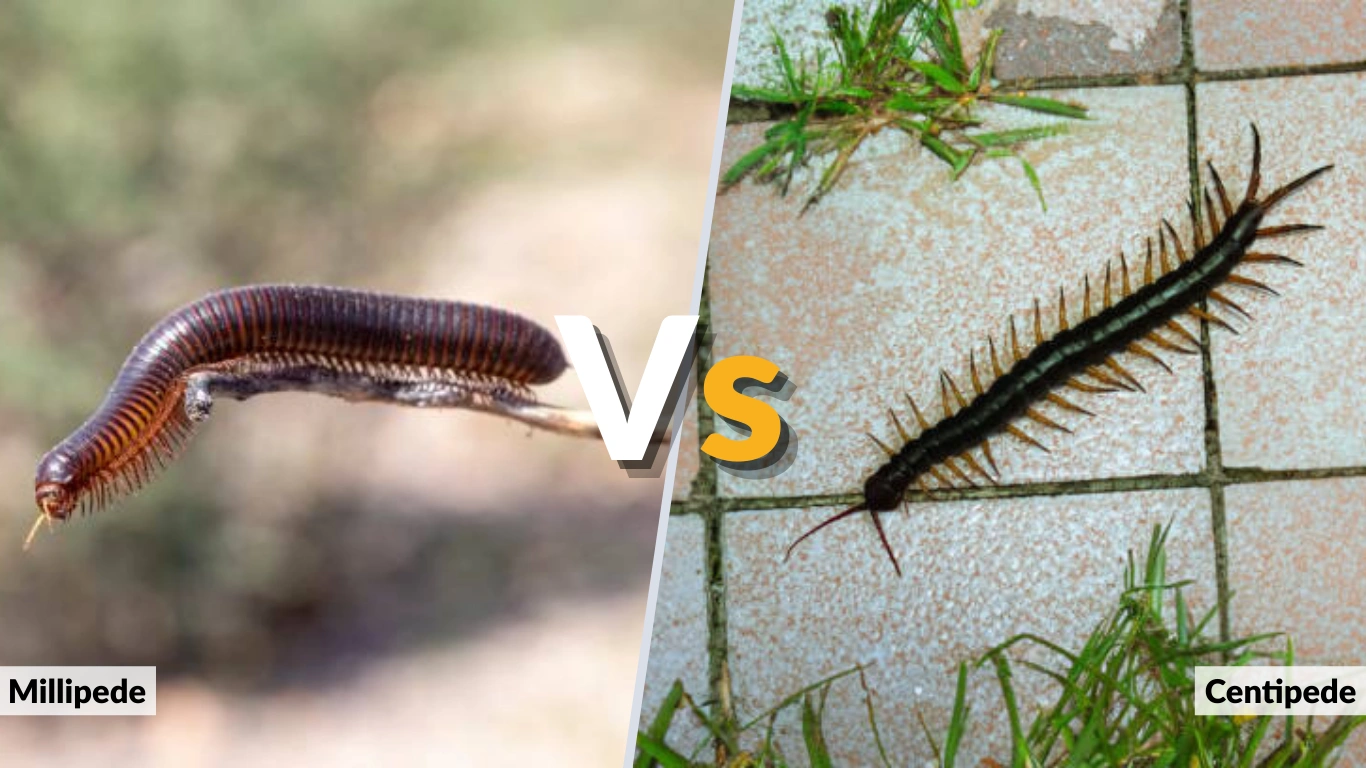
Millipedes and centipedes are often mistaken for each other because of their long, segmented bodies and many legs. However, these two arthropods are very different in appearance, behavior, and how they interact with humans. One is a slow-moving decomposer that helps break down organic matter, while the other is a fast, venomous predator. If you’ve ever found one in your garden or home, knowing which is which can help you respond appropriately. This guide explains their key differences in simple, practical terms.
Millipede vs Centipede: Quick Comparison
At first glance, millipedes and centipedes may look nearly identical. But a closer look reveals clear differences in body shape, leg structure, speed, and defense mechanisms.
| Feature | Millipede | Centipede |
| Legs per segment | Two pairs | One pair |
| Body shape | Cylindrical | Flattened |
| Speed | Slow | Fast |
| Diet | Decaying plants | Insects & spiders |
| Defense | Toxic secretion | Venomous bite |
| Risk to humans | Very low | Mild to moderate |
The simplest way to tell them apart is by their movement and body shape. Millipedes move slowly and have rounded bodies, while centipedes are flat and move quickly.
What Is a Millipede?
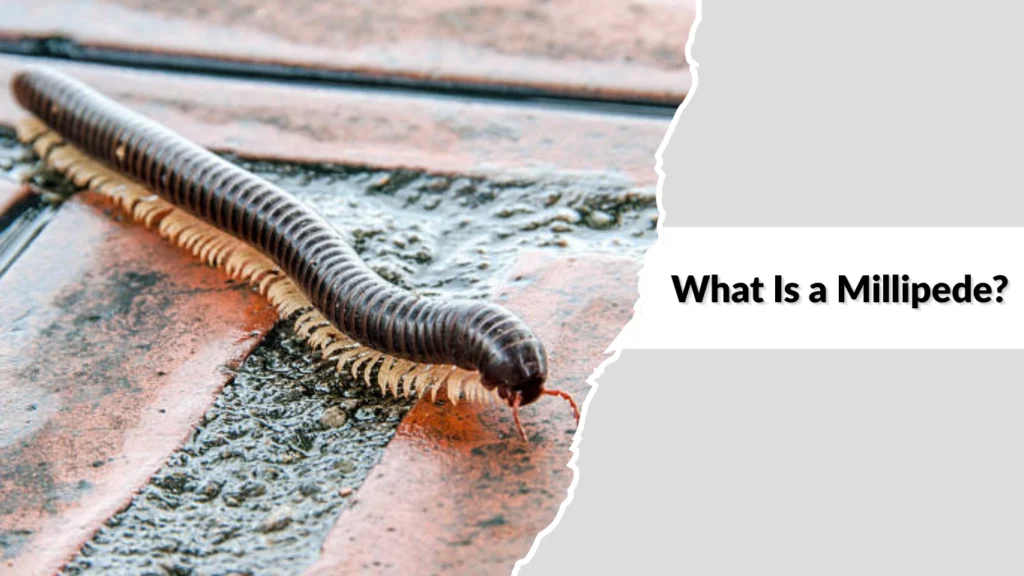
Millipedes belong to a group of arthropods known as myriapods. Despite their name meaning “a thousand feet,” no millipede actually has that many legs. However, they can have anywhere from dozens to hundreds of legs depending on the species.
Physical Characteristics
Millipedes have long, cylindrical bodies made up of many segments. Each body segment typically has two pairs of legs, which is one of their defining features. Their bodies are rounded rather than flat, and they usually appear dark brown or black, though some species may have reddish tones.
They have short antennae and relatively small heads compared to their body length. Because their legs are positioned underneath their body, they often appear to glide slowly along surfaces.
Behavior and Diet
Millipedes are primarily detritivores, meaning they feed on decaying organic matter such as dead leaves, wood, and plant debris. They play an important role in ecosystems by helping break down organic material and returning nutrients to the soil.
They prefer moist environments and are commonly found in:
- Leaf litter
- Compost piles
- Under logs and rocks
- Garden mulch
Millipedes are slow-moving and non-aggressive. When threatened, they typically curl into a tight spiral to protect their softer underside.
Are Millipedes Dangerous?
Millipedes do not bite humans. Instead of using venom, they rely on a defensive chemical secretion to deter predators. This secretion can sometimes cause mild skin irritation or an unpleasant smell, but it is generally harmless.
For most people, millipedes pose no serious risk. They are more of a nuisance than a danger, especially if they wander indoors during periods of heavy rain or high humidity.
What Is a Centipede?
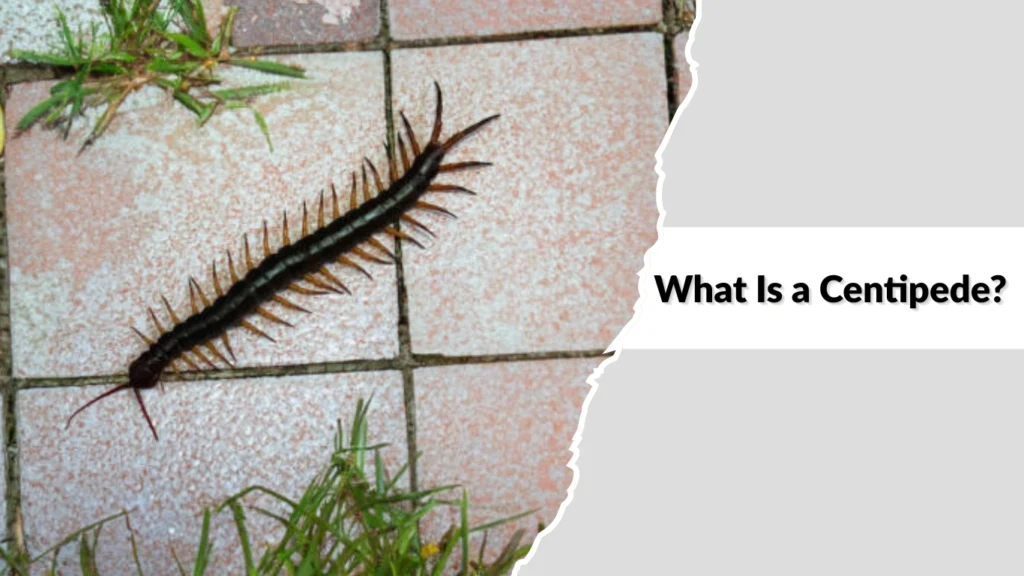
Centipedes are also myriapods, but unlike millipedes, they are active predators. They are built for speed and hunting, which makes them very different in both behavior and structure.
Physical Characteristics
Centipedes have flattened bodies with one pair of legs per segment. This is the easiest physical way to distinguish them from millipedes. Their legs extend outward from the sides of their body, giving them a wider and more intimidating appearance.
They have long antennae and specialized front legs called forcipules, which function like venom claws. These claws are used to capture and immobilize prey.
Centipedes are generally:
- Faster-moving
- More flexible
- Lighter in build compared to millipedes
The common house centipede, for example, has very long, delicate legs and can move extremely quickly across floors and walls.
Behavior and Diet
Unlike millipedes, centipedes are carnivorous. They feed on insects, spiders, and other small arthropods. Because of this, they can actually be beneficial in homes by reducing populations of other pests.
Centipedes are nocturnal hunters and prefer dark, damp environments such as:
- Basements
- Bathrooms
- Under stones
- Beneath bark
Their speed allows them to actively chase down prey rather than waiting passively.
Are Centipedes Dangerous?
Centipedes are venomous, meaning they inject venom into their prey through their forcipules. If handled or threatened, they can bite humans.
In most cases, a centipede bite feels similar to a bee sting. Symptoms may include:
- Localized pain
- Redness
- Mild swelling
Serious reactions are rare, though larger tropical species can deliver more painful bites. For most people, centipedes are not medically dangerous but can certainly be alarming.
Key Differences Between Millipedes and Centipedes
Although they share a similar body structure and belong to the same broader group, millipedes and centipedes differ significantly in several key ways.
Number of Legs
Millipedes have two pairs of legs per body segment, while centipedes have one pair per segment. This structural difference is one of the most reliable identification methods.
Despite the name “millipede,” they do not actually have a thousand legs. The number simply reflects their many-segmented body design.
Body Shape and Movement
Millipedes have a rounded, cylindrical body and move slowly in a wave-like motion. Their movement is steady and unhurried.
Centipedes, on the other hand, have flattened bodies and move quickly. Their legs extend outward, which helps them run rapidly and navigate tight spaces.
If you see a fast-moving, flat-bodied creature dart across the floor, it is almost certainly a centipede.
Millipede vs Centipede Bite Comparison
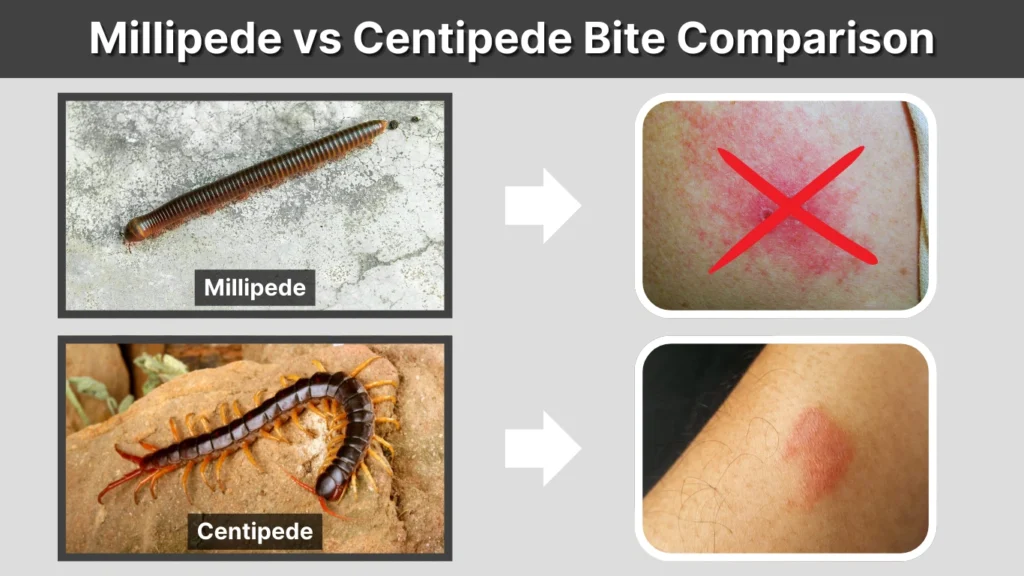
One of the most common concerns people have is whether these creatures bite — and how dangerous that bite might be.
Millipedes do not bite. They lack venom claws and are not aggressive toward humans. However, when threatened, they may release a defensive chemical secretion. This substance can sometimes cause mild skin irritation or staining, especially if handled roughly. Washing the area with soap and water is usually enough to prevent discomfort.
Centipedes, on the other hand, can bite. They use modified front legs called forcipules to inject venom into their prey. While centipedes rarely bite humans unless provoked or trapped, the bite can be painful. Most people describe it as similar to a bee sting, causing redness, swelling, and temporary discomfort.
Severe reactions are uncommon but possible, especially in individuals with allergies. If intense swelling, difficulty breathing, or prolonged pain occurs, medical attention should be sought.
Overall, centipedes pose a slightly higher risk, but neither creature is considered highly dangerous to humans.
Which One Is More Dangerous?
When comparing overall danger levels, centipedes are generally more hazardous than millipedes — but the risk is still low.
Millipedes are essentially harmless. They do not bite, sting, or attack. The only potential issue is their defensive secretion, which may cause mild irritation. In large numbers, they can become nuisance pests, but they do not damage homes or spread disease.
Centipedes are venomous predators. Although their bites can be painful, they are rarely medically significant. Larger species, especially tropical varieties, may cause stronger reactions, but serious complications are extremely rare.
In most cases, centipedes actually provide benefits by reducing populations of other insects such as cockroaches, ants, and spiders. Millipedes contribute by breaking down organic material and enriching soil.
Neither species should cause panic. Awareness and proper handling are usually enough to manage encounters safely.
How to Get Rid of Millipedes and Centipedes
If you find these creatures inside your home, the solution often lies in controlling moisture and entry points rather than using harsh chemicals.
Preventing Infestations
Both millipedes and centipedes are attracted to damp environments. Reducing moisture is the most effective long-term strategy.
- Fix leaking pipes and faucets
- Use dehumidifiers in basements
- Improve ventilation in bathrooms
- Clean gutters and improve outdoor drainage
- Seal cracks around windows, doors, and foundations
Outdoors, remove leaf piles, mulch buildup, and rotting wood near your home’s foundation. These materials create ideal hiding spots.
Safe Removal Methods
If you encounter one indoors:
- Vacuum or gently capture and release it outside
- Use sticky traps for monitoring
- Avoid crushing millipedes directly, as they may release defensive chemicals
Chemical pesticides are rarely necessary unless there is a significant infestation. In persistent cases, consulting a pest control professional may be helpful.
Ecological Importance of Both Species
Despite their unsettling appearance, both millipedes and centipedes play essential roles in ecosystems.
Millipedes are decomposers. They feed on dead leaves, wood, and organic matter, helping break down debris and return nutrients to the soil. Without them, forest floors would accumulate excessive plant waste.
Centipedes act as natural pest controllers. By feeding on insects and small arthropods, they help maintain ecological balance. In gardens, they can reduce populations of harmful pests.
Understanding their ecological value can help shift the perception of these creatures from pests to important environmental contributors.
FAQs
How can you tell a millipede from a centipede?
The easiest way to tell them apart is by examining their legs and body shape. Millipedes have two pairs of legs per body segment and a rounded body, while centipedes have one pair per segment and a flattened body. Centipedes also move much faster and have visible front claws.
Are centipedes more dangerous than millipedes?
Yes, centipedes are more dangerous because they can bite and inject venom. However, their bites are usually mild and rarely cause serious medical issues. Millipedes do not bite and are generally harmless, aside from occasional minor skin irritation from their defensive secretions.
Do millipedes bite humans?
No, millipedes do not bite humans. They lack venom claws and are not aggressive. When threatened, they curl into a spiral and may release a defensive chemical. This substance can cause mild irritation but is not considered dangerous.
Why do millipedes curl up?
Millipedes curl into a tight spiral as a defense mechanism. This posture protects their softer underside and legs while exposing their tougher outer shell. It also helps them release defensive chemicals more effectively if a predator attempts to attack.
Should I kill centipedes in my house?
Not necessarily. House centipedes often help control other indoor pests like spiders and cockroaches. If their presence is minimal, they can be beneficial. However, if you notice large numbers, addressing moisture issues and sealing entry points is a better long-term solution than simply killing them.
Conclusion
Although millipedes and centipedes may look similar at first glance, they are very different in structure, behavior, and risk level. Millipedes are slow-moving decomposers that rely on chemical defenses, while centipedes are fast, venomous predators. In most cases, neither poses a serious threat to humans.
Learning how to identify them properly helps reduce unnecessary fear and ensures appropriate action if they enter your home. Rather than viewing them solely as pests, it’s helpful to recognize the important roles they play in maintaining ecological balance.