
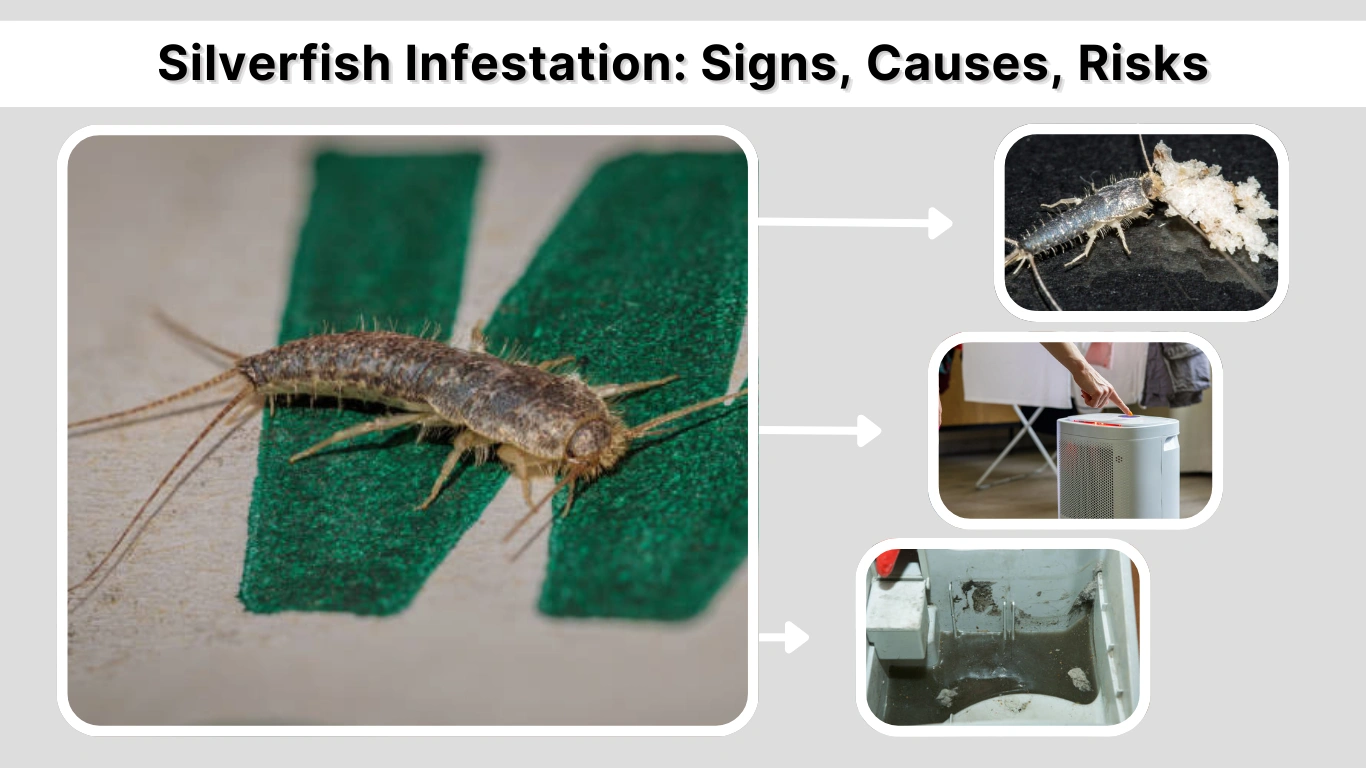
Silverfish infestations are a common but often misunderstood household problem. These small, fast-moving insects usually remain hidden during the day, allowing their numbers to grow quietly behind walls, under floors, and inside stored items. Because they feed on paper, fabrics, and food residues, silverfish can cause long-term damage if an infestation is not addressed early. Understanding how infestations begin, what signs to look for, and why silverfish choose certain environments is the first step toward effective control.
What Is a Silverfish Infestation?
A silverfish infestation occurs when a breeding population establishes itself inside a home or building. Seeing one silverfish does not always mean there is an infestation, but repeated sightings, especially in multiple rooms, usually indicate that eggs, nymphs, and adults are present.
Silverfish infestations tend to persist because these insects reproduce slowly but live for several years. They hide in cracks, wall voids, storage boxes, and under appliances, which protects them from light, predators, and many surface sprays. Over time, overlapping generations allow the population to expand without being noticed.
Why Do Silverfish Infest Homes?
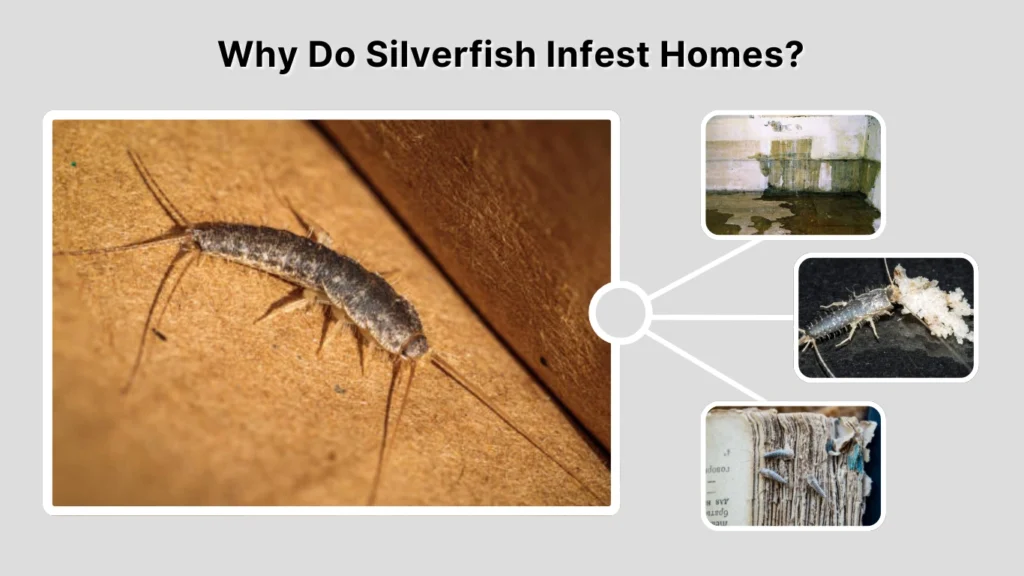
Silverfish enter homes in search of three main things: moisture, food, and shelter. Modern houses provide all three in abundance.
Humidity is the most important factor. Bathrooms, kitchens, basements, and laundry rooms often maintain moisture levels high enough for silverfish eggs and nymphs to survive. Even small leaks, condensation on pipes, or poor ventilation can create ideal micro-habitats.
Food sources are surprisingly easy for silverfish to find. They feed on starches and sugars found in book bindings, wallpaper paste, cardboard, fabrics, pet food, spilled flour, and even microscopic mold. Because these materials are common in most homes, silverfish can survive even where sanitation is good.
Shelter completes the environment. Cracks in walls, gaps under baseboards, cluttered storage, and stacked papers provide dark, undisturbed spaces where silverfish can hide, molt, and lay eggs.
Common Signs of a Silverfish Infestation
Physical Sightings
One of the earliest signs of a silverfish infestation is seeing live silverfish, usually late at night when lights are turned on. They often dart across bathroom floors, kitchen counters, or basement walls. Frequent sightings, especially of different sizes, suggest an active breeding population.
Property Damage
Silverfish feed by scraping surfaces, leaving irregular holes, notches, and surface etching. Damaged books, yellowed wallpaper, chewed clothing, and contaminated pantry items are common indicators. Over time, infestations can destroy stored documents, photographs, and natural-fiber fabrics.
Biological Evidence
As silverfish grow, they shed their skins. These translucent, paper-thin exoskeletons may collect in corners, under sinks, or inside storage boxes. Tiny pepper-like droppings and hidden egg clusters in cracks may also be present, although they are rarely noticed without close inspection.
Where Silverfish Infestations Usually Start
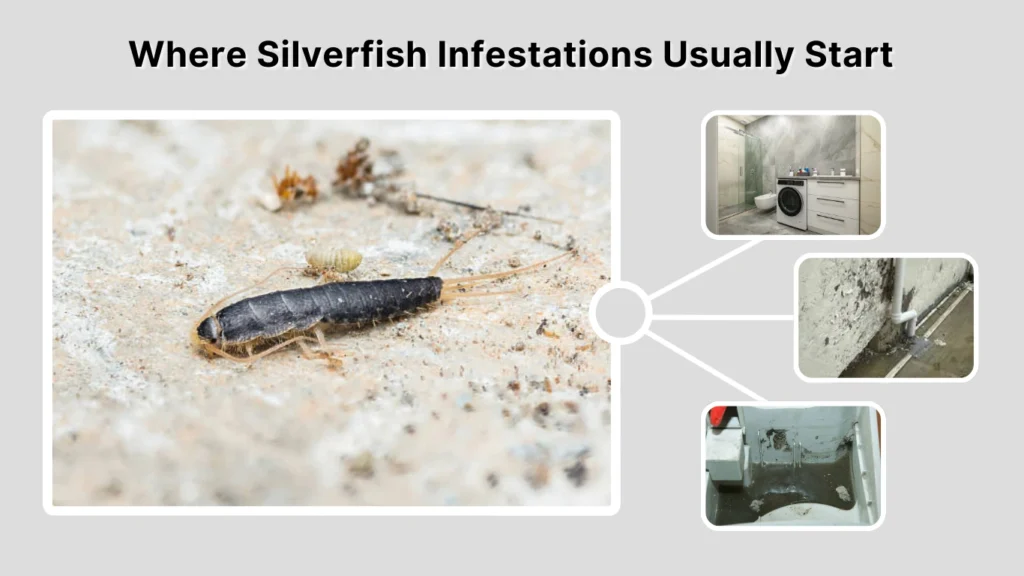
Silverfish infestations almost always begin in dark, humid, undisturbed areas. Bathrooms and laundry rooms are frequent starting points because of moisture from showers, sinks, and washing machines. Basements and crawl spaces are also prime habitats due to naturally higher humidity and limited airflow.
Kitchens and pantries support infestations when food residues and cardboard packaging are available. Bookcases, closets, and storage rooms provide both food and shelter, especially when filled with papers, fabrics, and boxes. From these locations, silverfish gradually spread into walls and other rooms.
How a Silverfish Infestation Develops
Infestations begin when adult silverfish lay eggs in protected cracks, behind baseboards, inside wall voids, or among stored materials. Eggs hatch into small nymphs that immediately start feeding and hiding in the same areas.
Because silverfish develop slowly and can live for years, infestations grow gradually. Multiple generations often overlap, meaning eggs, juveniles, and adults are all present at the same time. This makes infestations difficult to eliminate, since killing visible adults does not affect hidden eggs or deep-harbored nymphs.
What Causes Silverfish Infestations
Excess Moisture
Persistent humidity is the single most important cause of silverfish infestations. Leaking pipes, roof seepage, damp basements, steamy bathrooms, and poor ventilation allow silverfish to survive, reproduce, and spread. Without moisture control, most treatments fail.
Food Sources
Silverfish are opportunistic feeders. Paper products, cardboard, fabrics, crumbs, glue, and mold all support infestations. Even small amounts of organic residue in hidden areas are enough to maintain a population.
Structural Entry Points
Cracks in foundations, gaps around plumbing, loose baseboards, and shared walls in apartments allow silverfish to move between rooms and units. Once inside, they disperse quickly through wall voids and storage areas.
Are Silverfish Infestations Dangerous?
Silverfish do not bite and are not known to transmit diseases. However, infestations are not harmless. They contaminate food, destroy paper goods and textiles, and may worsen allergies by shedding skins and producing fine debris. For many homeowners, the psychological stress and persistent nature of silverfish infestations are significant concerns.
Silverfish Infestation vs Firebrat Infestation
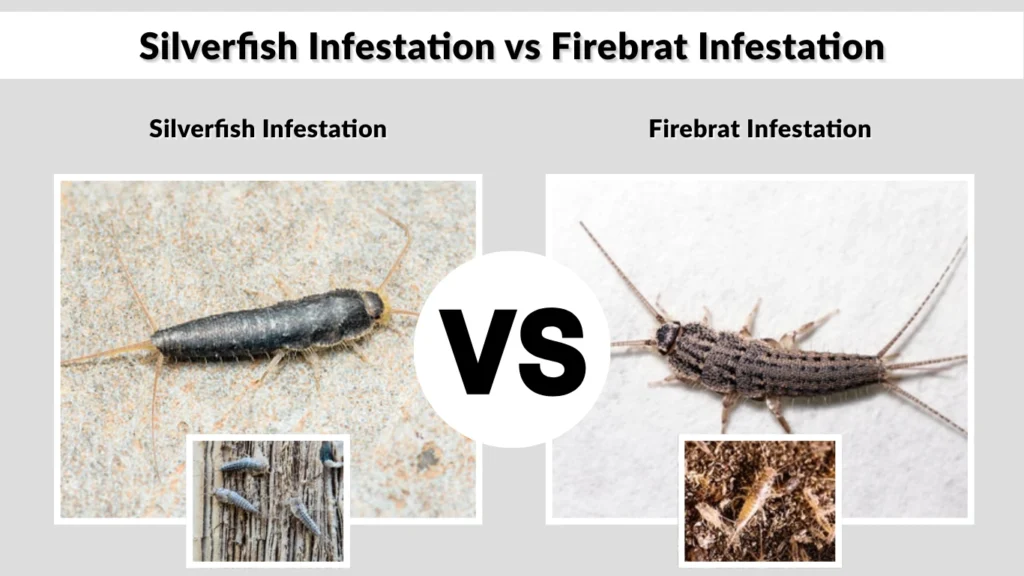
Silverfish and firebrats are closely related insects and are often confused with each other. Both belong to the order Zygentoma and share similar body shapes and feeding habits, but their infestation patterns differ.
| Feature | Silverfish Infestation | Firebrat Infestation |
| Preferred environment | Cool to warm, humid areas | Very warm, hot environments |
| Common locations | Bathrooms, basements, kitchens, bookcases | Boiler rooms, attics, ovens, furnace areas |
| Speed of development | Slow, long-term infestations | Faster population growth |
| Damage pattern | Paper, fabrics, stored foods | Paper, starches, heat-area materials |
| Control approach | Moisture reduction + treatment | Heat-area focus + treatment |
Correct identification is important because controlling humidity is more critical for silverfish, while firebrats require attention to heat sources.
How to Inspect for a Silverfish Infestation
Effective control begins with locating active areas. Inspections are best done at night using a flashlight, since silverfish are nocturnal. Look along baseboards, under sinks, behind toilets, near floor drains, inside cabinets, and around stored items.
Sticky traps placed along walls and in corners help monitor activity and reveal which rooms are most heavily infested. Finding shed skins, feeding damage, and moisture sources helps identify breeding zones where eggs and nymphs are likely concentrated.
How to Get Rid of a Silverfish Infestation
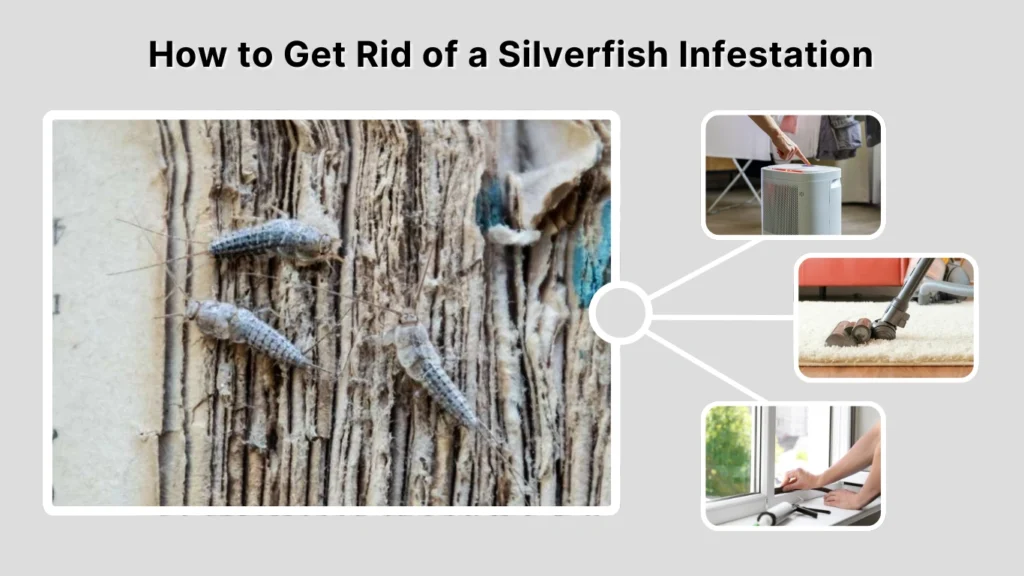
Moisture Reduction (Foundation of Control)
Lowering humidity is the most important step in eliminating silverfish. Dehumidifiers, exhaust fans, and repairing leaks remove the conditions silverfish need to survive. Dry environments dramatically reduce egg survival and slow population growth.
Deep Cleaning and Habitat Removal
Vacuuming cracks, corners, and storage areas removes eggs, shed skins, and food debris. Decluttering, discarding cardboard, and organizing papers into sealed containers reduce both shelter and feeding sites.
Sealing and Exclusion
Caulking gaps around baseboards, sealing wall cracks, and weather-stripping doors and windows block silverfish movement. Sealing plumbing penetrations prevents spread between rooms.
Targeted Treatment Options
Desiccant dusts such as silica aerogel and diatomaceous earth dry out silverfish at all life stages. Insect growth regulators disrupt molting and reproduction. Sticky traps reduce adults and help track progress. Residual insecticides may be used in severe infestations when applied into cracks and voids.
Natural and Home Remedies for Silverfish Infestations
Some homeowners use diatomaceous earth or boric acid in wall voids and under appliances. Cedar products and essential oils may repel silverfish but rarely eliminate infestations alone. Baking soda and sugar mixtures are commonly mentioned, but evidence for consistent control is limited. Natural methods work best as part of a broader moisture-control and sanitation plan.
Why Silverfish Infestations Keep Coming Back
Recurring infestations usually mean underlying conditions remain. Eggs hidden deep in cracks can survive treatments. Moisture problems allow new generations to thrive. Partial treatments that only kill visible adults fail to reach breeding sites. In apartment buildings, reinfestation from neighboring units is also common.
How to Prevent Future Silverfish Infestations
Long-term prevention focuses on keeping homes dry, sealed, and organized. Maintaining indoor humidity below 50 percent, fixing leaks promptly, and improving airflow remove critical survival conditions. Storing books, clothing, and food in airtight containers protects valuable items. Routine inspections and occasional trap monitoring help detect early activity before infestations expand.
When to Call a Professional for a Silverfish Infestation
Professional pest control is recommended when infestations are widespread, persistent, or linked to hidden moisture problems. Professionals use commercial-grade dusts, growth regulators, and wall-void treatments that homeowners cannot easily apply. They also identify structural issues that support infestations.
Common Myths About Silverfish Infestations
Many believe silverfish only infest dirty homes, but humidity is far more important than cleanliness. Others think silverfish come from drains, when they actually emerge from wall voids and hidden spaces. Another myth is that a single spray treatment will solve the problem, but long-term control requires environmental correction.
FAQs
What is the first sign of a silverfish infestation?
The first sign is often repeated nighttime sightings in the same areas, especially bathrooms, kitchens, or basements. Finding shed skins or damaged paper products also suggests an active infestation.
How fast do silverfish infestations spread?
Silverfish infestations spread slowly compared to many insects, but they are persistent. Because silverfish live for years and reproduce steadily, populations can quietly expand through wall voids and storage areas.
Can silverfish infestations go away on their own?
No. Without moisture reduction and targeted control, silverfish infestations usually persist or worsen. Indoor environments often provide everything silverfish need to survive long-term.
What attracts silverfish the most?
Moisture is the strongest attractant. High humidity combined with paper products, fabrics, cardboard, and food residues creates ideal conditions for infestations.
What permanently stops a silverfish infestation?
Permanent control requires correcting moisture problems, removing food and shelter, sealing entry points, and using treatments that reach eggs, nymphs, and adults.