
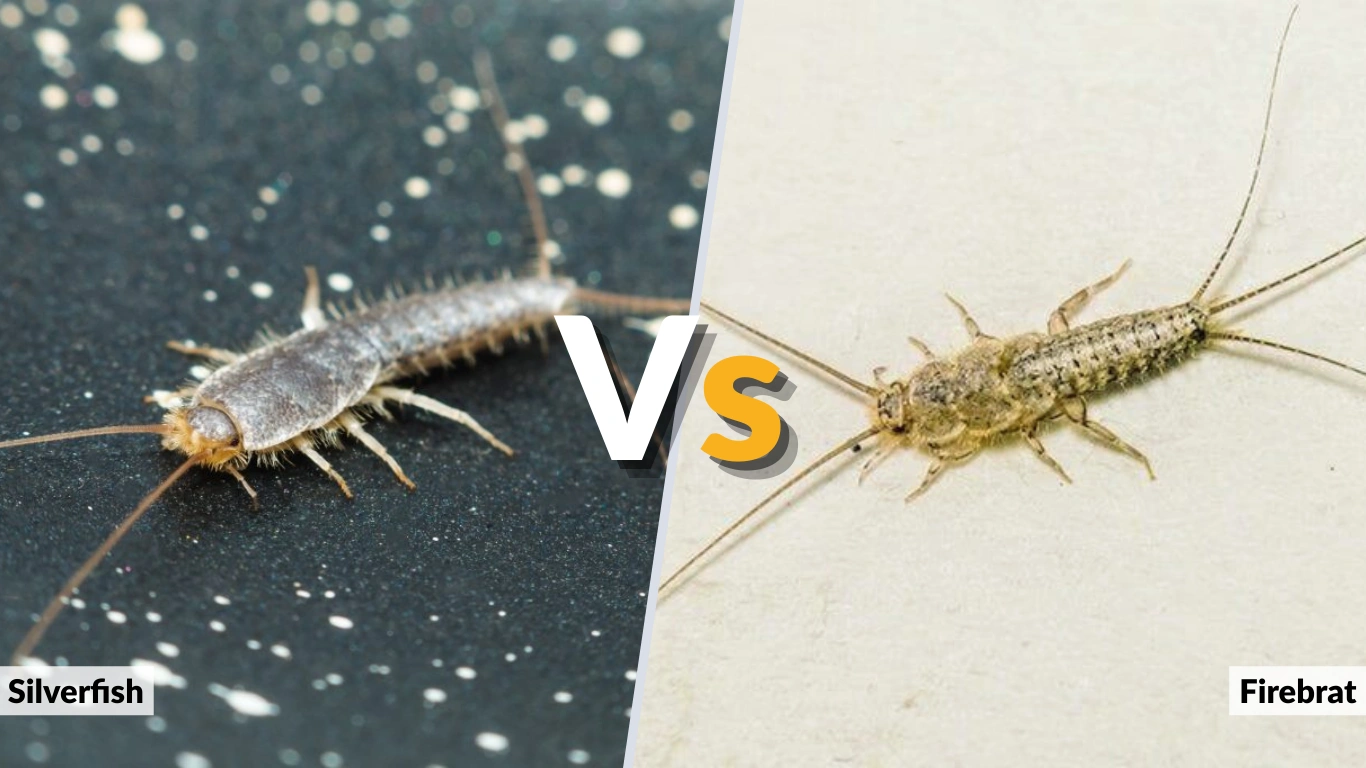
If you’ve spotted a small, fast-moving insect darting across your bathroom floor or hiding near warm appliances, you might be dealing with either a silverfish or a firebrat. At first glance, these two pests look almost identical. Both are wingless, silvery-gray insects with long antennae and wriggling movements. However, they differ in habitat preferences, behavior, and the types of problems they cause inside homes. Understanding these differences can help you identify and control the infestation effectively.
What Is a Silverfish?
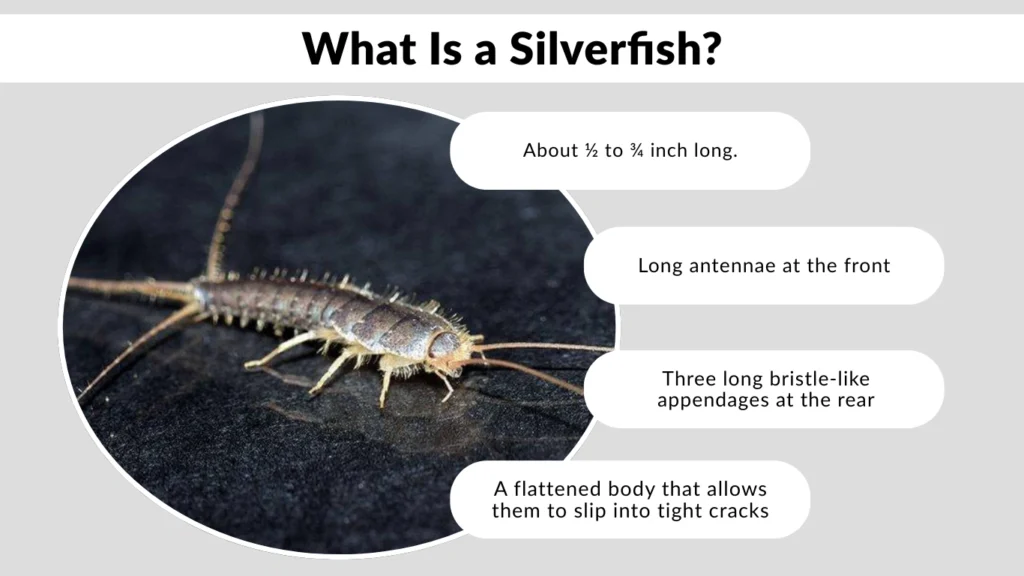
Silverfish (Lepisma saccharinum) are small, wingless insects known for their metallic sheen and fish-like movements. They have existed for hundreds of millions of years and are considered primitive insects.
Appearance
Silverfish typically measure about ½ to ¾ inch long. Their bodies are teardrop-shaped and covered in tiny, silver scales that give them a shiny look. They have:
- Long antennae at the front
- Three long bristle-like appendages at the rear
- A flattened body that allows them to slip into tight cracks
Habitat
Silverfish prefer cool, damp, and dark environments. Common locations include:
- Bathrooms
- Basements
- Laundry rooms
- Under sinks
- Inside wall voids
They thrive in humidity levels above 75% and are often found in older homes with moisture issues.
Diet
Silverfish feed primarily on carbohydrates and sugars, especially starches. Their diet includes:
- Paper and books
- Wallpaper paste
- Cardboard
- Fabrics like cotton and linen
- Pantry goods
Because of this, they are often found in libraries, storage boxes, and closets.
What Is a Firebrat?
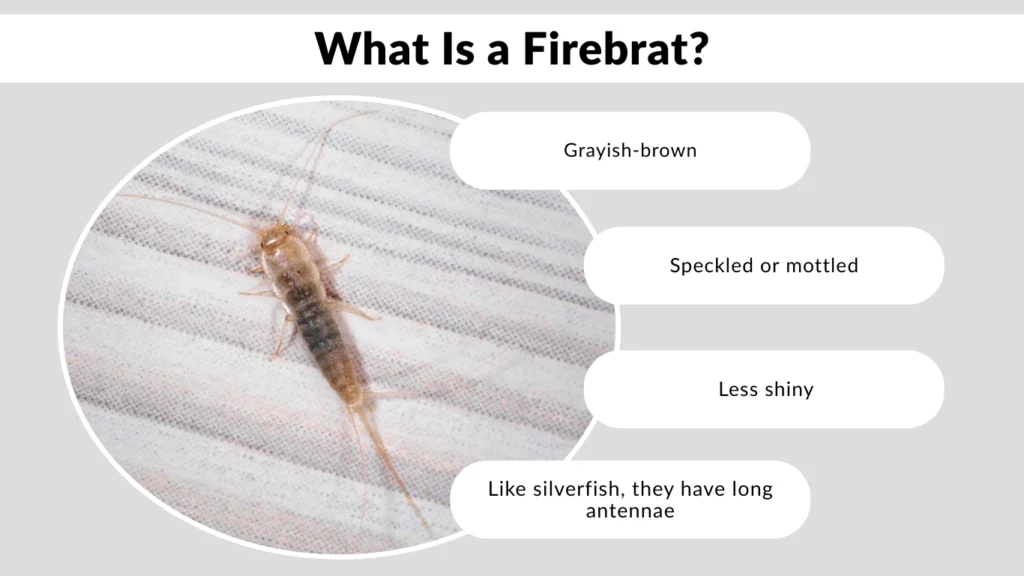
Firebrats (Thermobia domestica) are close relatives of silverfish and look remarkably similar. However, their environmental preferences set them apart.
Appearance
Firebrats are slightly shorter and more mottled in color compared to silverfish. Instead of a uniform silver tone, they often appear:
- Grayish-brown
- Speckled or mottled
- Less shiny
Like silverfish, they have long antennae and three tail-like appendages.
Habitat
Firebrats prefer hot, humid environments. They are typically found in:
- Attics
- Near furnaces
- Around water heaters
- Inside boiler rooms
- Behind ovens and refrigerators
They thrive at temperatures between 90°F and 110°F, making them more common in warm climates or heated indoor areas.
Diet
Firebrats eat similar materials as silverfish, including:
- Starches
- Paper
- Glue
- Flour
- Fabric
Because they favor heat, they are often found in kitchens and utility spaces rather than bathrooms.
Silverfish vs Firebrat: Key Differences
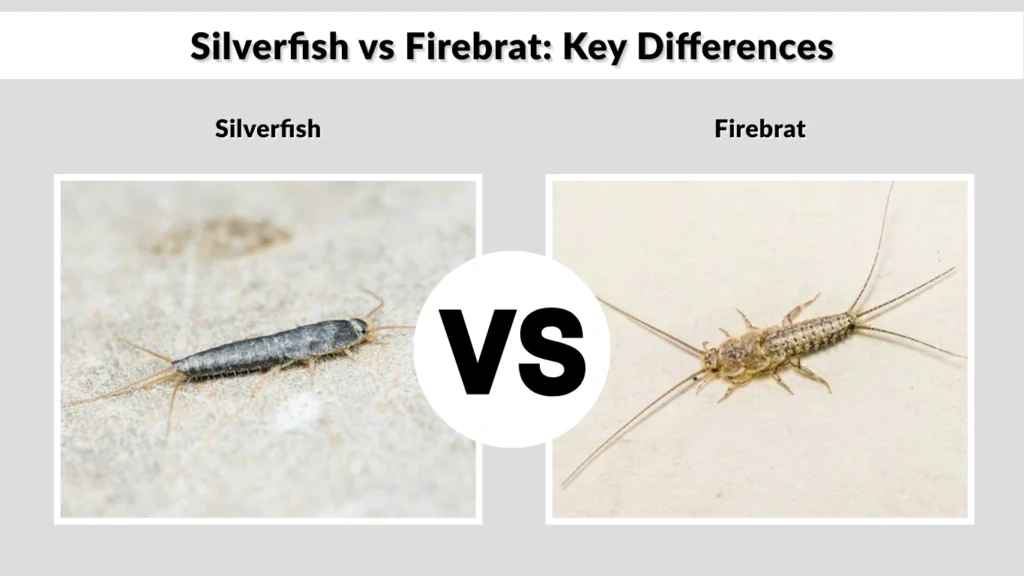
Although these insects are related, several characteristics can help distinguish them.
1. Temperature Preference
This is the most important difference.
- Silverfish prefer cool, moist areas.
- Firebrats prefer hot, humid areas.
If the insect is near a furnace or heater, it’s likely a firebrat. If it’s in a damp basement, it’s probably a silverfish.
2. Color and Appearance
- Silverfish have a shiny, metallic silver appearance.
- Firebrats appear darker and mottled, often brownish-gray.
Lighting can make identification tricky, but close inspection usually reveals the difference.
3. Activity Zones
Silverfish are more commonly found in:
- Bathrooms
- Basements
- Storage rooms
Firebrats are more common in:
- Kitchens
- Attics
- Mechanical rooms
4. Geographic and Climate Preference
Silverfish can survive in a wider range of climates, especially temperate regions. Firebrats are more common in warm climates or in homes with constant heat sources.
Similarities Between Silverfish and Firebrats
Despite their differences, these pests share many traits.
Ancient Origins
Both insects belong to the order Zygentoma and are considered among the most primitive insects alive today.
No Wings
Neither species has wings. They move quickly in a wriggling, fish-like motion.
Nocturnal Behavior
Both are primarily active at night and avoid light. You may only see them when you switch on the lights suddenly.
Destructive Feeding Habits
Both insects feed on starchy materials and can damage:
- Books
- Important documents
- Clothing
- Wallpaper
- Stored food
Although they don’t bite humans, their presence can lead to costly damage over time.
Signs of Infestation
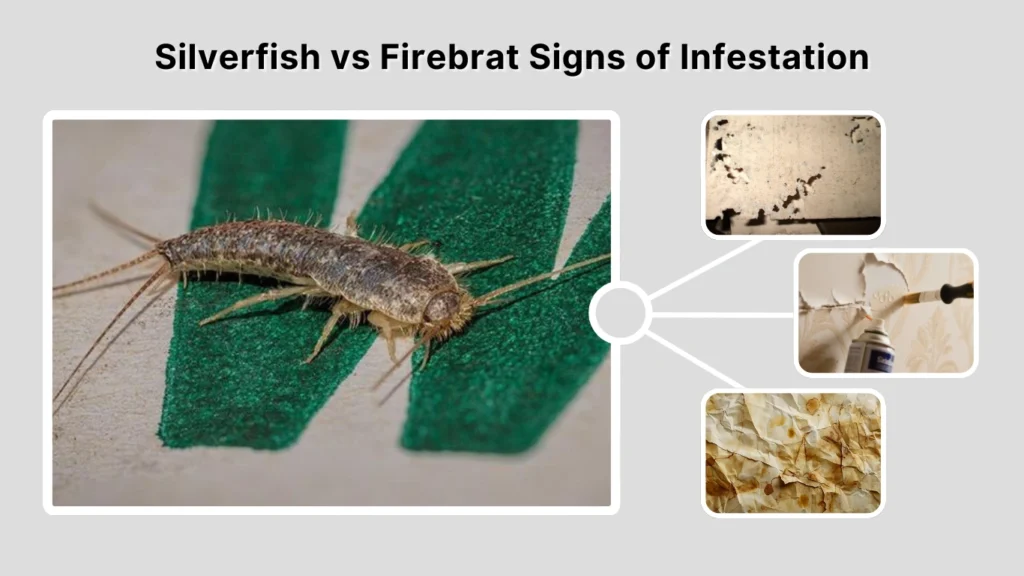
Whether you’re dealing with silverfish or firebrats, the signs are similar:
- Small holes in paper or fabric
- Yellow stains on clothing or books
- Shed skins
- Tiny pepper-like droppings
- Live insects scurrying away when disturbed
Because they reproduce slowly compared to other pests, infestations may develop gradually.
Life Cycle
Both silverfish and firebrats have a similar life cycle.
Egg Stage
Females lay small white eggs in cracks and crevices.
Nymph Stage
Young nymphs look like smaller versions of adults. They molt several times before reaching maturity.
Adult Stage
Adults can live for two to eight years, depending on environmental conditions. This long lifespan allows infestations to persist if untreated.
Are Silverfish or Firebrats Dangerous?
Neither silverfish nor firebrats pose direct health risks to humans. They:
- Do not bite
- Do not transmit diseases
- Are not venomous
However, they can trigger allergies in some individuals due to shed skins and droppings. Their real concern lies in property damage.
How to Get Rid of Silverfish and Firebrats
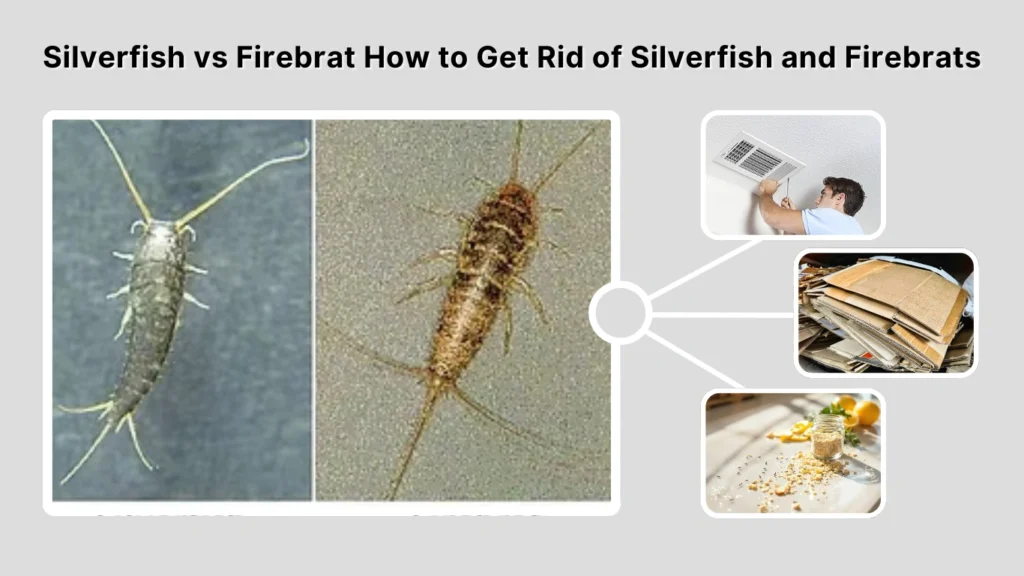
Treatment methods are largely the same for both pests.
1. Reduce Humidity
Since both species rely on moisture, lowering humidity is crucial.
- Use dehumidifiers
- Improve ventilation
- Fix plumbing leaks
- Seal cracks and gaps
2. Eliminate Food Sources
- Store food in airtight containers
- Remove clutter
- Keep books and papers in sealed bins
- Vacuum regularly
3. Use Natural Remedies
Common home remedies include:
- Diatomaceous earth
- Boric acid
- Sticky traps
These methods can help control small infestations.
4. Professional Pest Control
If the infestation is widespread, professional treatment may be necessary. Pest control experts can:
- Identify the exact species
- Locate hidden nesting areas
- Apply targeted insecticides
Prevention Tips
Preventing silverfish and firebrats involves controlling moisture and heat.
- Keep humidity below 50%
- Insulate hot water pipes
- Seal cracks in walls
- Regularly inspect attics and basements
- Store paper goods properly
Regular cleaning and maintenance go a long way in preventing infestations.
Which Pest Is Worse?
Neither silverfish nor firebrats are inherently “worse.” The impact depends on where they establish themselves.
- Silverfish may cause more noticeable damage in libraries or storage areas.
- Firebrats can be more persistent in heated mechanical spaces.
Both are nuisance pests rather than serious threats.
Quick Comparison Table
| Feature | Silverfish | Firebrat |
| Color | Shiny silver | Brownish-gray, mottled |
| Preferred Temperature | Cool and humid | Hot and humid |
| Common Locations | Bathrooms, basements | Attics, furnaces, kitchens |
| Lifespan | 2–8 years | 2–8 years |
| Diet | Starches and sugars | Starches and sugars |
Final Thoughts
Silverfish and firebrats may look nearly identical, but their environmental preferences provide the biggest clue to identification. Silverfish favor cool, damp areas like bathrooms and basements, while firebrats thrive in hot, humid spaces near heat sources. Both can damage paper, fabric, and stored goods, making early detection important.