
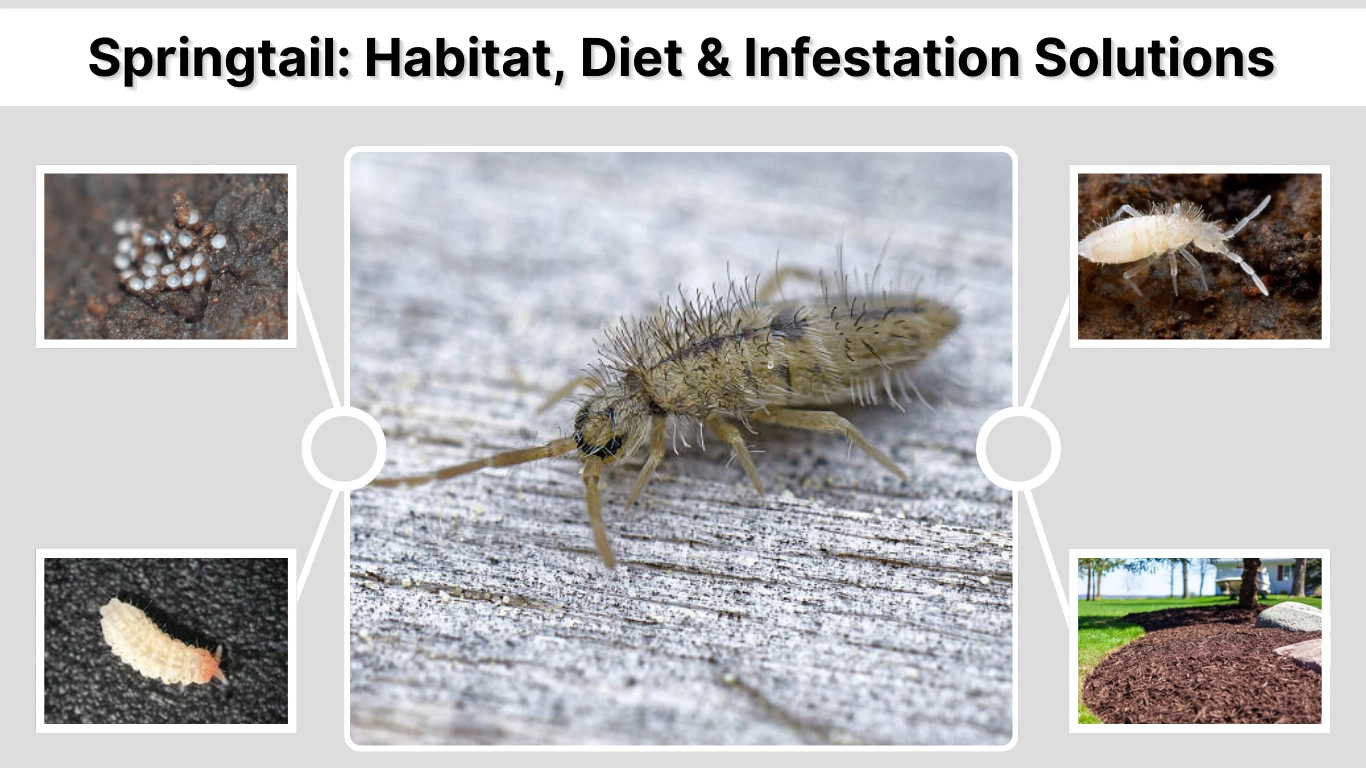
A springtail infestation can be alarming when you suddenly notice tiny jumping bugs around sinks, bathtubs, or windowsills. Although they resemble fleas, springtails are harmless nuisance pests that thrive in damp environments. These moisture-loving creatures often enter homes after heavy rain or when humidity levels rise indoors. Understanding springtail identification, habitat, life cycle, and lifespan is the first step toward controlling them effectively and preventing recurring infestations.
What Is a Springtail?
A springtail is a tiny, wingless arthropod belonging to the order Collembola. While many people assume they are insects, springtails are classified separately due to differences in their internal anatomy. They are among the most common soil-dwelling organisms in the world.
Springtails get their name from a forked appendage under their abdomen called a furcula. This unique structure allows them to “spring” into the air when disturbed, which is why they appear to jump suddenly from surfaces.
Quick Springtail Facts
- Size: Typically 1–2 millimeters long
- Color: White, gray, brown, or black
- Wings: None
- Behavior: Jump when threatened
- Preferred environment: Moist, humid areas
- Risk level: Harmless to humans
Despite their small size, a springtail infestation can appear overwhelming because they often gather in large numbers.
Springtail Identification Guide
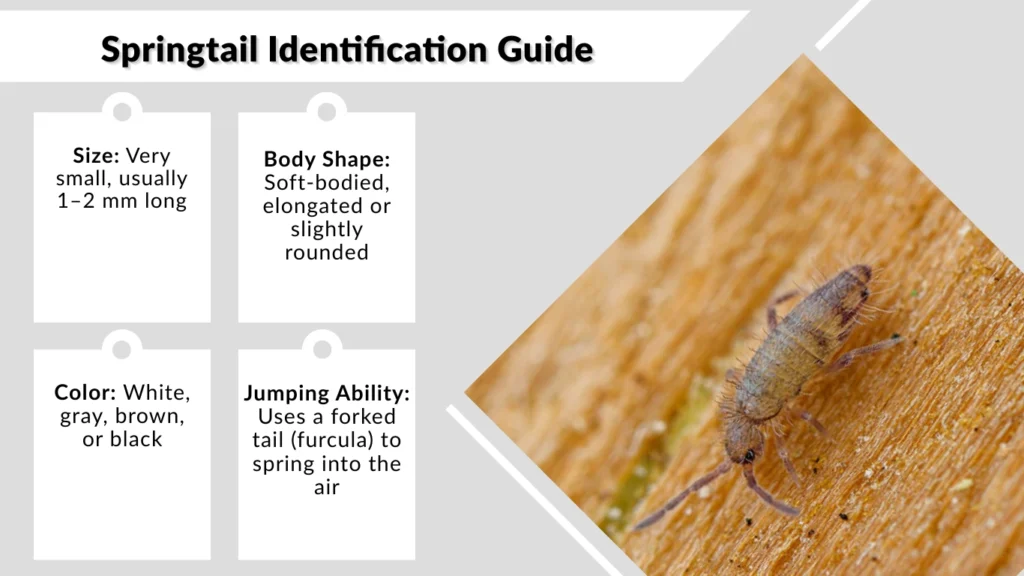
Springtail identification is important because these tiny pests are often mistaken for fleas or other small jumping insects. Although they may look alarming when found in large numbers, springtails are harmless and do not bite humans or pets. They are moisture-loving creatures that usually appear in damp areas of the home. Recognizing their physical traits and behavior can help you confirm a springtail infestation quickly.
Key Identification Features
- Size: Very small, usually 1–2 mm long
- Body Shape: Soft-bodied, elongated or slightly rounded
- Color: White, gray, brown, or black
- Wings: None
- Jumping Ability: Uses a forked tail (furcula) to spring into the air
- Movement: Scatter quickly when disturbed
- Habitat: Found in damp areas like sinks, basements, and potted plants
If you see tiny bugs jumping near moisture but no one is getting bitten, you are most likely dealing with springtails rather than fleas.
Springtail vs Flea – Key Differences
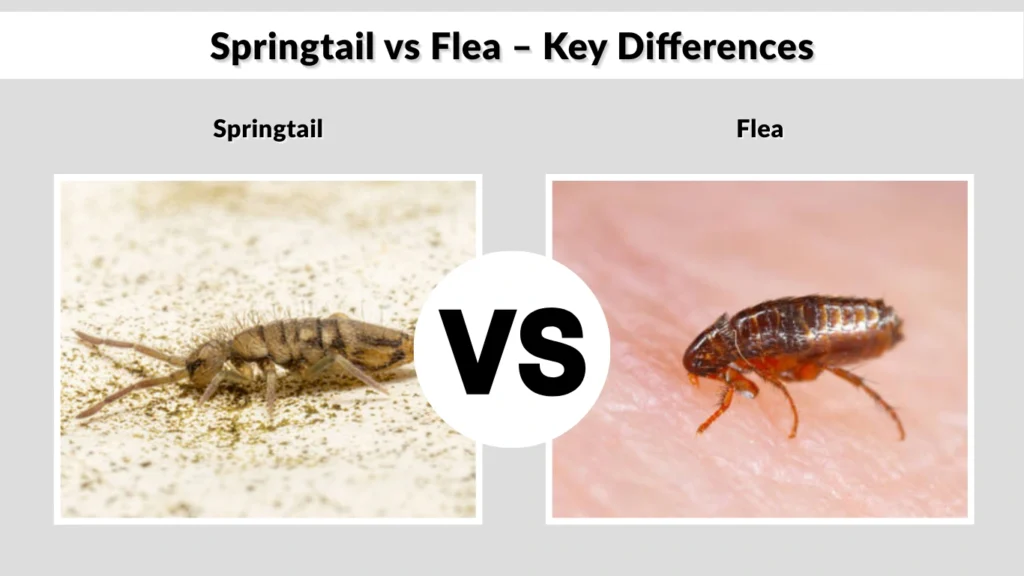
Because they jump, many homeowners assume they are dealing with fleas. However, understanding the difference between springtail vs flea can prevent unnecessary pest treatments.
Fleas are parasites that feed on blood and bite humans or animals. Springtails, on the other hand, do not bite and are not interested in blood meals.
Here are the main differences:
| Feature | Springtail | Flea |
| Size | 1–2 mm | 2–3 mm |
| Color | White, gray, brown, black | Dark brown or black |
| Bite humans? | No | Yes |
| Lives on pets? | No | Yes |
| Habitat | Damp areas | On animals, carpets |
| Jump style | Springs unpredictably | Strong directional jump |
If you are not experiencing bites and your pets are not scratching excessively, you are most likely dealing with a springtail infestation rather than fleas.
Springtail Habitat – Where Do They Live?
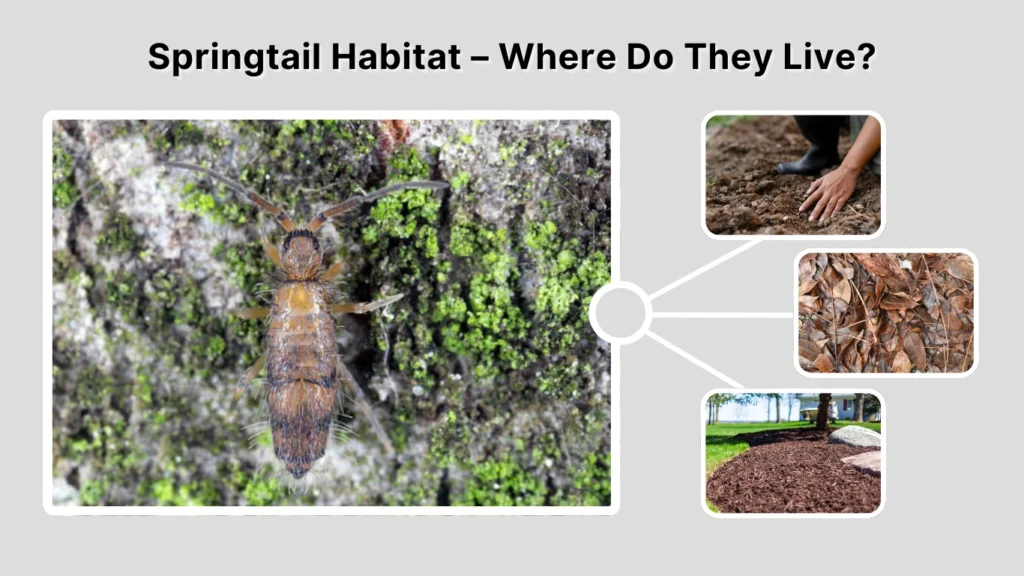
Understanding springtail habitat helps explain why infestations occur indoors.
Outdoor Habitat
Springtails naturally live in:
- Soil
- Leaf litter
- Mulch
- Compost piles
- Under rocks and logs
They play an important ecological role outdoors by breaking down decaying organic matter and feeding on fungi.
Indoor Habitat
Inside homes, springtails seek out damp, humid conditions. They are commonly found in:
- Bathrooms
- Kitchens
- Basements
- Crawl spaces
- Areas with plumbing leaks
- Overwatered plant soil
Heavy rainfall often triggers indoor migration. When soil becomes oversaturated, springtails move toward drier environments—sometimes entering through foundation cracks, door gaps, or window frames.
Humidity levels above 50% create ideal conditions for survival. Without moisture, springtails quickly dry out and die.
Springtail Life Cycle Explained
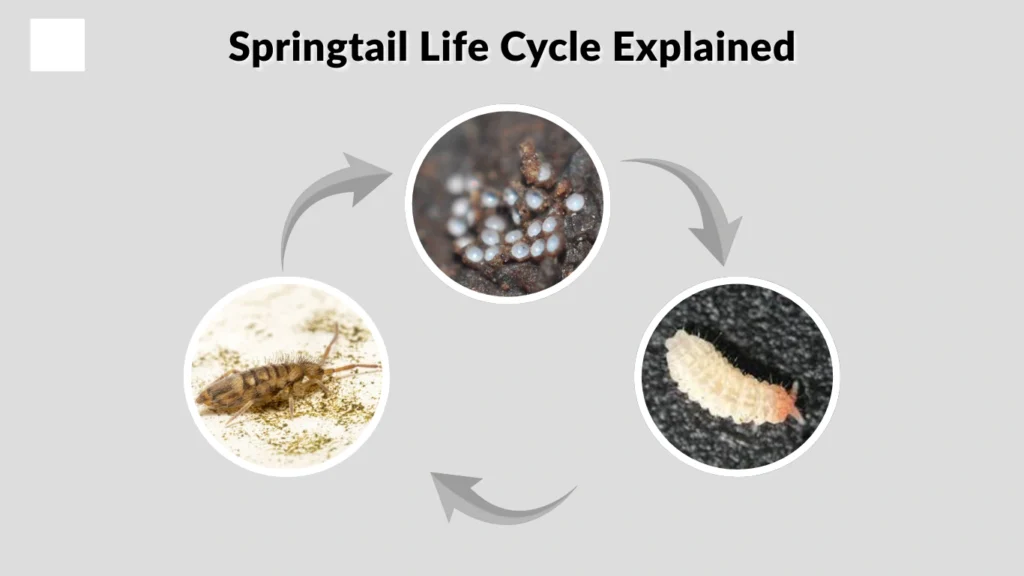
The springtail life cycle is relatively simple but allows populations to grow quickly under ideal conditions.
Egg Stage
Female springtails lay clusters of tiny eggs in moist environments such as soil or damp cracks. The eggs hatch within one to three weeks, depending on temperature and humidity.
Juvenile Stage
After hatching, young springtails resemble smaller versions of adults. Unlike many insects, they continue molting even after reaching maturity. This continuous molting allows them to adapt and survive in changing environments.
Adult Stage
Adult springtails are fully capable of reproduction and can begin laying eggs shortly after reaching maturity. Under favorable conditions, populations can increase rapidly, leading to noticeable springtail infestation indoors.
How Long Does a Springtail Live?
Many homeowners ask, how long does a springtail live?
The average springtail lifespan ranges from several weeks to a few months. In stable, humid environments with abundant food sources, they may survive longer. However, dry conditions significantly shorten their lifespan.
Because they reproduce quickly, even short lifespans can sustain large populations if moisture problems are not addressed.
Springtail Diet – What Do Springtails Eat?
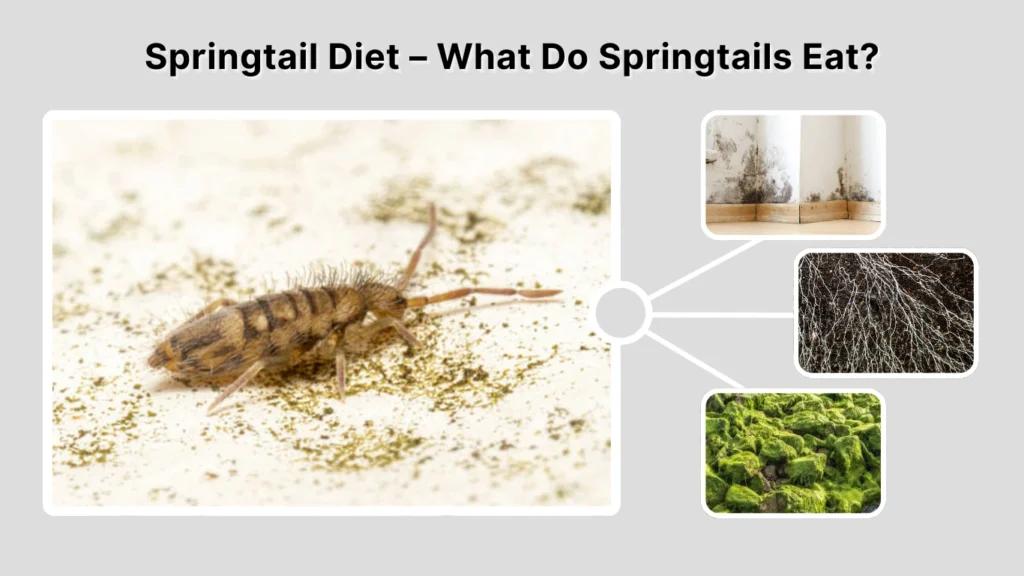
Understanding the springtail diet helps explain why these pests appear in damp homes. Springtails primarily feed on organic matter that thrives in moist environments. Their diet includes:
- Mold and mildew
- Fungi
- Algae
- Bacteria
- Decaying plant material
Indoors, mold growth around sinks, drains, window frames, and damp drywall provides a steady food source. Overwatered houseplants are another common attraction because moist soil encourages fungal growth.
Although they can be annoying indoors, springtails play a beneficial role outdoors. By feeding on decaying organic matter and fungi, they help recycle nutrients back into the soil. The problem arises only when their natural habitat overlaps with indoor moisture problems.
Signs of a Springtail Infestation
A springtail infestation is usually linked to excess moisture. Recognizing early warning signs can help you take action before populations grow larger.
Common signs include:
- Clusters of tiny bugs near sinks or bathtubs
- Groups gathering around basement floors
- Bugs floating in toilet bowls
- Large numbers appearing after heavy rain
- Tiny insects around potted plants
- Sudden movement or scattering when disturbed
Unlike other household pests, springtails do not damage wood, fabric, or food. However, their presence often signals an underlying humidity or drainage issue that needs attention.
If you notice recurring populations in the same damp areas, it is likely that environmental conditions are supporting their survival.
How to Get Rid of Springtail Infestation
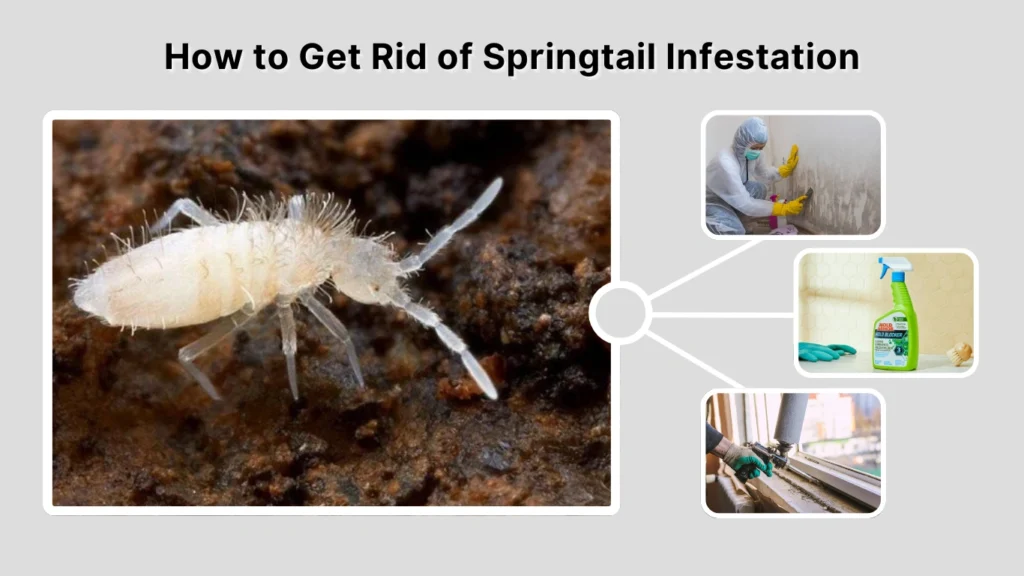
The most effective way to eliminate a springtail infestation is to remove moisture. Chemical treatments alone rarely solve the problem because springtails will continue returning if humidity remains high.
1. Eliminate Moisture (Most Important Step)
Moisture control is the permanent solution. Start with these steps:
- Fix leaking faucets and pipes
- Repair damaged grout or caulking
- Use a dehumidifier in basements
- Improve bathroom and kitchen ventilation
- Keep indoor humidity below 50%
Running exhaust fans and increasing air circulation can significantly reduce survival conditions for springtails.
2. Remove Food Sources
Since springtails feed on mold and organic debris, removing these materials helps control their population.
- Clean mold and mildew with appropriate cleaners
- Avoid overwatering indoor plants
- Replace overly damp potting soil
- Remove wet cardboard or organic debris
- Clean drains regularly
By eliminating their food supply, you disrupt the environment that allows them to thrive.
3. Seal Entry Points
Preventing new springtails from entering your home is equally important.
- Seal cracks in foundations
- Caulk gaps around windows and doors
- Repair damaged weather stripping
- Improve outdoor drainage near the foundation
- Keep mulch and soil away from exterior walls
Proper landscaping and water management can greatly reduce migration indoors after heavy rainfall.
4. Treatment Options
If moisture control alone does not fully eliminate the infestation, additional measures may help.
- Diatomaceous earth: A natural powder that dehydrates small insects
- Vinegar solution: Can help clean areas where they cluster
- Insecticides: Only recommended for severe infestations and should be used carefully
However, keep in mind that treatments without moisture reduction will only provide temporary relief.
Preventing Future Springtail Problems
Once you eliminate a springtail infestation, prevention becomes your main focus.
Here are long-term prevention tips:
- Monitor indoor humidity regularly
- Maintain gutters and downspouts
- Ensure proper yard drainage
- Avoid piling mulch against your foundation
- Inspect crawl spaces for dampness
- Schedule routine plumbing checks
Because springtails cannot survive in dry environments, consistent moisture management is the key to preventing their return.
FAQs
How can I tell if I have springtails or fleas?
Springtails are smaller and do not bite humans or pets. Fleas are darker, slightly larger, and usually cause itchy bites. If you notice jumping bugs near moisture sources but no bite marks or pet irritation, they are most likely springtails.
Are springtails visible to the naked eye?
Yes, springtails are visible, but they are extremely small—about 1–2 mm long. They may look like tiny specks of dust that suddenly jump when disturbed, especially in damp areas like sinks or basements.
Why do springtails jump?
Springtails jump as a defense mechanism. They use a forked appendage under their abdomen called a furcula to spring into the air when threatened. This sudden movement helps them escape predators.
Do springtails bite or harm humans?
No, springtails do not bite, sting, or transmit diseases. They are harmless nuisance pests. However, their presence often indicates excess moisture or mold growth in your home.
Where are springtails most commonly found indoors?
Springtails are commonly found in bathrooms, kitchens, basements, crawl spaces, and around overwatered houseplants. They prefer humid environments with mold or organic matter available for food.
Conclusion
A springtail infestation may look alarming, especially when large numbers gather around sinks, basements, or windows. However, these tiny jumping pests are harmless and do not bite humans or pets. Their presence usually indicates excess moisture rather than a serious pest problem.
By understanding springtail identification, habitat, life cycle, lifespan, and diet, you can address the root cause of the issue. Focus on reducing humidity, eliminating mold, and sealing entry points. With proper moisture control, springtails will disappear naturally and are unlikely to return.