
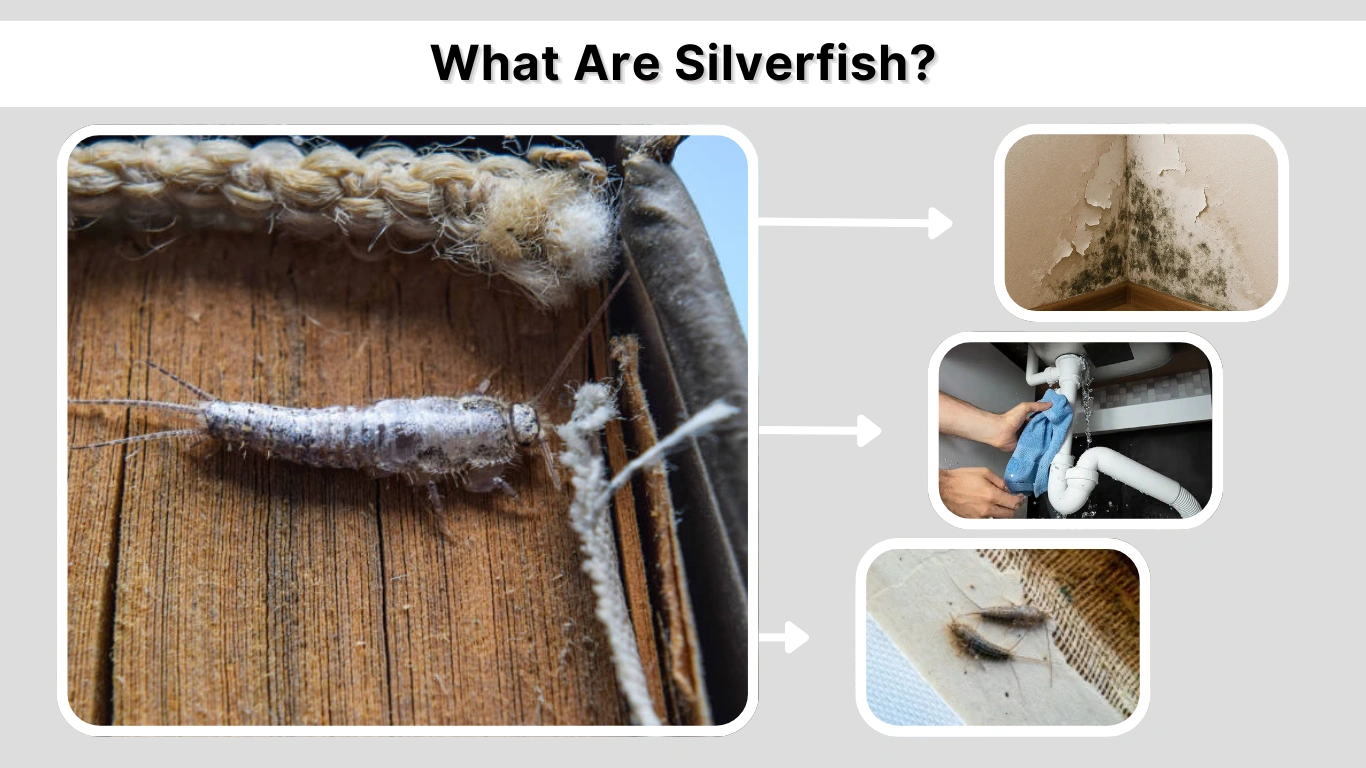
Silverfish are small, fast-moving insects that often appear suddenly in bathrooms, bedrooms, basements, and kitchens. Many homeowners first notice them at night and quickly search questions like “what are silverfish,” “what are silverfish attracted to,” or “what are silverfish a sign of.” Although they do not bite, silverfish can damage paper, fabrics, and stored household items. Understanding what silverfish are, where they come from, and why they live indoors is the first step toward controlling them.
What Are Silverfish Insects?
Silverfish are primitive, wingless insects that belong to the order Zygentoma. They are not fish, and they are not worms, even though their movement often makes people think they are. Silverfish are true insects, meaning they have six legs, a segmented body, and antennae. They are among the oldest insect groups still living today and have existed for more than 400 million years.
When people ask “what are silverfish bugs,” they are usually referring to household silverfish that live indoors. These insects prefer dark, damp, and quiet environments where they can hide during the day and come out at night to feed. Because they are nocturnal, infestations often go unnoticed until numbers increase.
Silverfish feed on carbohydrates, especially sugars and starches. This makes homes an ideal environment for them. Items like books, cardboard, wallpaper glue, clothing fibers, and pantry residues all serve as potential food sources. Although silverfish do not spread disease, they are considered nuisance pests because of the damage they cause to personal belongings.
What Do Silverfish Look Like and What Color Are They?
Silverfish have a distinctive, flattened, carrot-shaped body that narrows toward the tail. Adults usually grow between ½ to 1 inch long. Their bodies are covered with tiny overlapping scales, which give them a metallic or shimmering appearance.
Most silverfish are silver-gray, but some may appear brownish, bluish, or dull gray depending on age and lighting. This shiny color is where the name “silverfish” comes from. They move in a quick, wiggling motion that resembles the way fish swim, especially when startled.
At the head, silverfish have two long antennae. At the rear, they have three tail-like appendages, which help distinguish them from other small household insects. People often ask “what are silverfish made of,” but like all insects, they are made of soft internal tissues protected by a flexible exoskeleton composed mainly of chitin.
Silverfish are closely related to firebrats and bristletails, insects that share similar shapes and habits. Knowing what silverfish look like is important, because they are often confused with earwigs, roach nymphs, or small centipedes.
How to Identify Silverfish
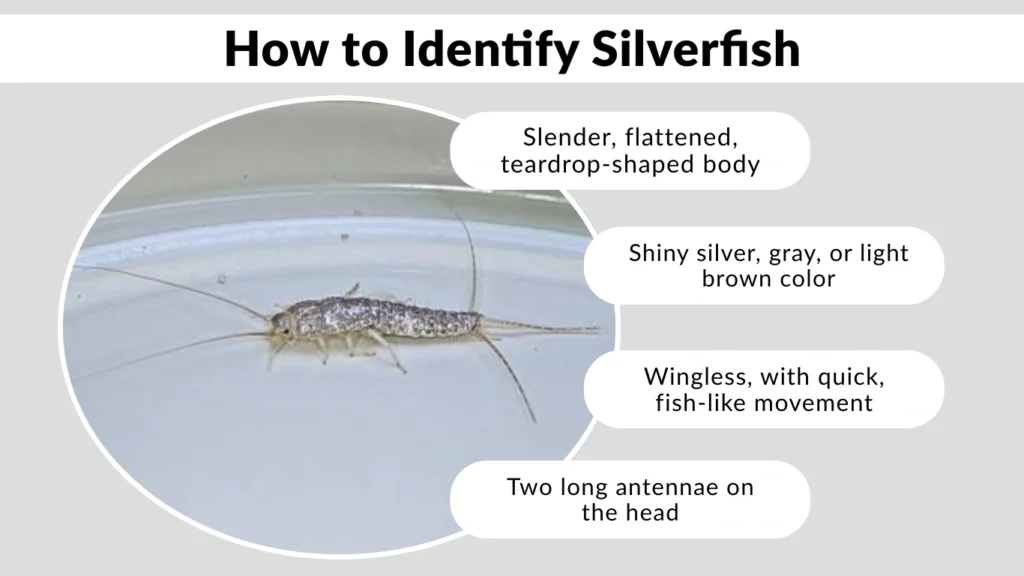
- Slender, flattened, teardrop-shaped body
- Shiny silver, gray, or light brown color
- Wingless, with quick, fish-like movement
- Two long antennae on the head
- Three long bristles at the tail end
- Usually seen at night when lights are turned on
- Commonly found near sinks, tubs, bookshelves, or stored paper
What Are Silverfish Attracted To?
One of the most common questions is “what are silverfish attracted to?” The strongest attraction for silverfish is moisture. They thrive in areas with high humidity, such as bathrooms, laundry rooms, basements, and kitchens. Homes with poor ventilation, leaking pipes, or damp walls create perfect conditions for them to survive and reproduce.
Silverfish are also attracted to starches and sugars. They feed on paper, book bindings, wallpaper paste, cardboard boxes, cereal crumbs, flour, and even pet food dust. Fabrics such as cotton, linen, silk, and rayon may also be damaged, especially if they contain food stains or sweat residues.
Mold and mildew are another major attractant. Silverfish often feed on microscopic fungi growing on walls, in drains, or on damp stored items. This is why they are frequently found behind baseboards, under sinks, and inside storage boxes.
Many people ask whether silverfish are attracted to light or LED lights. Silverfish are not attracted to light itself. In fact, they avoid bright areas. When they appear after lights are switched on, it is because they were already active in the dark and are suddenly exposed.
Where Do Silverfish Come From and Why Are They in My House?
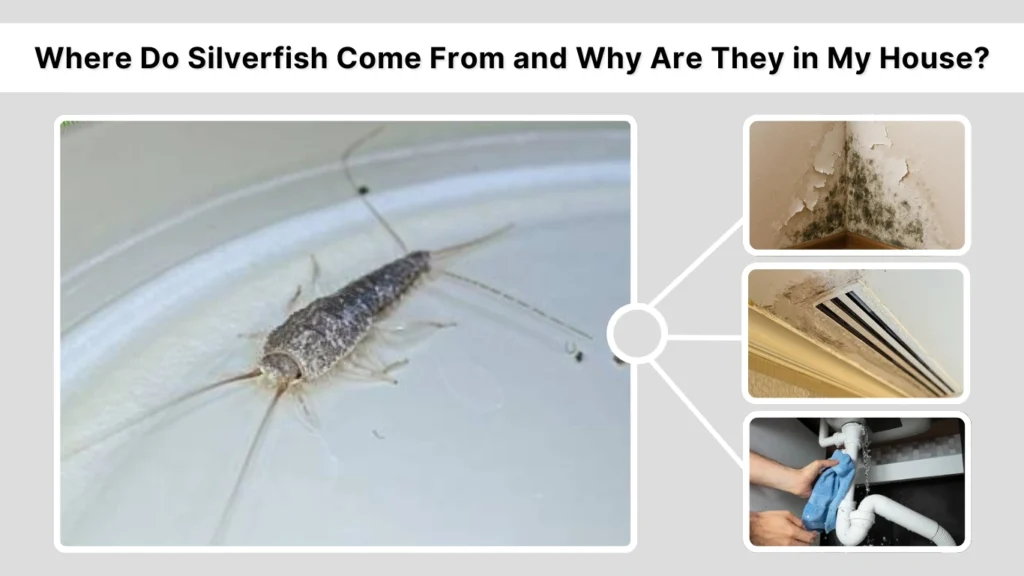
- High indoor humidity and warm temperatures
- Leaky pipes, roof seepage, or condensation
- Poor airflow in bathrooms and basements
- Cardboard boxes, old books, and stored papers
- Cracks in walls, foundations, and around drains
- Food residues in kitchens and pantries
- New items such as boxes, furniture, or books brought into the home
Silverfish usually enter homes through tiny cracks and gaps, or they are unknowingly carried inside in storage items. Once inside, they settle in quiet, damp locations where food is available.
What Are Silverfish a Sign Of?
Seeing silverfish is often a warning sign of moisture problems. Their presence may indicate hidden leaks, condensation buildup, poor ventilation, or even early mold growth. Silverfish also suggest that there are undisturbed areas in the home where clutter, paper products, or fabrics are stored for long periods.
In many cases, silverfish are not the main problem—they are a symptom. Controlling them effectively often requires correcting humidity levels, sealing entry points, and improving sanitation.
Are Silverfish Dangerous or Harmful?
A very common concern is “what are silverfish and are they harmful?” Silverfish are not dangerous to humans. They do not bite, sting, or transmit diseases. They are not poisonous, and their presence does not directly threaten human health. However, silverfish can still be a serious household problem.
The main harm caused by silverfish is property damage. Because they feed on starches and sugars, they can destroy books, documents, wallpaper, cardboard boxes, photographs, and clothing made from natural fibers. Over time, an infestation can ruin stored belongings, especially in basements, closets, and attics.
Some people may experience mild allergic reactions to silverfish scales or droppings, but this is uncommon. In nature, silverfish play a small role by breaking down organic materials, which is why some people ask “what are silverfish good for.” Outdoors, they help recycle decaying matter. Indoors, however, they serve no useful purpose and are considered nuisance pests.
Where Are Silverfish Found and When Are They Most Active?
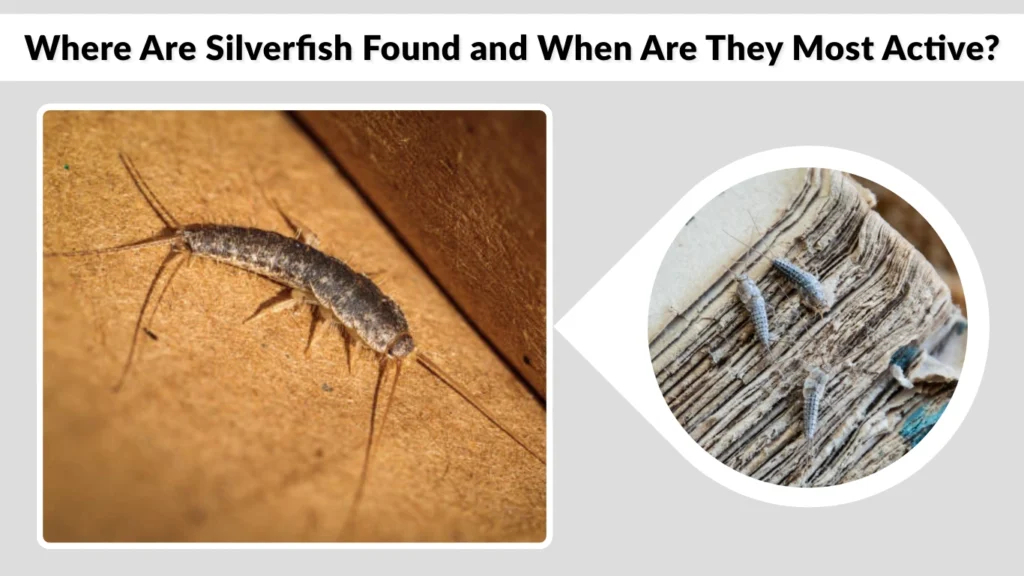
Silverfish are found worldwide and are present in almost all U.S. states. They thrive in both urban and rural environments as long as moisture and shelter are available. Because they are highly adaptable, they can survive in apartments, houses, libraries, warehouses, and commercial buildings.
Silverfish are most active in warm, humid seasons, especially spring and summer. This is why many people search “what time of year are silverfish most active.” During these months, higher humidity and temperatures increase their movement and reproduction. In colder regions, silverfish may move deeper into homes during winter, remaining active indoors year-round.
Silverfish are nocturnal insects. They hide during the day and become active at night. This explains why they are often seen when someone turns on a bathroom or kitchen light late at night.
What Are Silverfish in Bathrooms and Bedrooms?
Silverfish are frequently found in bathrooms because these rooms provide exactly what they need: moisture, warmth, darkness, and food sources such as soap residue, paper products, and mildew. They hide under sinks, behind toilets, inside wall gaps, and beneath floor mats.
When people notice silverfish in bedrooms or even in beds, it is usually because the insects are traveling from nearby bathrooms, closets, or basements. Bedrooms often contain books, clothing, wallpaper, and cardboard storage, which attract silverfish. They may crawl across beds accidentally, but they do not live on humans and do not feed on blood or skin.
Seeing silverfish in multiple rooms often means the home has a humidity or structural access issue that allows them to spread easily.
What Are Silverfish in Minecraft?
Many people also search “what are silverfish in Minecraft.” In the game, silverfish are hostile mobs designed to mimic the behavior of real silverfish. They hide inside special blocks and emerge when those blocks are broken or attacked.
Minecraft silverfish are not insects in the biological sense. They exist as a gameplay mechanic to surprise players and protect certain stronghold areas. While inspired by real silverfish, they behave very differently and should not be confused with real household pests.
How to Get Rid of Silverfish Naturally and Effectively
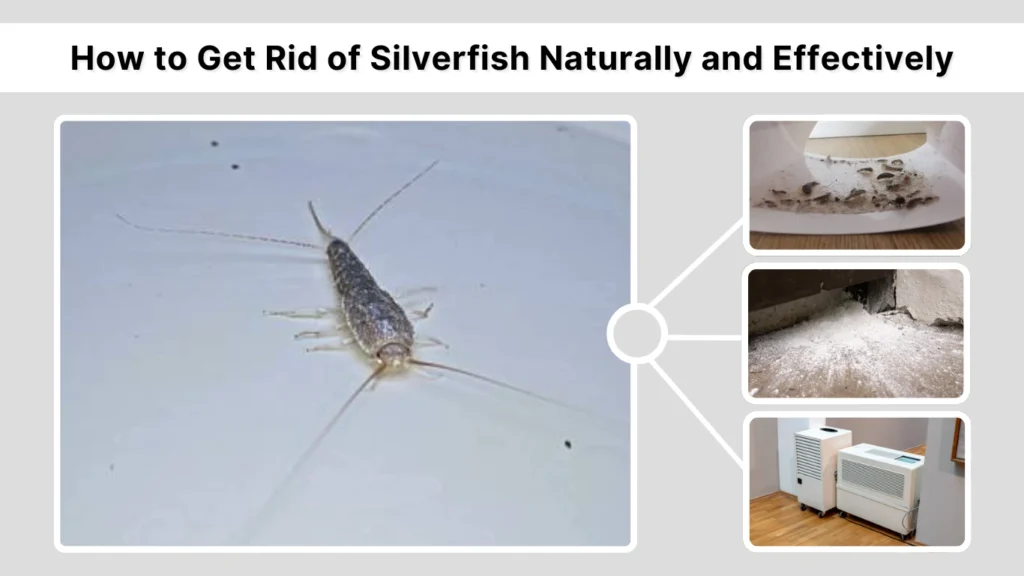
The most effective way to control silverfish is to change the environment they depend on.
Reducing indoor humidity is the first and most important step. Using dehumidifiers, exhaust fans, and fixing leaks removes the moisture silverfish need to survive. Sealing cracks, repairing loose baseboards, and caulking around sinks and drains limits their hiding places.
Removing food sources is equally important. Store books, papers, and clothing in sealed containers. Vacuum regularly, especially along baseboards, inside closets, and under furniture. Decluttering storage areas makes the home less attractive to silverfish.
Natural control methods such as diatomaceous earth, cedar, essential oil repellents, and sticky traps can help reduce populations. In heavy infestations, professional pest control may be necessary, especially if silverfish are spreading throughout the home.
FAQs
What are silverfish and why do I have them?
Silverfish are small, wingless insects that enter homes looking for moisture, shelter, and food. You may have silverfish because of high humidity, hidden leaks, stored paper products, or cracks that allow them to enter. Their presence often indicates damp or undisturbed areas.
What are silverfish attracted to in homes?
Silverfish are attracted to humidity, warmth, darkness, and foods rich in starch and sugar. Common attractants include books, cardboard, wallpaper glue, cereal residues, clothing made from natural fibers, and mold. Bathrooms, basements, kitchens, and storage areas are especially appealing.
What does it mean if silverfish are in my house?
Silverfish in a house usually mean there is excess moisture, poor ventilation, or hidden food sources. They often signal damp conditions behind walls, under floors, or in storage areas. Their appearance can be an early warning sign of leaks or developing mold problems.
Are silverfish dangerous to humans?
Silverfish are not dangerous. They do not bite, sting, or spread disease. However, they can damage household items such as books, documents, wallpaper, and clothing. Over time, an untreated infestation can lead to costly property damage even though health risks are minimal.
What season are silverfish most active?
Silverfish are most active during warm, humid seasons, especially spring and summer. Higher temperatures and moisture levels encourage movement and reproduction. In colder climates, they often remain active indoors year-round where conditions stay warm and damp.