
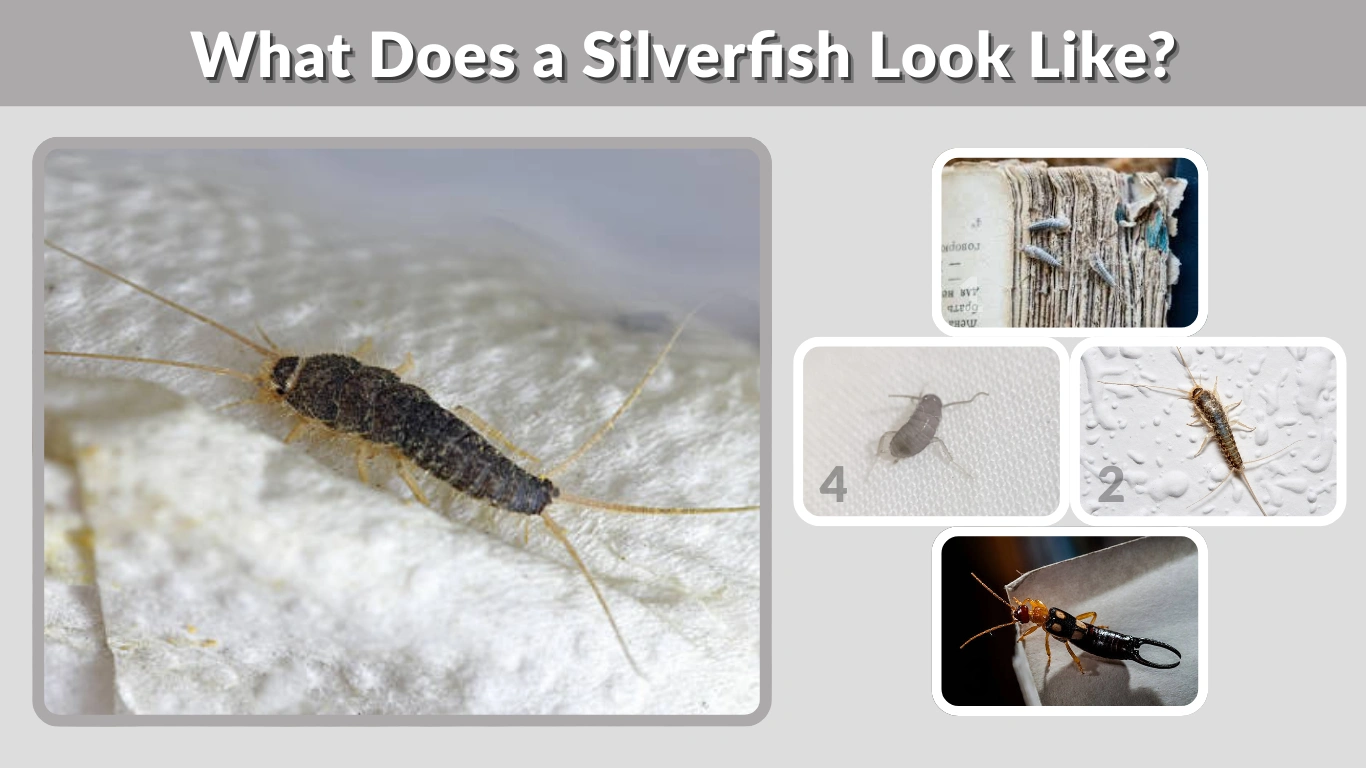
Silverfish are small, fast-moving insects that many people notice for the first time in bathrooms, kitchens, or dark closets. Because they appear suddenly and disappear just as quickly, homeowners often become worried and search for what a silverfish looks like, whether it bites, and if it signals an infestation. Learning to correctly identify silverfish is important, since they are frequently confused with other household pests. This guide explains exactly what silverfish look like in real life, including their body shape, color, movement, and early life stages.
What Does a Silverfish Look Like in Real Life?
In real life, a silverfish is a small, wingless insect with a flattened, carrot-shaped body that tapers toward the tail. Most adult silverfish measure between half an inch and one inch long. Their bodies are usually covered in shiny, metallic-looking scales that give them a silver, gray, or sometimes bluish appearance.
One of the most noticeable traits of a silverfish is the way it moves. Instead of walking in a straight line, it wiggles side to side as it runs, similar to the motion of a fish. This is where the name “silverfish” comes from. They are very fast and usually flee into cracks or under objects when exposed to light.
Silverfish are nocturnal insects, so they are rarely seen during the day. People most often spot them at night when turning on a bathroom or kitchen light. Their quick movement and reflective bodies often make them stand out against floors, sinks, and walls.
What Does a Silverfish Bug Look Like?
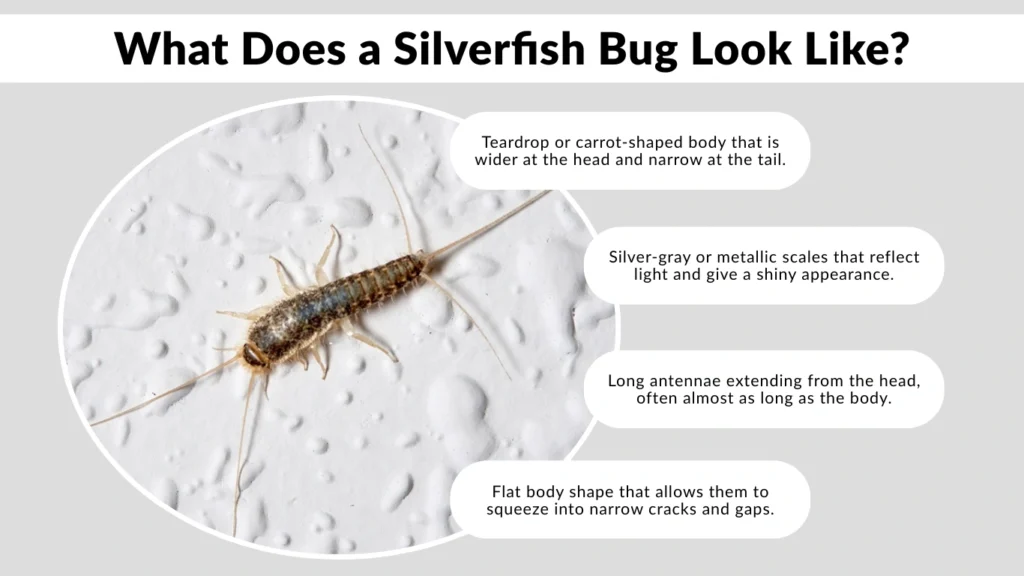
Silverfish have several clear physical features that make them easy to identify once you know what to look for.
- Teardrop or carrot-shaped body that is wider at the head and narrow at the tail.
- Silver-gray or metallic scales that reflect light and give a shiny appearance.
- Long antennae extending from the head, often almost as long as the body.
- Three tail-like bristles at the rear, with one central filament and two side filaments.
- Flat body shape that allows them to squeeze into narrow cracks and gaps.
These traits separate silverfish from most other insects commonly found in homes.
What Does a Silverfish Insect Look Like Up Close?
Head and Antennae
Up close, a silverfish has a small, rounded head with two long, thread-like antennae. These antennae are sensory organs that help silverfish detect moisture, food, and movement. Their eyes are very small and not always easy to see, which is why silverfish rely heavily on touch and vibration rather than vision.
The head blends smoothly into the body, without a narrow “neck,” giving silverfish a continuous, streamlined shape.
Body and Scales
The body of a silverfish is divided into visible segments and covered with tiny overlapping scales. These scales are what create the shiny, metallic effect. They are delicate and shed easily, which is why silverfish often leave behind tiny, silvery flakes where they have been active.
As silverfish grow, they molt multiple times, shedding their outer layer. Finding these shed skins in corners, drawers, or near baseboards is a common sign of silverfish presence.
Legs and Movement
Silverfish have six short legs located near the front of the body. Despite their small size, these legs allow them to move extremely quickly. Their motion is smooth and wave-like, which makes them appear to glide rather than walk.
When disturbed, silverfish usually dart forward and then curve sharply to the side, disappearing into tight spaces almost instantly.
What Does a Baby Silverfish Look Like?
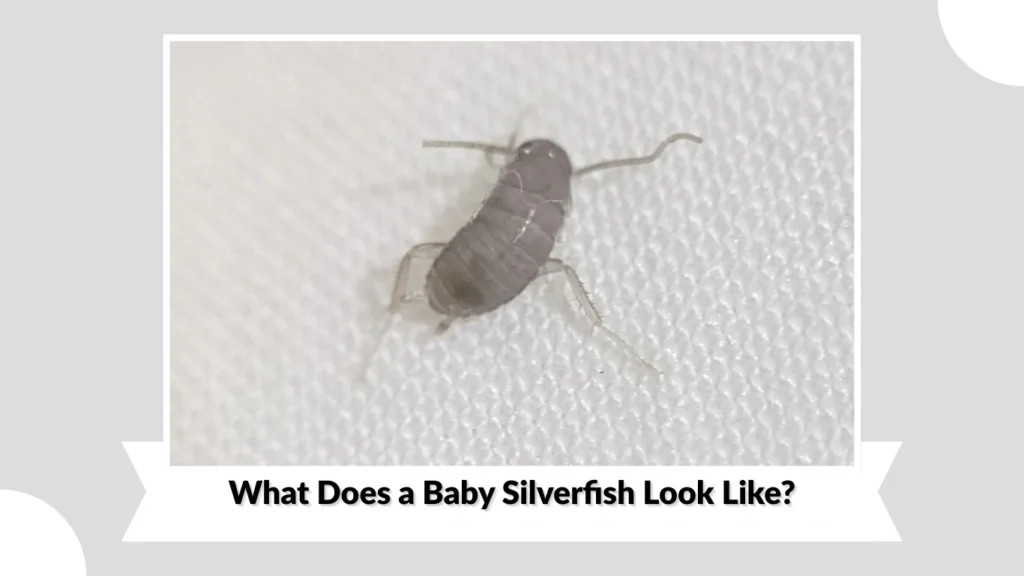
Baby silverfish, also called nymphs, look very similar to adults but are much smaller and paler. When they first hatch, they are tiny—often less than one-eighth of an inch long—and their bodies may appear white or translucent rather than silver.
As they grow, baby silverfish go through a series of molts. With each molt, they become larger and gradually develop the darker, shinier scales seen in adults. Their antennae and tail filaments are already present at birth, just shorter and less noticeable.
Because they are so small and usually hidden deep in cracks or behind stored items, baby silverfish are rarely seen. However, their presence indicates active breeding and usually means an infestation is developing.
What Do Silverfish Eggs Look Like?
Silverfish eggs are extremely small and difficult to detect. They are usually oval in shape and white or translucent in color, blending easily into dust and debris. Female silverfish lay eggs in tiny cracks, behind baseboards, under flooring, and inside wall gaps where moisture is present.
Eggs are often deposited in clusters and left to hatch quietly. Because of their size and hidden placement, most people never see silverfish eggs, even in active infestations.
What Does a Silverfish Nest Look Like?
Silverfish do not build visible nests like ants or bees. Instead, they gather and breed in hidden, protected locations where moisture and food are available. A “silverfish nest” usually refers to these concealed areas rather than a structured home.
Typical silverfish nesting zones include cracks behind baseboards, spaces under sinks, wall voids, attic insulation, and cardboard boxes. These areas may contain eggs, shed skins, and tiny black droppings. Because silverfish hide so well, nests are rarely discovered until infestations become noticeable.
Finding clusters of shed skins, repeated sightings in the same room, or damage to paper and fabrics often points to a nearby nesting site.
What Does a Silverfish Infestation Look Like?
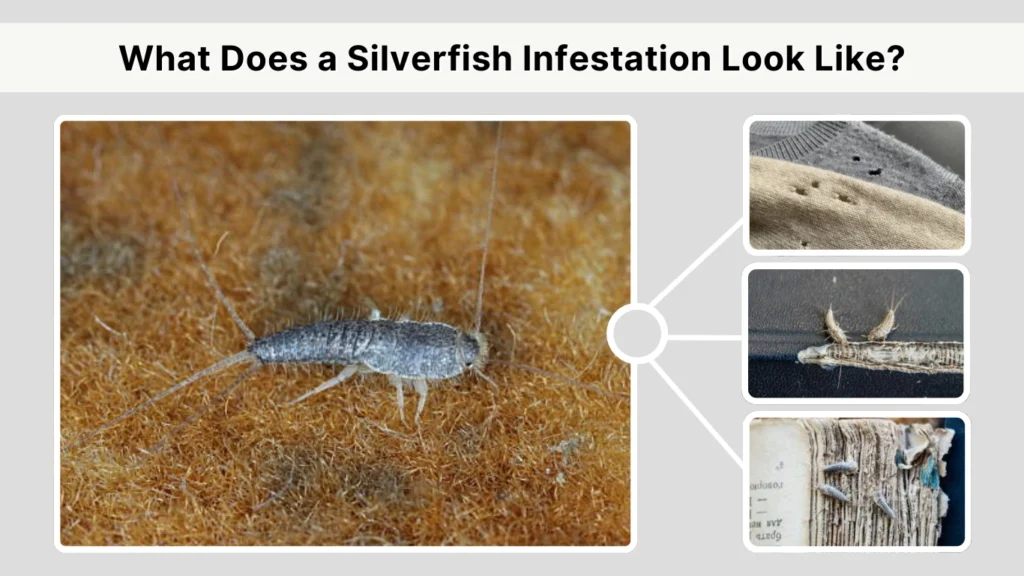
A silverfish infestation is usually identified by frequent sightings rather than one isolated insect. Seeing silverfish regularly in bathrooms, kitchens, or closets—especially at night—is a strong indicator.
Other common signs include shed skins along baseboards, yellow stains on paper or fabrics, and small black droppings resembling pepper. Homeowners may also notice damage to books, wallpaper, cardboard boxes, or stored clothing. In heavier infestations, silverfish may appear in multiple rooms, signaling that the population has spread throughout the home.
Infestations often develop quietly because silverfish avoid light and hide in deep cracks. By the time damage is visible, numbers may already be significant.
What Does a Silverfish Bite Look Like?
Do Silverfish Bite Humans?
Silverfish are not aggressive insects and are not known to bite humans. Their mouthparts are designed for scraping starches and organic materials, not for piercing skin. In most cases, silverfish will run away from people rather than make contact.
Skin Reactions Often Confused With Bites
Red marks or itching sometimes blamed on silverfish are usually caused by other insects such as bed bugs, fleas, mites, or mosquitoes. Skin irritation can also result from allergies, fabric pests, or contact with shed skins and debris in infested environments.
Because silverfish do not feed on blood, true silverfish bites are extremely rare and not medically recognized as a common issue.
What a “Silverfish Bite” Would Look Like
If a silverfish were to nibble human skin, it would likely cause very mild, surface-level irritation without puncture marks, venom, or swelling patterns. There would be no distinct bite signature. Most reported “silverfish bites” are actually unrelated skin conditions or bites from other household pests.
What Does a Silverfish Look Like in Minecraft vs Real Life
The silverfish seen in Minecraft looks very different from a real silverfish. In the game, silverfish appear block-shaped, gray, and segmented, emerging from stone blocks and attacking players.
In real life, silverfish are smooth, elongated insects with shiny scales, long antennae, and three tail filaments. They do not live in stone blocks or behave aggressively. The confusion arises because both are small, gray, and quick-moving, but real silverfish are harmless household insects, not hostile creatures.
Silverfish vs Similar-Looking Bugs
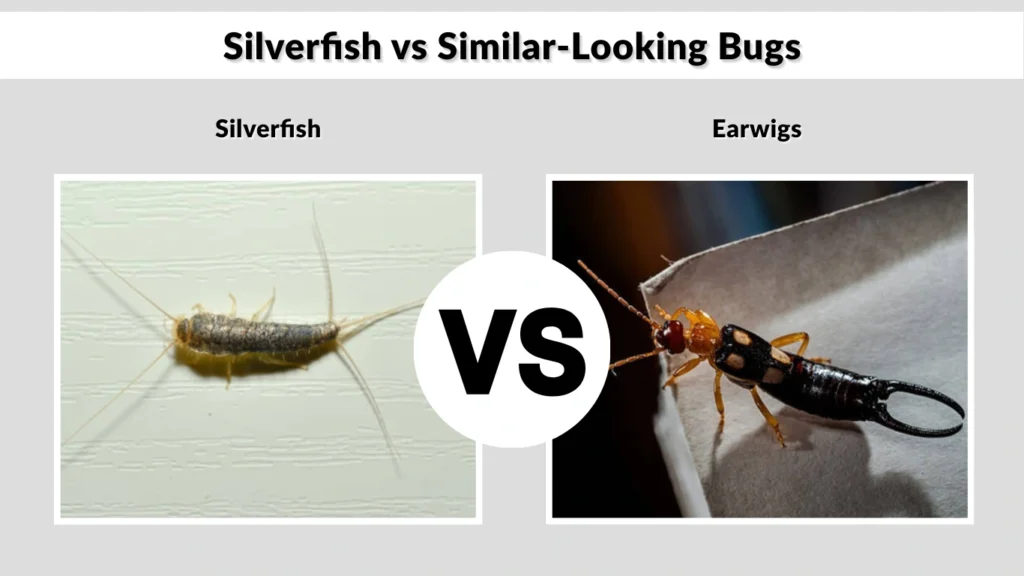
Silverfish are often confused with firebrats, which look similar but prefer hotter environments and are usually darker. Earwigs are sometimes mistaken for silverfish, but earwigs have visible pincers at the rear. Carpet beetle larvae are fuzzy and worm-like, unlike the smooth silverfish body.
Booklice are much smaller and softer-bodied, while house centipedes have long legs and a very different body structure. Learning these differences helps avoid misidentification and unnecessary treatments.
Where You’re Most Likely to See Silverfish
Silverfish are most often seen in damp areas such as bathrooms, kitchens, and laundry rooms, especially near sinks and drains. Closets, wardrobes, basements, and attics are also common locations, particularly where cardboard boxes, books, or stored clothing are present.
They may appear along baseboards, inside bathtubs, or on walls at night when lights are switched on.
FAQs
What does a silverfish look like in real life?
A real silverfish is a small, wingless insect with a flattened, carrot-shaped body, shiny silver-gray scales, long antennae, and three tail-like bristles. Adults usually measure between half an inch and one inch long and move with a fast, fish-like wriggle.
What does a baby silverfish look like?
Baby silverfish are tiny, pale versions of adults. They are usually white or translucent when they hatch and already have antennae and tail filaments. As they molt and grow, they darken and develop the shiny scales seen in mature silverfish.
What do silverfish eggs look like?
Silverfish eggs are extremely small, oval, and white or translucent. They are laid in hidden cracks, wall gaps, and damp areas. Because of their size and placement, they are rarely noticed even in active infestations.
What does a silverfish infestation look like?
An infestation usually involves repeated sightings, especially at night, along with shed skins, tiny black droppings, and damage to books, wallpaper, cardboard, or clothing. Finding silverfish in multiple rooms often indicates a widespread problem.
What does a silverfish bite look like on humans?
Silverfish are not known to bite humans. Marks blamed on silverfish are almost always caused by other insects or skin irritations. There is no typical silverfish bite pattern because they do not feed on human skin or blood.