
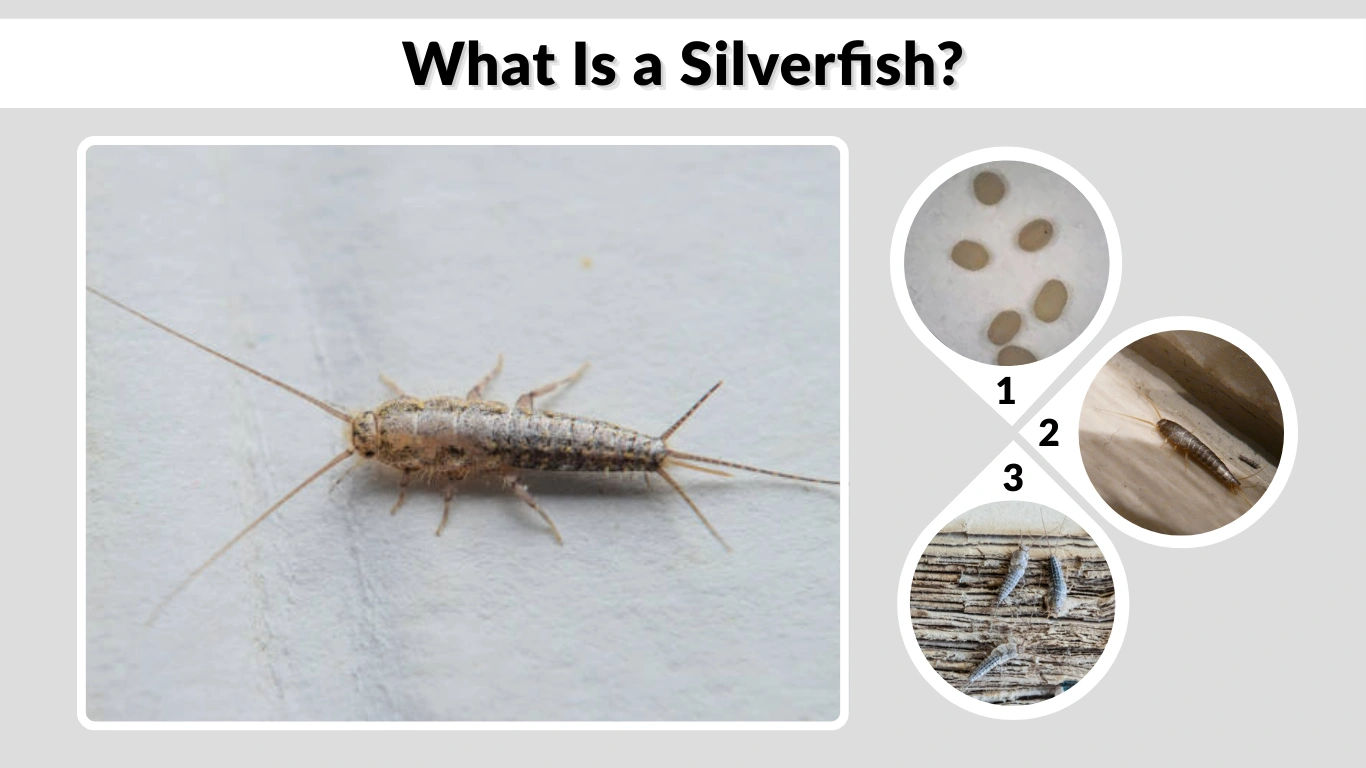
Silverfish are small, fast-moving insects that often surprise homeowners when they appear in bathrooms, kitchens, or bedrooms at night. Many people search “what is a silverfish” after seeing a tiny, shiny bug quickly disappear into a crack or under furniture. Although silverfish do not bite or spread disease, they can damage books, wallpaper, clothing, and stored foods. Understanding what a silverfish bug is, what it looks like, and why it enters homes helps you recognize early warning signs and prevent a serious infestation.
What Is a Silverfish?
A silverfish is a small, wingless household insect known for its silvery color and fish-like movements. It belongs to an ancient group of insects that existed long before dinosaurs, which explains its primitive body structure. Silverfish are nocturnal scavengers, meaning they hide during the day and come out at night to search for food.
People often ask, “what type of bug is a silverfish?” Technically, a silverfish is not a true “bug” in the scientific sense, but an insect from the order Zygentoma. In homes, silverfish are considered nuisance pests because they feed on materials humans use every day, such as paper, fabrics, and pantry items.
What Type of Insect Is a Silverfish?
Scientific classification and family
Silverfish belong to the order Zygentoma (formerly called Thysanura). This group includes silverfish and firebrats, both known for their flattened bodies and long tail filaments. They are among the most primitive living insects, meaning they have changed very little over millions of years.
Is a silverfish a bug or an insect?
In everyday language, people call silverfish “bugs.” Scientifically, they are insects with six legs, long antennae, and simple body segments. They are not beetles, worms, or spiders, even though their movement sometimes causes confusion.
How silverfish are different from other house pests
Unlike roaches or ants, silverfish do not live in visible nests. They hide deep inside walls, under floors, and inside stored items. They also continue molting throughout their entire lives, which is rare among insects.
What Does a Silverfish Look Like?
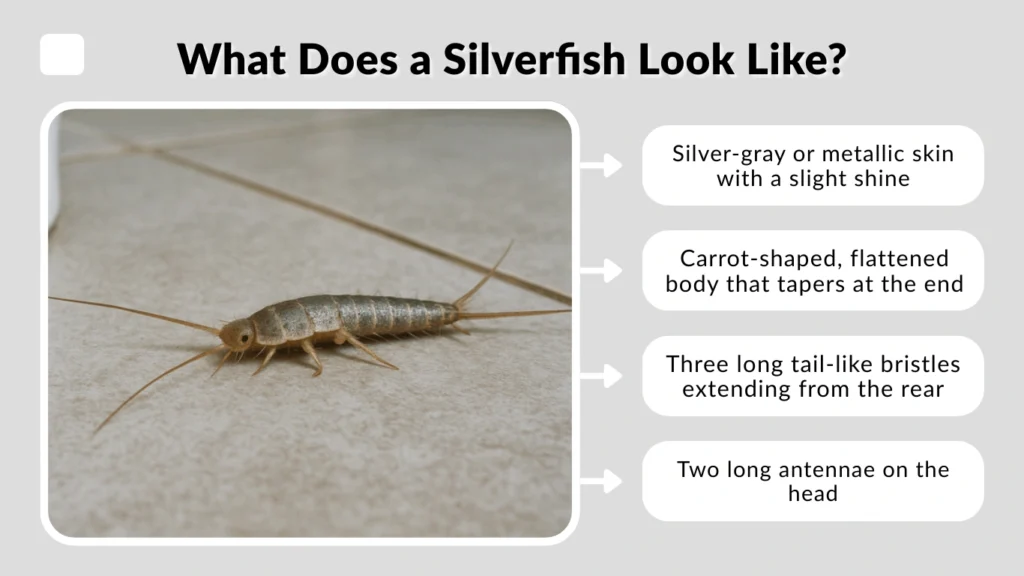
Silverfish are easy to recognize once you know their features. They are named for their shiny appearance and the way they move across surfaces like a swimming fish.
Identification Features
- Silver-gray or metallic skin with a slight shine
- Carrot-shaped, flattened body that tapers at the end
- Three long tail-like bristles extending from the rear
- Two long antennae on the head
- Tiny overlapping scales covering the body
- Usually ½ to 1 inch long
- Very fast, wriggling, fish-like movement
Young silverfish look similar to adults, only smaller and lighter in color. Because they move quickly and avoid light, people often see them for only a second before they vanish.
What Is a Silverfish Bug in the House?
When silverfish appear indoors, it is usually because the environment suits their survival needs. Silverfish thrive in dark, humid, and quiet areas. Bathrooms, kitchens, laundry rooms, basements, and attics provide moisture, warmth, and hiding places, making them ideal shelters.
Inside a house, silverfish hide behind baseboards, under sinks, inside bookcases, behind wallpaper, and in cardboard boxes. They come out mainly at night to search for food, which can include paper glue, book bindings, clothing fibers, pantry crumbs, and even dead insects.
Although silverfish do not bite humans or pets, their presence often causes concern because they can damage valuable items and are difficult to eliminate once established.
What Is a Silverfish Infestation?
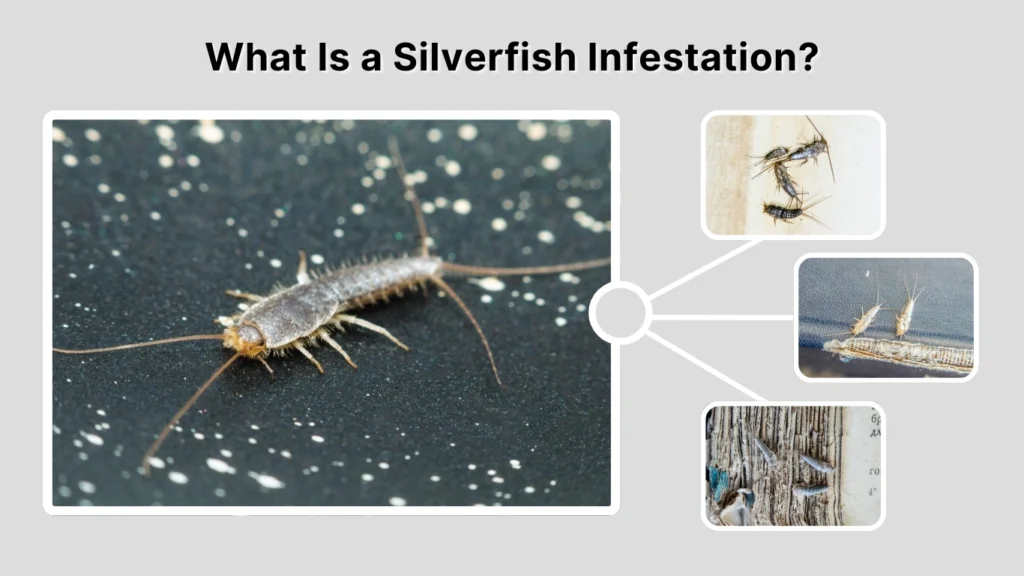
Single silverfish vs infestation
Seeing one silverfish does not always mean an infestation. However, silverfish are rarely alone. If conditions are right, there are usually more hidden nearby. An infestation means a breeding population is living inside the structure, not just an occasional wandering insect.
How silverfish infest homes
Silverfish enter homes through cracks, plumbing lines, vents, boxes, and second-hand books or furniture. Once inside, they lay eggs in dark crevices. Because silverfish can survive months without food and live for years, infestations can quietly grow without being noticed.
Why infestations last a long time
Silverfish reproduce slowly but live unusually long lives for insects, sometimes several years. They also avoid light and human activity, making them difficult to detect. Without moisture control and deep cleaning, silverfish populations often persist for a long time.
What Is Considered a Silverfish Infestation?
A silverfish infestation is not defined by one insect, but by repeated activity and visible signs throughout the home.
Common Infestation Signs
- Seeing silverfish frequently, especially at night
- Finding them in multiple rooms
- Discovering shed skins and tiny yellow stains
- Noticing holes in paper, books, wallpaper, or clothing
- Finding insects inside storage boxes and cupboards
- Continued sightings over several weeks
These signs usually mean silverfish are breeding indoors and living inside walls, furniture, or stored materials.
What Is Silverfish a Sign Of?
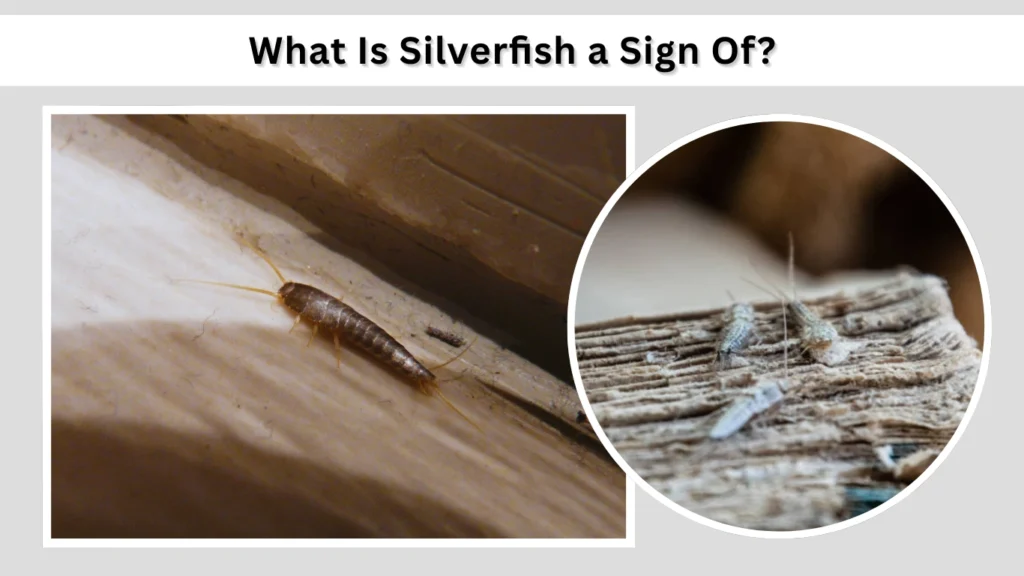
Silverfish are often a warning sign of hidden environmental problems inside a home. Because they depend heavily on moisture, their presence usually points to excess humidity, water leaks, or condensation. Bathrooms with poor ventilation, damp basements, leaking pipes, and kitchens with standing water are common silverfish hotspots.
Silverfish can also indicate mold or mildew growth. They feed on microscopic fungi and the starches found in moldy materials, which means their appearance sometimes suggests unseen mold behind walls, under floors, or inside cabinets. In addition, silverfish may signal structural gaps, loose wallpaper, or cluttered storage areas that give them shelter and steady food sources.
What Is the Purpose of a Silverfish?
In nature, silverfish play a small but useful ecological role. Outdoors, they act as decomposers, feeding on dead plants, fallen leaves, wood particles, and other organic matter. By breaking down these materials, silverfish help recycle nutrients back into the soil.
Inside homes, however, this same feeding behavior becomes a problem. Household materials such as books, cardboard, fabrics, and wallpaper glue contain starches and cellulose similar to what silverfish eat outdoors. While silverfish are not aggressive or harmful to people, their natural purpose conflicts with indoor living, turning them into destructive nuisance pests.
What Is the Lifespan of a Silverfish?
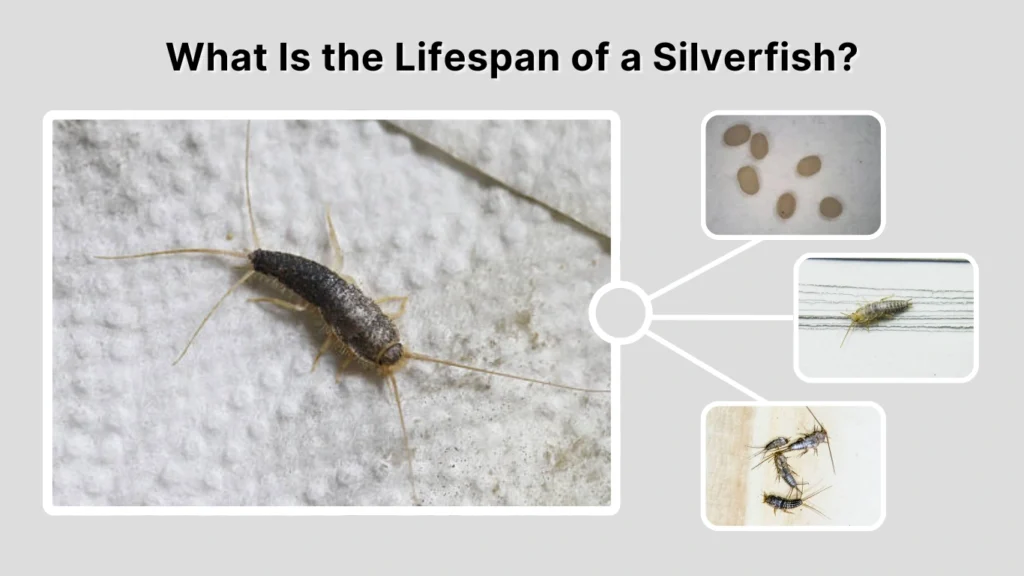
Silverfish are unusually long-lived compared to most household insects. Their slow development and long survival ability make infestations difficult to control.
Life Cycle & Longevity
- Eggs are laid in dark cracks and hidden spaces
- Nymphs hatch looking like tiny adults
- They grow slowly and molt many times
- Silverfish continue molting even as adults
- Average lifespan ranges from 2 to 8 years
- Adults can reproduce multiple times during life
Because they can live for years and survive long periods without food, silverfish populations can remain hidden and active inside buildings for a very long time.
What Looks Like a Silverfish but Is Brown?
Firebrats
Firebrats are the most commonly confused insect. They look similar in shape but are usually brown or gray with dark mottled patterns. Firebrats prefer hotter areas like ovens, boiler rooms, and fireplaces.
Carpet beetle larvae
Carpet beetle larvae are brown, fuzzy, and slow-moving. Unlike silverfish, they are covered in hairs and do not have shiny scales or fish-like movement.
Earwigs and other look-alikes
Earwigs are brown and elongated but have visible pincers on the back. Booklice are tiny and pale but lack silverfish tails. These differences help identify true silverfish.
Key visual differences
True silverfish are smooth, shiny, fast, and tapered, with three long tail bristles. Most brown look-alikes are either hairy, segmented differently, or much slower.
What Is a Silverfish in Minecraft?
In Minecraft, silverfish are small hostile mobs that hide inside stone blocks and emerge when the blocks are broken. They swarm players and are often found in strongholds and special underground structures.
The game version does not represent real silverfish behavior, but the name was chosen because both are small, fast, and difficult to eliminate. Minecraft silverfish are fictional creatures inspired loosely by the real insect’s quick movements and hidden lifestyle.
Are Silverfish Harmful or Dangerous?
Silverfish are not dangerous to humans. They do not bite, sting, or transmit known diseases. However, they can cause indirect problems. Their feeding habits damage paper, books, clothing, carpets, and pantry items. Over time, this can lead to noticeable property loss.
Some people may experience mild allergic reactions from silverfish scales or shed skins, especially in large infestations. Although they pose no serious health threat, their ability to damage belongings and persist unnoticed makes them an unwelcome household pest.
Why Do Silverfish Keep Appearing in Homes?
Silverfish continue appearing because homes often provide everything they need: moisture, darkness, shelter, and food. Even after cleaning, small leaks, humid air, and hidden cracks can support their survival. Their long lifespan and ability to hide deep within walls allow them to avoid detection.
Without controlling humidity, sealing entry points, and removing food sources, silverfish can repeatedly reappear, giving the impression they never truly leave.
FAQs
What exactly is a silverfish insect?
A silverfish is a small, wingless insect from the order Zygentoma. It has a silvery metallic body, long antennae, and three tail bristles. Silverfish are nocturnal scavengers that feed on starches, paper, fabrics, and organic debris inside homes.
Is one silverfish a sign of infestation?
One silverfish does not always mean infestation, but it often suggests others are nearby. Because silverfish hide well and are active at night, repeated sightings usually indicate a breeding population living inside walls, floors, or stored materials.
What attracts silverfish into a house?
Silverfish are attracted to moisture, warmth, and food sources like paper, glue, fabric fibers, and pantry crumbs. High humidity, leaking pipes, cluttered storage, and poor ventilation create ideal living conditions for them.
How long do silverfish live indoors?
Silverfish can live between two and eight years indoors, far longer than most household insects. They grow slowly, molt throughout their lives, and can survive months without food, allowing infestations to persist for long periods.
Are silverfish useful or only pests?
Outdoors, silverfish help recycle organic matter and support natural decomposition. Indoors, however, they damage household materials and stored items. For this reason, they are considered pests when found in homes.