
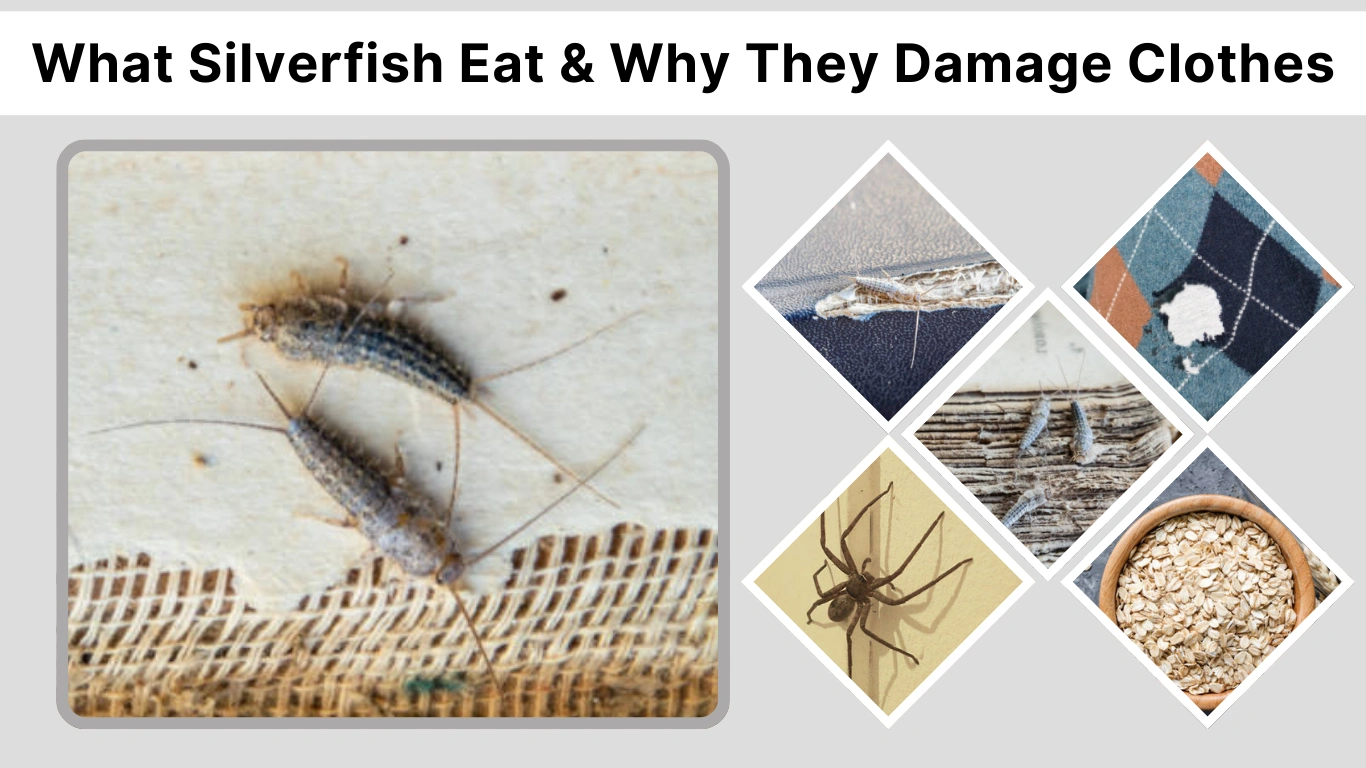
Silverfish are tiny, silvery-gray insects known for their quick, darting movement and their appetite for materials stored around the home. Although they don’t bite or harm humans, their diet makes them destructive to clothing, books, wallpaper, food storage, and even certain household materials. Understanding exactly what silverfish eat—and why they target specific fabrics, papers, and adhesives—helps you prevent damage, eliminate food sources, and protect vulnerable items. This guide explains their full diet, habits, and the risks they pose to clothing, books, and stored valuables.
Identification
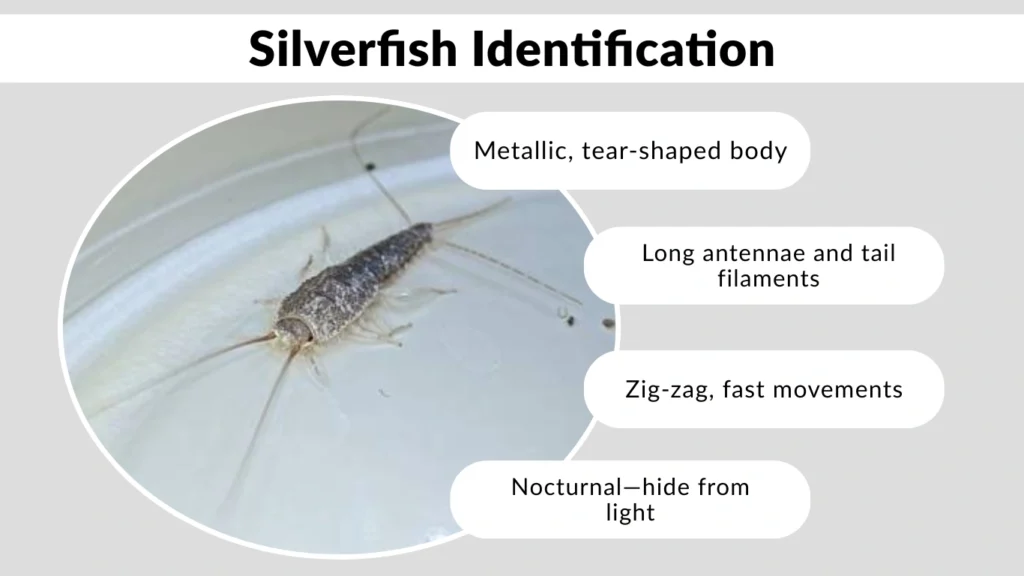
- Metallic, tear-shaped body
- Long antennae and tail filaments
- Zig-zag, fast movements
- Nocturnal—hide from light
- Common in bathrooms, basements, attics, and kitchens
Silverfish thrive in dark, moist areas where humidity stays above 70%. Their bodies are built for squeezing into cracks, behind baseboards, and inside storage boxes where starchy materials are easy to find.
What Silverfish Eat
Silverfish primarily feed on items high in starch, sugar, and protein. In the wild, they eat decaying plant material, fungi, and natural debris. Indoors, they exploit human environments filled with processed materials. Their feeding method involves scraping or grazing surfaces, leaving irregular holes and thin, etched lines behind.
They do not need much food to survive; in some cases, a silverfish can live over a year without eating if moisture is available. This makes eliminating food sources even more important since total starvation is difficult.
Starches & Sugars They Prefer
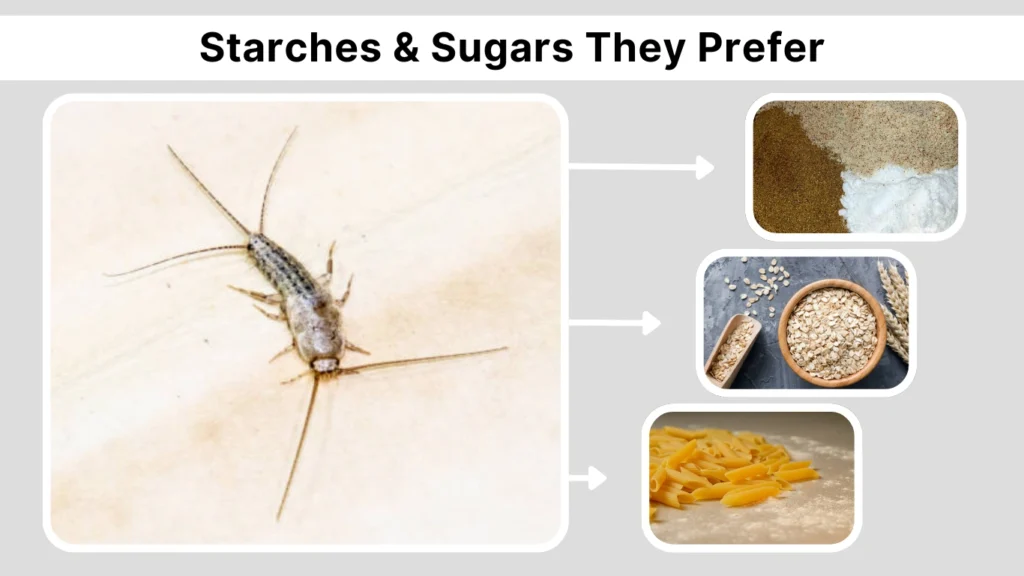
Silverfish are carbohydrate specialists. Indoors, they target:
- Sugar, flour, cereals
- Rolled oats and grains
- Pasta and dry baking food
- Glue and adhesive residues
- Wallpaper paste
- Book bindings containing starch
- Dead insects (for protein)
Adhesive-based items are the main reason silverfish are found inside books, wallpaper, and cardboard. Even the glue in old photo albums becomes a food source.
Do Silverfish Eat Clothes?
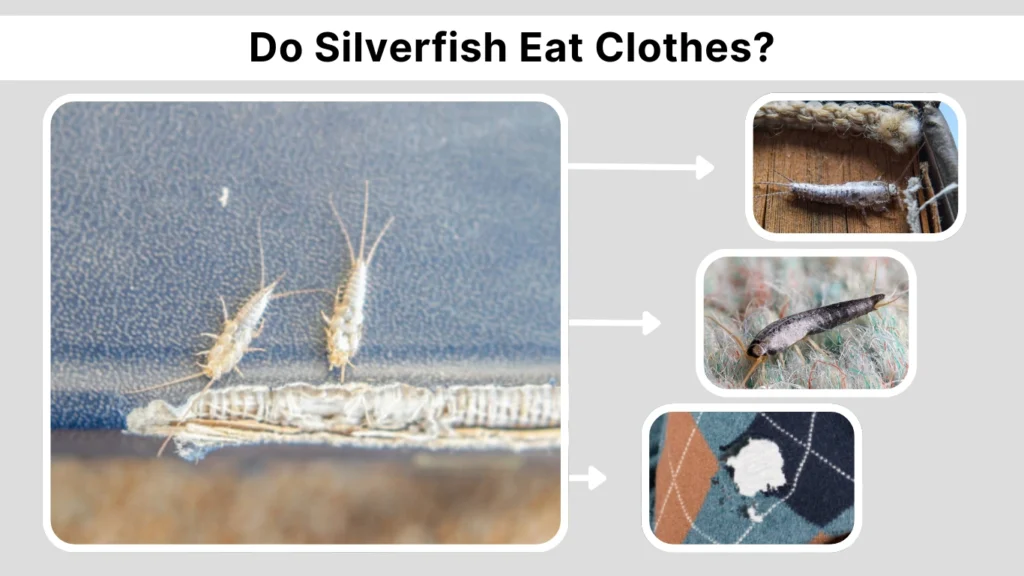
Yes—silverfish can and do eat clothes, especially fabrics with natural fibers or those contaminated with sweat, skin cells, food stains, or oils. They prefer starchy fibers, but protein-rich materials like wool and silk also attract them. Clothing with traces of body oils is particularly appealing because the salt and protein act as nutrients.
Silverfish rarely chew through clothing aggressively like moth larvae. Instead, they graze, creating scattered small holes, worn patches, and irregular thinning. These marks often appear on clothes stored in humid closets, basements, or containers where moisture increases the fabric’s attractiveness.
Fabrics Silverfish Commonly Eat
- Cotton
- Linen
- Silk
- Rayon
- Wool
- Natural–synthetic blends
- Any fabric contaminated with sweat or food
Silverfish generally ignore pure synthetics like polyester unless food residue or natural fibers are present.
Silverfish vs Clothing Materials
| Material | Will Silverfish Eat It? | Notes |
| Cotton | Yes | Extra attractive if sweaty or damp |
| Polyester | Rarely | Only eaten if blended with naturals |
| Wool | Yes | High-protein fiber silverfish enjoy |
| Leather | Sometimes | Prefer aged, dirty, or damp pieces |
| Synthetics | No | Lack nutrients silverfish need |
This table helps explain why freshly washed, dry synthetics stay safe while stored wool sweaters are more vulnerable.
Do Silverfish Eat Books, Paper & Money?
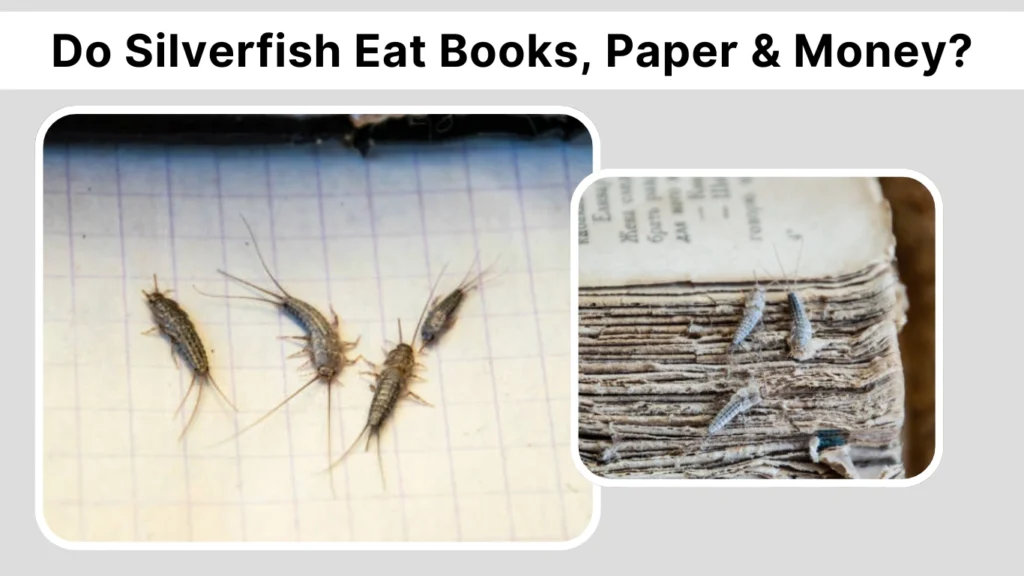
Paper is one of the silverfish’s favorite food sources. They chew the carbohydrate-rich fibers and especially love the starch-based glue used in bindings. Books stored in humid areas suffer the worst damage as silverfish burrow near the spine or edges.
Silverfish also eat magazines, artwork, cardboard boxes, and paper money, not because they seek currency itself, but because the paper contains cellulose and often glues. Historical records, photographs, and collectibles are particularly at risk.
Books with older glue are more vulnerable than modern ones because older adhesives contain higher amounts of wheat and starch. In addition, cardboard storage boxes absorb humidity, making them prime feeding and breeding areas.
Paper-Based Materials Silverfish Target
- Books and book bindings
- Magazines and newspapers
- Stored documents
- Paper money and collectibles
- Cardboard boxes
- Photographs
- Wallpaper
The damage typically appears as edges scraped thin, tiny holes, or loose bindings where the glue has been eaten.
Do Silverfish Eat Household Materials?
Silverfish don’t eat household materials like wood or plastic directly, but they do chew starches, glues, mold, and residues found on them.
For example, while they don’t consume wood, they will eat mold growing on damp wooden surfaces. Similarly, plastic containers themselves aren’t edible, but any food dust or residue stuck to the plastic can attract silverfish.
Materials Silverfish Actually Chew
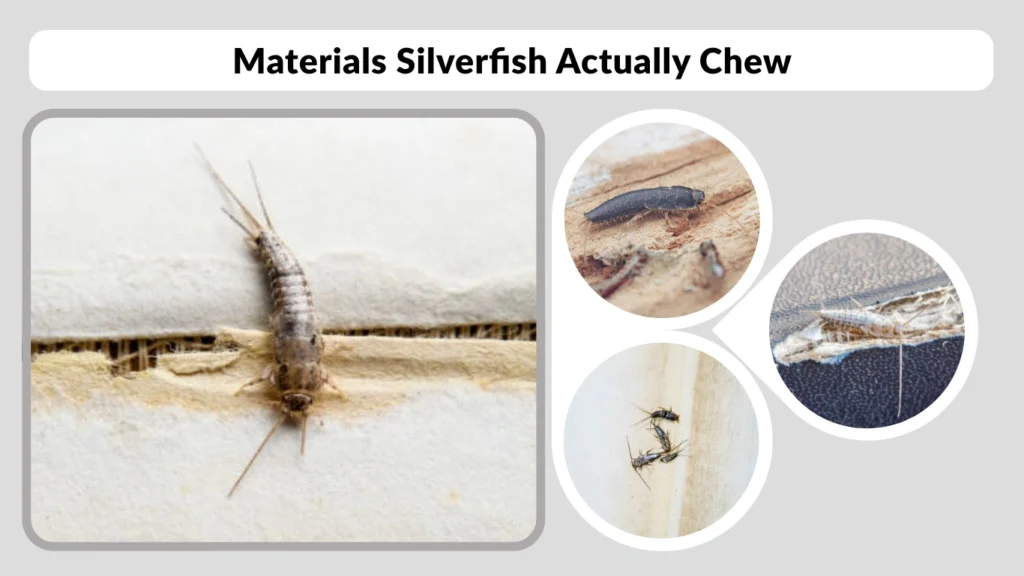
| Material | Do They Eat It? | Why |
| Wood | No | They eat mold on damp wood |
| Plastic | Rarely | Only if residue is present |
| Drywall | Sometimes | For starch in glue compounds |
| Hair / Dead Skin | Yes | Excellent protein source |
| Carpet | Sometimes | Only natural-fiber carpets |
Hair, dandruff, and skin cells are surprisingly common attractants, explaining why silverfish often appear in bathrooms and near laundry areas.
Do Silverfish Eat Other Bugs?
Silverfish are not active hunters. They do not chase or kill live insects. However, they are opportunistic scavengers and will eat dead insects, shed exoskeletons, and fragments of other bugs. These protein sources help them survive in places where carbohydrate-rich materials are limited. This scavenging ability also helps silverfish thrive in basements, utility rooms, and corners where dead insects accumulate.
They do not prey on cockroaches, ants, or spiders despite myths claiming otherwise. Their mouthparts are designed for scraping surfaces—not for piercing or attacking.
What Eats Silverfish?
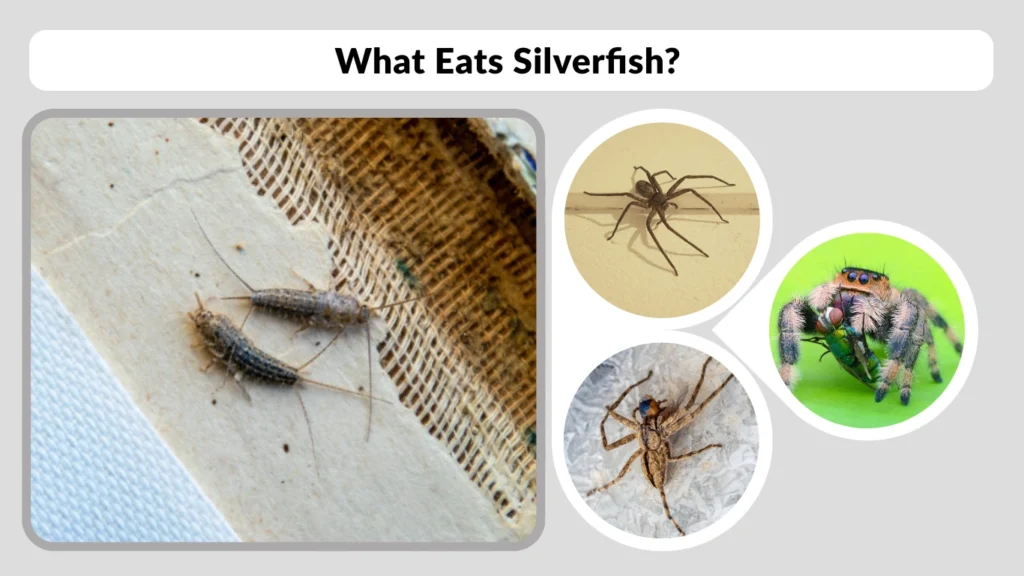
Silverfish have many natural predators, especially indoors. Although these predators may help reduce silverfish numbers, they rarely eliminate an infestation completely. Predatory insects and small animals feed on silverfish mainly by opportunistic hunting.
Common Silverfish Predators
- House spiders – Hunt silverfish if they cross their webs
- Jumping spiders – Active predators that catch small silverfish
- Wolf spiders – Strong hunters that will eat larger silverfish
- Daddy longlegs – Occasionally consume small silverfish
- Ants – Opportunistically eat silverfish or their eggs
- Centipedes – One of the most effective silverfish predators
- Lizards and geckos – Eat silverfish when found indoors
- Roaches – May consume silverfish eggs or remains
House centipedes are often the most effective natural control because they actively chase silverfish at night in kitchens, basements, and bathrooms.
Pets & Silverfish: Safety Questions
Pets frequently encounter silverfish, especially in humid areas of the home. Fortunately, silverfish are not toxic, do not bite, and do not carry diseases that affect pets or humans.
Can Cats Eat Silverfish?
Yes—cats often hunt and occasionally eat silverfish. This behavior is normal and not harmful. Silverfish do not contain venom or toxins, and digestion poses little risk. The primary concern is environmental: if a home has many silverfish, a moisture or cleanliness issue may need attention.
Can Dogs Eat Silverfish?
Dogs generally ignore silverfish, but eating one is safe. Since silverfish are tiny and harmless, most dogs won’t even notice them. No special precautions are needed unless pesticide treatments are being used in the home.
Can People or Reptiles Eat Silverfish?
Humans do not eat silverfish, though accidental contact is harmless. Some reptiles—such as bearded dragons—may eat silverfish if encountered. While this is not dangerous, silverfish are not a reliable or nutritious food source for pet reptiles and should not be intentionally offered.
Why Silverfish Make Holes in Clothes
Silverfish damage occurs when fabrics contain starch, sugars, protein, body oils, or moisture. These microscopic residues provide nutrients. When silverfish find stored clothing in humid conditions, they scrape fibers to gather nutrients, leaving tiny holes and uneven worn patches.
Sweaty clothing left in a laundry basket, wool sweaters stored in damp closets, or cardboard clothing boxes create ideal conditions. Silverfish do not chew large, round holes like moth larvae; instead, they create scattered pinholes and thinning that gradually becomes visible.
Items stored near bathrooms, sinks, or basements tend to show the worst damage because humidity softens fabric fibers and increases microbial growth that silverfish feed on.
How to Prevent Silverfish From Eating Clothes
Preventing silverfish damage requires removing their food sources and reducing moisture. Since they thrive in high-humidity environments, controlling the environment is key. Clothing stored improperly becomes a major target because fibers absorb oils, sweat, and starches from the skin.
Effective Prevention Tips
- Reduce humidity below 50% using dehumidifiers
- Store clothes in airtight containers or sealed garment bags
- Wash clothing before storing to remove sweat and stains
- Avoid cardboard boxes, which attract moisture and support silverfish feeding
- Use cedar blocks, lavender, or repellents in closets
- Seal cracks and baseboards where silverfish hide
- Fix leaks in bathrooms, basements, and laundry rooms
Long-term prevention focuses on dryness, cleanliness, and eliminating hiding areas.
Habitat & Behavior
Silverfish prefer environments that mimic their natural outdoor habitats: dark, moist, and rich in organic debris. Inside homes, they hide in cracks, behind appliances, inside boxes, and along baseboards. Their flattened bodies allow them to squeeze into tight gaps, making them hard to detect.
Silverfish are extremely fast and move in a unique, fish-like motion. They’re nocturnal, becoming active at night to search for food. Their survival abilities are impressive—they can live over three years and reproduce quickly in warm, humid rooms.
Range & Where Silverfish Live Indoors
Silverfish can be found anywhere moisture and starchy materials intersect.
Common indoor locations:
- Bathrooms
- Basements
- Kitchens
- Attics
- Laundry rooms
- Inside bookshelves
- Storage rooms
- Cardboard boxes
- Behind wallpaper
Areas with poor ventilation or slow leaks are the most likely places for infestation.
FAQs
What do silverfish eat in the home?
Silverfish eat starches, sugars, proteins, and natural fibers. Indoors, they target paper, fabrics, book bindings, cardboard, glue, wallpaper paste, cereals, and even dead insects. Humid areas make these materials softer and easier for silverfish to scrape, which increases feeding activity and potential damage.
Do silverfish eat clothes or just damage them?
Silverfish do actively eat clothes, especially natural fibers like cotton, silk, and wool. They also feed on body oils, sweat, and food residue trapped in fabrics. Their scraping mouthparts create scattered holes, thinning, and worn areas—particularly on unwashed or humid clothing stored for long periods.
Can silverfish eat through plastic bags?
Silverfish cannot chew through hard plastic, but thin, low-grade plastics or unsealed bags may still allow access. They enter through openings or chew existing weak spots. If clothing or papers inside contain starches or oils, the silverfish may find their way inside by squeezing through tiny gaps.
Do silverfish eat money or important documents?
Yes—silverfish can damage paper money, documents, and books. They are attracted to the cellulose and starch-based adhesives in banknotes, envelopes, and paper files. Humid storage areas make these materials more vulnerable. Archival storage methods help protect important papers from infestation.
What attracts silverfish the most?
Silverfish are most attracted to humidity, warmth, darkness, and accessible food sources like paper, glue, starchy fabric fibers, and crumbs. Leaky pipes, damp basements, unwashed laundry, and cardboard storage boxes create perfect conditions. Reducing moisture and sealing materials are the best preventive steps.