
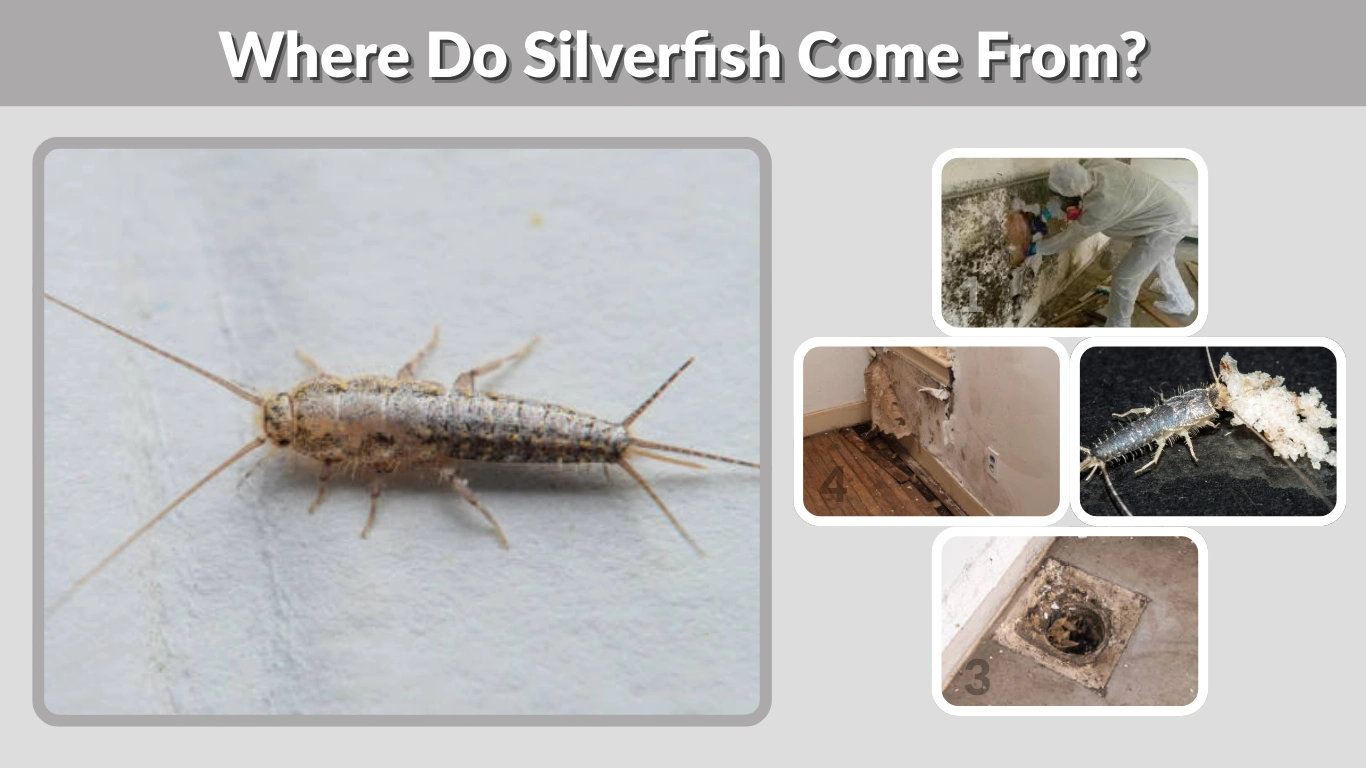
Silverfish are small, wingless insects that often appear unexpectedly in bathrooms, kitchens, basements, and storage areas. Many homeowners believe they “come from nowhere,” but silverfish always originate from specific environments and conditions. They are strongly linked to moisture, darkness, and hidden food sources. Understanding where silverfish come from is the first step to controlling them effectively. This guide explains their natural origins, why they move indoors, and how they first establish themselves inside homes.
Natural Origins of Silverfish
Silverfish did not evolve to live only in houses. In nature, they are commonly found in cool, damp, and dark environments such as under rocks, fallen leaves, tree bark, caves, and soil debris. These places provide the same things silverfish seek indoors: moisture, shelter, and organic material to feed on.
Outdoors, silverfish survive by feeding on decaying plant matter, algae, fungi, and natural starches. They avoid sunlight and remain hidden most of the time, which is why people rarely notice them outside. When environmental conditions change—such as heavy rain, drought, or cold weather—silverfish may migrate from outdoor hiding spots into buildings where the temperature and humidity are more stable.
Homes unintentionally recreate their ideal habitat. Basements, bathrooms, wall voids, and storage spaces closely resemble the dark, humid shelters silverfish use in nature, making houses a natural extension of their outdoor environment.
Why Silverfish Come Into Houses
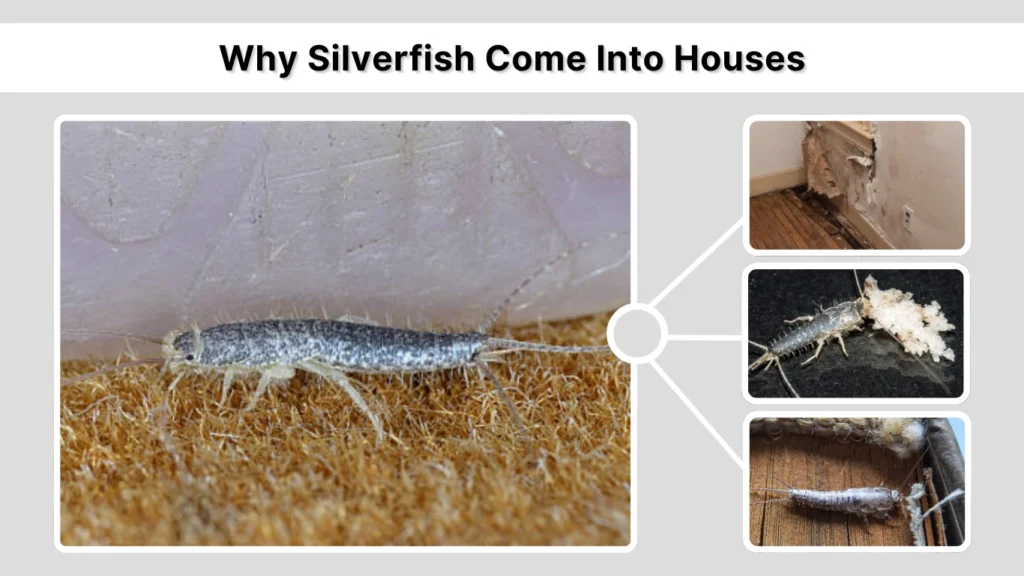
Silverfish do not enter homes randomly. They are driven indoors by very specific survival needs.
Moisture and Humidity Attraction
Moisture is the most important factor behind silverfish infestations. Silverfish lose water easily through their bodies, so they must live in humid environments to survive. Leaking pipes, damp basements, poorly ventilated bathrooms, condensation around windows, and wet laundry areas all create ideal conditions.
When humidity rises indoors, silverfish can thrive, reproduce, and remain hidden for long periods. This is why they are most often seen in bathrooms, kitchens, basements, crawl spaces, and laundry rooms.
Search for Food Sources
Silverfish are scavengers that feed on materials most people don’t think of as food. Inside homes, they consume starches, sugars, and proteins found in paper, book bindings, wallpaper glue, cardboard boxes, fabrics, cereals, flour, pet food, and even dead insects.
Stored items provide both nutrition and shelter. Old books, stacked papers, clothing piles, and pantry storage can quietly support silverfish populations without obvious signs of damage at first.
Need for Shelter and Darkness
Silverfish avoid light and open areas. They prefer narrow cracks, hidden voids, and undisturbed spaces where predators and human activity are limited. Wall gaps, baseboards, floor drains, cabinet corners, and spaces behind appliances create perfect hiding zones.
Because of this behavior, silverfish are usually present long before they are ever seen. People typically notice them only when populations grow or when humidity or temperature changes force them into visible areas.
Common Entry Points Into Homes
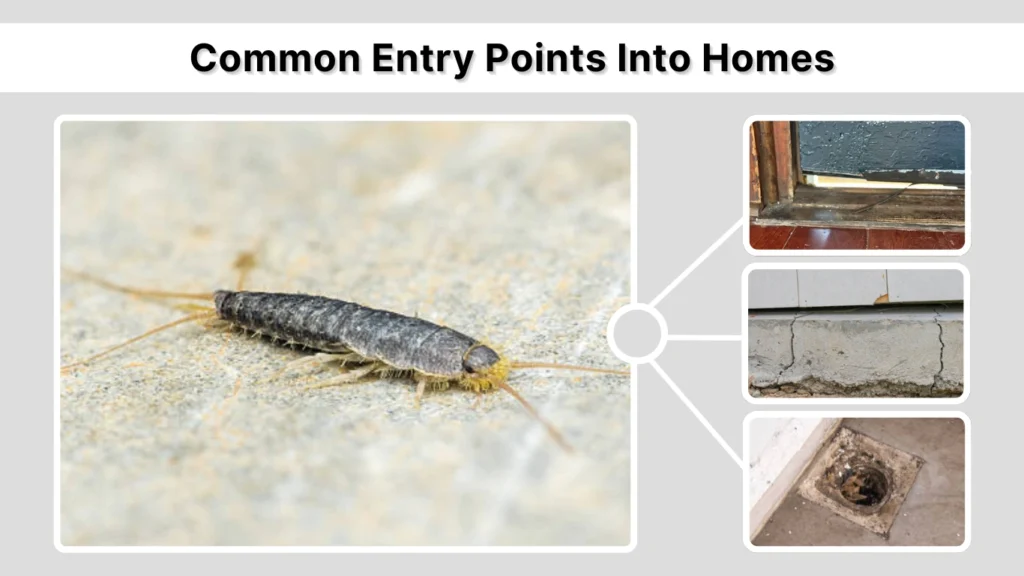
Silverfish usually enter houses from outside or spread between rooms through small, unnoticed openings.
- Gaps under doors and around window frames
- Cracks in foundations, walls, and flooring
- Openings around plumbing pipes and utility lines
- Floor drains, vents, and crawl-space access points
- Cardboard boxes, books, and stored items brought indoors
- Shared walls in apartments, offices, and older buildings
Once inside, they move easily through wall voids and structural gaps, allowing them to spread far from their original entry point.
Indoor Places Silverfish Usually Come From
Bathrooms, Kitchens, and Laundry Areas
These rooms attract silverfish because they consistently provide moisture and warmth. Hidden leaks under sinks, water behind tiles, damp bath mats, and condensation around pipes allow silverfish to survive without being seen. Food particles, soap residues, and paper products stored nearby further support their presence.
Basements, Attics, and Storage Rooms
Basements and storage areas are some of the most common sources of silverfish inside homes. They are often cool, dark, and rarely disturbed. Cardboard boxes, old books, clothing, and long-term storage materials offer both food and shelter. Attics can also host silverfish, especially when roof leaks or poor ventilation create trapped humidity.
Life Cycle and How Infestations Start
Silverfish infestations often begin quietly and develop slowly. Female silverfish lay small batches of eggs in hidden, protected locations such as cracks in walls, behind baseboards, inside book spines, or under stored materials. These eggs hatch into tiny, pale nymphs that resemble smaller versions of adults.
Unlike many insects, silverfish continue to molt throughout their lives, allowing them to survive for several years under the right conditions. Because they grow slowly and stay hidden, a population can become well-established long before homeowners realize silverfish are present. When moisture increases or hiding spaces are disturbed, they may suddenly start appearing in sinks, bathtubs, and along walls, giving the impression of a sudden invasion.
Environmental Conditions That Support Silverfish
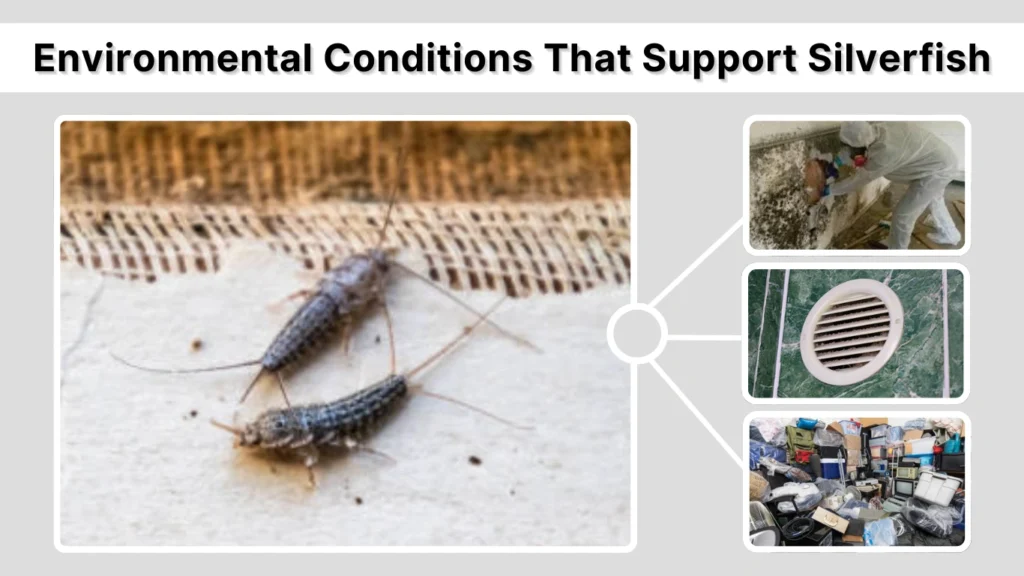
Certain indoor conditions allow silverfish to survive, spread, and reproduce effectively.
- High humidity levels that prevent dehydration
- Poor ventilation in bathrooms, basements, and attics
- Long-term clutter and undisturbed storage
- Leaking plumbing, roof seepage, or damp foundations
- Warm, dark hiding spots near food sources
When these factors exist together, homes can unknowingly become permanent habitats rather than temporary shelters.
Can Silverfish Come From Drains or Plumbing?
Silverfish are often seen near sinks, bathtubs, and floor drains, which leads many people to believe they come directly from drains. In reality, silverfish rarely breed inside drains. However, plumbing systems create damp travel routes and access points into walls, cabinets, and floors.
Small gaps around pipes allow silverfish to move between rooms and levels of a building. Moisture around drains also attracts them, making bathrooms and kitchens common sighting areas even when the actual nest is hidden elsewhere, such as behind walls or under flooring.
Seasonal and Weather-Related Causes
Why Silverfish Appear More in Summer
Warm temperatures combined with high humidity create perfect breeding conditions for silverfish. During summer, increased moisture in the air allows them to move more freely and reproduce more quickly. This often leads to a noticeable rise in indoor sightings, especially in homes without good ventilation or climate control.
Why They Move Indoors During Rain or Cold
Heavy rainfall can flood outdoor hiding places, forcing silverfish to seek shelter indoors. During colder months, they move into heated buildings to escape low temperatures. These seasonal shifts explain why silverfish may suddenly appear even in homes that previously showed no visible activity.
How to Stop Silverfish at the Source
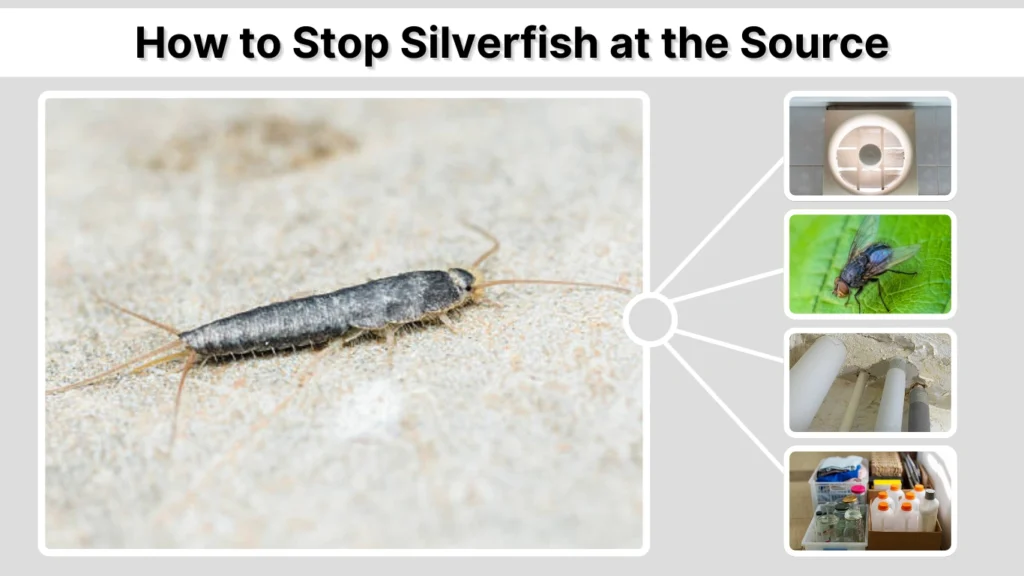
Preventing silverfish begins with removing the conditions that attract them.
- Reduce indoor humidity using exhaust fans and dehumidifiers
- Repair leaking pipes, roofs, and foundation cracks
- Seal gaps around doors, windows, and utility lines
- Store paper goods and clothing in dry, sealed containers
- Improve ventilation in basements, bathrooms, and attics
- Regularly inspect hidden, high-risk areas
By controlling moisture and eliminating shelter, homes become far less suitable for silverfish survival.
FAQs
Do silverfish come from outside or inside?
Silverfish originate from both outdoor environments and hidden indoor spaces. They naturally live outdoors under rocks, bark, and leaf litter, but once inside a building, they can establish long-term populations within walls, basements, and storage areas if moisture and food remain available.
Can silverfish appear even in clean houses?
Yes. Silverfish are attracted more to humidity and shelter than to dirt. Even very clean homes can develop silverfish problems if there is excess moisture, poor airflow, or stored paper products that provide hiding places and food sources.
Do silverfish come from drains?
Silverfish usually do not breed inside drains, but they often travel along plumbing lines and moist pipe areas. Seeing them near sinks or tubs typically indicates nearby humidity or hidden nesting areas rather than a true drain-based origin.
Why do silverfish suddenly show up?
Sudden sightings often happen when humidity changes, seasons shift, or hidden areas are disturbed. Silverfish may already be living behind walls or under storage and only become visible when conditions push them into open spaces.
Does seeing one silverfish mean there are more?
Often, yes. Silverfish are nocturnal and secretive, so visible individuals may represent a larger unseen population. Because they live long and reproduce steadily, early sightings should be taken as a sign to inspect for hidden sources.