
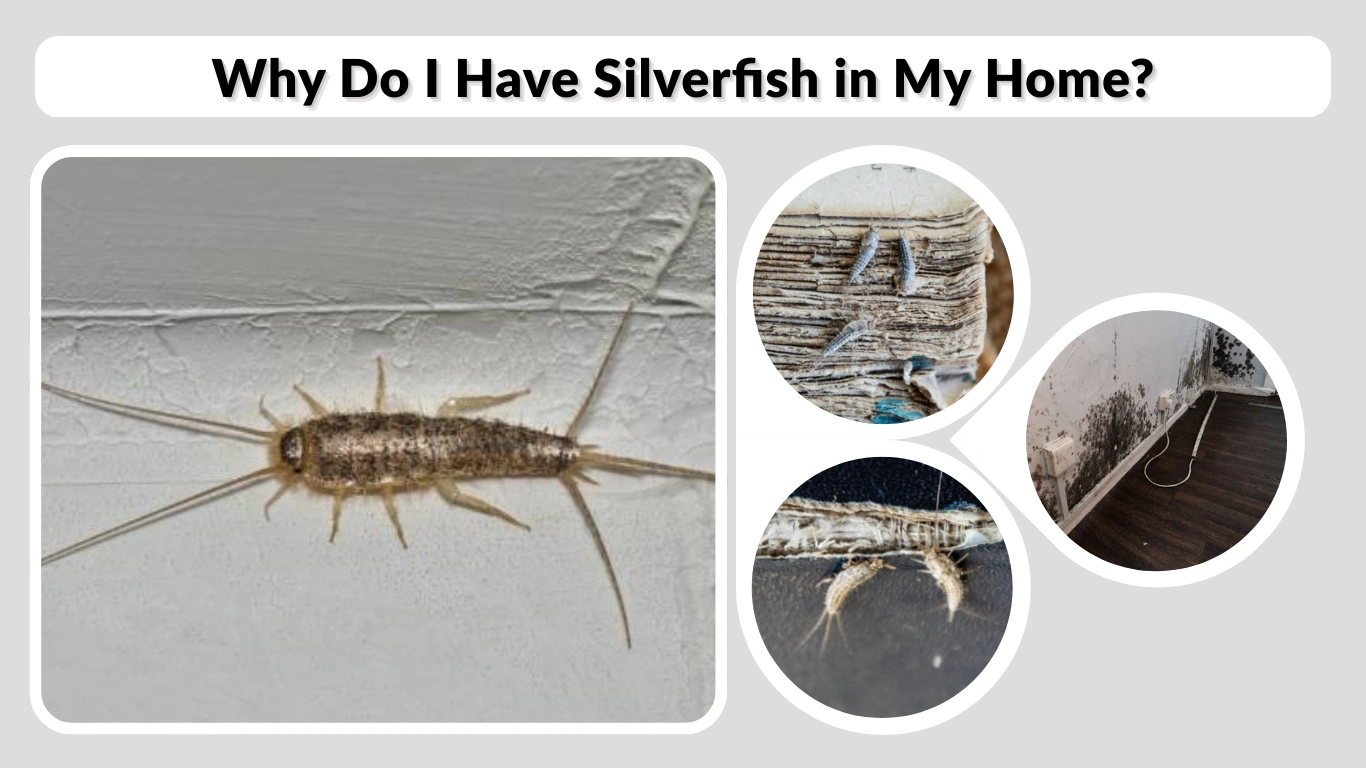
Seeing silverfish in your home can be unsettling, especially when they appear suddenly in bathrooms, kitchens, or bedrooms late at night. These fast-moving, wingless insects are not random intruders. Their presence usually means your home is offering the moisture, shelter, and food sources silverfish need to survive. Understanding why silverfish are attracted indoors helps explain where they come from, what conditions support them, and how to remove the causes before infestations grow.
What Are Silverfish and Why Do They Enter Homes?
Silverfish are small, nocturnal insects named for their silvery-gray color and fish-like movement. Outdoors, they naturally live in dark, damp environments such as under rocks, inside leaf litter, and beneath tree bark. These places provide steady humidity and plenty of organic material to feed on.
Homes unintentionally recreate these same conditions. Modern houses contain plumbing, insulation, stored paper products, and warm, protected spaces that closely match silverfish’ natural habitats. When indoor moisture rises or food sources become easy to access, silverfish move inside to survive and reproduce. Unlike many pests, silverfish do not need garbage or spoiled food; everyday household materials are enough to sustain them.
Once indoors, silverfish can live for years if conditions remain favorable. They hide deep inside wall voids, behind baseboards, and beneath flooring, emerging mainly at night to feed. This secretive behavior is why people often see silverfish only after populations have already become established.
Main Reasons You Have Silverfish in Your Home
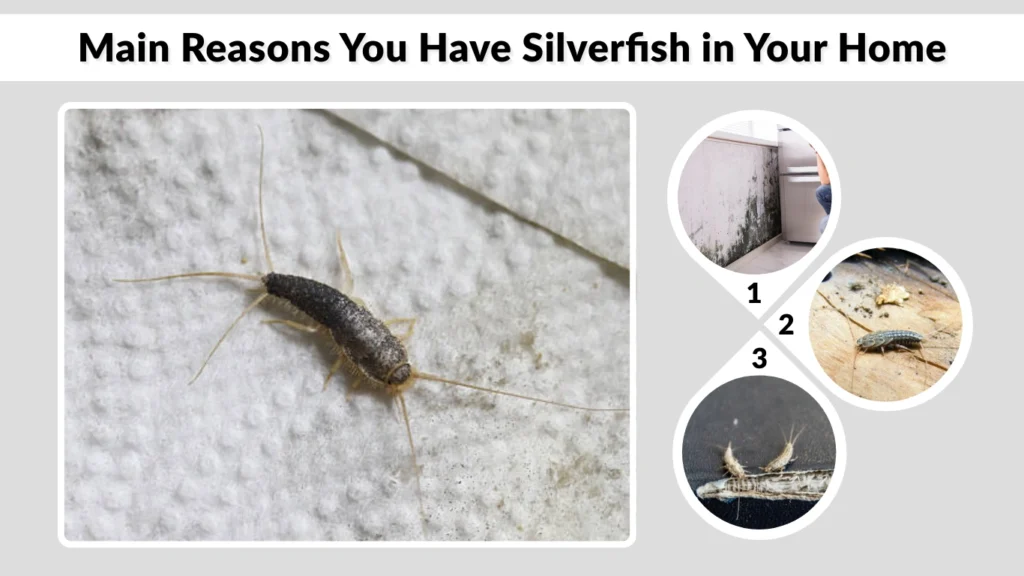
Excess Moisture and High Humidity
Moisture is the single most important factor attracting silverfish. These insects lose water easily through their bodies and must live in humid environments to survive. Bathrooms, basements, kitchens, and laundry rooms naturally hold more moisture than other parts of the home.
Leaky pipes, dripping faucets, poor ventilation, and condensation around windows or air-conditioning systems create perfect silverfish habitats. Even slightly damp drywall, insulation, or wooden structures can support them. Homes in humid climates or during rainy seasons often experience sudden increases in silverfish activity because moisture levels rise throughout the building.
Readily Available Food Sources
Silverfish feed on a surprisingly wide range of household materials. Their preferred foods are rich in starches and sugars, including paper, book bindings, cardboard, wallpaper glue, fabrics, and pantry crumbs. They also consume dead insects, mold, and microscopic organic debris.
Because these materials exist in almost every home, silverfish rarely struggle to find food. Stored books, old files, clothing closets, and pantry shelves all provide continuous nourishment. When food sources are abundant, silverfish can multiply without ever needing to travel far.
Dark and Undisturbed Hiding Places
Silverfish are extremely sensitive to light and prefer tight, protected spaces. Wall voids, cracks behind baseboards, storage boxes, closets, and areas behind appliances offer the darkness and shelter they require.
Homes filled with clutter, stacked boxes, or long-term storage areas create ideal hiding conditions. Silverfish thrive where human activity is minimal. This allows them to feed, molt, and reproduce without disturbance, often building populations long before homeowners notice any visible insects.
Structural Entry Points
Silverfish rarely appear magically. They enter homes through tiny openings that often go unnoticed. Cracks in foundations, gaps around plumbing, poorly sealed windows, vents, and damaged door frames all provide access points.
They may also arrive inside cardboard boxes, old books, grocery packaging, or second-hand furniture. Once inside, silverfish spread through wall spaces and flooring, gradually expanding into kitchens, bathrooms, and bedrooms.
How Silverfish Get Inside Your House
Silverfish use both active movement and accidental transport to invade homes.
- Through cracks and crevices in foundations, walls, and baseboards
- Via plumbing lines and drains where moisture and darkness exist
- Inside boxes, books, and stored items brought from basements, garages, or shops
- Through doors, windows, and vents that are poorly sealed
- From crawl spaces, attics, and basements where outdoor conditions transition indoors
Because silverfish are small and flexible, even very narrow gaps can become entry routes. Once a few individuals establish themselves in suitable areas, populations can slowly grow without being detected.
Why Silverfish Suddenly Appear in Homes
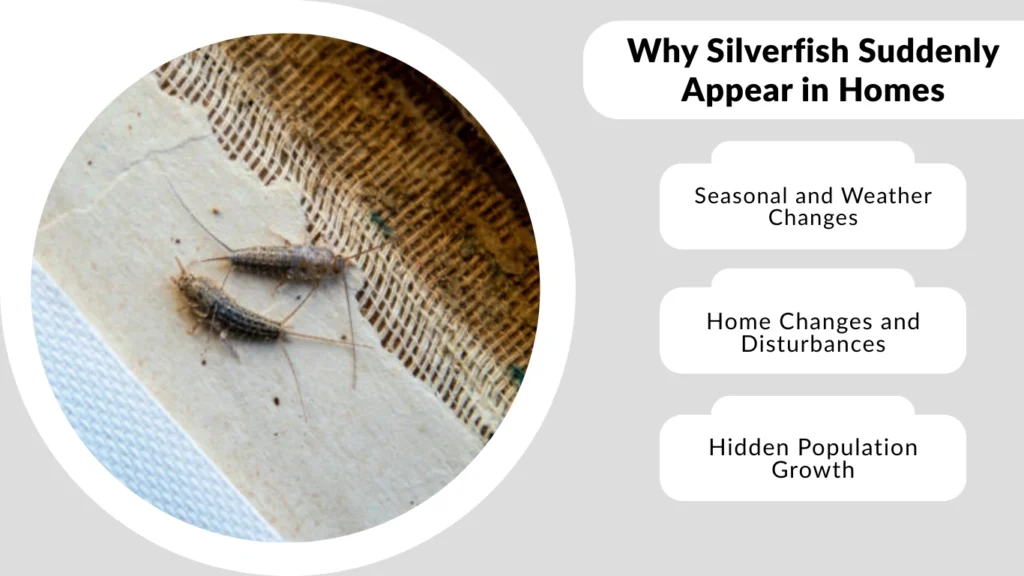
Seasonal and Weather Changes
Many people notice silverfish when seasons shift. Heavy rain, rising humidity, or cold temperatures can drive outdoor silverfish indoors in search of stable conditions. Summer humidity often increases bathroom and basement moisture, while winter pushes silverfish deeper into heated structures.
Weather changes also influence plumbing condensation and indoor dampness, unintentionally expanding available habitats throughout the home.
Home Changes and Disturbances
Renovations, moving storage boxes, replacing flooring, or opening walls can expose hidden silverfish populations. Once their shelter is disturbed, silverfish often spread into visible living areas.
Even small changes, such as installing new plumbing, altering ventilation, or storing new cardboard boxes, can shift moisture or food availability and trigger noticeable increases in activity.
Hidden Population Growth
Silverfish reproduce slowly but live long lives. This allows populations to build quietly over time. By the time silverfish are regularly seen, many more are usually hidden behind walls and under floors. Sudden visibility often reflects population size rather than sudden arrival.
Most Common Places Silverfish Are Found Indoors
Silverfish prefer areas that combine moisture, darkness, and access to food. Bathrooms and kitchens are among the most frequent locations because plumbing creates constant humidity. You may see silverfish in sinks, bathtubs, under cabinets, or around drains and baseboards.
Basements and laundry rooms are also major hotspots. These spaces often contain leaks, condensation, and long-term storage, which provide both shelter and food. Closets, bedrooms, and home offices attract silverfish because they hold books, clothing, cardboard boxes, and wallpaper—ideal feeding materials. Bookcases, filing cabinets, and stored papers are especially vulnerable. Attics and wall voids may house the main population, with insects spreading outward into living spaces at night.
What Having Silverfish in Your Home Indicates
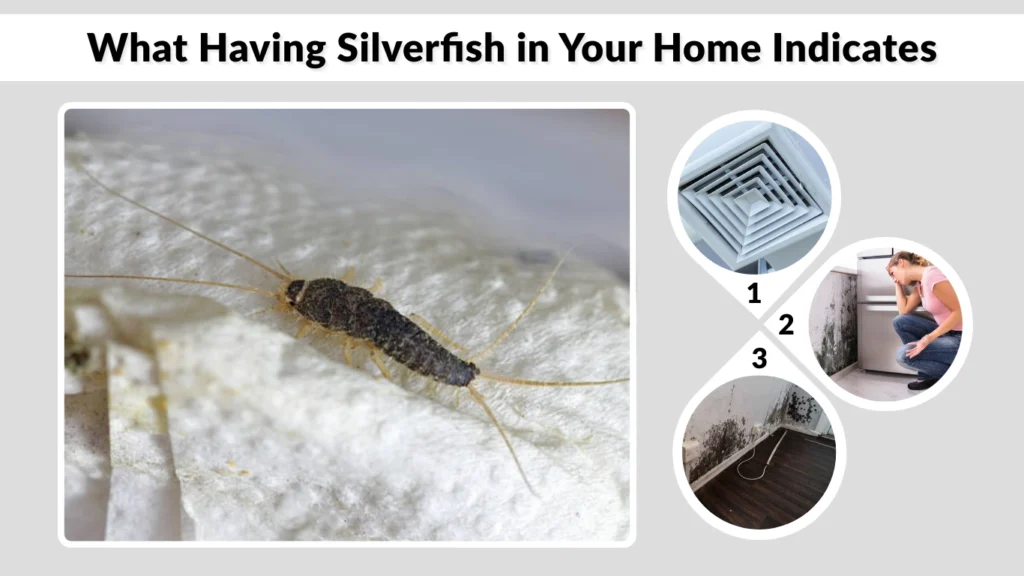
Finding silverfish usually means your home has conditions that support moisture-loving insects. This often points to hidden humidity problems, ventilation issues, or minor leaks that may not yet be obvious. Silverfish presence can act as an early warning sign of dampness behind walls, under flooring, or inside insulation.
It may also indicate excess clutter or long-term storage that provides undisturbed shelter. While silverfish do not necessarily mean a house is dirty, they do suggest that environmental conditions are favorable for insects. Addressing those conditions often reduces not only silverfish but other moisture-related pests as well.
Problems Silverfish Can Cause If Ignored
Although silverfish do not bite or transmit disease, their long-term impact can be costly.
- Damage to books and documents through feeding on paper, bindings, and adhesives
- Clothing and fabric deterioration including cotton, linen, and silk
- Food contamination in pantries through chewing on packaging
- Wallpaper and glue damage resulting in peeling or staining
- Gradual spread through the home as populations increase
Over time, infestations can destroy valuable items, especially in libraries, storage rooms, and clothing closets.
How to Remove the Conditions That Attract Silverfish
Eliminating silverfish begins with changing the environment they depend on. Moisture control is the most important step. Repairing leaks, improving ventilation, and using dehumidifiers can dramatically reduce silverfish survival.
Clutter reduction also plays a major role. Removing cardboard boxes, organizing storage, and vacuuming hidden areas deprive silverfish of shelter and food. Sealing cracks, caulking baseboards, and closing gaps around plumbing further limit movement and nesting sites.
While insecticides may kill visible silverfish, they rarely solve the problem unless environmental causes are corrected. Long-term control focuses on dryness, cleanliness, and structural maintenance.
How to Prevent Silverfish From Returning
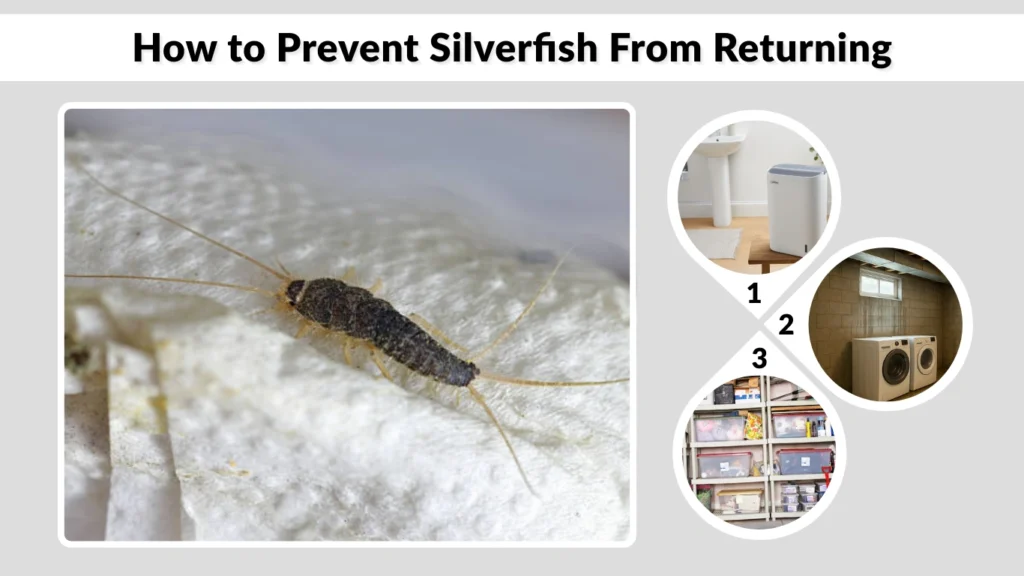
Preventing silverfish is an ongoing process that targets moisture, access points, and food sources.
- Lower indoor humidity with dehumidifiers and bathroom fans
- Improve airflow and ventilation in kitchens, basements, and laundry rooms
- Store books, clothes, and papers in sealed plastic containers
- Maintain regular deep cleaning in closets, storage rooms, and behind appliances
- Seal cracks and repair gaps around doors, windows, and pipes
- Inspect dark areas routinely to catch activity early
Consistency in these habits greatly reduces the chance of reinfestation.
When Silverfish in Your Home Becomes a Serious Issue
Seeing one silverfish occasionally is not unusual, but repeated sightings across multiple rooms usually indicate a developing infestation. Damage to books, fabrics, or wallpaper, combined with frequent night sightings, suggests populations are well established.
Professional inspection may be helpful when moisture problems are hidden inside walls or when silverfish continue to appear despite environmental improvements. Early intervention protects stored belongings and prevents long-term structural and material damage.
FAQs
Why do I keep finding silverfish in my bathroom?
Bathrooms provide the moisture silverfish need to survive. Leaking pipes, poor ventilation, and condensation create humid environments where silverfish can hide behind walls and under fixtures. The presence of paper products and organic residue gives them additional food sources, making bathrooms ideal habitats.
Does having silverfish mean my house is dirty?
Not necessarily. Silverfish are attracted more by moisture and hiding places than by dirt. Even very clean homes can develop silverfish problems if humidity is high or leaks are present. However, clutter and long-term storage can make infestations easier to establish.
Where do silverfish usually come from?
Silverfish typically enter from outdoors through cracks, plumbing gaps, and foundation openings. They can also be brought inside in cardboard boxes, books, groceries, or second-hand furniture. Once inside, they spread through wall voids and hidden spaces.
Are silverfish a sign of moisture or mold problems?
Often, yes. Silverfish thrive in damp environments, so their presence may indicate hidden humidity issues or minor leaks. While they do not directly cause mold, the conditions that support silverfish also favor mold growth.
Will silverfish go away on their own?
Silverfish rarely disappear without environmental changes. If moisture and food remain available, populations can survive for years. Reducing humidity, sealing entry points, and removing hiding places are necessary to make homes unsuitable for them.