
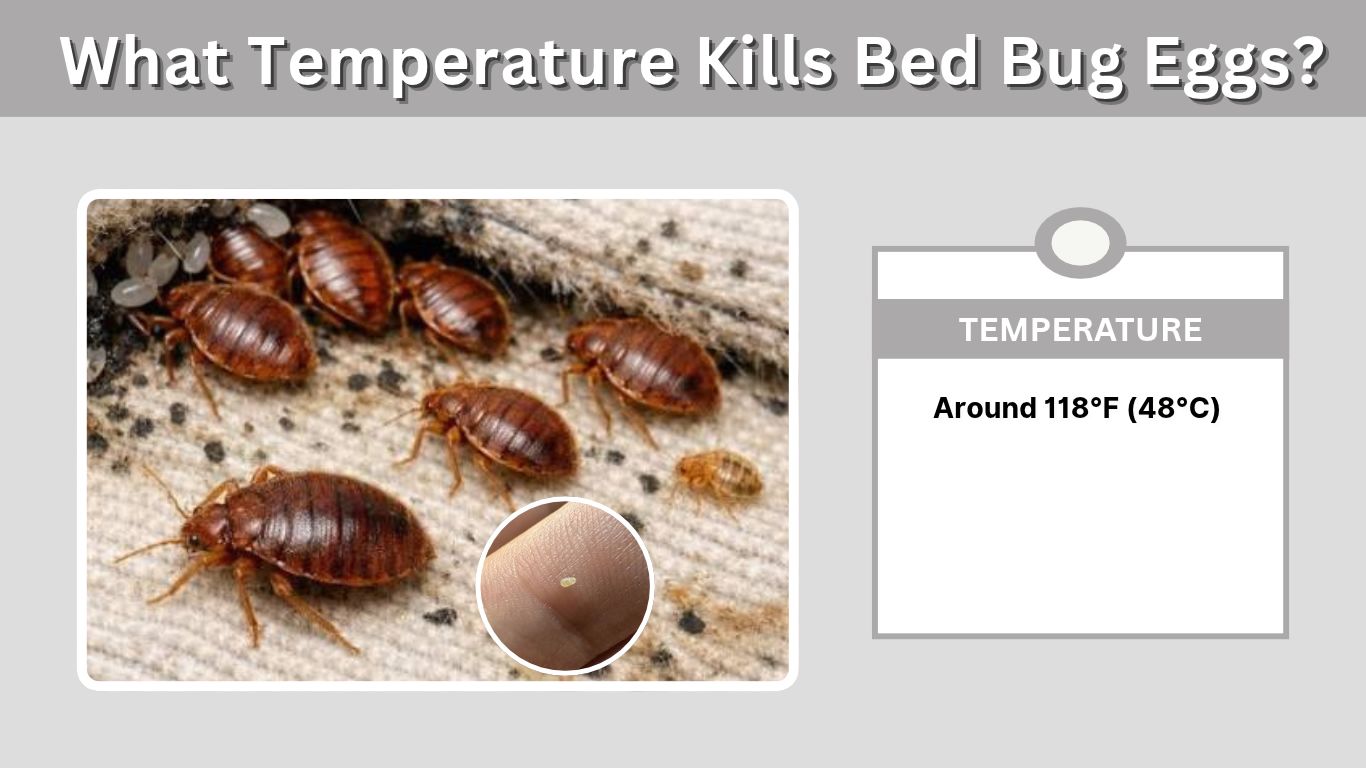
Bed bug eggs are difficult to eliminate because they are tiny, well hidden, and more heat-tolerant than adult bed bugs. They often remain inside mattress seams, furniture joints, and small cracks where ordinary cleaning cannot reach them. So, what temperature kills bed bug eggs effectively?
Bed bug eggs can be killed at temperatures around 118°F (48°C) when exposed for approximately 90 minutes. At 122°F (50°C), controlled studies and treatment guidance indicate that eggs can die in less than a minute. However, successful heat treatment depends on maintaining the correct temperature long enough to reach every hidden egg.
What Temperature Kills Bed Bug Eggs?
Bed bug eggs can survive moderate heat, but sufficiently high temperatures eventually destroy them. Both temperature and exposure duration determine how quickly the eggs die. Lower temperatures require longer exposure, while higher temperatures can kill eggs much faster. Proper treatment must heat the eggs themselves, not just the surrounding air.
Minimum Temperature to Kill Bed Bug Eggs
Research indicates that temperatures around 113°F (45°C) can kill bed bug eggs when maintained for approximately seven to eight hours. At 118°F (48°C), the required exposure decreases to around 90 minutes.
The U.S. Environmental Protection Agency recommends heating infested items or areas to at least 120°F (49°C) for 90 minutes to ensure that eggs are killed. These recommendations highlight the importance of maintaining heat rather than briefly reaching a target temperature.
What Temperature Kills Bed Bug Eggs Instantly?
At approximately 122°F (50°C), bed bug eggs can die in less than one minute under controlled exposure conditions. However, this does not mean that heating a room to 122°F immediately eliminates an infestation.
Eggs hidden inside mattresses, furniture, or wall openings may remain cooler than the surrounding air. Professional treatments maintain elevated temperatures until difficult-to-reach locations have received sufficient heat to destroy the insects and their eggs.
Why Are Bed Bug Eggs Harder to Kill?
Bed bug eggs have a protective outer shell that helps shield the developing embryo from environmental conditions. This makes eggs more resistant to certain insecticides and short periods of heat exposure than mobile bed bugs.
Their hiding places create another challenge. Females attach eggs to protected surfaces, including wooden joints, fabric seams, and crevices. Heat must penetrate these areas thoroughly to provide reliable control.
What Temperature Kills Bed Bugs and Their Eggs?
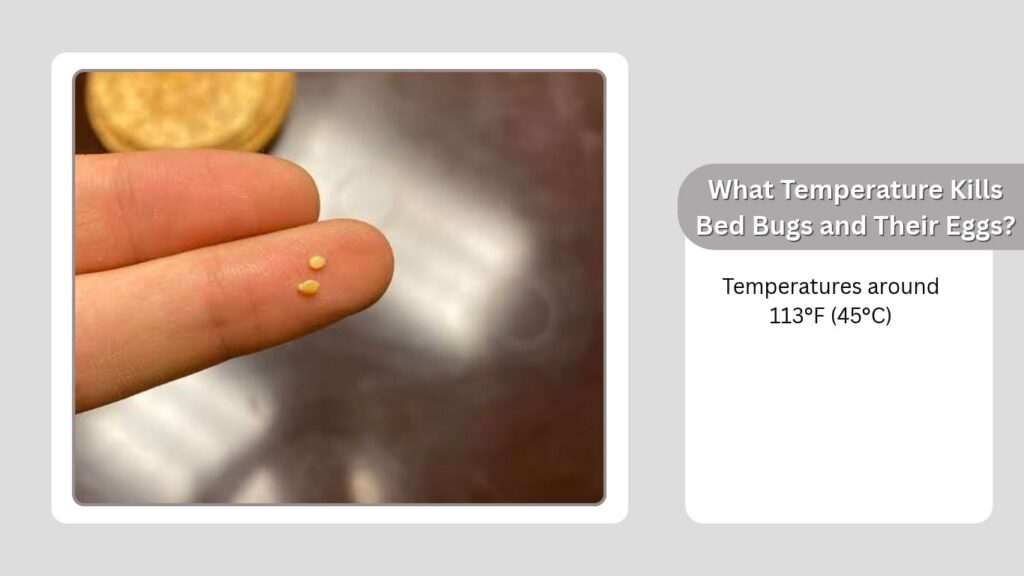
Adult bed bugs, immature nymphs, and eggs can all be eliminated through properly applied heat treatment. However, different developmental stages have different levels of heat tolerance. Eggs generally require more exposure than adults at moderately elevated temperatures.
Understanding these differences helps homeowners avoid treatments that kill visible insects while leaving surviving eggs behind.
Temperature Needed to Kill Adult Bed Bugs
Adult bed bugs begin experiencing potentially lethal heat stress at temperatures around 113°F (45°C). Under controlled conditions, sustained exposure at this temperature can kill adults in approximately 90 minutes.
Increasing the temperature reduces the required exposure time. However, surviving bed bugs may move away from heated areas if treatment is uneven, which is why professional equipment and careful monitoring are important.
Temperature Needed to Kill Bed Bug Eggs
Bed bug eggs can survive heat exposures that would already kill adult insects. At 113°F, eggs may require several hours of continuous exposure, while approximately 90 minutes at 118°F can provide effective control.
For practical treatment, the most important requirement is that every potentially infested hiding place reaches the lethal temperature. An air thermometer showing 120°F does not prove that eggs deep inside furniture have reached the same temperature.
How to Use Heat to Kill Bed Bug Eggs
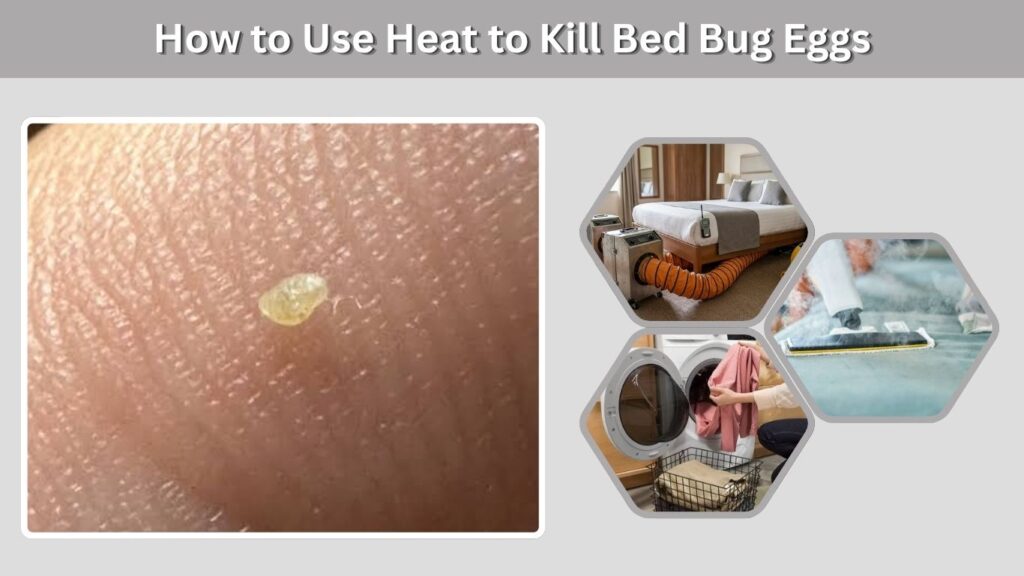
Heat treatment is one of the most effective nonchemical options for controlling bed bugs and their eggs. Several approaches can work, depending on the materials being treated and how extensively the insects have spread. Clothes dryers and appropriate steam equipment are useful for certain household items, while larger infestations may require professional treatment.
1. Use a Clothes Dryer
A household clothes dryer is a practical way to kill bed bug eggs in clothing, bedding, pillowcases, curtains, and other heat-safe fabrics. The EPA recommends using a high-temperature dryer setting for approximately 30 minutes.
Place potentially infested belongings in sealed bags before moving them to prevent bed bugs from spreading. Avoid overloading the dryer, and store treated items in clean, sealed containers until the infestation has been controlled.
2. Apply Steam Treatment
Steam cleaners can kill exposed bed bug eggs on mattresses, upholstery, bed frames, and other suitable surfaces. EPA guidance specifies that steam should reach at least 130°F (54°C), although the actual temperature reaching the eggs determines effectiveness.
Use a suitable attachment and move slowly enough to deliver heat into fabric folds and crevices. Avoid excessive steam pressure because it may scatter insects. Keep steam away from electrical outlets and heat-sensitive materials.
3. Consider Professional Heat Treatment
Professional pest-control companies use specialized heating equipment to raise temperatures throughout infested rooms or buildings. Their equipment allows technicians to measure temperatures and identify locations that are not heating evenly.
This approach can treat furniture, cracks, and other difficult areas without relying entirely on chemical insecticides. However, sensitive belongings may need protection or removal, and professional follow-up may still be necessary.
Can Cold Temperatures Kill Bed Bug Eggs?
Bed bug eggs can also be destroyed by freezing, although cold treatment generally requires much longer exposure than heat. Eggs and other bed bug stages may survive brief exposure to cold temperatures, especially when protected inside fabrics or furniture.
Freezing can be useful for certain small belongings, but it is less practical for treating an entire room or widespread infestation.
What Freezing Temperature Kills Bed Bug Eggs?
A temperature of 0°F (-18°C) maintained for approximately four days is a commonly recommended freezing treatment for suitable small items. The entire item must reach this temperature for the required duration.
Use a thermometer to verify the freezer temperature. Household freezers may fluctuate, and thick materials can take longer to cool completely. Outdoor winter temperatures are generally too unpredictable for dependable bed bug control.
Can Bed Bug Eggs Survive Winter?
Yes, bed bug eggs and mobile bed bugs may survive ordinary winter conditions, particularly inside heated buildings. Even in unheated spaces, sheltered locations may remain warmer than the outdoor air.
Brief exposure to freezing temperatures does not guarantee elimination. Because bed bugs can tolerate some cold conditions, relying on winter weather to treat mattresses, clothing, or furniture is not recommended.
Common Mistakes When Using Heat Against Bed Bug Eggs
Heat treatment can fail when temperatures are too low, exposure is too brief, or hidden areas do not receive enough heat. Some household methods may also create serious fire hazards or damage belongings.
Understanding these limitations is essential before attempting to eliminate bed bugs without professional assistance.
Using a Hair Dryer or Space Heater
A household hair dryer may heat directly exposed insects, but it is not a dependable method for eliminating an entire infestation. Bed bugs can escape into deeper hiding places, and uneven heating may leave viable eggs behind.
Never attempt whole-room heat treatment with ordinary space heaters, propane heaters, fireplaces, or a raised thermostat setting. These methods cannot reliably control temperatures throughout the room and may create dangerous fire conditions.
Relying on Hot Water Alone
Washing clothes or bedding in hot water may kill some bed bugs and eggs, but washing alone is not always reliable. Water temperature, washing duration, and fabric thickness can affect treatment results.
For dryer-safe items, follow washing with a high-heat dryer cycle of approximately 30 minutes. Materials that cannot tolerate heat should be treated using an appropriate alternative method rather than exposed to damaging temperatures.
How to Know If Bed Bug Eggs Are Dead After Treatment
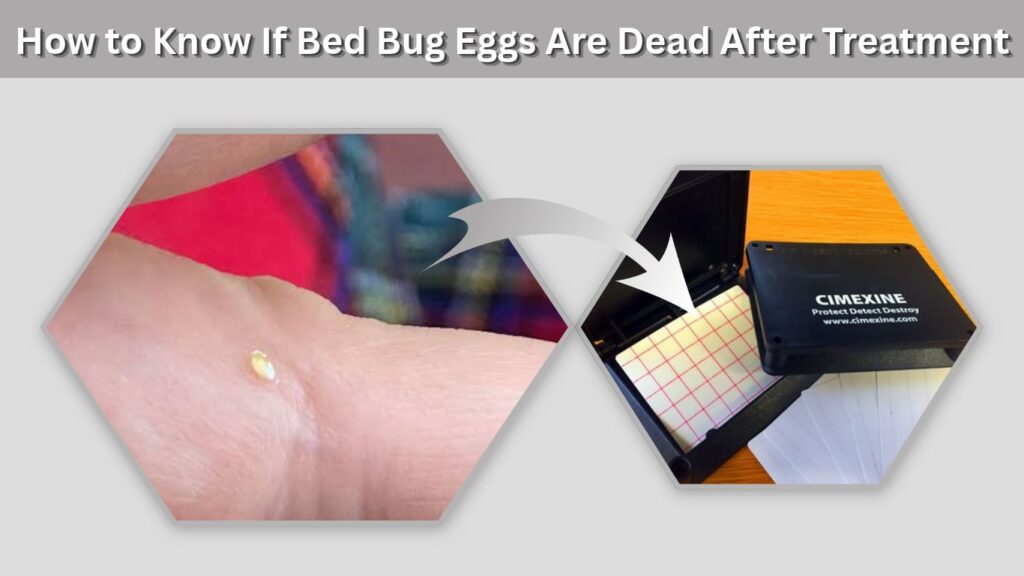
Confirming that bed bug eggs have been destroyed is difficult because dead eggs may look similar to viable ones. Empty eggshells may also remain attached to surfaces after the young insects hatch.
The best way to evaluate treatment success is to monitor infestation activity rather than relying only on the appearance of eggs.
Inspect Common Hiding Places
Examine mattress seams, box springs, headboards, furniture joints, and nearby cracks using a flashlight. Look for live insects, newly hatched nymphs, eggs, dark fecal spots, and shed skins.
Repeat inspections over the following weeks. Finding newly hatched nymphs may indicate that some eggs survived or that insects remain in untreated hiding places.
Use Bed Bug Monitoring Devices
Bed bug interceptor traps placed beneath bed legs can help detect surviving insects. They are particularly useful when checking whether bed bug activity continues after treatment.
Keep sleeping areas properly isolated, reduce clutter, and continue monitoring. If live insects remain or new activity appears, additional treatment may be necessary.
FAQs
1. Does 120°F Kill Bed Bug Eggs?
Yes, temperatures around 120°F (49°C) can kill bed bug eggs when maintained long enough. EPA guidance recommends at least 90 minutes for heat-treating infested areas or belongings. The eggs themselves must reach the target temperature, including those hidden inside mattresses or furniture.
2. What Temperature Kills Bed Bug Eggs Instantly?
Controlled heat-treatment guidance indicates that approximately 122°F (50°C) can kill bed bug eggs in less than one minute. However, the heat must directly reach the eggs. Household treatments generally require longer heating periods because hidden areas warm more slowly than the surrounding air.
3. Can Bed Bug Eggs Survive 100°F?
Yes, bed bug eggs can survive temperatures around 100°F (38°C). This temperature is not high enough to provide reliable elimination. Ordinary warm rooms, summer weather, and brief exposure to sunlight should not be considered effective bed bug egg treatments without verified lethal temperatures.
4. Does a Clothes Dryer Kill Bed Bug Eggs?
Yes, a clothes dryer operating on high heat for approximately 30 minutes can kill bed bug eggs in suitable fabrics. Clothing, sheets, pillowcases, and certain other belongings can be treated this way. Avoid overloading the dryer and follow the fabric’s care instructions.
5. Can Bed Bug Eggs Survive Heat Treatment?
Bed bug eggs can survive incomplete heat treatment if hidden locations do not reach lethal temperatures for long enough. Thick mattresses, furniture interiors, and structural gaps can remain cooler than the surrounding air. Proper monitoring and professional treatment help reduce the chance of surviving eggs.
