
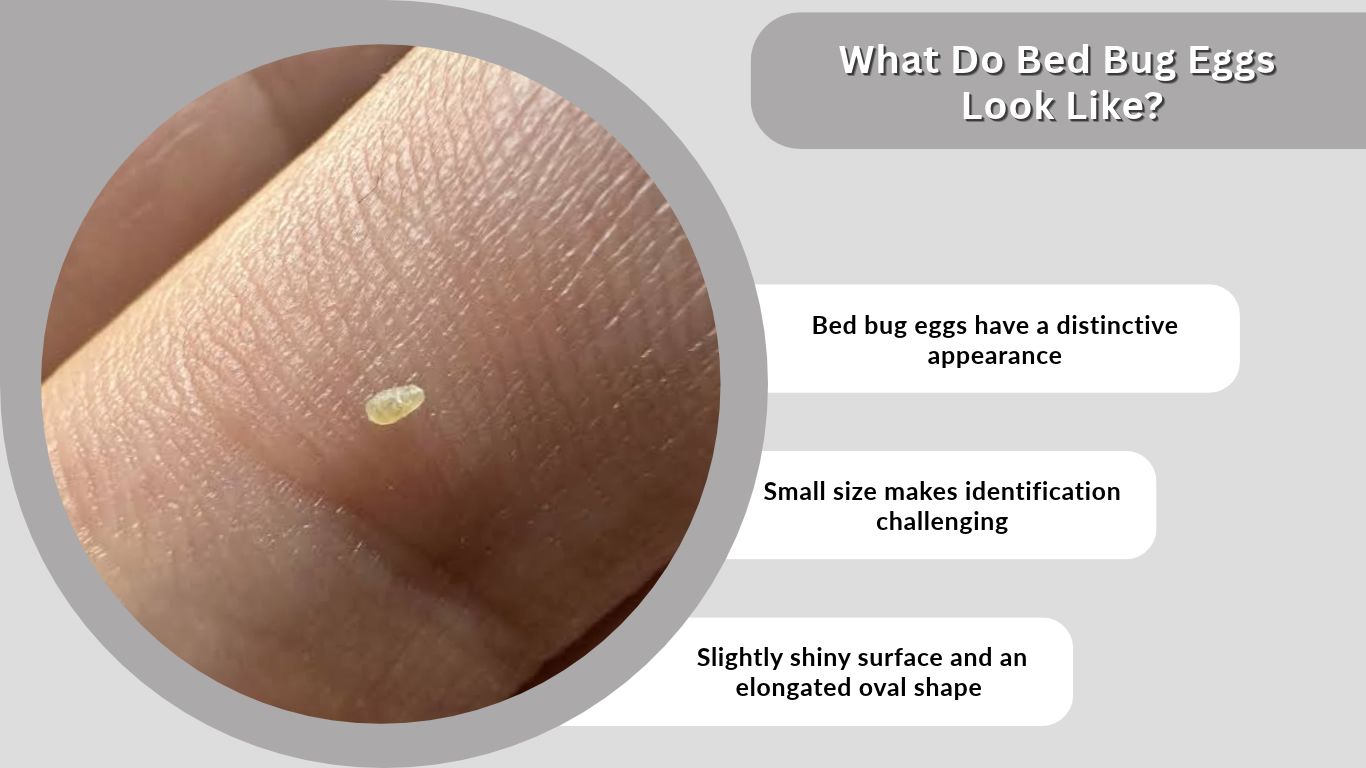
Bed bug eggs are tiny, pearl-white, oval-shaped objects measuring approximately 1 millimeter long. They resemble miniature grains of rice but are considerably smaller and often difficult to notice without magnification. These eggs usually appear in mattress seams, furniture cracks, bedding folds, and other protected hiding places. Their pale color and small size make them easy to mistake for dust or fabric debris. Understanding what bed bug eggs look like can help you identify possible infestations early, recognize newly hatched eggs, and distinguish them from other household particles.
What Do Bed Bug Eggs Look Like?
Bed bug eggs have a distinctive appearance, although their extremely small size makes identification challenging. They are generally white or translucent, with a smooth, slightly shiny surface and an elongated oval shape. Unlike adult bed bugs, which are reddish-brown and have visible legs, eggs are motionless and firmly attached to surfaces. Several physical characteristics can help distinguish them from ordinary household debris.
What Color Are Bed Bug Eggs?
Freshly laid bed bug eggs are usually pearl-white or slightly translucent. Depending on lighting conditions and development, they may also appear cream-colored or faintly yellowish.
As the embryo develops, a small dark eye spot may become visible through the eggshell. This usually occurs during the later stages of development, making older eggs look slightly different from newly laid ones.
What Size and Shape Are Bed Bug Eggs?
Bed bug eggs measure approximately 1 millimeter long and around 0.5 millimeters wide. They have an elongated, oval or barrel-like shape, with a small cap at one end.
Their appearance is frequently compared to a miniature grain of rice. However, an ordinary rice grain is several times longer, so the comparison describes their shape rather than their actual size.
What Do Bed Bug Eggs Feel Like?
Bed bug eggs have delicate outer shells rather than the hard texture of rice or seeds. They can be difficult to pick up because females attach them to surfaces using a glue-like substance.
The eggs may feel like tiny raised particles when touched, but texture alone is not a reliable identification method. Examining their shape and location with a magnifying glass is more useful.
What Do Bed Bug Eggs Look Like on Different Surfaces?
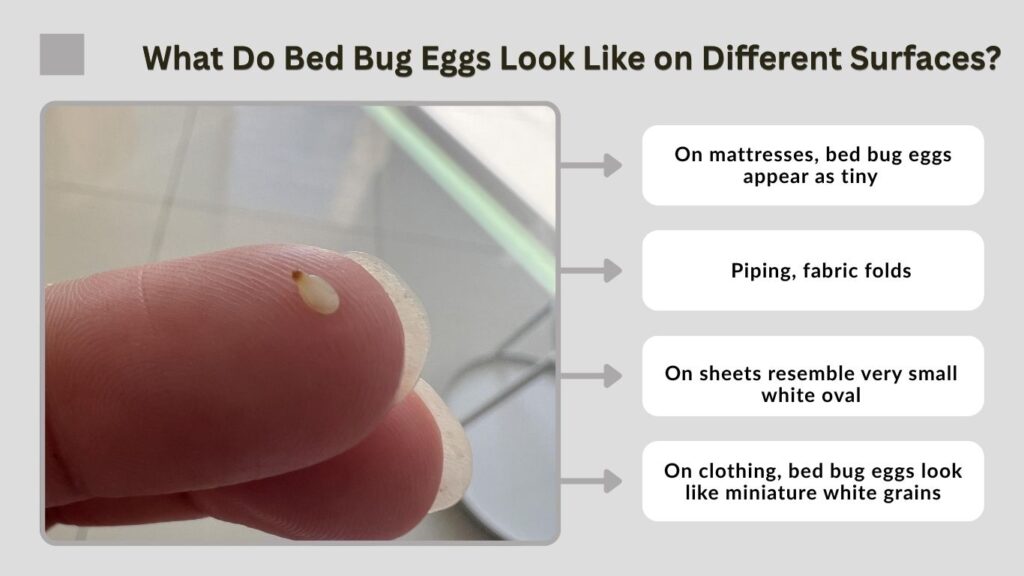
Bed bug eggs can appear slightly different depending on the color and texture of the surface beneath them. White eggs may blend into light-colored bedding but become more noticeable against darker fabrics or wooden furniture. Female bed bugs generally deposit eggs in protected areas near sleeping or resting locations. Knowing where to inspect makes these tiny objects easier to find.
What Do Bed Bug Eggs Look Like on a Mattress?
On mattresses, bed bug eggs appear as tiny whitish grains attached to seams, piping, fabric folds, and stitched edges. They may occur individually or in small groups.
Inspect the mattress edges, underside, labels, and nearby box spring. You might also notice black fecal spots, pale shed skins, or living insects around the same hiding places.
What Do Bed Bug Eggs Look Like on Sheets?
Bed bug eggs on sheets resemble very small white oval particles. They can be difficult to distinguish from lint, especially on white or light-colored bedding.
Although eggs can occur on sheets, bed bugs more commonly lay them in protected seams and crevices. Check pillowcase stitching, blanket folds, and areas where bedding remains undisturbed.
What Do Bed Bug Eggs Look Like on Clothes?
On clothing, bed bug eggs look like miniature white grains attached to fabric fibers, stitching, or folded areas. They are easier to notice against dark clothing than pale fabrics.
Clothing is not usually their preferred egg-laying location, but eggs can be deposited on items kept near an infestation. Inspect garment seams, pockets, collars, and folded clothing stored close to beds.
What Do Bed Bug Eggs Look Like on Furniture and Wood?
On furniture, bed bug eggs resemble tiny white capsules attached to narrow cracks or hidden joints. Their pale color may contrast with dark wood, making them somewhat easier to notice.
Common locations include wooden bed frames, headboards, screw holes, drawer joints, and upholstered furniture seams. Eggs can remain attached even when the furniture is moved.
Do Bed Bug Eggs Look Like Rice, Sesame Seeds, or Salt?
Bed bug eggs are frequently confused with ordinary household particles because of their small size and whitish color. Rice grains, sesame seeds, salt, dandruff, and lint can resemble eggs at first glance. However, differences in size, shape, texture, and attachment can help distinguish them. Bed bug eggs are typically smooth, elongated, and fixed to the surface where they were laid.
Do Bed Bug Eggs Look Like Rice?
Yes, bed bug eggs resemble miniature rice grains because both have elongated shapes and pale coloring. However, bed bug eggs are much smaller and somewhat translucent.
Rice grains are generally hard and several millimeters long. Bed bug eggs are delicate, approximately 1 millimeter long, and usually attached to nearby surfaces.
Do Bed Bug Eggs Look Like Sesame Seeds or Salt?
Bed bug eggs may resemble tiny sesame seeds, but sesame seeds are typically larger, flatter, and harder. Their color may also range from cream to brown.
Salt grains are usually crystalline and angular, while bed bug eggs have smooth oval outlines. Dandruff and lint are more irregularly shaped and do not share the consistent capsule-like appearance of bed bug eggs.
What Do Bed Bug Eggs Look Like Before and After Hatching?
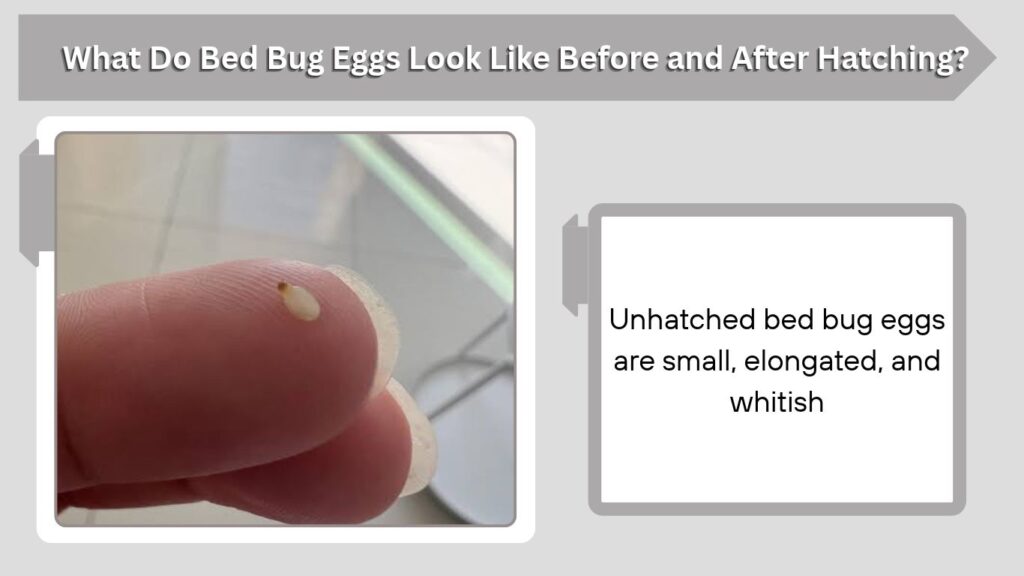
Bed bug eggs change as the developing insects mature and eventually emerge. Before hatching, viable eggs typically appear smooth, pearl-white, and slightly translucent. After hatching, empty shells remain behind and may look paler or more transparent. Understanding these differences helps determine whether an object could be an unhatched egg or a discarded shell, although appearance alone cannot confirm viability.
What Do Unhatched Bed Bug Eggs Look Like?
Unhatched bed bug eggs are small, elongated, and whitish, with an intact outer shell. Newly laid eggs usually have a uniform pearl-white appearance.
As development progresses, the embryo’s dark eye spots may become visible under magnification. Under favorable indoor conditions, most eggs hatch within approximately 6 to 10 days.
What Do Hatched Bed Bug Eggs Look Like?
Hatched bed bug eggs resemble tiny, empty, translucent shells. They may retain their original oval outline, but a small opening appears at one end where the nymph emerged.
These empty shells often remain attached to mattress seams or furniture. Finding them indicates previous hatching, but it does not automatically confirm whether living bed bugs remain nearby.
What Do Dead or Dried Bed Bug Eggs Look Like?
Dead or dried bed bug eggs may appear shriveled, collapsed, discolored, or otherwise damaged. However, these changes are not reliable proof that an egg is dead.
Some nonviable eggs can still look intact. Therefore, visual inspection alone cannot determine whether treatment has successfully killed every egg.
How to Identify Bed Bug Eggs in Your Home
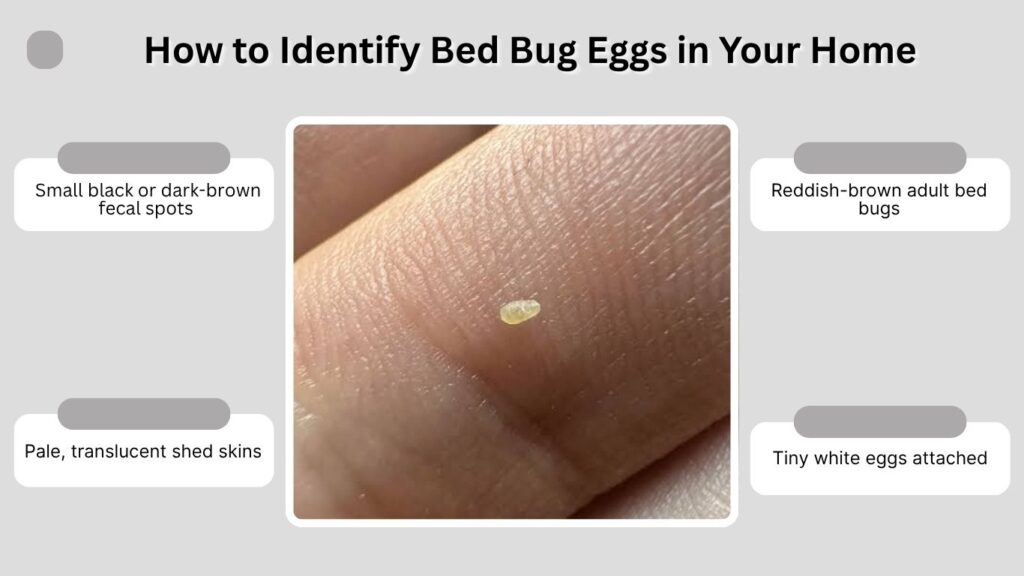
Identifying bed bug eggs requires careful inspection because they are nearly invisible against certain surfaces. A bright flashlight, magnifying glass, and systematic approach can make searching easier. Start around sleeping areas before expanding your inspection to nearby furniture. Remember that finding a tiny white particle does not automatically mean you have bed bugs.
Common Signs Found Near Bed Bug Eggs
Look for additional evidence that supports the presence of bed bugs:
- Small black or dark-brown fecal spots on mattresses.
- Reddish-brown adult bed bugs hiding in seams.
- Pale, translucent shed skins from growing nymphs.
- Tiny white eggs attached to cracks or fabric.
- Living nymphs around furniture joints and sleeping areas.
Finding several of these signs together provides stronger evidence than discovering unidentified white particles alone.
How to Check for Bed Bug Eggs
Begin by examining mattress seams, box springs, bed frames, and headboard joints. Use a magnifying glass to inspect suspected eggs without crushing them.
If you find suspicious objects, photograph them closely or collect a sample in a sealed container for professional identification. Avoid moving untreated belongings into other rooms because this may spread an infestation.
What to Do If You Find Bed Bug Eggs
Finding suspected bed bug eggs should prompt a careful inspection rather than immediate disposal of your mattress or furniture. Confirm the identification before selecting a treatment.
For dryer-safe bedding and clothing, the EPA recommends using a clothes dryer on high heat for 30 minutes to kill bed bugs and their eggs. Washing alone may not eliminate every life stage.
Because eggs can remain hidden inside cracks, professional pest management may be necessary. Effective control usually combines inspection, appropriate heat treatments, monitoring, and other approved methods.
FAQs
1. Can You See Bed Bug Eggs With the Naked Eye?
Yes, bed bug eggs are visible to the naked eye, but they are extremely small. Each egg measures approximately 1 millimeter long, making it difficult to notice without close inspection. A bright flashlight and magnifying glass can improve visibility, particularly on light-colored mattresses.
2. Are Bed Bug Eggs Hard Like Rice?
No, bed bug eggs are not hard like dry rice. They have delicate shells and are attached to surfaces using a sticky substance produced during egg laying. Rice grains are larger, harder, and easier to move, making them noticeably different.
3. Do Bed Bug Eggs Look Like Sand or Dandruff?
Bed bug eggs can be mistaken for tiny sand particles or dandruff, especially on bedding. However, sand is generally hard and granular, while dandruff consists of irregular skin flakes. Bed bug eggs have a more consistent oval shape and are commonly attached to surfaces.
4. What Do Bed Bug Egg Sacs Look Like?
Bed bugs do not produce large egg sacs like some spiders. Instead, females lay individual eggs that may accumulate in small groups around protected hiding places. These eggs are tiny, pearl-white, and elongated, usually attached to mattress seams or furniture cracks.
5. Where Do Bed Bugs Usually Lay Their Eggs?
Bed bugs commonly lay eggs in mattress seams, box springs, bed frames, headboards, furniture joints, and narrow cracks near sleeping areas. These protected locations provide shelter for developing eggs and newly hatched nymphs. Eggs may also occur in luggage, clothing, and other belongings.
