
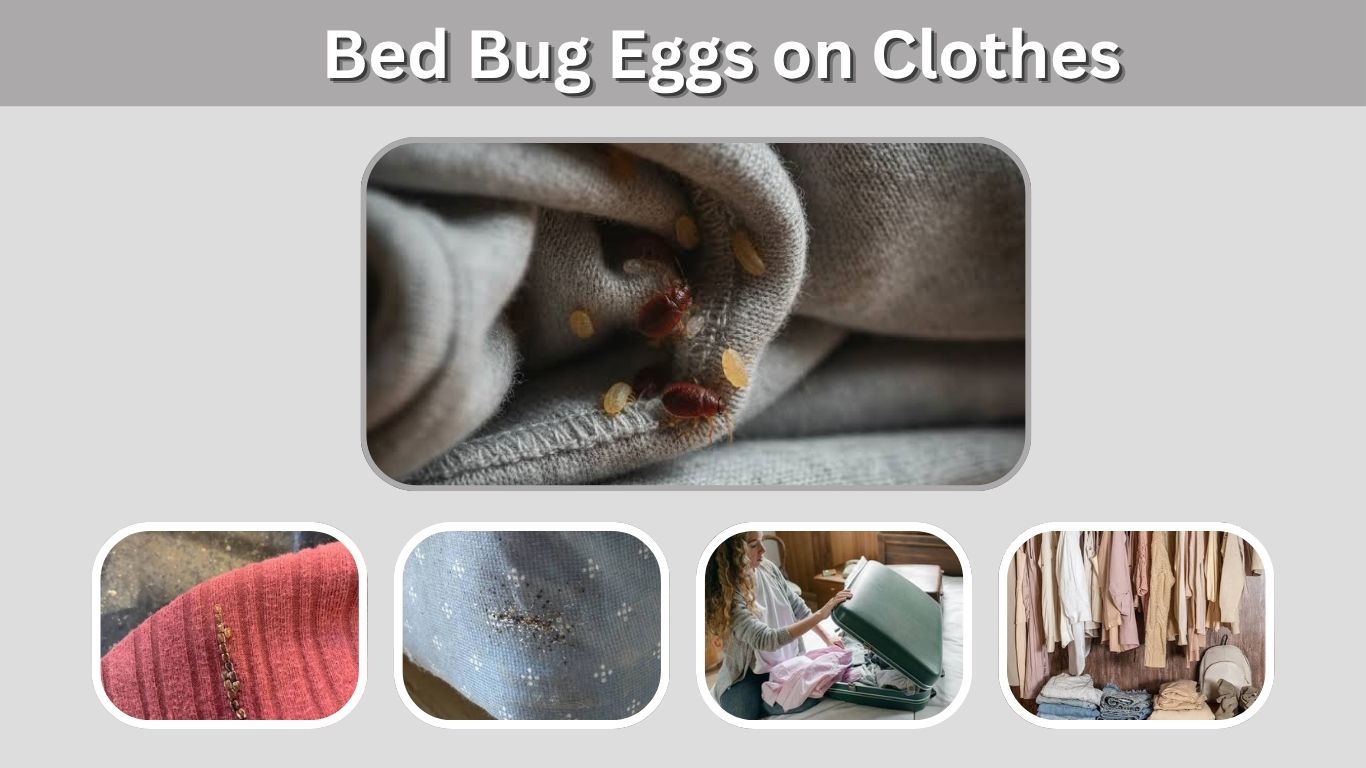
Bed bug eggs on clothes are tiny, pearl-white, oval-shaped objects that may hide in fabric seams, folds, and stitching. Although bed bugs prefer laying eggs in protected cracks near sleeping areas, clothing can also become infested, particularly when stored close to an affected bed. These eggs are difficult to notice because they measure approximately 1 millimeter long and can stick to fabric fibers. Understanding how to identify bed bug eggs on clothing, whether they can spread through laundry, and how to remove them safely can help prevent an infestation from spreading.
What Do Bed Bug Eggs Look Like on Clothes?
Bed bug eggs on clothes resemble miniature white grains of rice. They have smooth, slightly translucent surfaces and elongated oval shapes. Unlike ordinary lint or dust, these eggs are attached to fabric with a glue-like substance. Their appearance can vary slightly depending on the clothing color and the stage of development. Identifying them requires examining fabric seams and folds carefully.
Size, Color, and Shape of Bed Bug Eggs
Bed bug eggs are approximately 1 millimeter long and about 0.5 millimeters wide. Freshly laid eggs appear pearly white, while developing eggs may become slightly translucent. A tiny dark eye spot may become visible before hatching.
Their oval shape makes them resemble extremely small rice grains. However, bed bug eggs are much smaller and more delicate. They can be difficult to distinguish from lint or other pale particles without magnification.
How to Spot Bed Bug Eggs on Clothing
Start by inspecting the seams, folded edges, pockets, and stitched areas of clothing. A flashlight and magnifying glass can make tiny white eggs easier to notice.
Dark-colored clothing often provides better contrast, while eggs may blend into white or cream-colored fabric. Look for additional signs such as living bed bugs, shed skins, and dark fecal spots before assuming that a white particle is an egg.
Do Bed Bugs Lay Eggs in Clothes?
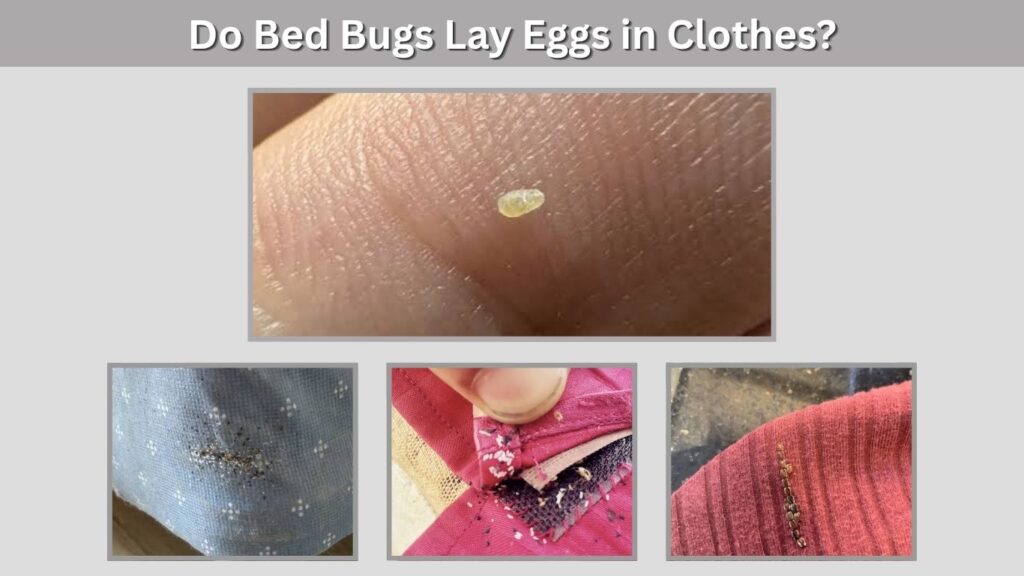
Yes, bed bugs can lay eggs on clothing, although clothes are not their preferred egg-laying location. Female bed bugs usually deposit eggs in mattress seams, bed frames, furniture cracks, and other protected spaces near their feeding sources. However, clothes stored beside an infested bed or left undisturbed for long periods may provide suitable hiding places. This is particularly possible when infestations become widespread.
Where Do Bed Bugs Lay Eggs on Clothes?
Bed bugs may deposit eggs in protected areas of clothing where they are less likely to be disturbed. Common potential locations include:
- Inside shirt and jacket seams.
- Along trouser waistbands and pockets.
- Within folded or stacked clothing.
- Around collars, cuffs, and stitched edges.
Clothes stored in drawers, wardrobes, or laundry piles near infested furniture may be exposed. However, finding eggs in these areas is less common than finding them in established bed bug hiding places.
How Common Are Bed Bug Eggs on Clothing?
Bed bug eggs on clothing are possible but generally less common than eggs in mattresses and furniture. Bed bugs prefer stable hiding places where they can remain protected between blood meals.
Clothing that is worn and washed regularly is usually less suitable for egg laying. Undisturbed clothing piles, laundry baskets, and stored garments may offer better hiding opportunities, especially during heavy infestations.
Can Bed Bug Eggs Stick to Clothes and Travel?
Bed bug eggs can stick to clothes because females produce a sticky substance that attaches them to surfaces. Once deposited, the eggs remain stationary while developing. However, clothing containing attached eggs can be transported to another location. This creates a potential way for infestations to spread between bedrooms, homes, hotels, or shared laundry areas.
Can You Carry Bed Bug Eggs on Your Clothes?
Yes, you can unknowingly transport bed bug eggs on contaminated clothing. Because the eggs are small and attached to fabric, they may remain unnoticed during ordinary handling.
However, live bed bugs hiding in clothing, luggage, and personal belongings are generally a more common concern. Bed bugs do not live permanently on human bodies like lice, but they can hitchhike on belongings.
Can Bed Bug Eggs Hatch on Clothes?
Yes, viable bed bug eggs can hatch on clothing if environmental conditions remain suitable. Under favorable indoor temperatures, bed bug eggs typically hatch within approximately 6 to 10 days.
After hatching, young bed bugs must find a blood meal to continue developing. Clothing stored near sleeping areas may allow newly emerged nymphs to reach a host, particularly when nearby hiding places are available.
How to Get Rid of Bed Bug Eggs on Clothes
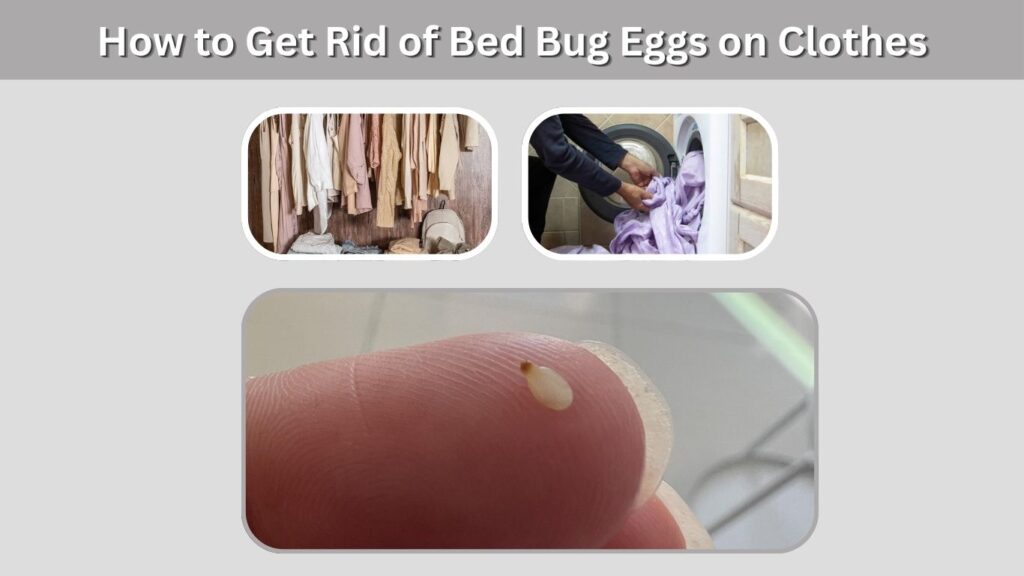
Removing bed bug eggs from clothing requires appropriate laundering and heat treatment. Because eggs can attach firmly to fabric, shaking clothes or brushing away visible particles may not eliminate every egg. Some eggs can also survive ordinary washing conditions. The most reliable household approach for dryer-safe garments is exposure to sufficiently high dryer temperatures for the recommended duration.
1. Separate and Seal Infested Clothing
Place potentially infested clothes directly into sealed plastic bags before moving them to the laundry area. This reduces the risk of live bed bugs escaping during transportation.
Avoid shaking contaminated garments indoors. Keep affected clothing separated from clean laundry, and transfer items carefully from the bags into the washing machine or dryer.
2. Wash Clothes Using Suitable Water Temperatures
Wash clothing using the hottest water temperature allowed by its care label. Hot washing may help remove bed bugs, eggs, and other debris from fabric.
However, washing alone is not always sufficient to kill every bed bug egg. Cold or lukewarm water may leave some viable eggs behind, so appropriate drying or another validated treatment is important.
3. Dry Clothes on High Heat
A clothes dryer is one of the most effective household methods for killing bed bugs and their eggs. The U.S. Environmental Protection Agency recommends using high heat for at least 30 minutes on items that can safely tolerate it.
Ensure garments receive adequate heat throughout the treatment. Avoid overloading the dryer, and follow fabric-care instructions to prevent damage to delicate materials.
4. Handle Delicate Clothing Carefully
Clothing that cannot tolerate high heat requires special attention. Wool, silk, leather, and other delicate materials may shrink, discolor, or become damaged during hot drying.
Consider professional dry cleaning or a pest-control service experienced in treating delicate belongings. Inform the service provider about possible bed bug contamination before handing over the items.
How to Prevent Bed Bug Eggs From Getting on Clothes
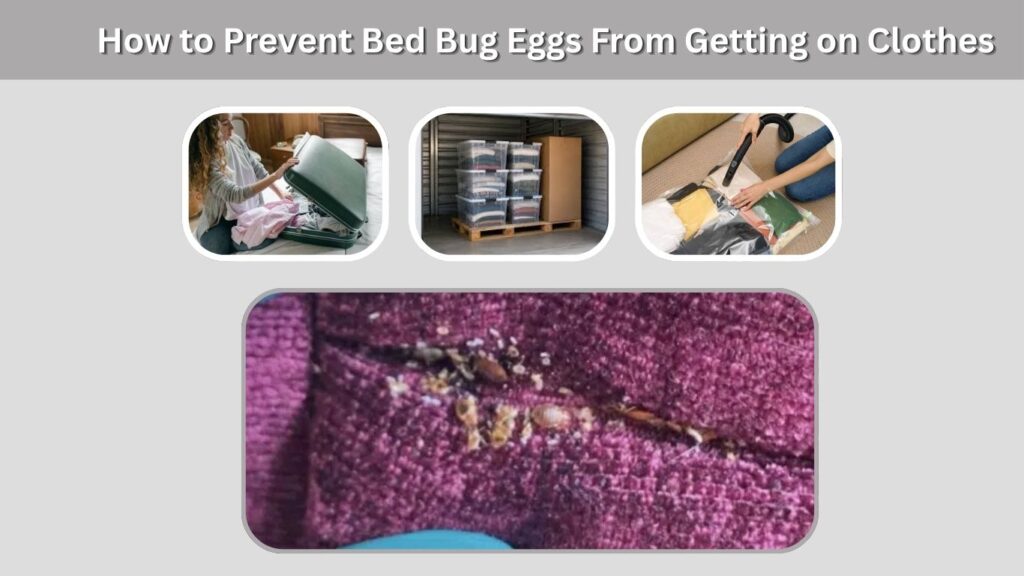
Preventing bed bug eggs on clothing involves reducing exposure to infested areas and handling belongings carefully. Bed bugs are excellent hitchhikers and can spread through luggage, furniture, clothing, and personal items. Regular inspections, proper storage, and careful laundry practices can lower the likelihood of transporting them. Treating clothing is helpful, but an existing household infestation must also be addressed.
Inspect Clothing After Traveling
Check clothing, luggage, and personal belongings after staying in hotels or other unfamiliar sleeping environments. Pay attention to garment folds, suitcase seams, and pockets.
Avoid placing luggage directly on hotel beds or upholstered furniture until the room has been inspected. If you suspect exposure, keep your belongings sealed until they can be checked and appropriately treated.
Keep Clean Clothes Away From Infested Areas
Store freshly treated clothes in clean, sealed containers or plastic bags while bed bug treatment is underway. This helps prevent insects from moving back into clean garments.
Avoid placing treated clothing on infested mattresses or furniture. Clean laundry baskets and storage areas, and continue monitoring nearby hiding places for signs of bed bug activity.
FAQs
1. Can You See Bed Bug Eggs on Clothes?
Yes, bed bug eggs are visible to the naked eye, but they are extremely small. Measuring approximately 1 millimeter long, they resemble tiny white oval particles. Using a bright flashlight and magnifying glass can help identify suspected eggs along clothing seams and folds.
2. Does Washing Clothes Kill Bed Bug Eggs?
Washing clothes may remove some bed bug eggs, but it does not reliably kill all of them. The effectiveness depends on water temperature and washing conditions. For garments that tolerate heat, high-temperature drying for at least 30 minutes is a more reliable treatment.
3. Can Bed Bug Eggs Travel on Clothes?
Yes, bed bug eggs can travel when attached to clothing being transported between locations. Although the eggs cannot move independently, their attachment to fabric allows them to accompany contaminated garments. Live bed bugs can also hide in clothing and personal belongings.
4. Does Drying Clothes Kill Bed Bug Eggs?
Yes, a properly heated clothes dryer can kill bed bug eggs. The EPA recommends drying suitable garments on high heat for 30 minutes. Ensure the clothing can tolerate the temperature and receives adequate heat throughout the drying cycle.
5. Can Bed Bug Eggs Survive in Stored Clothes?
Yes, viable bed bug eggs can survive in stored clothing until they hatch, provided environmental conditions remain favorable. Eggs usually hatch within 6 to 10 days under suitable conditions. Sealing clothes in bags temporarily contains them but does not immediately kill the eggs or newly emerged bed bugs.
