
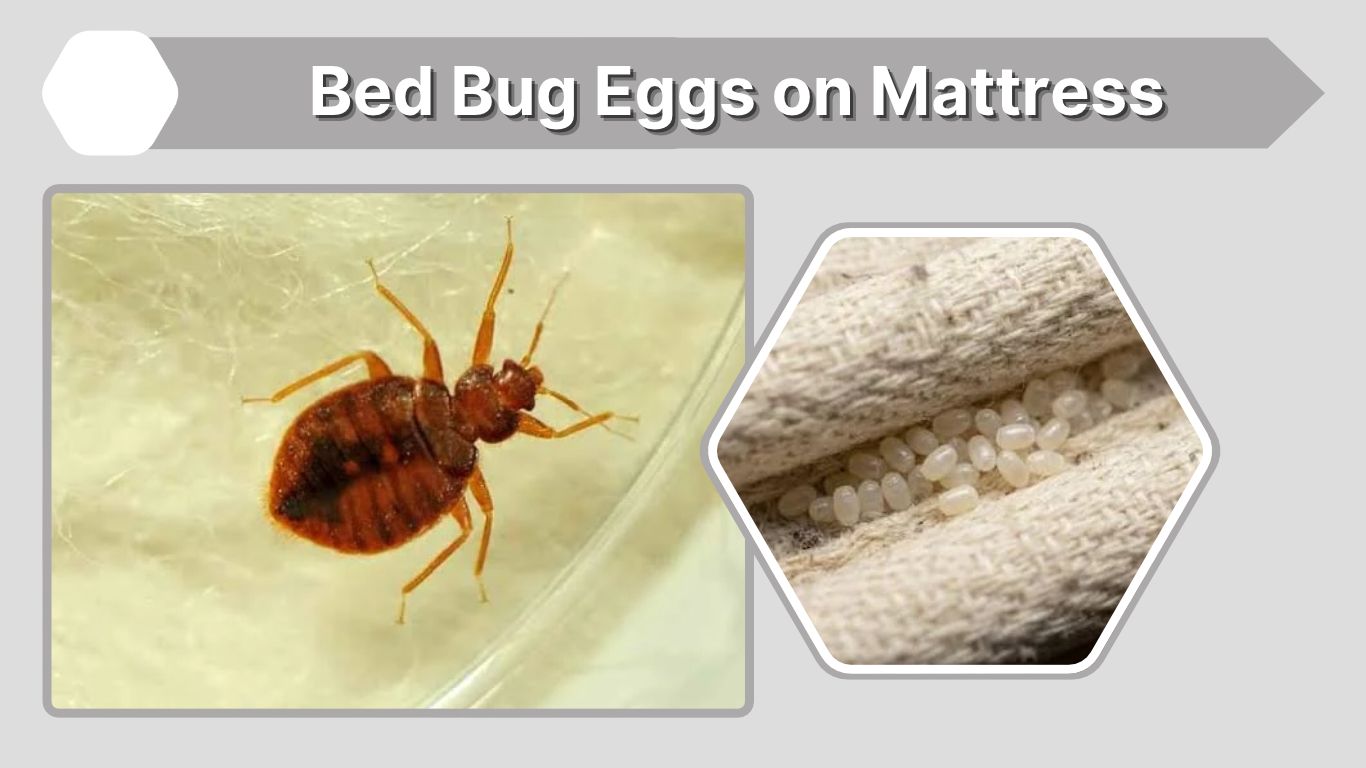
Bed bug eggs on a mattress are tiny, pearl-white, oval-shaped objects commonly found along seams, edges, and fabric folds. Measuring approximately 1 millimeter long, these eggs resemble miniature grains of rice and can be difficult to see without close inspection. Female bed bugs attach their eggs to protected surfaces, allowing them to remain hidden until hatching. Discovering eggs on your mattress may indicate an active or previous infestation. This guide explains how to identify mattress bed bug eggs, recognize early warning signs, and remove them using effective treatment methods.
What Do Bed Bug Eggs Look Like on a Mattress?
Bed bug eggs on mattresses appear as tiny, whitish, elongated capsules with smooth surfaces. They are approximately the size of a pinhead and may occur individually or in small clusters. Their pale color makes them difficult to notice against white mattress fabric. However, eggs can become more visible along darker seams or when surrounded by bed bug droppings and shed skins.
Size, Shape, and Color of Bed Bug Eggs
Bed bug eggs measure approximately 1 millimeter long and have an elongated oval or barrel-like shape. Fresh eggs are usually pearl-white and slightly translucent.
Their appearance resembles miniature grains of rice, although they are much smaller. As the developing embryo matures, a small dark eye spot may become visible inside the egg. This feature can help distinguish older eggs under magnification.
What Do Early-Stage Bed Bug Eggs Look Like?
Early-stage bed bug eggs generally appear smooth, pale white, and slightly shiny. They are firmly attached to the mattress surface with a glue-like substance produced during egg laying.
Newly deposited eggs usually lack the visible eye spots associated with later development. Because of their small size, they may resemble lint, dust, or tiny fabric particles, making identification difficult without a magnifying glass.
Where Do Bed Bugs Lay Eggs on a Mattress?
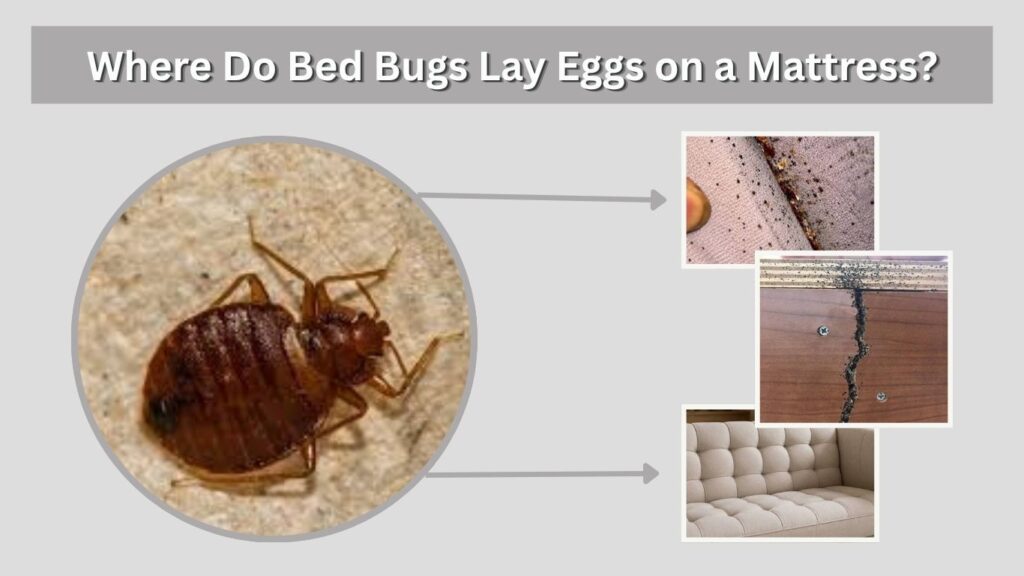
Female bed bugs prefer depositing eggs in protected areas where developing insects are less likely to be disturbed. Mattresses provide several suitable hiding places, especially around stitched edges and folded material. Although eggs can appear on exposed fabric, they are more commonly found in narrow gaps and sheltered locations. Bed frames and box springs should also be inspected because they often contain additional hiding places.
Bed Bug Eggs in Mattress Seams and Edges
Mattress seams are among the most common places to find bed bug eggs. The narrow spaces between stitching and fabric layers provide protection for eggs and newly hatched nymphs.
Inspect the piping, stitched edges, labels, and corners of your mattress carefully. Eggs may appear as small white particles attached directly to the fabric. Dark fecal spots or shed skins nearby can strengthen the suspicion of an infestation.
Bed Bug Eggs in Mattress Corners and Folds
Mattress corners, fabric folds, buttons, and tufted sections can provide additional hiding places. These areas are often overlooked during ordinary cleaning.
Pay particular attention to the underside of the mattress and sections close to the bed frame. Bed bugs may also deposit eggs in cracks along wooden headboards or inside gaps around box springs.
Can Bed Bugs Lay Eggs Inside a Foam Mattress?
Yes, bed bugs can deposit eggs in accessible cracks, openings, or seams of a foam mattress. However, they do not normally burrow through intact foam to create tunnels.
Mattress covers, stitching, damaged fabric, and nearby bed frames are generally more accessible hiding places. A foam mattress is not automatically bed bug-free simply because it lacks traditional springs or deep fabric tufts.
Early Signs of Bed Bug Eggs on a Mattress
Recognizing early signs of mattress bed bug eggs can help identify a developing infestation before it becomes widespread. Eggs are often difficult to locate because they are extremely small and hidden in protected spaces. Other signs may be easier to notice during inspection, including dark droppings, shed skins, and living insects. However, no single stain or unidentified particle proves that bed bugs are present.
Bed Bug Eggs, Droppings, and Shed Skins
Several physical signs may appear around mattress seams and sleeping areas:
- White eggs: Tiny oval objects attached to seams or fabric folds.
- Dark droppings: Small black or brown fecal spots that may resemble ink stains.
- Shed skins: Pale, translucent exoskeletons left behind by growing bed bugs.
- Live insects: Small reddish-brown adults or pale young nymphs.
Finding multiple signs together provides stronger evidence of bed bug activity than discovering eggshell-like particles alone.
How to Identify Bed Bug Eggs on a Mattress
Use a bright flashlight and magnifying glass to inspect the mattress systematically. Remove the bedding carefully and examine the seams, corners, piping, labels, and underside.
Look for smooth oval eggs attached to fabric rather than loose, irregular particles. If you find suspicious objects, take close-up photographs or collect a sample in a sealed container for expert identification.
What Do Hatched or Dried Bed Bug Eggs Look Like?
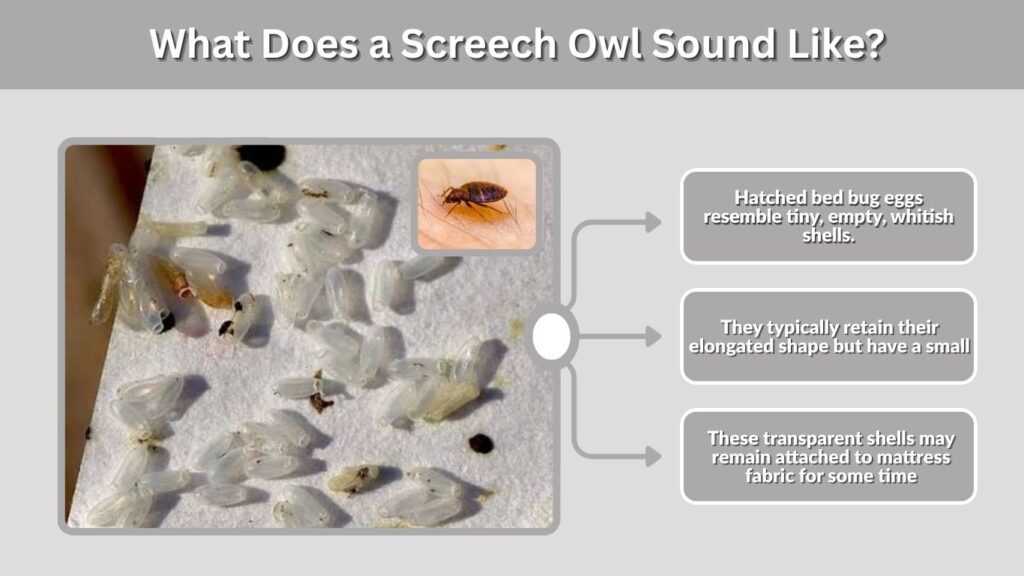
Bed bug eggs change after the developing nymph emerges. Unhatched eggs usually appear fuller and more uniform, while empty shells become translucent and may look slightly collapsed. Old eggshells can remain attached to mattress seams even after the insects have moved elsewhere. Understanding these differences may help you recognize previous hatching activity, although appearance alone cannot establish whether an infestation is still active.
What Do Hatched Bed Bug Eggs Look Like?
Hatched bed bug eggs resemble tiny, empty, whitish shells. They typically retain their elongated shape but have a small opening at one end where the young insect emerged.
These transparent shells may remain attached to mattress fabric for some time. Their presence indicates that eggs previously hatched, but additional evidence is needed to determine whether living bed bugs remain.
What Do Old or Dried Bed Bug Eggs Look Like?
Old or damaged bed bug eggs may appear flattened, shriveled, or discolored. Empty eggshells can become fragile and blend into dust or other mattress debris.
However, an intact-looking egg is not necessarily alive, and a discolored egg is not necessarily dead. Visual inspection cannot reliably determine whether every egg has been killed by treatment.
How to Get Rid of Bed Bug Eggs on a Mattress
Removing bed bug eggs from a mattress requires careful cleaning and effective treatment. Because the eggs are attached to protected surfaces, vacuuming alone may not eliminate every one. Heat, appropriate steam treatment, mattress encasements, and professional pest control can help manage an infestation. Treatment should also include nearby furniture and bed frames to prevent surviving insects from returning.
1. Vacuum Mattress Seams and Corners
Use a vacuum with a crevice attachment to clean mattress seams, stitched edges, corners, and nearby bed-frame joints.
Vacuuming can remove accessible insects and some eggs, but firmly attached eggs may remain. After cleaning, seal the vacuum contents in a plastic bag and dispose of them in an outdoor trash container.
2. Use Appropriate Steam Treatment
Steam treatment can kill bed bugs and eggs when sufficient heat reaches the affected surfaces. The EPA recommends steam temperatures of at least 130°F (54°C).
Use equipment suitable for mattress treatment and avoid forceful airflow that may scatter insects. Prevent excessive moisture from accumulating inside the mattress, and follow the manufacturer’s cleaning instructions.
3. Install a Bed Bug Mattress Encasement
A bed bug-proof mattress encasement completely surrounds the mattress and closes with a secure zipper. It helps trap surviving bed bugs inside and reduces accessible hiding places.
Choose an encasement specifically designed for bed bug control. Keep it intact and properly sealed for the recommended period, which may be at least a year, while addressing the infestation throughout the room.
4. Seek Professional Bed Bug Treatment
Professional pest control may be necessary when eggs and living bed bugs are found in multiple locations. Specialists can combine targeted heat, appropriate insecticides, and monitoring.
Never apply an insecticide directly to a mattress unless its label specifically permits that use. Avoid relying on rubbing alcohol, household chemicals, or bug bombs as a primary treatment.
How to Prevent Bed Bug Eggs From Returning
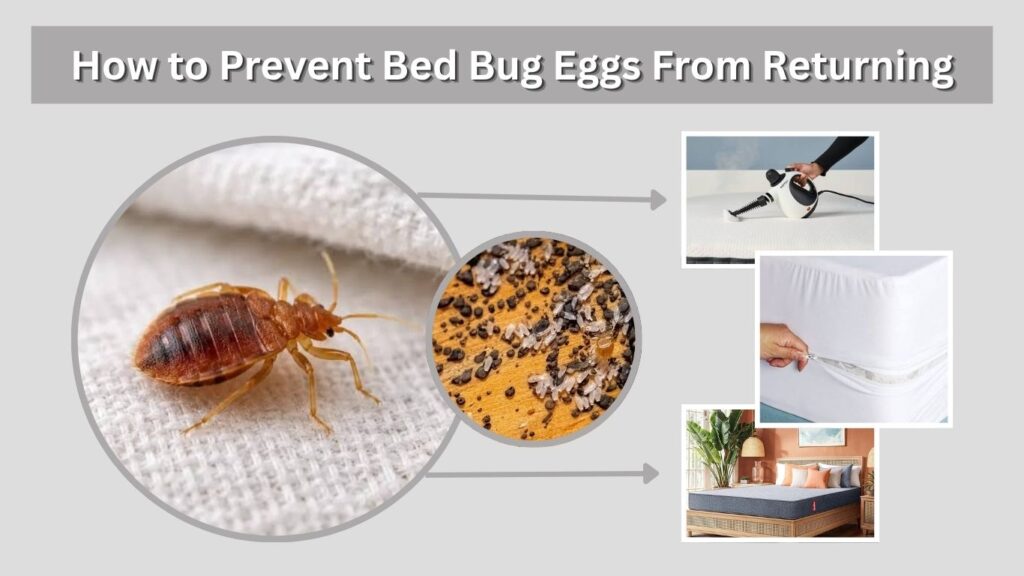
Preventing another infestation requires addressing the entire sleeping area rather than treating the mattress alone. Bed bugs can survive in furniture joints, wall cracks, and other spaces near beds. Regular inspections and monitoring help detect remaining insects before they reproduce. Maintaining protective encasements and avoiding contaminated furniture can also reduce opportunities for another infestation.
Keep Your Mattress and Bed Frame Protected
Inspect mattress seams regularly and maintain a secure bed bug-proof encasement. Keep the bed slightly away from walls and prevent bedding from touching the floor.
Bed bug interceptor traps under bed legs can help monitor insect activity. However, these measures work best when combined with a complete pest management plan.
Monitor for New Bed Bug Activity
Continue examining mattress edges, bed frames, and nearby furniture after treatment. Look for fresh fecal marks, living insects, eggs, or newly shed skins.
The EPA recommends inspecting at least every seven days after treatment. Follow-up professional visits may be needed because hidden eggs can survive some control methods.
FAQs
1. Can You See Bed Bug Eggs on a Mattress?
Yes, bed bug eggs are visible to the naked eye, but their extremely small size makes them difficult to notice. They measure approximately 1 millimeter long and appear pearl-white. A flashlight and magnifying glass can make inspection easier.
2. Do Bed Bug Eggs Stick to a Mattress?
Yes, female bed bugs attach eggs to surfaces using a glue-like substance. This helps eggs remain attached to mattress seams, fabric folds, and other protected areas. Some eggs may be difficult to remove through ordinary brushing or vacuuming alone.
3. Can Bed Bugs Lay Eggs on an Air Mattress?
Yes, bed bugs can lay eggs around accessible seams, folds, valves, or other protected areas of an air mattress. However, smooth inflatable surfaces generally offer fewer hiding places than traditional mattresses. Nearby bed frames and furniture may still harbor eggs.
4. What Kills Bed Bug Eggs on a Mattress?
Professional heat treatment, properly applied steam, and certain appropriately labeled pest-control products can kill bed bug eggs. Vacuuming helps remove accessible eggs but is not always sufficient. Treatment must reach hidden areas to eliminate the infestation effectively.
5. Should You Throw Away a Mattress With Bed Bug Eggs?
Not necessarily. Many infested mattresses can be treated and protected with properly fitted bed bug encasements. Throwing away the mattress without controlling nearby bed bugs may not solve the problem. Professional assessment can help determine whether treatment or disposal is appropriate.
