
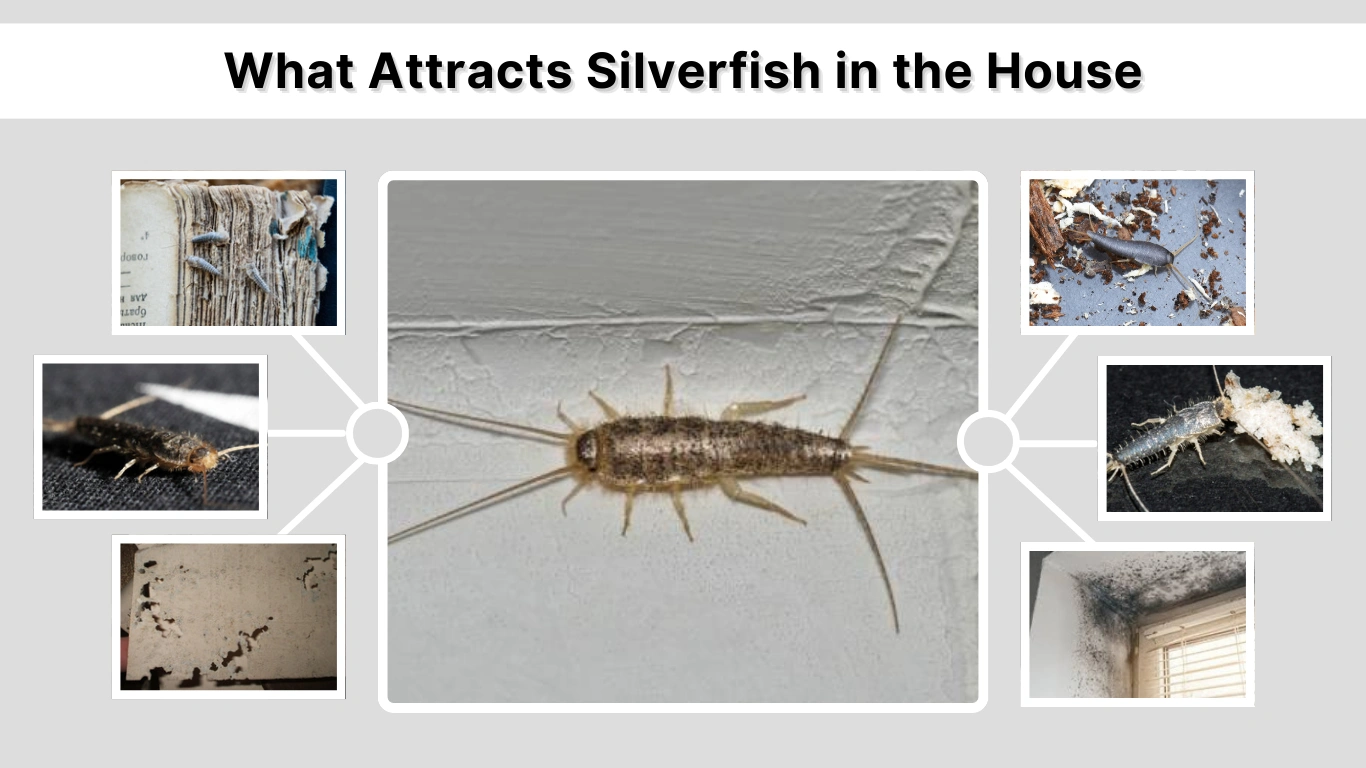
Silverfish are small, fast-moving insects that often appear in bathrooms, kitchens, basements, and bedrooms. Although they don’t bite, their presence can be unsettling and damaging, especially when they begin feeding on books, wallpaper, clothing, and stored foods. Understanding what attracts silverfish in the house is the first and most important step toward long-term control. When you remove the conditions they rely on, silverfish populations naturally decline.
What Are Silverfish and Why They Come Indoors
Silverfish are wingless, nocturnal insects that have existed for millions of years. Outdoors, they live under rocks, leaf litter, bark, and other damp, hidden environments. Inside homes, they look for similar conditions: moisture, warmth, darkness, and steady food sources.
Modern houses unintentionally provide everything silverfish need to survive. Plumbing systems create humidity, stored items supply food, and wall voids offer perfect shelter. Once inside, silverfish can live for several years, hiding during the day and emerging at night to feed and explore. Their ability to survive long periods without food also makes them difficult to eliminate if the environment continues to attract them.
Main Things That Attract Silverfish Indoors
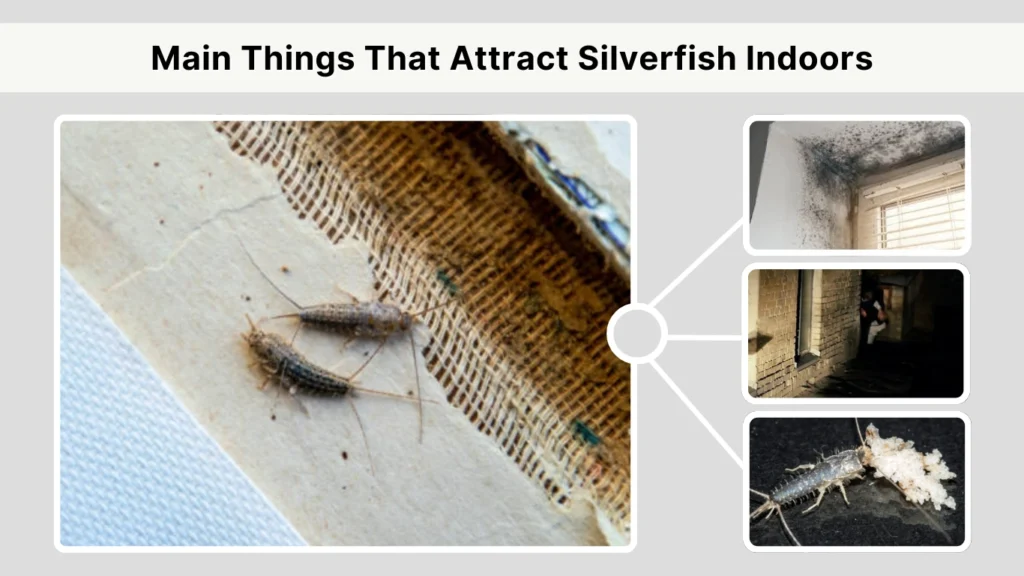
Silverfish don’t randomly wander into homes. They are drawn by very specific environmental factors.
- High humidity and constant moisture
- Dark, undisturbed hiding places
- Warm and stable indoor temperatures
- Readily available food sources
- Cracks, crevices, and wall voids
- Cluttered storage areas and poor airflow
When several of these conditions exist together, silverfish can quickly settle and begin reproducing.
What Attracts Silverfish in the House Most
Moisture and Humidity
Moisture is the strongest attraction for silverfish. They lose water easily through their bodies and must live in humid environments to survive. Leaking pipes, damp basements, poorly ventilated bathrooms, and condensation around windows or air conditioners all create ideal conditions. Homes with humidity levels above 60 percent are especially attractive and often experience repeat sightings.
Dark and Hidden Areas
Silverfish avoid light and prefer undisturbed locations. Closets, cardboard boxes, wall gaps, under sinks, behind appliances, and inside storage containers offer safety from predators and human activity. These hidden zones allow silverfish to rest during the day and emerge at night without disturbance.
Warm and Stable Temperatures
Silverfish thrive in warm environments, generally between 70°F and 85°F (21°C–29°C). Heated homes, insulated walls, and indoor plumbing create year-round comfort, allowing silverfish to remain active even in colder seasons when outdoor conditions become unfavorable.
What Are Silverfish Bugs Attracted to for Food
Starches and Sugars
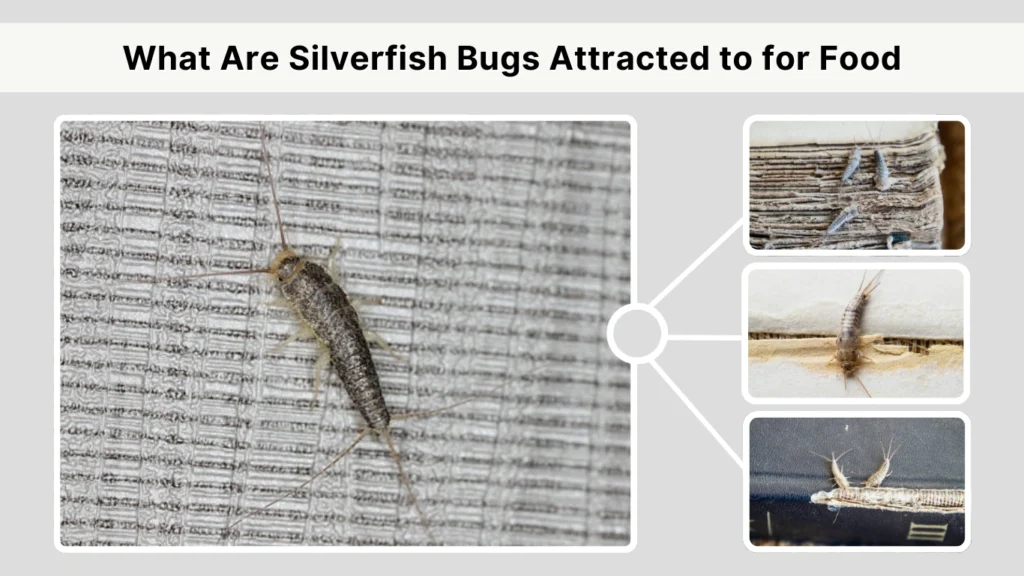
Silverfish primarily feed on carbohydrates. They are strongly attracted to starches and sugars found in book bindings, wallpaper paste, glue, cereal boxes, flour, sugar, crumbs, and even dust. This is why they are often found in libraries, pantries, and storage rooms.
Fabrics and Natural Fibers
Clothing and household textiles are another major food source. Silverfish can digest cellulose and certain proteins found in cotton, linen, silk, rayon, and even starched fabrics. Stored clothes, curtains, carpets, and upholstery provide both food and shelter.
Mold and Mildew
Mold is a powerful attractant for silverfish. Damp paper, cardboard, basement walls, and bathroom corners often grow microscopic fungi, which silverfish feed on. Homes with mold problems frequently experience persistent silverfish activity.
Household Items That Commonly Attract Silverfish
Many everyday objects silently support silverfish survival.
- Old books, magazines, and paperwork
- Cardboard boxes and packaging
- Pantry foods and unsealed dry goods
- Stored clothing and linens
- Wallpaper, glue, and peeling paint
- Damp towels, bath mats, and sponges
When these items are combined with humidity and darkness, they create perfect silverfish habitats.
What Attracts Silverfish in the Bathroom
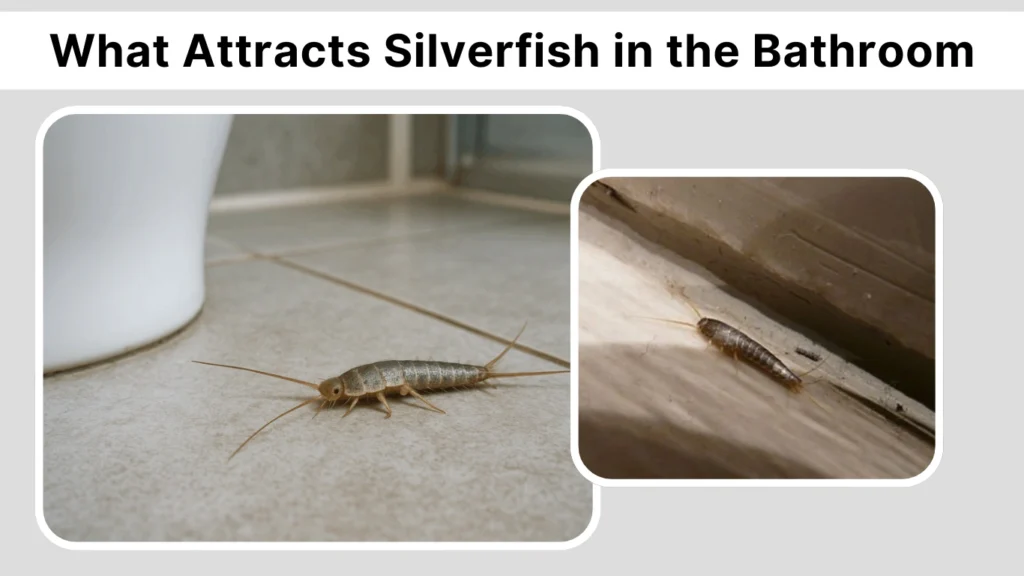
Bathrooms are one of the most common silverfish hotspots. Daily showers and baths raise humidity, while sinks, drains, and toilets provide constant moisture. Leaking fixtures, wet grout, mold growth, and poor ventilation make bathrooms ideal breeding environments.
Silverfish typically hide under sinks, behind toilets, inside wall voids, and around floor drains. At night, they emerge to feed on mold, soap residue, hair, and paper products. Because bathrooms often stay warm and dark overnight, silverfish populations can grow unnoticed for long periods.
What Attracts Silverfish in the Bedroom
Bedrooms may seem unlikely, but they offer many hidden attractants. Closets store clothing and fabrics, books provide starches, and beds create dark, undisturbed spaces. Human breathing also increases nighttime humidity, especially in closed rooms.
Silverfish are commonly found along baseboards, under beds, inside drawers, and behind furniture. If a bedroom contains stored papers, cardboard boxes, or an attached bathroom, it becomes even more appealing.
Are Silverfish Attracted to Light or LED Lights?
Silverfish are not attracted to light. In fact, they are strongly light-averse insects. They spend most of their lives hidden in dark crevices and only come out when the environment is quiet and dim. People often think silverfish are attracted to LED lights because they suddenly see them scatter when a light is switched on at night. This happens because the light exposes them, not because it draws them in.
When lights turn on, silverfish instinctively run for cover. Their sudden movement across floors, sinks, or walls creates the impression that the light caused their appearance. In reality, silverfish were already present, feeding or exploring in darkness. LED lights themselves do not produce heat or wavelengths that attract silverfish. What truly attracts them is the humidity and shelter often found in rooms where lights are used at night, such as bathrooms and kitchens.
Seasonal and Structural Factors That Attract Silverfish
Weather and Seasonal Changes
Outdoor silverfish populations shift with the seasons. During heavy rain, cold weather, or extreme heat, silverfish search for more stable environments. Homes provide consistent warmth, moisture, and protection, making them ideal refuges. Many infestations begin in autumn and winter, when outdoor conditions become less favorable and silverfish migrate indoors through small gaps and plumbing lines.
Home Design and Construction
Certain home features naturally attract silverfish. Basements, crawl spaces, and poorly ventilated rooms often retain moisture. Plumbing systems create humid wall voids. Insulation, cardboard storage, and wooden structures provide food and shelter. Cracks in foundations, loose baseboards, attic openings, and gaps around pipes all act as entry points and long-term hiding spaces.
Signs Your Home Is Attracting Silverfish
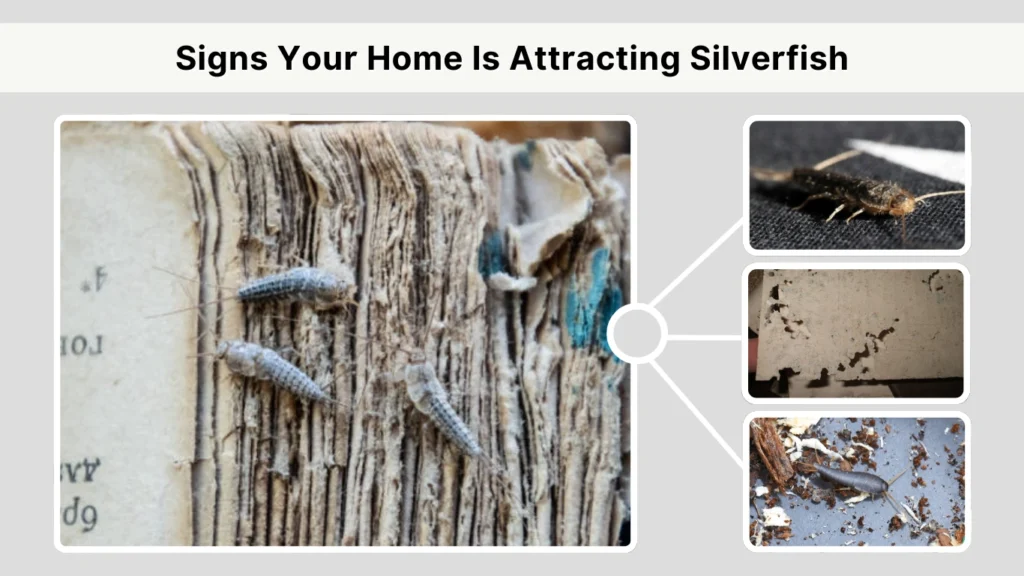
Silverfish are secretive, but they leave behind clear evidence when conditions suit them.
- Frequent sightings at night
- Yellow stains or tiny black droppings
- Holes or scrape marks on paper and fabrics
- Shed skins in corners or drawers
- Increased activity in bathrooms and basements
Seeing silverfish repeatedly usually means your home is supplying moisture, shelter, and food.
What Attracts Silverfish and How to Get Rid of Them
Removing What Attracts Them
The most effective way to control silverfish is to remove what they depend on. Lower indoor humidity with dehumidifiers, exhaust fans, and better airflow. Fix leaking pipes, wipe condensation, and dry wet surfaces quickly. Store dry foods in sealed containers, reduce paper clutter, and vacuum regularly to remove crumbs, dust, and shed skins.
Blocking Entry and Hiding Places
Seal cracks around windows, doors, baseboards, and plumbing lines. Caulk wall gaps, repair loose tiles, and replace damaged grout. Reduce clutter in basements, closets, and storage rooms. Elevating stored items off floors and using plastic containers instead of cardboard removes both shelter and food sources.
Long-Term Prevention Strategy
Silverfish control works best as a long-term environmental strategy, not a one-time treatment. Consistent humidity management, regular cleaning, and routine inspections prevent reinfestation. Homes that stay dry, bright, and uncluttered rarely support silverfish populations.
Natural vs Chemical Control Methods
Natural Deterrents
Natural control focuses on making the environment unsuitable. Dehumidifiers are one of the most effective tools. Diatomaceous earth can damage silverfish exoskeletons. Cedar products repel insects in closets and drawers. Certain essential oils, such as lavender or citrus, may discourage activity when used regularly.
Chemical Treatments
When silverfish populations are large or persistent, chemical treatments may be necessary. Residual sprays, insecticidal dusts, and commercial baits can reduce numbers. Professional pest control is recommended if silverfish continue appearing despite environmental improvements, as hidden moisture problems or wall infestations may exist.
FAQs
What attracts silverfish the most inside a house?
Silverfish are most strongly attracted to moisture, humidity, and darkness. Leaking pipes, damp basements, and poorly ventilated bathrooms create ideal living conditions. When these areas also contain paper, fabrics, or stored foods, silverfish can easily feed, hide, and reproduce.
Why do silverfish suddenly appear in bathrooms?
Bathrooms produce constant steam and condensation, which silverfish require to survive. Drains, leaking fixtures, mold growth, and dark overnight conditions make bathrooms perfect habitats. Silverfish often remain hidden until populations grow large enough to be seen.
Are silverfish attracted to dirty houses only?
No. Silverfish are attracted to moisture and food sources, not dirt. Even very clean homes can support silverfish if humidity is high and paper products, fabrics, or mold are present. Cleanliness helps, but moisture control is far more important.
Do silverfish mean there is a moisture problem?
In most cases, yes. Regular silverfish sightings often indicate excess humidity, hidden leaks, or poor ventilation. Silverfish presence can act as an early warning sign of moisture problems that may also encourage mold growth and structural damage.
How can I permanently stop attracting silverfish?
Permanent control comes from reducing humidity, sealing entry points, decluttering storage areas, and protecting food and paper products. When a home no longer provides moisture, shelter, and easy food, silverfish populations naturally collapse and stop returning.