
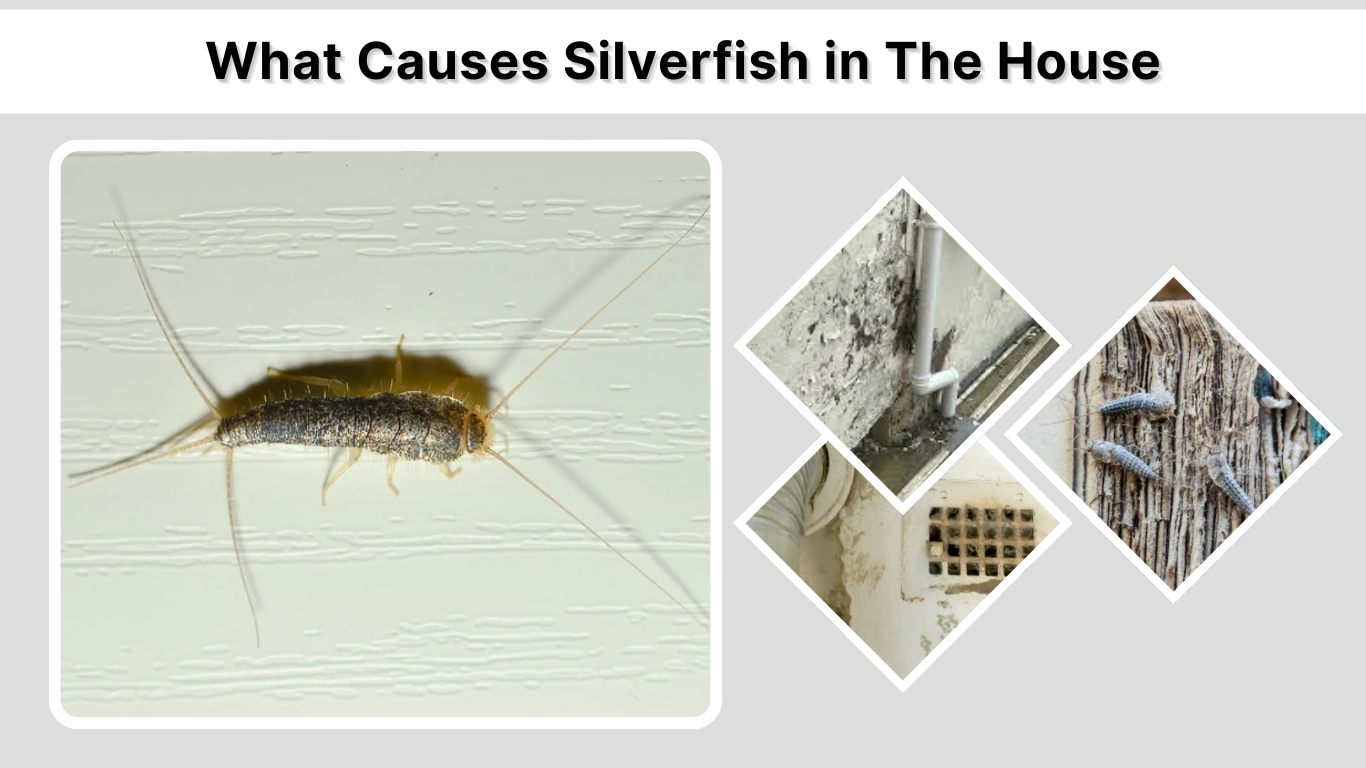
Silverfish are small, wingless insects that often surprise homeowners when they appear in sinks, bathtubs, closets, or along baseboards. While they are not dangerous to humans, their presence usually signals underlying environmental problems inside a home. Understanding what causes silverfish is the key to stopping them effectively. When the conditions that support silverfish are removed, infestations naturally decline. This guide explains why silverfish enter houses, what allows them to survive, and what causes their numbers to grow.
What Are Silverfish and Why They Appear Indoors
Silverfish are ancient insects that naturally live outdoors under rocks, bark, leaf litter, and other damp, protected areas. These environments provide moisture, darkness, and organic materials to feed on. When silverfish move indoors, it is because homes unintentionally recreate these same conditions.
Inside a house, silverfish search for stable temperatures, constant humidity, hidden spaces, and steady food sources. Plumbing systems, storage areas, insulation, and wall voids offer everything they need. Because silverfish are nocturnal and fast-moving, they often go unnoticed until populations become established. Their long lifespan and slow reproduction allow infestations to persist quietly for months or even years.
Main Causes of Silverfish in a Home
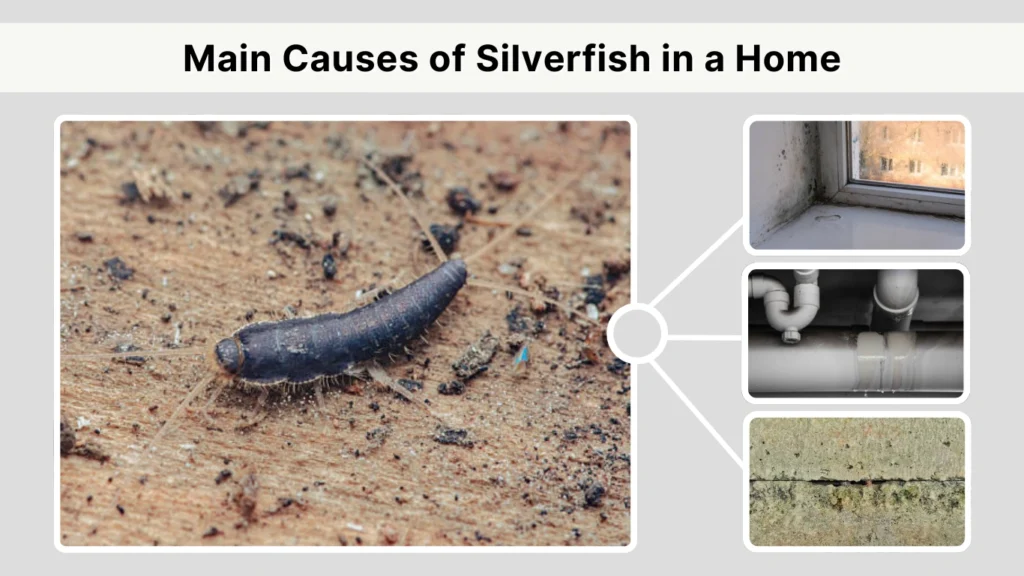
Silverfish do not infest houses without reason. Certain environmental and structural conditions directly cause silverfish to move in and remain active.
- Excess moisture and high humidity
- Leaking pipes and plumbing problems
- Dark, undisturbed hiding places
- Easy access to food sources
- Structural cracks and wall gaps
- Cluttered storage and poor airflow
When several of these factors exist together, silverfish are able to survive, feed, and reproduce successfully.
What Causes Silverfish in the House Most
Moisture and Humidity Issues
The primary cause of silverfish in any home is moisture. Silverfish lose water easily through their bodies and must live in humid environments to survive. Bathrooms, kitchens, basements, and laundry rooms often provide constant humidity through steam, condensation, and slow leaks. Homes with humidity levels above 60 percent are especially attractive. Damp drywall, wet grout, and condensation on pipes create the ideal environment for silverfish to hide and breed.
Plumbing Leaks and Water Sources
Even small leaks can support silverfish populations. Dripping pipes, slow drain leaks, loose toilet seals, and moisture inside wall cavities provide reliable water sources. Silverfish frequently hide under sinks, behind washing machines, inside cabinets, and along plumbing lines. Hidden leaks are one of the most common reasons silverfish infestations persist despite cleaning efforts.
Warm and Stable Indoor Temperatures
Silverfish thrive in warm environments, typically between 70°F and 85°F. Heated homes, insulated walls, and indoor plumbing create stable temperatures year-round. This allows silverfish to remain active and continue reproducing even during winter, when outdoor populations decline.
What Causes Silverfish to Appear in Large Numbers
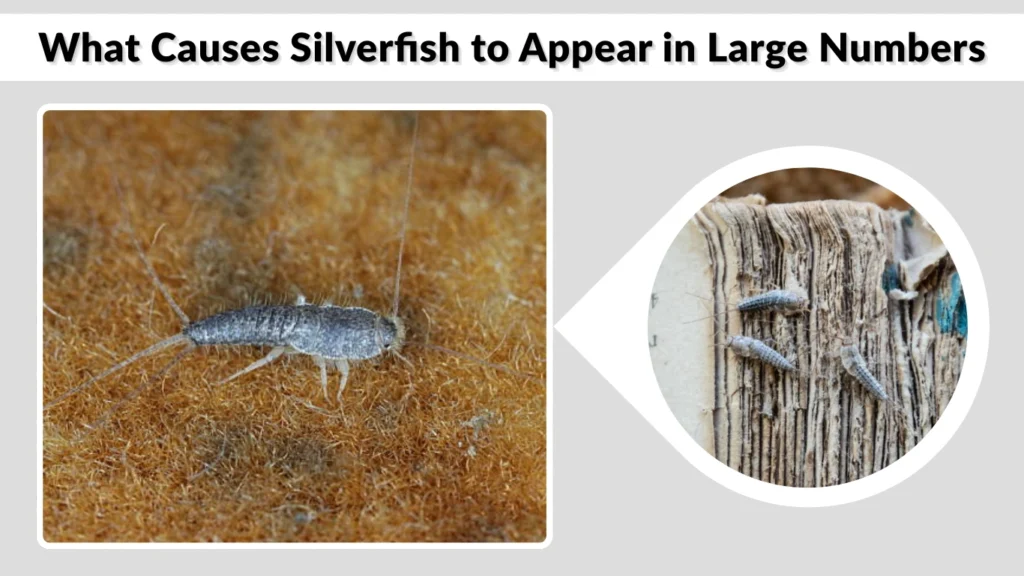
Food Availability
Silverfish feed mainly on carbohydrates. They consume paper, glue, book bindings, wallpaper paste, dust, cereal, flour, sugar, and even dead insects. They can also digest certain fabrics such as cotton, linen, silk, and rayon. When homes contain large amounts of stored paper, cardboard boxes, pantry goods, or fabric materials, silverfish have continuous access to food.
Shelter and Hiding Zones
Dark, undisturbed areas allow silverfish to rest and breed without disruption. Wall voids, basements, closets, attics, storage rooms, and spaces under appliances provide ideal shelter. These areas are rarely cleaned or inspected, allowing populations to grow unnoticed.
Seasonal Migration Indoors
Weather changes often cause sudden silverfish appearances. Heavy rain floods outdoor hiding places. Cold weather and extreme heat force silverfish to seek stable environments. Homes become safe shelters, and silverfish enter through cracks, foundation gaps, and plumbing openings.
Common Household Conditions That Cause Silverfish
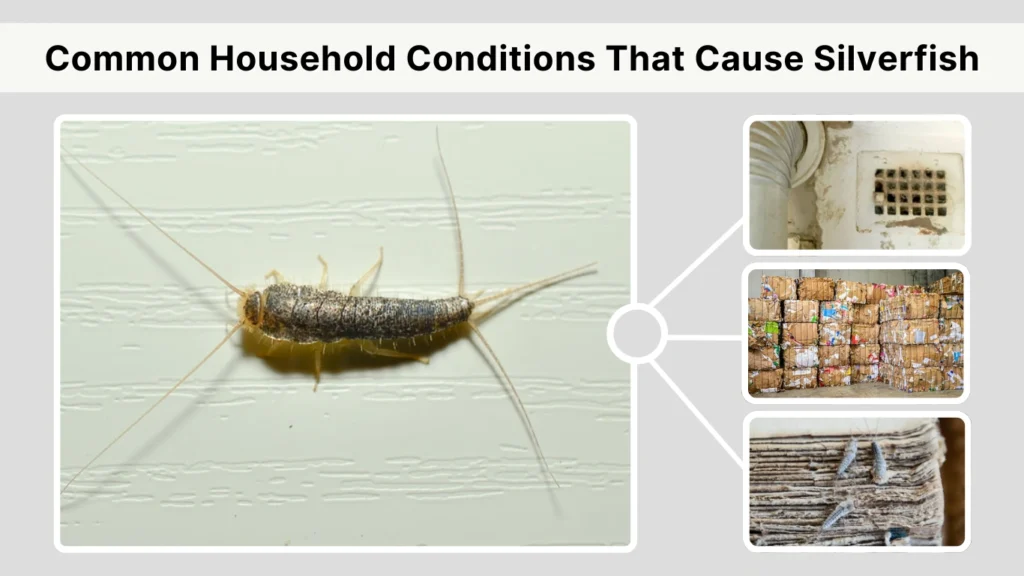
Certain everyday household situations quietly support silverfish survival.
- Poor ventilation in bathrooms and basements
- Mold or mildew growth
- Cardboard boxes and paper storage
- Damp towels, rugs, and laundry
- Large book or document collections
- Unsealed dry foods in pantries
These conditions supply moisture, food, and shelter at the same time, making infestations far more likely.
What Causes Silverfish in the Bathroom
Bathrooms are the most common starting point for silverfish infestations. Hot showers create steam, sinks and tubs produce condensation, and drains maintain constant moisture. Leaking fixtures, mold around tiles, damp cabinets, and poorly ventilated spaces create ideal breeding conditions.
Silverfish hide under sinks, behind toilets, around drains, and inside wall gaps. At night, they emerge to feed on mold, soap residue, hair, and paper products. Because bathrooms often remain humid for hours after use, silverfish can thrive even in otherwise clean homes.
What Causes Silverfish in Bedrooms and Living Areas
Silverfish do not stay limited to bathrooms. Once established, they spread into bedrooms, living rooms, and storage areas where food and shelter are available. Closets full of clothing, boxes under beds, bookcases, and carpeted floors all provide attractive environments. Natural fibers, dust, and starch-based materials allow silverfish to feed without needing to return to kitchens or bathrooms.
Wall edges, baseboards, furniture joints, and drawer corners offer darkness and protection. Bedrooms also trap humidity overnight from human breathing, especially when windows remain closed. If a bedroom shares a wall with a bathroom or laundry area, hidden moisture often extends into adjacent rooms, quietly expanding the infestation.
What Causes a Silverfish Infestation
Long-Term Moisture Exposure
A true infestation develops when moisture problems remain unresolved. Constant humidity allows silverfish eggs to hatch and juveniles to survive. Basements, crawl spaces, and poorly ventilated bathrooms commonly support continuous breeding cycles.
Hidden Breeding Locations
Silverfish rarely breed in open spaces. They lay eggs inside wall voids, behind cabinets, under flooring, and within insulation. These hidden zones protect them from cleaning efforts and allow populations to rebuild quickly if surface insects are removed.
Lack of Environmental Control
Sprays and traps alone rarely stop infestations. If humidity remains high and food sources are present, silverfish quickly recolonize treated areas. Infestations persist when the environment continues to support survival.
What Damage Do Silverfish Cause
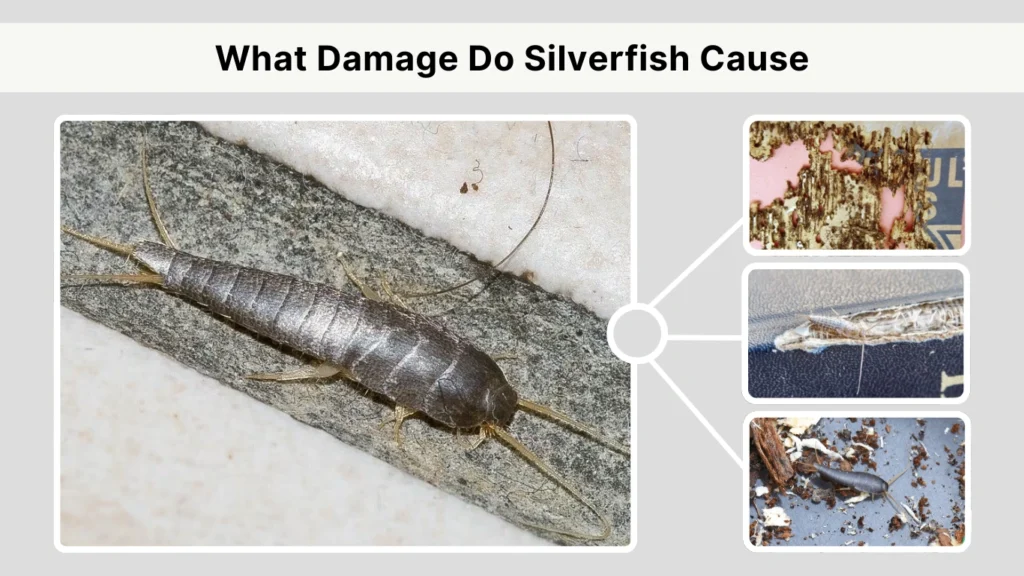
Although silverfish do not bite or spread disease, they cause noticeable material damage.
- Holes in books, documents, and photographs
- Damage to wallpaper, glue, and book bindings
- Yellow stains and feeding marks on fabrics
- Contamination of pantry foods
- Shed skins and droppings in drawers and corners
- Scraping damage on cardboard and stored papers
Over time, this damage can affect both household items and valuable collections.
What Harm Do Silverfish Cause in a Home
Property and Material Damage
Silverfish damage accumulates slowly but steadily. Important papers, clothing, wallpaper, and stored items may be ruined. Libraries, archives, and homes with stored documents are especially vulnerable.
Food and Storage Problems
Silverfish invade pantries and contaminate dry foods such as flour, cereal, sugar, and pet food. Their presence forces homeowners to discard affected products, increasing food waste.
Psychological and Hygiene Concerns
Repeated sightings often cause stress, sleep disruption, and discomfort. Silverfish are also associated with moisture and mold problems, which may indicate deeper structural or air-quality concerns.
What Causes Silverfish and How to Get Rid of Them
Fixing the Root Causes
Long-term control begins with moisture reduction. Use dehumidifiers, install exhaust fans, and improve airflow. Repair leaks, reseal bathrooms, dry wet areas promptly, and reduce condensation. Store paper goods and fabrics in sealed plastic containers, and remove unnecessary clutter.
Blocking Entry and Nesting Areas
Seal cracks around baseboards, doors, windows, and plumbing lines. Caulk gaps, repair damaged grout, and close wall openings. Replace cardboard storage with plastic bins and keep stored items elevated off floors.
Long-Term Prevention Strategy
Prevention depends on consistency. Regular inspections, humidity monitoring, cleaning routines, and structural maintenance stop silverfish before populations can rebuild. Homes that stay dry and organized rarely support silverfish infestations.
Natural vs Chemical Treatment Options
Natural Control Methods
Dehumidifiers are the most effective natural tool. Diatomaceous earth damages silverfish exoskeletons. Cedar blocks repel insects in closets. Regular vacuuming removes eggs, shed skins, and food debris. Essential oils may offer minor deterrent effects when used consistently.
Chemical and Professional Treatments
For heavy infestations, baits, residual sprays, and insecticidal dusts can reduce populations. Professional pest control is recommended if silverfish continue appearing after environmental corrections, as hidden breeding zones or moisture issues may exist.
FAQs
What causes silverfish in a house the most?
Excess moisture is the leading cause of silverfish in homes. High humidity, plumbing leaks, and damp areas allow silverfish to survive and reproduce. When moisture combines with paper, fabrics, and hidden spaces, infestations become likely.
What causes silverfish in bathrooms specifically?
Bathrooms provide constant humidity from showers, condensation, and drains. Leaking fixtures, mold growth, and dark hiding spots under sinks and around toilets create ideal silverfish environments.
What causes a silverfish infestation to start?
Infestations begin when silverfish gain access to a home that offers long-term moisture, food sources, and protected breeding spaces. Seasonal weather changes often trigger their initial indoor movement.
What damage do silverfish actually cause?
Silverfish damage paper, books, wallpaper, fabrics, pantry foods, and stored items. While they are not dangerous to people, their feeding habits can ruin personal belongings and collections.
How do I permanently remove the causes of silverfish?
Permanent control requires lowering humidity, fixing leaks, sealing structural gaps, decluttering storage, and maintaining regular cleaning. When a home no longer provides moisture and food, silverfish populations collapse naturally.