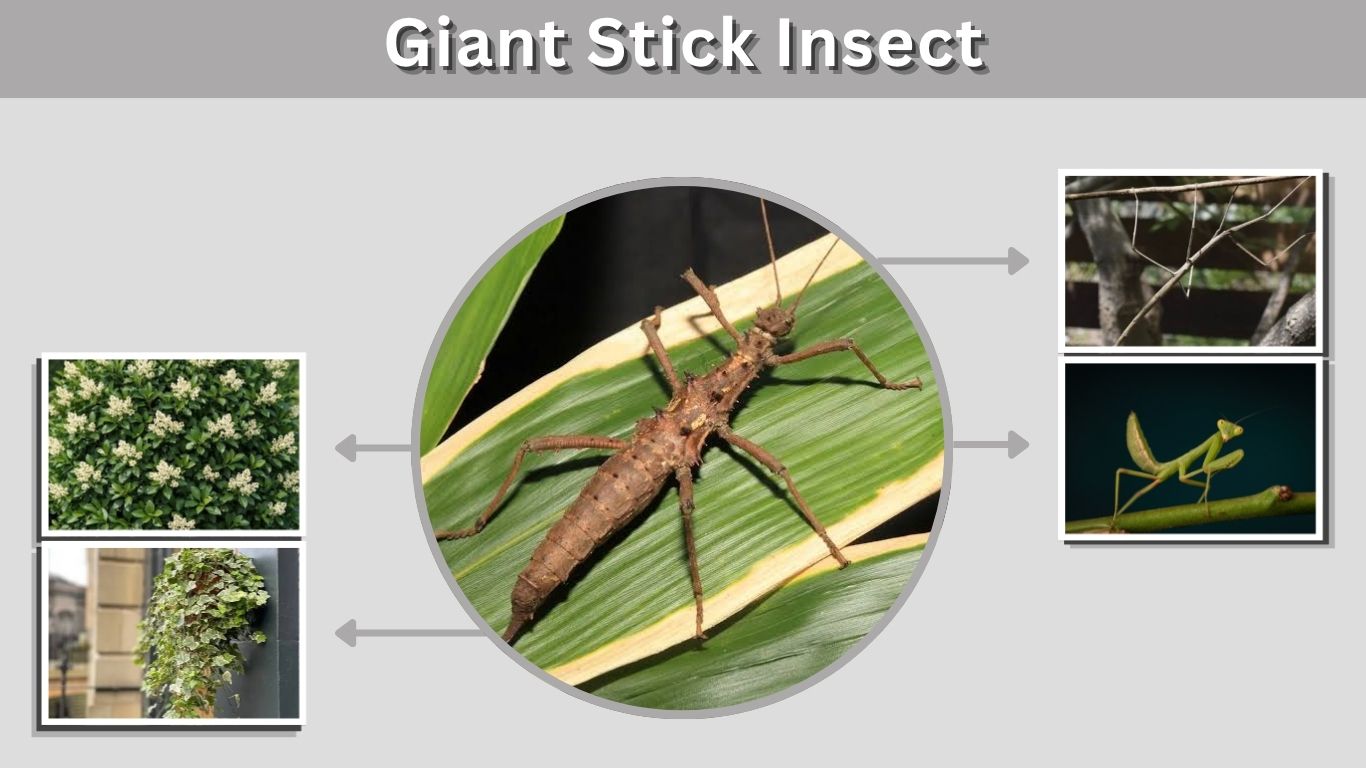
The giant stick insect is an exceptionally large plant-eating insect whose long body, slender legs, and natural camouflage make it look like a branch or twig. Also called a giant walking stick or giant stick bug, it belongs to the insect order Phasmatodea. Different species occur in Australia, Asia, North America, and other warm regions, and some rank among the longest insects on Earth.
What Is a Giant Stick Insect?
“Giant stick insect” is a general name applied to several unusually large species of stick and leaf insects. The term does not refer to one single species.
Although people commonly call them giant stick bugs, they are not “true bugs” from the insect order Hemiptera. Stick insects belong to Phasmatodea and have chewing mouthparts used for eating leaves. Their bodies and behavior are adapted to resemble plant material.
Giant Stick Insect Identification
Common identifying features include:
- Six long, slender legs
- A narrow, elongated body
- Long, threadlike antennae
- Green, brown, gray, or mottled coloration
- Chewing rather than piercing mouthparts
- Slow, swaying movements
- Wings that may be absent, reduced, or fully developed
- Spines, flaps, or leaflike projections in some species
When resting, many species extend their front legs beside the head, making the entire insect resemble one continuous twig. They may remain motionless for long periods or sway gently like a branch moving in the wind.
How Big Can Giant Stick Insects Get?
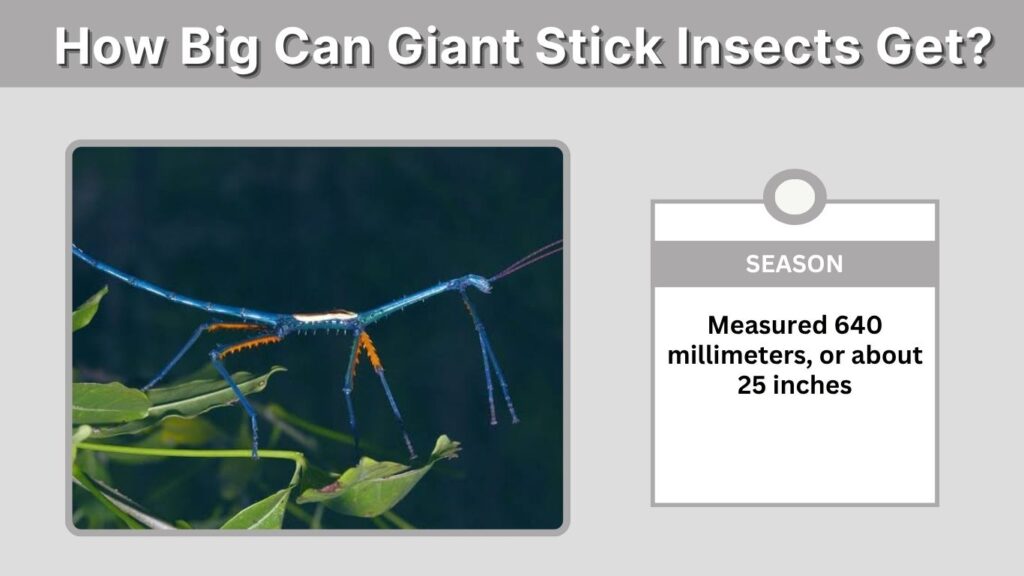
Their size depends on the species and how the measurement is taken. Scientists may measure only the body or include the fully extended legs.
Some tropical stick insects exceed 20 inches when their legs are stretched out. One specimen of Phryganistria chinensis reportedly measured 640 millimeters, or about 25 inches, with its legs fully extended.
The following examples show how widely giant stick insects vary:
| Species | Approximate maximum size | Location |
| Giant walkingstick | Nearly 7 inches | United States and Mexico |
| Giant prickly stick insect | Females around 8 inches | Australia |
| Titan stick insect | Body may exceed 8 inches | Australia |
| Phryganistria chinensis | Around 25 inches with extended legs | China |
| Acrophylla alta | About 16 inches | Australia |
Females are normally larger and heavier than males. Males of some species are slimmer and better able to fly, while heavy females may have reduced flight ability.
Common Types of Giant Stick Insects
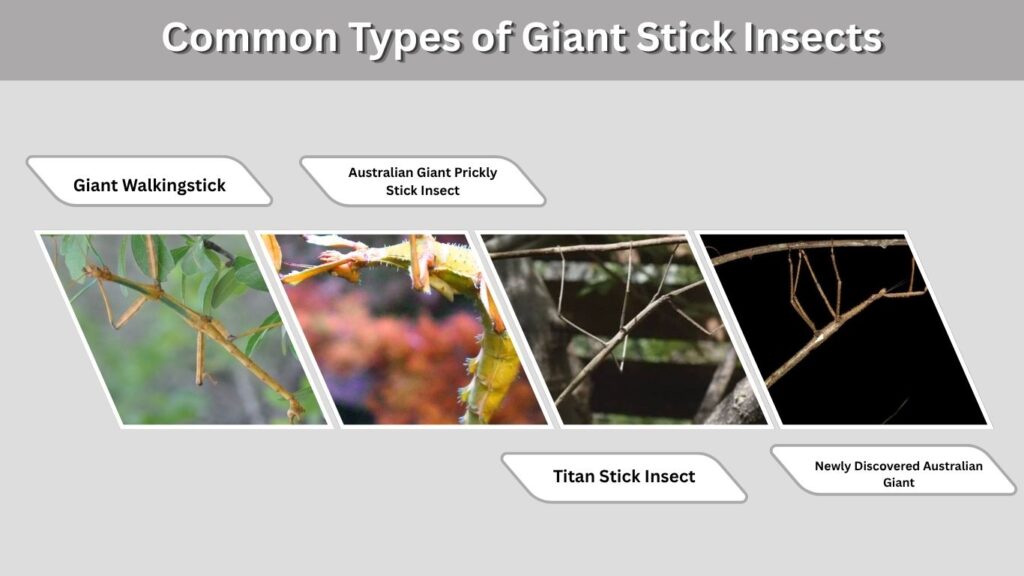
Several different insects may be described as giant walking sticks.
Giant Walkingstick
The giant walkingstick, Megaphasma denticrus, is the largest walkingstick found in the United States. It can grow to nearly 7 inches long and is especially associated with Texas and nearby regions. Its body may be green, tan, or brown, allowing it to blend into stems and branches.
It feeds on foliage from plants such as oak, pecan, hackberry, dogwood, birch, apple, wild cherry, and other trees or shrubs. Nymphs often feed closer to the ground, while older insects may climb into the crowns of trees.
Australian Giant Prickly Stick Insect
The Australian giant prickly stick insect, Extatosoma tiaratum, is also known as the spiny leaf insect or Macleay’s spectre. It has a thick, curved body covered with thornlike projections.
Adult females may reach around 20 centimeters, or nearly 8 inches, while males are generally much smaller and slimmer. Females have short wings and cannot fly effectively, whereas adult males have functional wings.
Females may be green, tan, or brown. When threatened, they can curve their abdomens upward and raise their legs, creating a posture that resembles a scorpion. However, they do not possess a stinger.
Titan Stick Insect
Australia’s titan stick insect is long, slender, and much less heavily armored than the giant prickly species. A young female documented by the Australian Museum measured approximately 21 centimeters, or more than 8 inches, in body length.
Titan stick insects rely primarily on their twiglike shape and color for protection. Their long bodies make them difficult to notice among thin branches and eucalyptus foliage.
Newly Discovered Australian Giant
In 2025, scientists described a giant Australian stick insect called Acrophylla alta. A female specimen weighed approximately 44 grams, making it heavier than insects previously considered Australia’s heaviest. The species was found in high-elevation rainforest in northern Queensland, where it spends much of its time high in the canopy.
Its remote habitat and exceptional camouflage may explain why such a large insect remained scientifically undocumented for so long.
Do Giant Stick Insects Have Wings?
Wing development differs among species and between males and females.
Some giant walking sticks are completely wingless. Others possess short wings that are useful only for defensive displays. Fully winged species may fly or glide, although large females are frequently too heavy for sustained flight.
In the giant prickly stick insect, adult males are light and winged, while the much heavier females have reduced wings. Some species suddenly expose colorful hind wings when threatened, startling predators before dropping or flying away.
What Do Giant Stick Insects Eat?
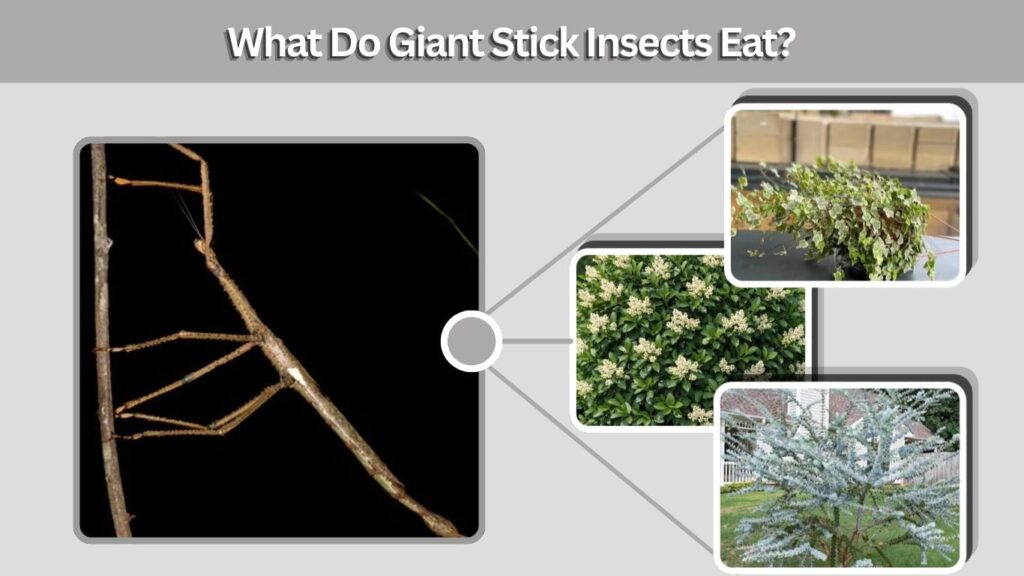
Giant stick insects are herbivores. They eat leaves rather than other insects, animals, wood, clothing, or stored food.
Common food plants include:
- Eucalyptus
- Oak
- Blackberry and bramble
- Rose
- Privet
- Pecan
- Dogwood
- Wild cherry
- Hazel
- Guava
Diet varies among species, and an insect adapted to one group of plants may refuse unfamiliar leaves. Australian giant prickly stick insects feed primarily on eucalyptus in the wild, although captive individuals may also accept bramble, rose, or oak.
Most feeding occurs at night. During daylight, the insect commonly remains still among the vegetation.
Are Giant Stick Insects Dangerous?
Giant stick insects are not aggressive predators and do not hunt or feed on people. They do not have venomous fangs or conventional stingers.
A large specimen may scratch with its leg spines or pinch when handled roughly. Certain species also use chemical defenses. Some walkingsticks can release unpleasant-smelling fluids, while a few North American species can spray an irritating substance toward a predator’s face.
Avoid placing an unidentified stick insect near your eyes. Handling should be gentle and limited, especially with spiny species.
Do Giant Stick Bugs Bite?
A giant stick bug does not normally bite. Its mouthparts are designed for cutting and chewing foliage, not piercing human skin.
Defensive scratches or pinches are possible, particularly from large spiny insects, but the animal generally prefers to freeze, sway, drop from its branch, or move away.
Are They Poisonous?
Most giant stick insects are not poisonous to touch. However, defensive secretions from certain species may irritate the eyes, skin, nose, or mouth.
Wash your hands after handling one and avoid touching your face. Flush the eyes with clean water if a defensive spray makes contact and seek medical care if pain or irritation continues.
Giant Stick Insect Life Cycle
Giant stick insects undergo incomplete metamorphosis:
- Egg
- Nymph
- Adult
Females commonly drop seedlike eggs individually onto the forest floor. Some eggs remain dormant for many months before hatching. Giant prickly stick insect eggs generally take around nine to twelve months to develop.
The young nymph resembles a miniature adult. It grows by shedding its exoskeleton several times. During molting, it hangs beneath a branch and carefully pulls itself out of the old skin. Adequate vertical space is essential because interrupted molts can leave the insect deformed or trapped.
Some stick insect species can reproduce through parthenogenesis, meaning females can lay viable eggs without mating.
Giant Stick Insect vs. Praying Mantis
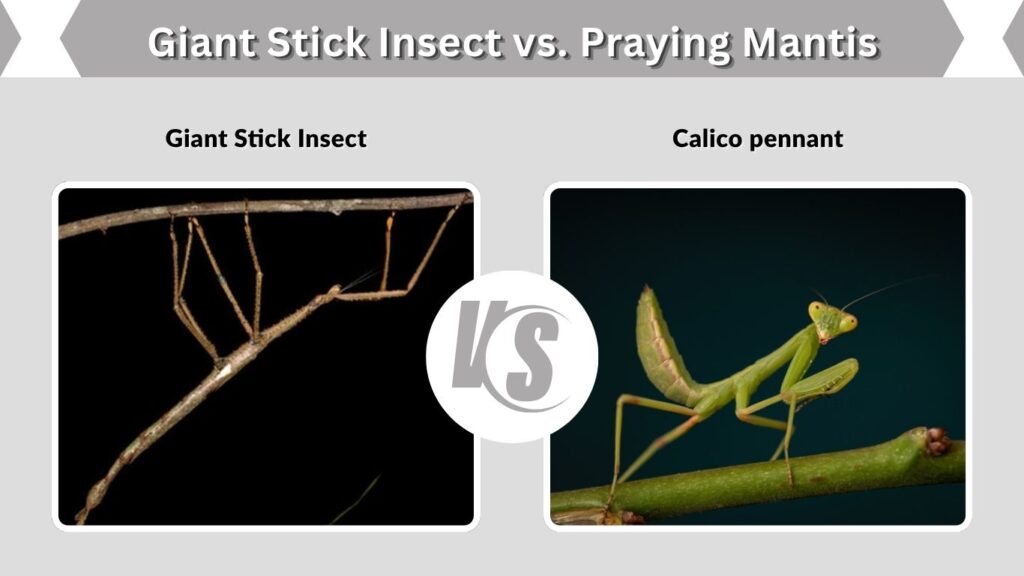
These insects may look similar from a distance, but their legs and diets are different.
A praying mantis has a triangular head and thick, folded front legs armed with spines for grabbing prey. It is a predator that eats insects and other small animals.
A giant stick insect generally has six relatively slender walking legs. It has a smaller head, moves more slowly, and feeds entirely on plants.
What to Do After Finding a Giant Walking Stick
A giant walking stick found outdoors should normally be left where it is. It does not infest houses, attack people, or damage wooden structures.
When one enters a building, place a container over it, gently slide stiff paper underneath, and release it onto a nearby tree or shrub. Never pull it by a leg because walkingsticks can be injured easily and some species may shed a limb when threatened.
FAQs
What is the biggest giant stick insect?
Several species compete for this title depending on whether body length or fully extended legs are measured. A captive-bred Phryganistria chinensis measured about 25 inches with its legs extended, placing it among the longest insects ever documented.
Are giant stick insects found in Texas?
Yes. Texas is home to the giant walkingstick, Megaphasma denticrus. It may reach nearly 7 inches and is considered the longest insect found in the United States. It usually lives on trees, shrubs, and vines.
Can a giant stick insect fly?
Some can, but many cannot. Adult males are more likely to possess functional wings because they are smaller and lighter. Large females may be wingless or have wings that are too small to support sustained flight.
Do giant stick bugs damage trees?
One or two insects usually cause little noticeable damage. Dense populations may remove significant foliage from trees and shrubs, but serious outbreaks are uncommon. Healthy mature plants generally tolerate limited feeding.
Can giant stick insects be kept as pets?
Some species are kept in captivity, but they require suitable food plants, ventilation, humidity, climbing space, and enough height to molt safely. Ownership and importation laws differ by location because non-native insects could threaten local plants if released.