
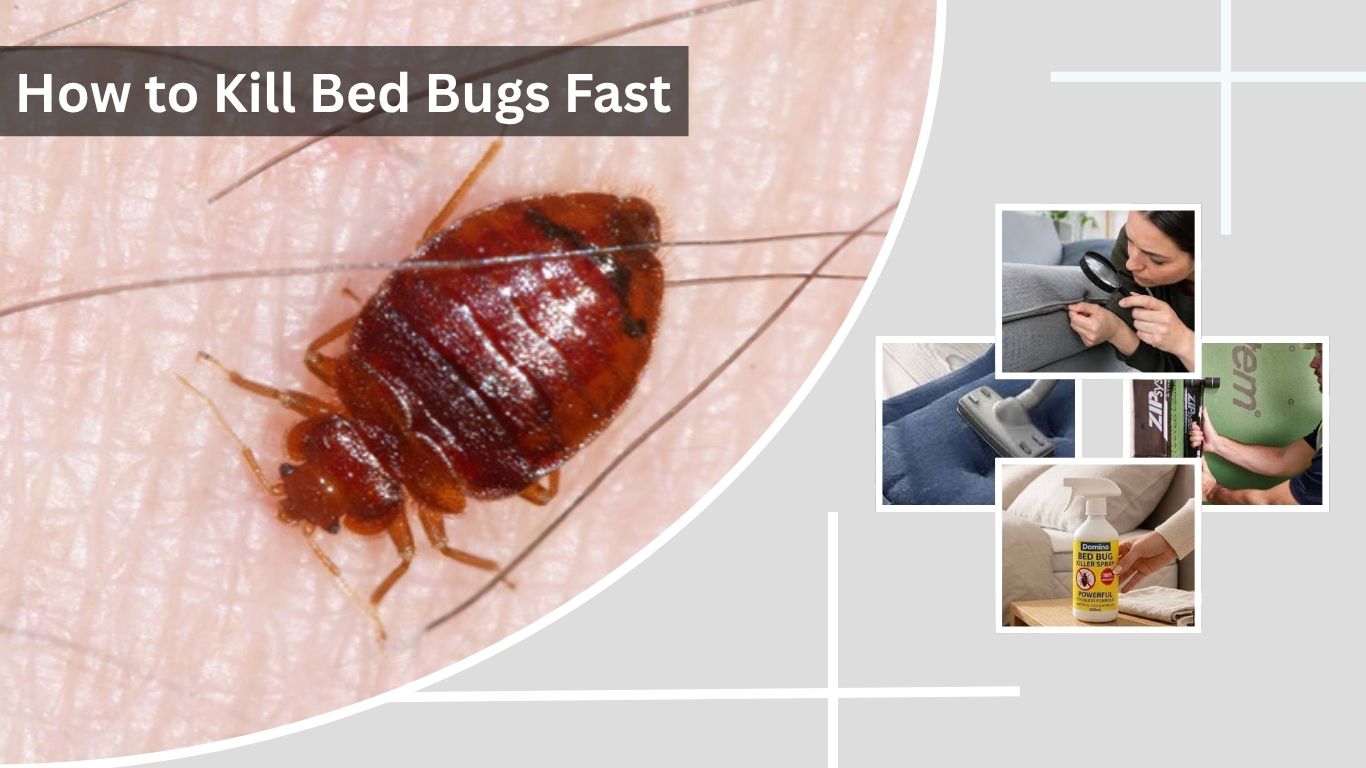
Bed bugs are difficult to eliminate because they hide in mattress seams, bed frames, furniture, and tiny wall cracks. You can start controlling them at home with careful cleaning, high-temperature drying, steam, and targeted treatment. The key is to treat the entire affected area and keep checking for new activity. This guide explains how to kill bed bugs, which methods work fastest, and how to prevent another infestation.
How to Kill Bed Bugs Fast at Home
The fastest approach combines several methods rather than relying on one spray. Find where insects hide, contain infested belongings, and remove visible bugs. Heat kills bed bugs and eggs in suitable items, while repeated inspection catches survivors. Follow these steps before deciding whether professional treatment is needed.
Inspect and Contain Infested Areas
Check mattress piping, headboards, box springs, bedside furniture, and cracks near the bed. Look for live reddish-brown bugs, tiny pale eggs, shed skins, and dark fecal spots. Avoid moving untreated belongings between rooms because bed bugs can hitchhike and spread.
- Place bedding and loose clothing into sealed bags before carrying them to the laundry.
- Separate treated items from anything still awaiting treatment.
- Keep clutter manageable so hiding places are easier to inspect.
Vacuum Bed Bugs and Hiding Places
Vacuum mattress seams, furniture joints, baseboards, and carpet edges. This reduces bed bug numbers but may miss eggs and insects deep inside cracks. Immediately seal the vacuum contents in a plastic bag and discard them in an outdoor trash bin.
Use High Heat on Washable Items
Put bedding, clothing, curtains, and other dryer-safe items through a hot drying cycle. Washing alone may not kill every bed bug. Keep clean items sealed until the surrounding room has been treated.
How Hot Does It Need to Be to Kill Bed Bugs?
Sustained high temperatures kill bed bugs only when heat reaches their hiding places. Warm room air is not enough. Household dryers work for fabrics, steam helps with cracks and upholstery, and professional equipment heats larger spaces more evenly.
What Temperature Kills Bed Bugs and Eggs?
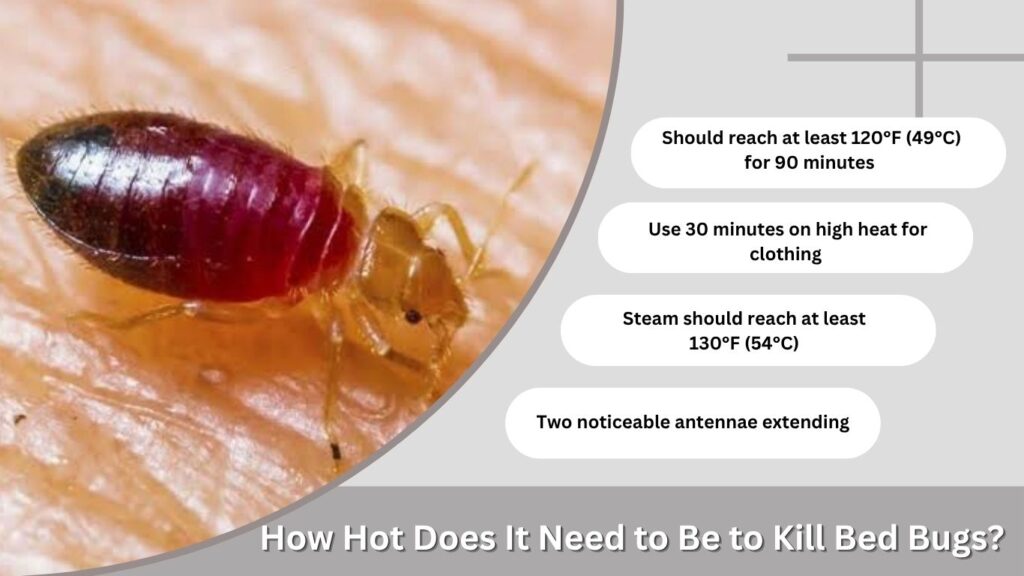
For controlled treatment, affected items should reach at least 120°F (49°C) for 90 minutes to kill eggs. Timing begins when hidden areas reach that temperature. Never heat rooms with space heaters, ovens, or fireplaces; these methods create serious fire risks.
How Long in a Dryer to Kill Bed Bugs?
Use 30 minutes on high heat for clothing and bedding that can withstand it. Avoid overloading the dryer, and check care labels first. Transfer treated clothing into clean bags rather than placing it on infested furniture.
How to Use Steam to Kill Bed Bugs
A suitable steamer can treat mattress seams, upholstered furniture, bed frames, and baseboards. Steam should reach at least 130°F (54°C) at the treatment point. Move slowly and use a broad attachment with gentle airflow so bugs are not scattered. Test delicate materials first, avoid electrical outlets, and allow fabrics to dry thoroughly.
How to Kill Bed Bugs on Mattresses, Couches, and Clothes
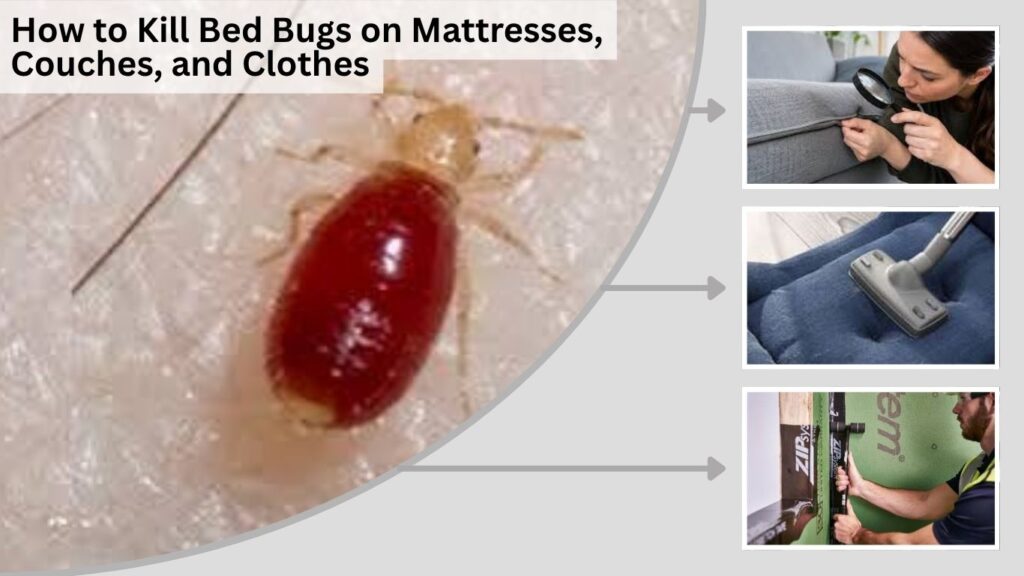
Different belongings require different treatments. Clothing can usually go in a dryer, while furniture needs careful work around seams, folds, and joints. Throwing away a mattress is rarely necessary as a first step.
How to Kill Bed Bugs on a Mattress
Vacuum every seam, fold, and label. Steam accessible areas if the manufacturer permits it. Install a tightly zipped, bed-bug-proof mattress and box-spring encasement to trap remaining insects. Do not spray sleeping surfaces unless the pesticide label specifically permits it.
How to Kill Bed Bugs on a Couch
Inspect cushion seams, zippers, undersides, and the furniture frame. Vacuum joints and steam suitable surfaces. Bed bugs hide deep inside upholstery, so surface cleaning may not solve a heavy infestation. Complicated furniture may need professional treatment.
How to Kill Bed Bugs on Clothes
Bag suspicious clothing before moving it, then use a dryer-safe high-heat cycle for 30 minutes. Wash items separately if cleaning is also needed. For delicate fabrics that cannot tolerate high heat, consult a cleaner and explain the possible infestation. Avoid spraying ordinary clothing with insecticide.
Can Cold or Natural Remedies Kill Bed Bugs?
Some nonchemical treatments work, but popular remedies are unreliable. Freezing requires controlled temperatures, and insecticidal dusts act slowly. Vinegar, baking soda, and essential oils cannot replace heat, inspection, and coordinated treatment.
How Cold Does It Need to Be to Kill Bed Bugs?
Freeze small items at 0°F (-18°C) or colder for at least four days, once their centers reach that temperature. Verify conditions with a thermometer. Freezers may fluctuate, and winter weather outdoors is unreliable. Freezing also leaves bugs elsewhere untouched.
How Long Does Diatomaceous Earth Take?
Pesticide-grade diatomaceous earth damages a bed bug’s protective coating, gradually drying it out. It can take weeks or longer. Use only products registered and labeled for bed bugs, following instructions for cracks and crevices. Never scatter food-grade or pool-grade powder on mattresses or floors; inhaling dust can be harmful.
Do Vinegar, Baking Soda, or Bleach Work?
Vinegar may harm bugs it directly contacts but will not reliably reach hidden insects or eggs. Baking soda has no convincing practical evidence as an effective bed bug treatment, and bleach can damage furnishings or create hazardous fumes. Rubbing alcohol is also highly flammable. Skip homemade chemical mixtures and prioritize proven physical controls.
How to Kill Bed Bug Eggs and Prevent Their Return
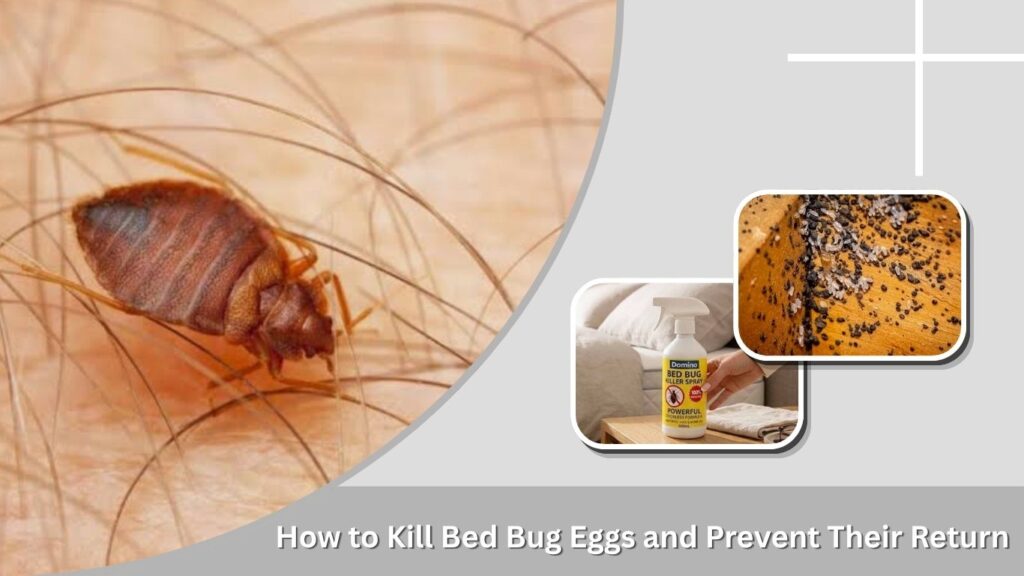
Eliminating visible adults is only part of the job. Eggs can remain inside seams and crevices, allowing activity to resume. Treat hiding places and monitor for several weeks. Apartment residents may also need help from building management.
Treat Eggs and Hidden Bugs Together
High heat and correctly applied steam can kill eggs they reach. Vacuuming helps remove exposed insects, but does not reliably remove all eggs. After treatment, keep the bed slightly away from walls, prevent bedding from touching the floor, and place bed bug interceptors beneath bed legs where suitable.
Use Bed Bug Sprays Carefully
If using pesticides, choose products specifically registered and labeled for bed bugs and the surfaces you intend to treat. Follow every instruction on application, ventilation, and re-entry. Do not combine chemicals or apply extra doses. Foggers or “bug bombs” are poor stand-alone solutions because pesticide mist may never reach the insects’ hiding places.
Know When to Call an Exterminator
Seek professional help when bugs are found in several rooms, activity continues after repeated treatment, or furniture has inaccessible hiding spaces. Ask for an integrated pest management plan combining inspection, targeted treatments, and follow-up visits. Continue checking seams and interceptor traps at least weekly, even after bites appear to stop.
FAQs
1. What Kills Bed Bugs Instantly?
Direct exposure to sufficiently hot steam or other controlled heat can kill bed bugs quickly, but it only works on insects actually reached. No common household spray instantly eliminates every hidden bed bug and egg in an infested room.
2. How Long Does It Take to Kill All Bed Bugs?
Individual bugs may die during treatment, but clearing an infestation can take several weeks because hidden insects and eggs may survive. The timeline depends on infestation size, treatment thoroughness, and whether follow-up visits or additional treatments are needed.
3. Can Bed Bugs Survive a Washing Machine?
Yes. Washing alone is not consistently reliable, especially with cooler water or short cycles. For dryer-safe fabrics, running a high-heat dryer for 30 minutes is a more dependable method. Keep treated items away from infested surfaces afterward.
4. Can You Kill Bed Bugs in a Car?
Vacuuming and treating removable fabric items can help, but parking a car in the sun does not guarantee that every hiding place reaches a lethal temperature. Avoid improvised heating devices or pesticide use that is not specifically allowed by the label.
5. What Is the Best Way to Kill Bed Bugs Naturally?
The strongest nonchemical options are high-temperature drying, carefully applied steam, vacuuming, mattress encasements, and ongoing monitoring. Each addresses a different part of the problem. A serious infestation may still require an experienced pest-control professional.
