
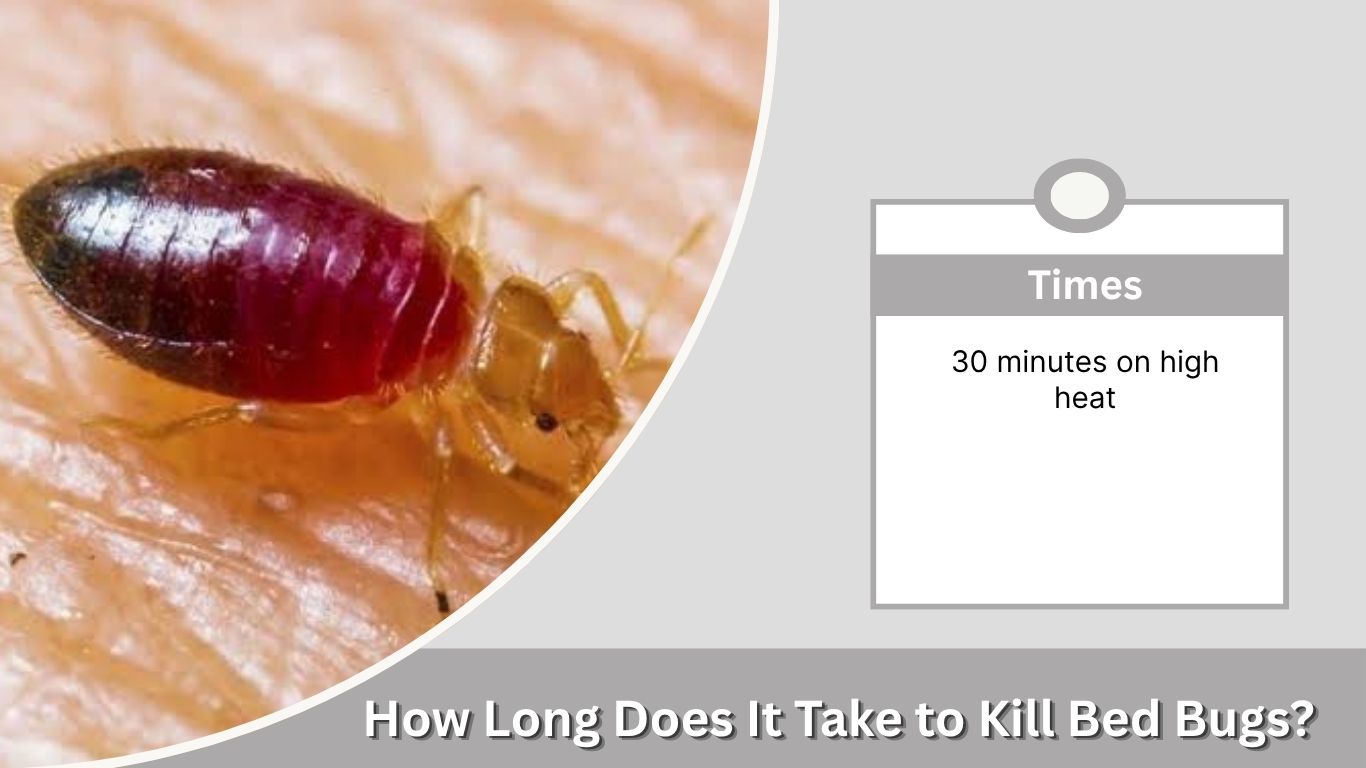
How long does it take to kill bed bugs? The answer depends on whether you use a clothes dryer, steam, freezing, insecticidal dust, or professional treatment. Some methods kill exposed insects in minutes, while eliminating an infestation can take several weeks. Eggs, hidden insects, and untreated furniture are common reasons the problem returns. Knowing the correct temperature and exposure time can prevent unsafe experiments. This guide explains how long common bed bug treatments take and which methods work most reliably.
How Long in the Dryer to Kill Bed Bugs?
For dryer-safe clothing and bedding, 30 minutes on high heat is a reliable recommendation. A dryer can kill adults, young bugs, and eggs when enough heat reaches the items. A regular low-heat cycle may not work, and tightly packed loads may heat unevenly.
How Long Should You Dry Clothes to Kill Bed Bugs?
Put infested clothes into a sealed bag before transporting them. Empty the bag directly into the dryer, select high heat, and run the cycle for at least 30 minutes. Check fabric-care labels first. For a large load, divide items so hot air circulates freely.
- Keep untreated laundry separate from clean items.
- Use clean bags or containers after drying.
- Do not place treated clothing back on an infested bed.
- Remember that washing alone may not kill every bed bug.
How Long to Dry Sheets, Pillows, and Bedding?
Sheets, pillowcases, blankets, and dryer-safe pillows follow the same high-heat rule. Bulky bedding needs room to tumble. If a comforter cannot tolerate high heat, check its care instructions and choose another suitable treatment.
Does the Dryer Kill Bed Bug Eggs?
Yes. Sufficient dryer heat kills bed bug eggs as well as living insects. However, the dryer treats only what you put inside it. Eggs remaining in a headboard, mattress seam, or nearby furniture still require attention. This is why laundry treatment is just one part of controlling an infestation.
How Long Does Heat Take to Kill Bed Bugs?
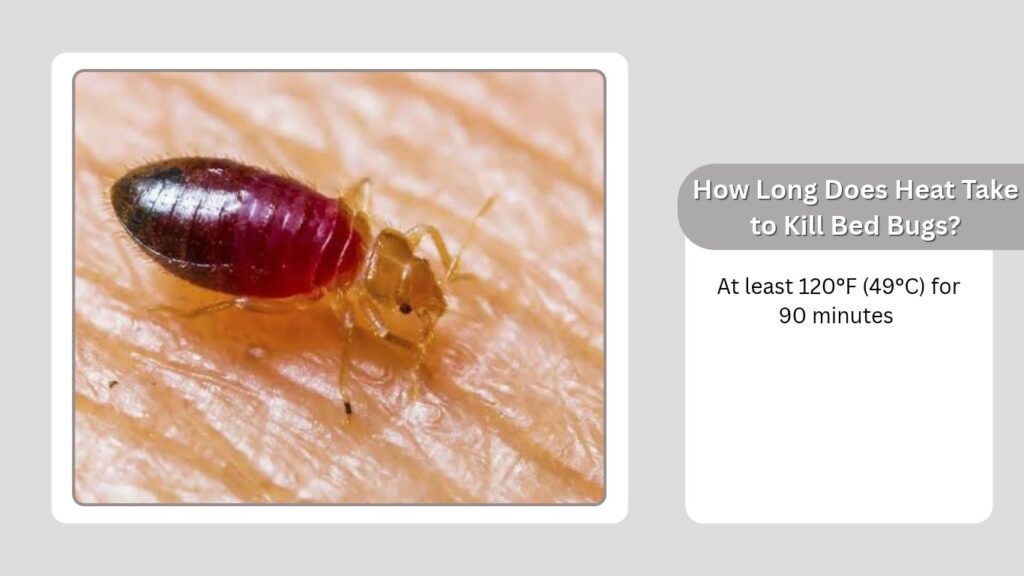
Heat works quickly when the correct temperature reaches hidden insects for long enough. Warm air near a heater is not proof. Professionals measure difficult areas, while dryers and steamers suit specific belongings and surfaces.
How Long at 120 Degrees to Kill Bed Bugs?
One established recommendation is to heat infested items or spaces to at least 120°F (49°C) for 90 minutes to ensure eggs are killed. The required exposure begins after the target temperature reaches hiding spots, not when equipment switches on. Higher temperatures may shorten treatment times, but attempting to improvise whole-room heating is dangerous.
How Long Does Professional Heat Treatment Take?
The heating phase may take several hours, depending on the property, equipment, contents, and how quickly hidden areas become hot enough. Preparation, monitoring, and cooling add time. A professional should explain the temperature targets and whether a follow-up inspection is included. Heat does not prevent bed bugs from arriving again later.
How Long Does Steam Take to Kill Bed Bugs?
Properly applied steam can kill bugs and eggs where the heat reaches them. The steam should be at least 130°F (54°C) at the treatment point. Move the steamer slowly over seams, upholstery, and accessible cracks; a quick pass may miss hidden insects. Use a broad attachment and gentle airflow to avoid scattering bugs.
How Long Does Diatomaceous Earth Take to Kill Bed Bugs?
Diatomaceous earth, often shortened to DE, is a drying agent rather than an instant-contact killer. It damages the protective coating on insects, causing gradual dehydration. Results vary with the product, exposure, and whether bugs cross treated areas. It may take weeks or even longer to contribute to control, so it should not be the only treatment.
Does Diatomaceous Earth Kill Bed Bugs Overnight?
No reliable overnight result should be expected. Bed bugs must encounter the product, and death is not immediate. Use only pesticide products registered and labeled for bed bugs, applied as directed in permitted cracks. Food-grade or pool-grade diatomaceous earth is unsuitable because inhaled dust can be harmful.
How Long in the Freezer to Kill Bed Bugs?
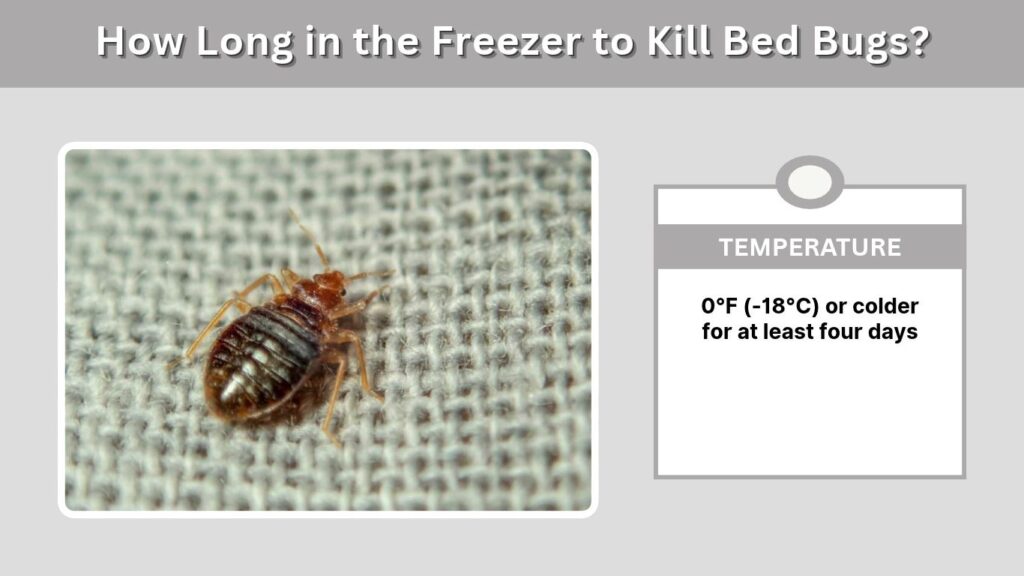
Freezing can work on certain small objects, but it is slower and less predictable than a properly operated dryer. Temperature must reach the center of the object and stay low long enough. Household freezers fluctuate, and outdoor winter temperatures usually cannot be trusted to treat mattresses, luggage, or furniture completely.
What Temperature and Time Are Needed?
Keep suitable sealed items at 0°F (-18°C) or colder for at least four days after the item’s center reaches that temperature. Verify the temperature with a thermometer. Books and shoes may be suitable if freezing will not damage them. Leaving furniture outdoors in cold weather is unreliable.
How Long Do Sprays and Home Remedies Take?
Chemical products have different active ingredients and application rules, so there is no single accurate answer for how long pesticide takes to kill bed bugs. Some products affect exposed insects more quickly than others, while residual formulations may take longer. Homemade remedies are often ineffective and can increase risks to people, pets, and property.
How Long Does Bleach Take to Kill Bed Bugs?
Bleach can harm insects through direct contact, but there is no reliable treatment time for eliminating an infestation. It can damage fabrics and finishes. Never mix bleach with other cleaners. Rubbing alcohol is highly flammable, while vinegar and baking soda are not reliable solutions. Avoid these homemade treatments.
How Long Do Commercial Bed Bug Sprays Take?
Products such as Crossfire, Bedlam, Temprid, and other labeled insecticides should be judged by their current labels, not a universal number of minutes. Drying and re-entry times are also different from insect-killing times. Follow directions precisely, especially for sleeping surfaces, children, pets, and ventilation. Do not apply extra products to rush results.
How Long Does It Take to Eliminate an Infestation?
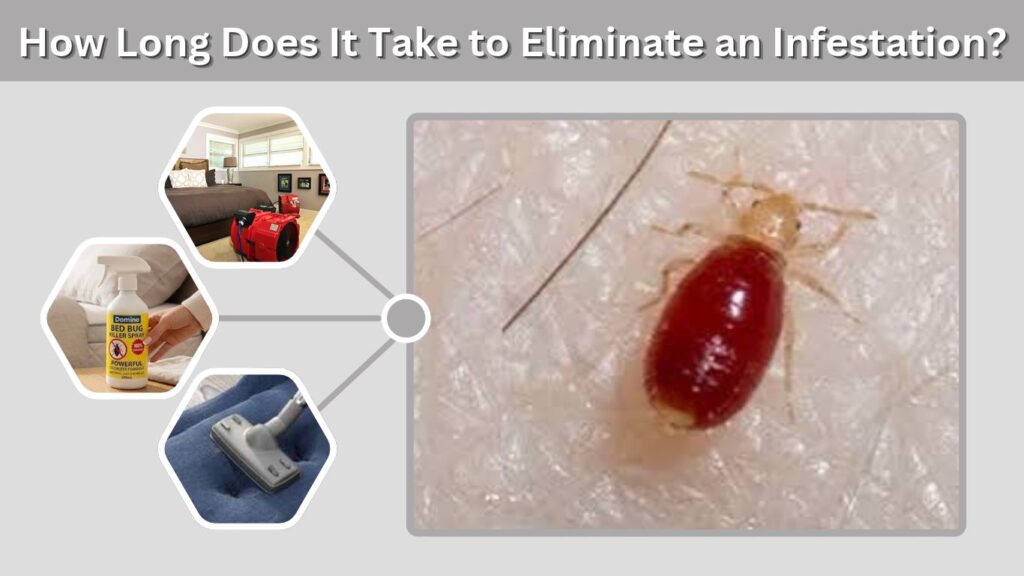
Killing an individual bug and clearing an entire room are different goals. A dryer or steamer can quickly treat exposed insects, but hidden eggs and missed hiding places may allow activity to continue. It often takes several weeks of coordinated treatment and monitoring to establish that the infestation is under control.
What Helps Treatment Work Faster?
- Inspect mattresses, bed frames, furniture joints, and baseboards carefully.
- Bag and heat-treat suitable clothing and bedding.
- Vacuum accessible bugs and seal vacuum waste immediately.
- Install bed bug encasements and use interceptors where appropriate.
- Arrange follow-up treatment if activity persists.
For extensive infestations, contact an experienced pest-control professional. In apartment buildings, coordinate with management because insects may move between units. Continue inspecting at least weekly after treatment rather than relying only on whether bites have stopped.
FAQs
1. How Long Does It Take to Kill Bed Bugs in a Hot Dryer?
Run dryer-safe items on high heat for at least 30 minutes, with enough room for hot air to circulate. This can kill bed bugs and eggs inside the load but will not treat bugs elsewhere in the room.
2. How Long Does It Take Heat to Kill Bed Bug Eggs?
At least 120°F (49°C) for 90 minutes is a recommended controlled heat-treatment target for killing eggs. The entire infested object, including hidden areas, must actually reach and maintain the required temperature.
3. How Long Does Bed Bug Powder Take to Work?
It depends on the active ingredient and how insects contact the product. Diatomaceous earth may take weeks or longer to contribute to control. Check the pesticide label and combine dust treatment with other approved methods.
4. How Long Does It Take to Freeze Bed Bugs?
Use a verified freezer temperature of 0°F (-18°C) or colder for at least four days after the object’s center becomes cold enough. Household freezers may be unreliable, and items that cannot tolerate freezing need other treatment.
5. Can Bed Bugs Be Eliminated in One Day?
Some exposed bed bugs and eggs can be killed in one day using suitable heat treatment. However, a whole infestation may require repeated inspections and additional treatment over several weeks before you can be confident no insects remain.
