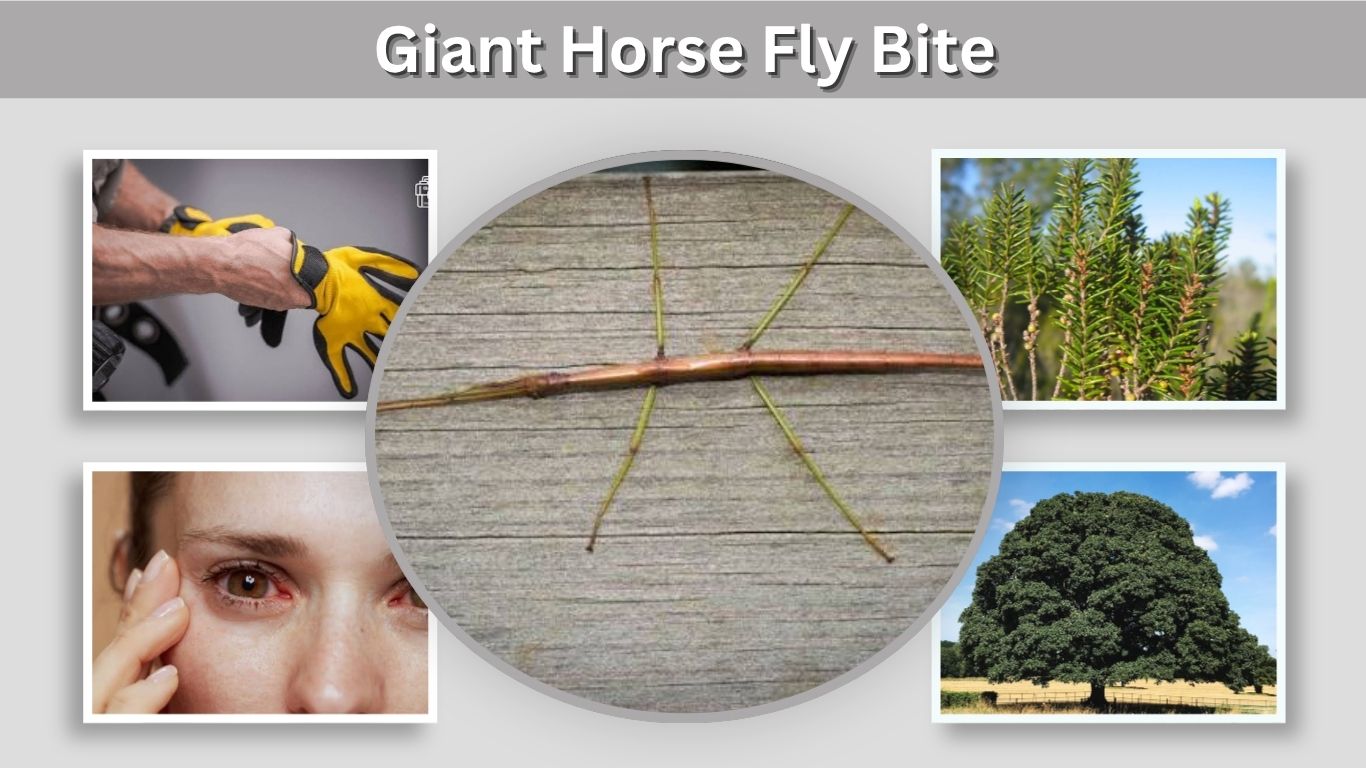
Florida’s warm climate and dense vegetation provide suitable habitat for unusual insects, including walking sticks. The most commonly encountered Florida stick bug is the two-striped walkingstick, a thick-bodied species recognized by its dark lengthwise stripes and powerful defensive spray. Although it cannot sting and rarely bites, handling it carelessly may result in painful eye or skin irritation.
What Is a Florida Walking Stick Bug?
Walking sticks are insects in the order Phasmatodea. Their long bodies and legs help them resemble twigs, stems, or pieces of bark. Unlike praying mantises and assassin bugs, walking sticks are herbivores that feed on leaves rather than hunting other insects.
The two-striped walkingstick, Anisomorpha buprestoides, is the most common stick insect documented in Florida. It is also known as the southern two-striped walkingstick, musk mare, devil’s riding horse, prairie alligator, and devil’s darning needle.
Florida Stick Bug Identification
A typical two-striped walkingstick has:
- A thick, elongated body
- Six relatively short, sturdy legs
- Long antennae
- Brown or tan background coloration
- Three dark stripes running along the body
- No functional wings
- A small male frequently riding on a larger female
- Two defensive glands located behind the head
Unlike extremely thin walking sticks that resemble narrow twigs, this Florida species has a comparatively stout body. Adult females average approximately 2⅔ inches long, while males average about 1⅔ inches. Females are noticeably broader and heavier.
Black-and-White Florida Stick Bug
An unusual black-and-white form occurs in the scrub habitat of Ocala National Forest. Its contrasting stripes can make it look different from the more familiar brown form, but it is associated with the same species.
The markings of dead or preserved specimens often fade, so photographs of living walking sticks usually show their natural colors more accurately.
Where Are Stick Bugs Found in Florida?
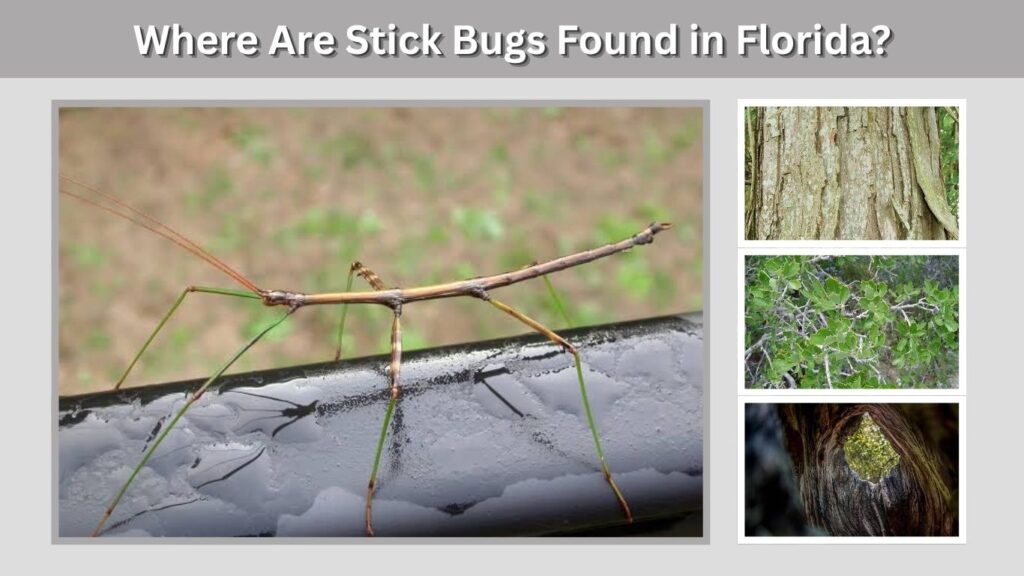
Two-striped walking sticks have been recorded across much of Florida, from northern counties to the Florida Keys. Documented locations include Alachua, Brevard, Broward, Collier, Escambia, Leon, Marion, Miami-Dade, Monroe, Orange, Osceola, Putnam, and many other counties.
They are commonly associated with wooded habitats containing suitable host plants and protected daytime shelters.
Common Habitats
Florida walking sticks may be found:
- On oak trees and shrubs
- Beneath loose tree bark
- Inside hollow trees
- In scrub and pine habitats
- Among garden plants
- Beneath vegetation or landscape debris
- On walls near wooded areas
- Around mulch and sheltered crevices
They are primarily active at night. During the day, individuals may gather in sheltered places, sometimes forming surprisingly large groups beneath bark or inside tree cavities.
Why Is One on Your Wall?
A walking stick may climb an exterior wall while moving between plants or searching for shelter. Outdoor lights, nearby trees, and dense landscaping can increase the chance of seeing one around a house.
They do not consume wood, drywall, furniture, clothing, or stored food. A walking stick found indoors is generally an accidental visitor rather than evidence of a household infestation.
What Do Florida Walking Stick Bugs Eat?
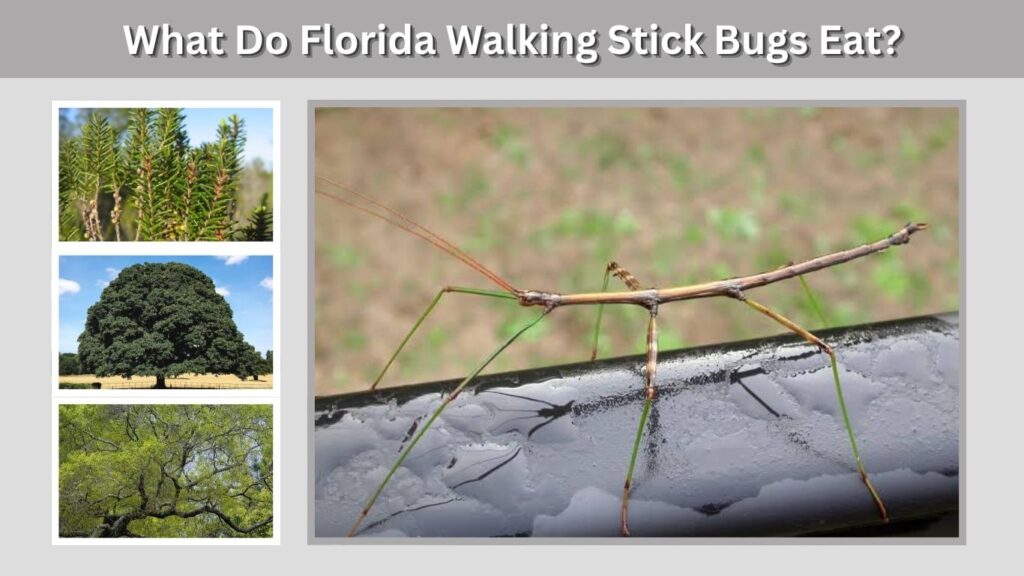
Florida walking sticks are plant eaters. They use chewing mouthparts to remove sections of leaves from trees and shrubs. They do not eat people, pets, mosquitoes, or other insects.
Two-striped walking sticks have been observed feeding on several plants, including:
- Oak
- Rosemary scrub
- Lyonia
- Crepe myrtle
- Roses
- Privet
Although they may rest on scrub palmettos, researchers have not necessarily observed them eating that plant.
Do They Damage Plants?
A few walking sticks usually cause little noticeable damage. Large concentrations can consume more foliage, but serious defoliation by the two-striped species has not been commonly reported.
Removing every walking stick from a landscape is generally unnecessary. Monitoring may be appropriate when many individuals repeatedly feed on a small or stressed ornamental plant.
Are Florida Stick Bugs Poisonous?
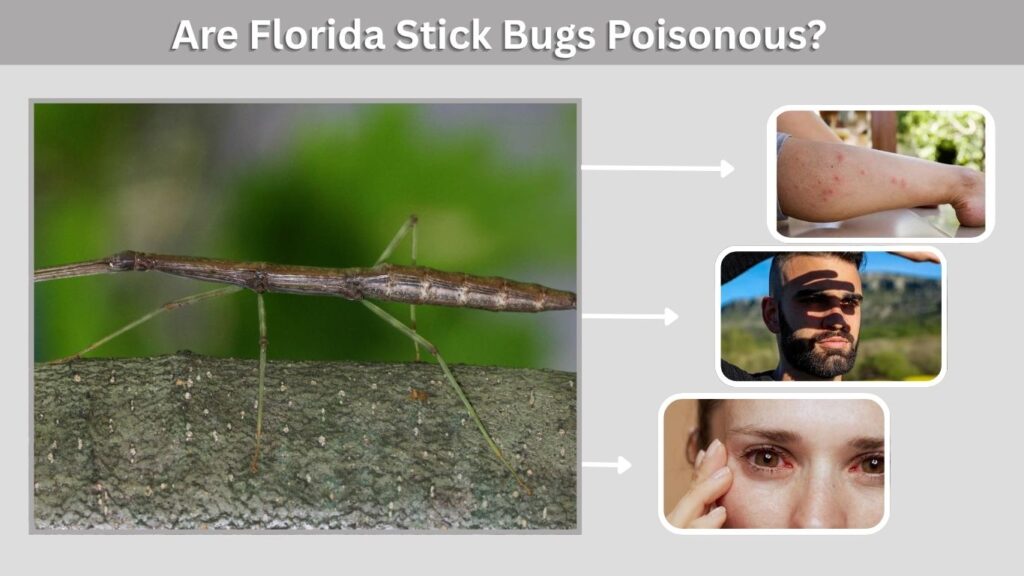
Florida walking sticks are not poisonous in the same way as an animal that is dangerous when touched or swallowed. They also do not possess venomous fangs or stingers.
However, the two-striped walkingstick produces a strong defensive chemical that can be sprayed toward a perceived threat. The secretion comes from glands in the thorax, directly behind the head, rather than from a stinger at the end of the abdomen.
Florida Walking Stick Spray
A disturbed two-striped walkingstick can direct its spray with considerable accuracy. Research cited by UF/IFAS found that it may reach approximately 12–16 inches. Physical contact, tapping, squeezing, or persistent prodding may trigger the defense.
The spray may cause:
- Severe burning in the eyes
- Redness and watering
- Light sensitivity
- Temporary blurred or impaired vision
- Irritation of the nose or mouth
- Skin discomfort in sensitive individuals
The insect often relies on this defense rather than biting or fighting. Avoid placing your face close to a Florida walking stick, particularly when photographing or examining a pair.
Can the Spray Harm Pets?
The defensive spray may injure a dog or cat if it reaches the eyes. A documented canine incident involved corneal injury following exposure, although rubbing may have worsened the damage.
Keep curious pets away from walking sticks. A pet that develops squinting, redness, heavy tearing, pawing at the face, or difficulty opening an eye after an encounter should receive prompt veterinary attention.
What to Do After Eye Exposure
Immediately flush the affected eye with plenty of clean water. Continue rinsing rather than rubbing the eye. Medical attention is recommended when pain is severe or symptoms include reduced vision or unusual sensitivity to light.
Do Florida Walking Stick Bugs Bite or Sting?
Two-striped walkingsticks do not have stingers. Their mouthparts are adapted for chewing leaves, and they do not normally bite people.
A frightened insect may struggle or press its legs against the skin, but its primary defense is its chemical spray. The safest approach is to avoid touching or cornering it.
| Concern | Florida walking stick |
| Stings people | No |
| Commonly bites | No |
| Venomous | No |
| Sprays defensive chemicals | Yes |
| Can irritate eyes | Yes |
| Eats household materials | No |
| Feeds on plants | Yes |
A long insect that produces an immediately painful puncture may be an assassin bug or another species rather than a true walking stick.
Florida Walking Stick Mating and Life Cycle
Walking sticks undergo incomplete metamorphosis, developing through egg, nymph, and adult stages. Young nymphs resemble miniature adults but are smaller and not reproductively mature.
Adults are especially abundant in Florida during fall, when mating and egg-laying commonly occur. The tiny male frequently remains attached to the back of the much larger female, creating the appearance of two insects stuck together.
How Females Lay Eggs
Instead of simply dropping each egg from a plant, female two-striped walkingsticks may dig small pits in sandy soil. One observed female deposited approximately eight to ten eggs in a pit, covered them with sand, and then moved to another location.
Females have also been observed placing eggs in crevices within pine-bark mulch.
Stick Bugs and Common Florida Lookalikes
Several Florida insects and objects may be confused with walking sticks.
Praying Mantis
A praying mantis has a triangular head and thick, folded front legs equipped with spines. It is a predator. A walking stick has a smaller head, ordinary walking legs, and a plant-based diet.
Grass-Like Mantis
Florida’s grass-like mantis has an extremely narrow body that can resemble a blade of grass or walking stick. Its folded raptorial front legs reveal that it is a mantis rather than a stick insect.
Bagworm Case
A small object covered in tiny sticks may be a bagworm caterpillar carrying a portable case. It does not have the exposed, elongated body and six long legs of a walking stick.
Water Stick Insect
A long insect found in a pond may be a water scorpion in the genus Ranatra. Despite being called a water stick insect, it is an aquatic true bug with grasping front legs and a breathing tube. It is unrelated to terrestrial walking sticks.
What to Do When You Find One
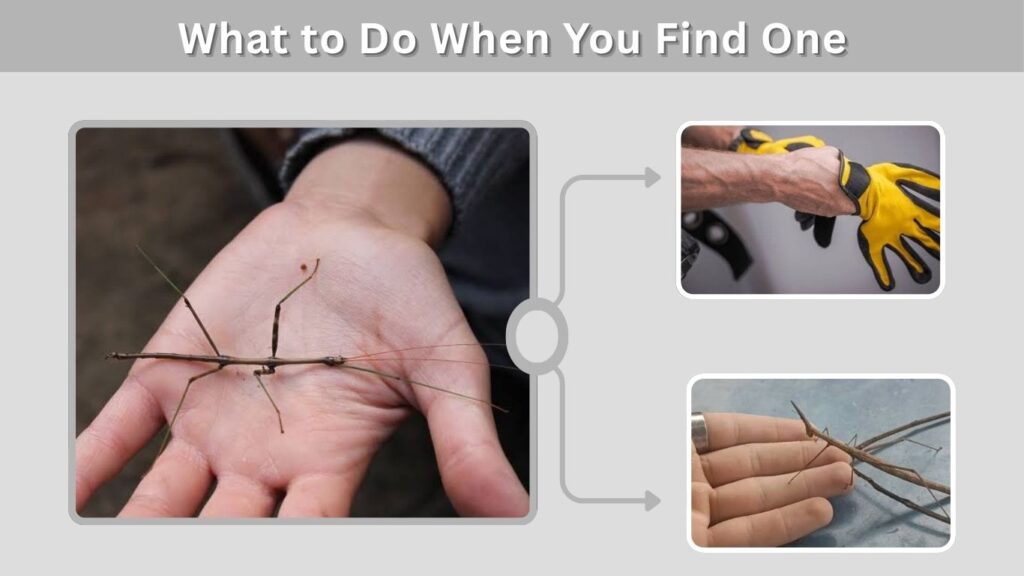
Leave a Florida walking stick alone when it is outdoors and not causing a problem. Do not poke it, pick it up, or position your face close to it.
To remove one from a building:
- Put on eye protection and gloves.
- Place a spacious container over the insect.
- Carefully slide stiff cardboard beneath it.
- Keep the container away from your face.
- Release it near vegetation away from doors and pets.
Do not grab its legs or spray it with household chemicals. Gentle relocation reduces the risk of defensive spraying and physical injury to the insect.
FAQs
Are there stick bugs in Florida?
Yes. Florida is home to the two-striped walking stick, Anisomorpha buprestoides. It is the state’s most commonly encountered stick insect and has been recorded across numerous counties, including parts of North, Central, and South Florida.
Is the Florida walking stick bug dangerous?
It is not aggressive and cannot sting. However, the two-striped walkingstick can spray a defensive chemical that causes intense eye irritation. Observe it from a safe distance and avoid touching, squeezing, or placing it near your face.
What is the black-and-yellow stick bug in Florida?
A dark walking stick with yellowish or pale stripes may be a color form of the two-striped walkingstick. Markings vary, and the Ocala National Forest also has a distinctive black-and-white form. A clear photograph and location help with identification.
Why are two Florida stick bugs attached?
The smaller insect riding on the larger one is usually a male mating with or guarding a female. Males are substantially smaller and slimmer, so a mating pair may initially look like one unusual insect with multiple bodies.
Can Florida stick bugs harm dogs?
They do not hunt or bite dogs, but their spray may seriously irritate a pet’s eyes. Keep pets from mouthing or pawing at them. Rinse exposed eyes gently and contact a veterinarian when redness, squinting, pain, or heavy tearing develops.