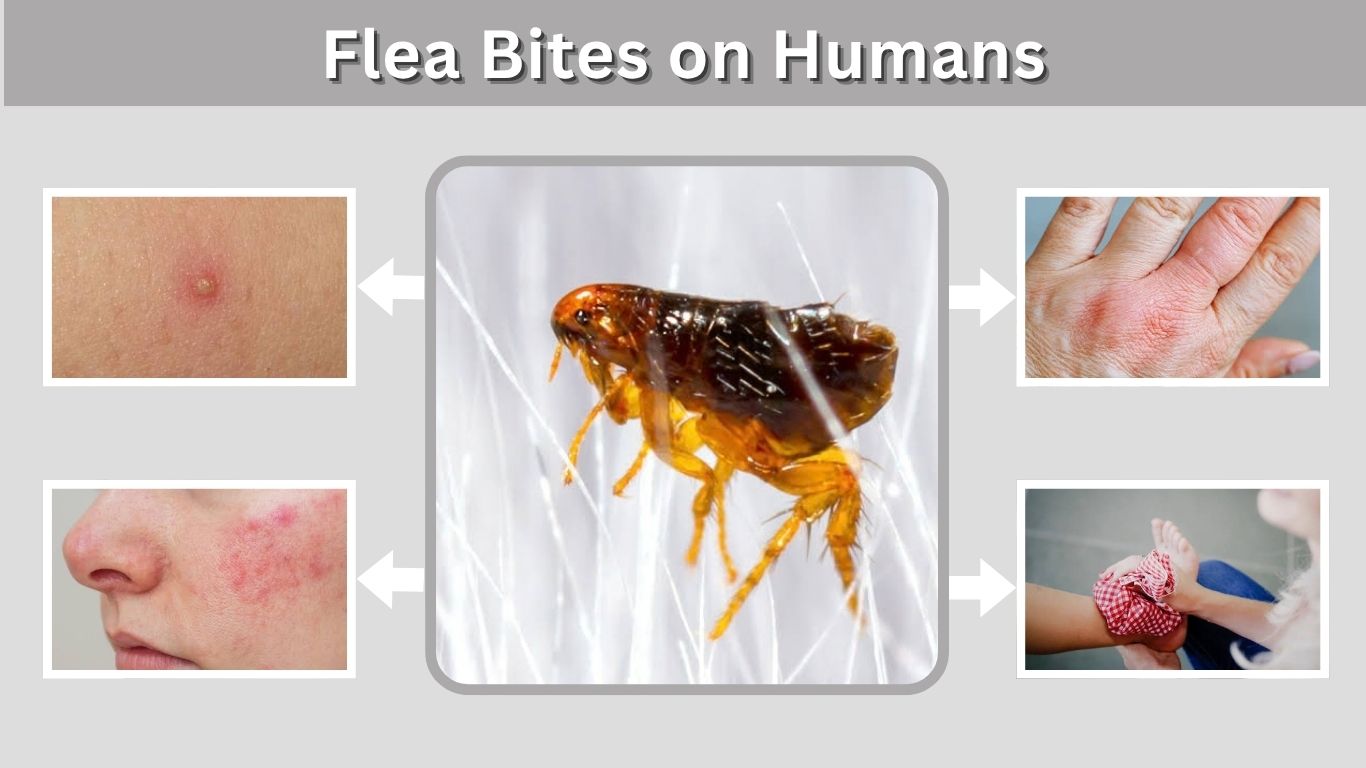
Flea bites on humans usually appear as small, itchy red bumps, often around the ankles, feet, and lower legs. Fleas commonly enter homes on pets or wildlife and may bite people when searching for a blood meal. While most bites cause temporary irritation, some people develop stronger allergic reactions or skin infections after scratching. Knowing what flea bites look like, how long they last, and how to treat the itching can make recovery easier while you eliminate fleas from your home.
What Do Flea Bites Look Like on Humans?
Flea bites can resemble bites from mosquitoes, bed bugs, and other insects, making identification difficult from appearance alone. They are generally small, raised, and intensely itchy. Their location and grouping can provide useful clues. People often notice several bites close together, particularly around areas of the body that are easily reached by fleas jumping from floors or carpets.
Common Appearance of Flea Bites
Typical flea bites may appear as:
- Small red or pink bumps
- A darker central puncture point
- Several bites grouped together
- Bites arranged in small clusters
- Redness surrounding each bump
- Mild swelling
- Intense itching
On darker skin tones, redness may be less obvious and bites may appear darker, purple, brown, or slightly raised compared with the surrounding skin.
Where Flea Bites Usually Appear
Flea bites commonly develop around the ankles, feet, calves, and lower legs because fleas usually live close to floors, rugs, animal bedding, and carpets.
Bites can also occur around the waist, arms, or other exposed areas, particularly when someone sits or lies near an infested location.
Flea Bites on Humans Symptoms
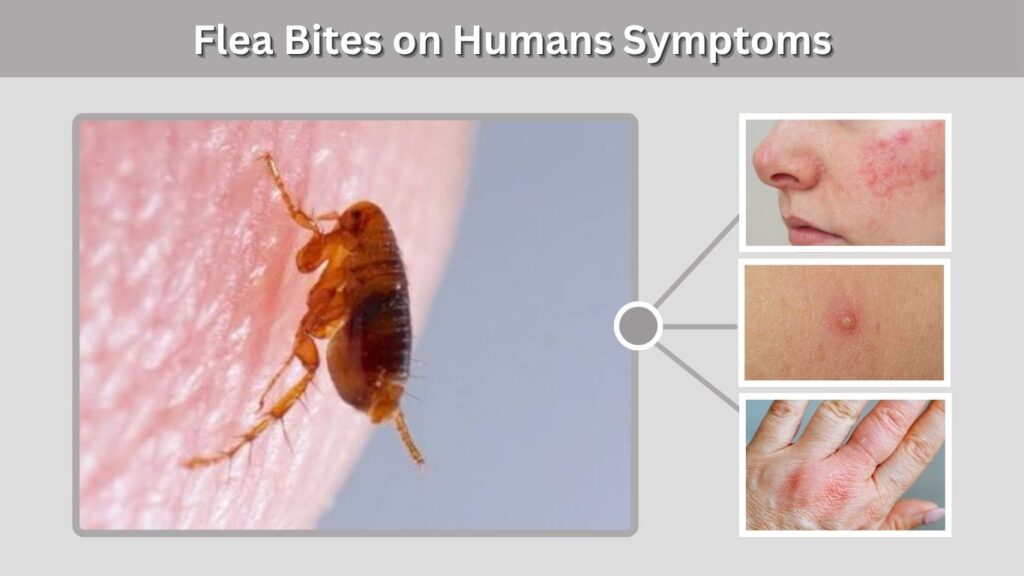
Most people develop only localized skin irritation after a flea bite. Symptoms can begin relatively quickly and may become more noticeable as the immune system responds to flea saliva. Individual reactions vary considerably, which means two people exposed to the same fleas may experience very different levels of itching, swelling, or redness.
Common Flea Bite Symptoms
Symptoms may include:
- Persistent itching
- Small raised bumps
- Red or discolored skin
- Mild swelling
- Tenderness around bites
- Irritated skin after scratching
Some people barely react, while others develop noticeable inflammation around each bite.
Why Do Flea Bites Itch?
Fleas inject saliva into the skin while feeding. The immune system recognizes substances in the saliva and produces an inflammatory response.
This reaction causes the characteristic itching and swelling.
Scratching provides temporary relief but can damage the skin, prolong irritation, and allow bacteria to enter through broken areas.
How to Treat Flea Bites on Humans
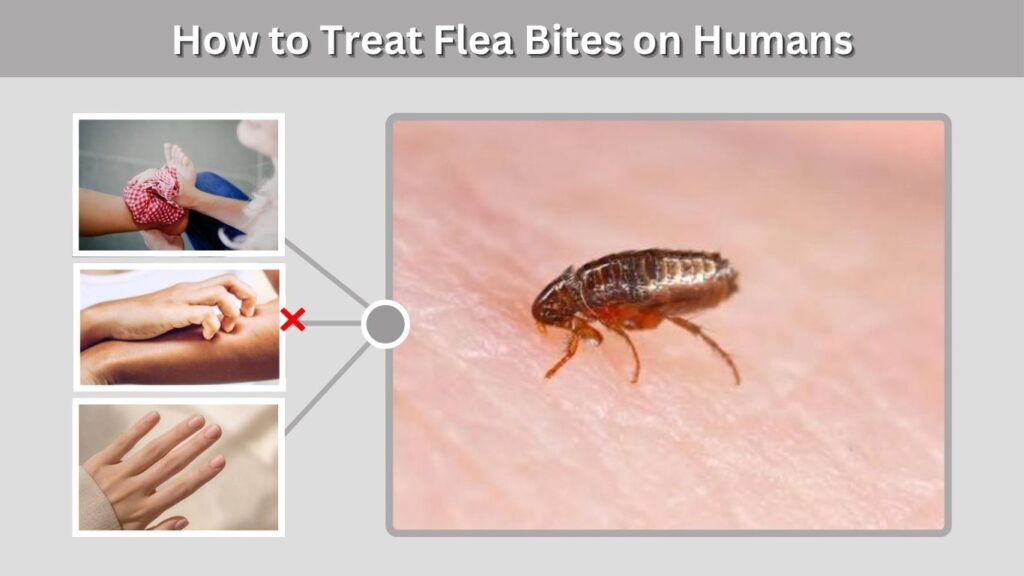
Most uncomplicated flea bites can be cared for at home. Treatment focuses on keeping the skin clean, reducing itching, and preventing scratching. Treating the bites alone will not prevent additional bites if fleas remain in the home, so controlling the infestation should happen at the same time.
Wash the Bite Area
Begin by gently washing affected skin with soap and water. Pat the area dry rather than rubbing it.
Cleaning can help remove dirt and reduce the risk of infection, particularly when a person has already been scratching.
Reduce Itching and Swelling
Simple approaches that may provide relief include:
- Applying a cool compress
- Avoiding scratching
- Using an appropriate anti-itch lotion
- Keeping fingernails short
- Wearing loose clothing over irritated areas
Over-the-counter hydrocortisone cream or an oral antihistamine may sometimes help itching, but follow the product directions and check with a healthcare professional or pharmacist when uncertain whether a medicine is appropriate for you.
Protect Scratched Skin
If scratching has broken the skin, keep the area clean and monitor it closely.
Avoid repeatedly picking at scabs because reopening the skin can slow healing. Increasing pain, warmth, swelling, discharge, or spreading redness may indicate infection and should be medically evaluated.
How Long Do Flea Bites Last on Humans?
The healing time for flea bites varies according to an individual’s skin sensitivity, the number of bites, and how much the affected areas are scratched. Mild bites may improve within a few days, while noticeable irritation can sometimes remain longer.
Healing Time for Flea Bites
The itching generally becomes less intense as the skin reaction settles.
Someone who develops a stronger allergic response may notice swelling and irritation for longer than a person with a mild reaction.
Repeated exposure can also make it seem as though old bites are not healing when new fleas are actually continuing to bite.
Allergic Reaction to Flea Bites on Humans
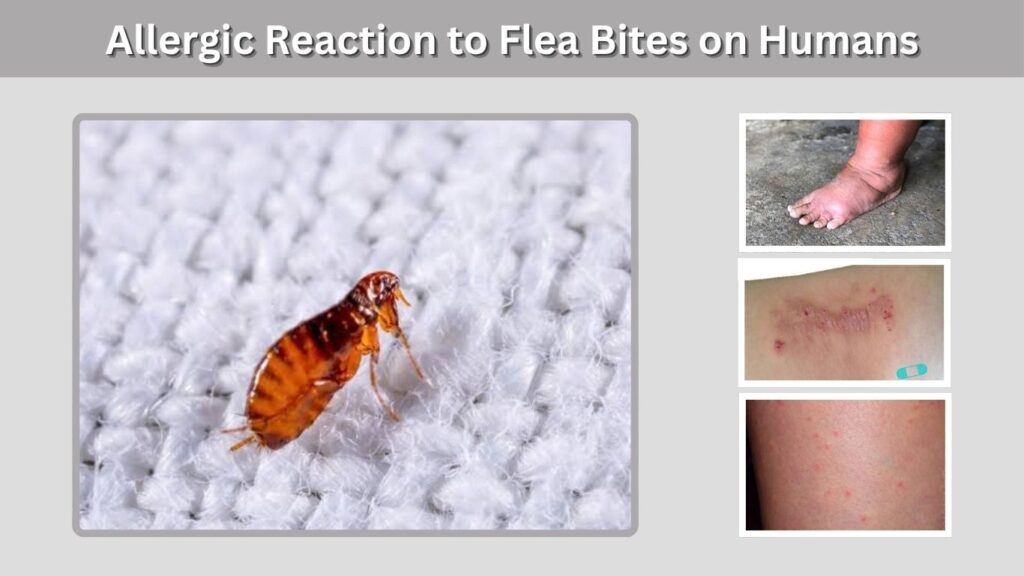
Some people are more sensitive to flea saliva and develop larger or more persistent skin reactions. This sensitivity is sometimes referred to as flea-bite hypersensitivity. Most reactions remain limited to the skin, but significant swelling or widespread symptoms deserve closer attention.
Signs of a Stronger Reaction
Possible signs include:
- Larger swollen areas
- Severe itching
- Widespread rash
- Blistering around bites
- Persistent redness
- Hives
Seek urgent medical care if a bite is followed by difficulty breathing, swelling of the face or throat, faintness, or another severe allergic symptom.
Infected Flea Bites
Flea bites themselves are often minor, but repeated scratching can introduce bacteria into damaged skin.
Signs that may suggest infection include increasing redness, warmth, tenderness, pus, worsening swelling, or fever. A healthcare professional should assess suspected skin infections.
Flea Bites vs Bed Bug Bites on Humans
Flea bites and bed bug bites can look very similar. Both may produce itchy red bumps in groups, so identifying the insect and investigating the environment is more reliable than judging the bites alone.
Location Can Provide Clues
Flea bites frequently affect the ankles and lower legs. Bed bug bites may appear on exposed areas such as the arms, shoulders, neck, face, and legs after sleeping.
However, these patterns are not absolute.
Fleas may bite other body areas, and bed bugs can bite the legs. Finding fleas, flea dirt, bed bugs, shed skins, or other physical signs provides stronger evidence.
Flea Bites vs Mosquito Bites
Mosquito bites are generally larger and puffier than typical flea bites, although individual reactions vary. Mosquitoes can bite almost any exposed part of the body, whereas flea bites are often concentrated lower on the legs.
Key Differences to Look For
When comparing the bites, consider:
- Flea bites are often small and clustered.
- Mosquito bites are frequently larger and isolated.
- Flea bites commonly affect ankles and lower legs.
- Mosquito bites can occur anywhere skin is exposed.
- Flea activity may be associated with pets or carpeting.
Because skin reactions overlap, bite appearance alone cannot always identify the insect responsible.
How to Prevent Flea Bites on Humans
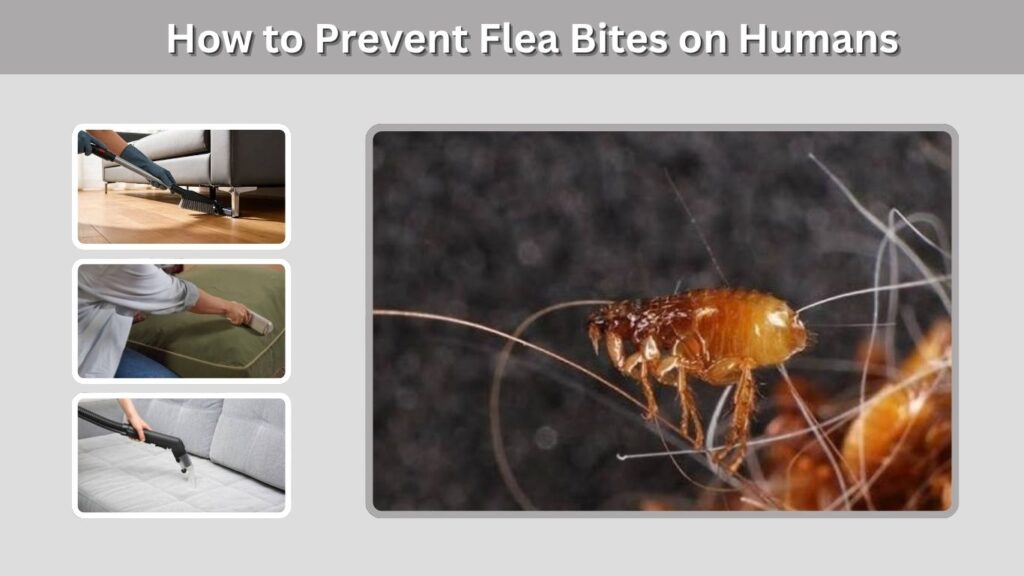
Stopping flea bites requires dealing with the source of the infestation. If fleas continue developing on pets or throughout the home, new bites may continue even while older ones are healing. A combination of pet care and environmental cleaning is generally more effective than treating only one part of the problem.
Reduce Fleas Around the Home
Useful steps include:
- Vacuum carpets and rugs frequently.
- Clean underneath furniture.
- Wash pet bedding regularly.
- Vacuum upholstered furniture.
- Empty vacuum contents promptly.
- Clean areas where pets sleep.
- Inspect pets for fleas and flea dirt.
- Address rodents or wildlife around the property.
Consistent cleaning helps remove flea eggs and larvae from places where immature fleas develop.
Protect Dogs and Cats
If you have pets, use flea-control treatments appropriate for their species, age, and weight.
A veterinarian can recommend suitable flea prevention. Never use a dog-only flea treatment on a cat unless the product specifically states that it is safe, because certain ingredients used in dog products can be dangerous to cats.
Why Flea Bites Keep Appearing
New bites may continue even after you begin treating an infestation because flea eggs, larvae, and pupae can remain hidden throughout the environment. Adult fleas may continue emerging over time.
Treat the Infestation, Not Just the Bites
Vacuuming, washing pet bedding, treating affected pets appropriately, and cleaning flea-prone areas should continue consistently.
If large numbers of fleas remain despite these measures, professional pest control may be necessary to identify hidden infestation areas and develop a broader treatment strategy.
When to See a Doctor for Flea Bites
Most flea bites improve without medical treatment, but some situations warrant professional evaluation. Pay particular attention to symptoms that become progressively worse rather than gradually improving.
Get Medical Advice If You Notice
Contact a healthcare professional if you develop:
- Increasing pain or swelling
- Spreading redness
- Pus or drainage
- Fever
- Severe or persistent itching
- Large blisters
- A widespread allergic rash
Emergency medical care is appropriate for difficulty breathing, facial or throat swelling, severe dizziness, or other signs of a serious allergic reaction.
FAQs
1. What do flea bites look like on humans?
Flea bites usually look like small, itchy, raised bumps that may appear red, pink, brown, or darker than the surrounding skin. Several bites often appear close together, especially around the ankles and lower legs.
2. How do you treat flea bites on humans?
Wash the skin gently, avoid scratching, and use a cool compress to reduce discomfort. Appropriate over-the-counter anti-itch products may also help. Seek medical advice if symptoms become severe or the skin appears infected.
3. How long do flea bites last on humans?
Mild flea bites may improve within several days, although itching or discoloration can sometimes remain longer. Continued new bites can indicate that fleas are still present in the environment.
4. Can flea bites cause an allergic reaction?
Yes. Some people develop larger swollen areas, severe itching, hives, or other skin reactions after flea bites. Serious breathing difficulty or facial swelling requires urgent medical attention.
5. How can I stop flea bites from happening again?
Eliminate the flea infestation by treating pets appropriately, washing pet bedding, vacuuming carpets and furniture, cleaning pet resting areas, and addressing possible wildlife or rodent sources around the property.