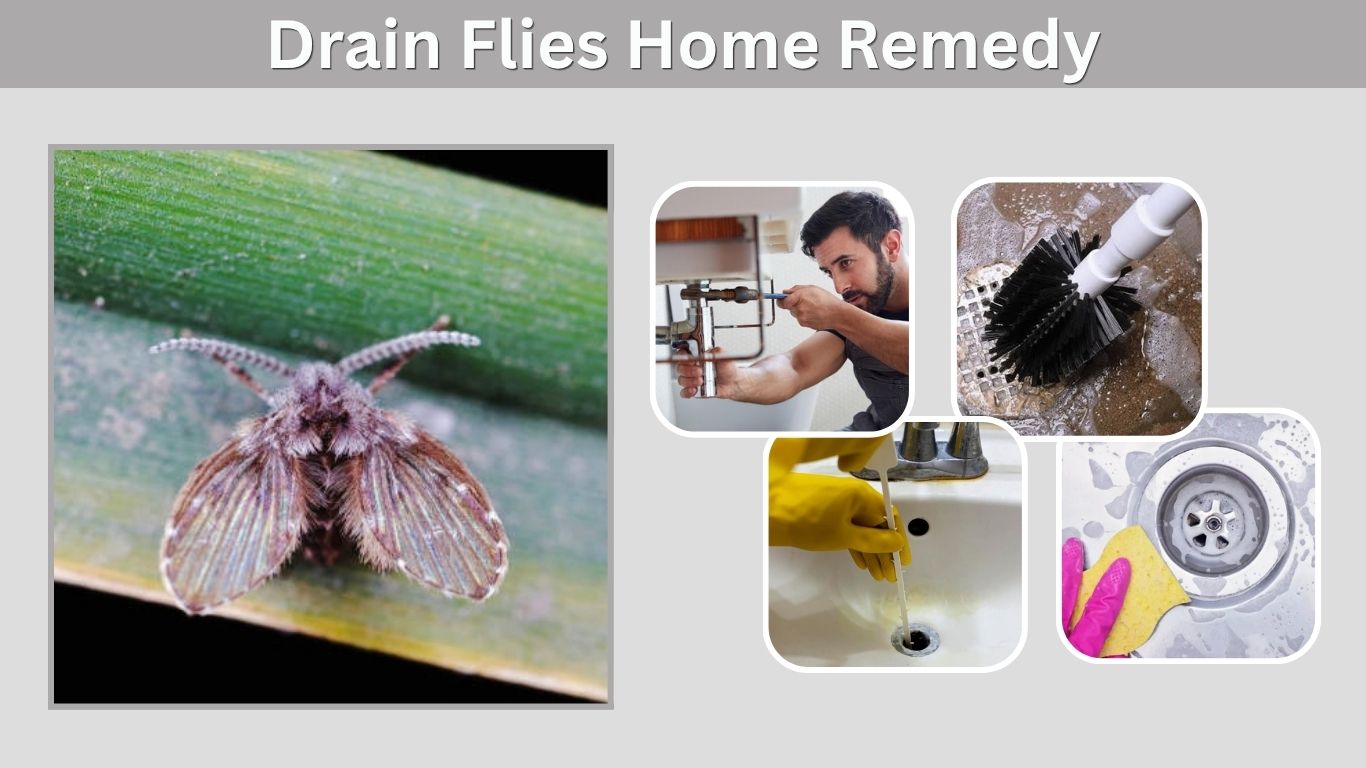
Drain flies are tiny, moth-like insects that commonly appear around bathroom sinks, kitchen drains, showers, and other damp areas. Although they usually do not bite, seeing dozens of them around the home can quickly become frustrating. The most effective drain flies home remedy is not simply killing the adult flies—it is removing the organic buildup where their larvae develop. Fortunately, several simple household methods can help clean breeding areas, reduce adult flies, and prevent the infestation from returning.
Why Are Drain Flies Appearing in Your Home?
Drain flies usually develop in moist locations containing decaying organic material. Inside a drain, a thin layer of slime made from food particles, soap residue, hair, grease, and microorganisms can provide an ideal breeding environment. Treating only the visible adult flies may provide temporary relief, but the problem often continues until this material is removed.
Organic Buildup Inside Drains
The most common reason for drain flies is organic buildup along the inside walls of a pipe. Female drain flies may lay their eggs in this damp material, and the larvae feed within it.
Kitchen sinks may develop buildup from grease and food particles, while bathroom drains commonly collect soap residue, hair, skin cells, and other debris.
Standing Water and Moisture
Drain flies thrive where moisture remains for long periods. Slow drains, leaking pipes, unused sinks, clogged floor drains, and continuously wet areas can all create favorable conditions.
A drain does not necessarily need to be completely blocked. Even a slowly draining pipe can retain enough moisture and organic matter for drain flies to reproduce.
Best Home Remedies for Drain Flies
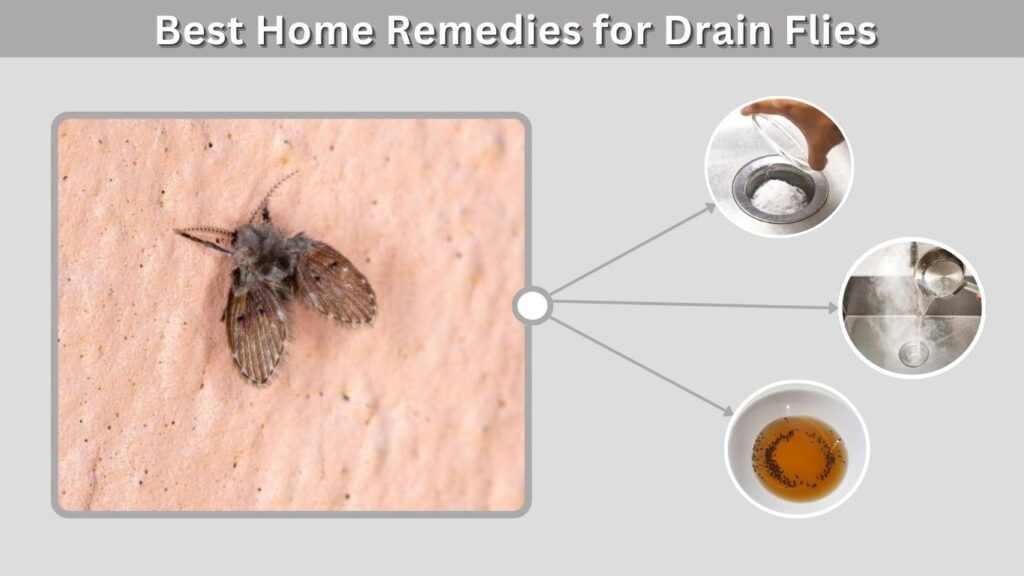
Several household treatments may help reduce drain fly activity, but cleaning the breeding material is the most important part of any treatment. Vinegar, baking soda, hot water, and simple traps can support the process. For larger infestations, these remedies usually work best when combined with thorough mechanical cleaning of the affected drain.
Baking Soda and Vinegar Remedy
Baking soda and vinegar are commonly used for household drain cleaning. The bubbling reaction may loosen some surface debris, although it should not be considered a substitute for physically scrubbing heavy organic buildup.
Try this method:
- Pour about 1/2 cup of baking soda into the drain.
- Follow it with approximately 1 cup of white vinegar.
- Allow the mixture to foam and sit for 30–60 minutes.
- Rinse the drain thoroughly with hot water.
- Repeat as needed while monitoring fly activity.
Never combine this treatment with bleach or other chemical drain cleaners.
Hot Water Treatment
Hot water can help soften greasy residue and wash loose organic material farther through the plumbing.
Pour hot water down the affected drain gradually once or twice daily after cleaning. Extremely boiling water may not be appropriate for every plumbing system, particularly certain plastic pipes, so very hot tap water is often the safer approach.
Hot water alone may reduce buildup, but it normally works better after the drain walls have been scrubbed.
Homemade Vinegar Trap
A vinegar trap can catch some adult flies while you work on eliminating their breeding site.
You can make one using:
- A small bowl or cup
- Apple cider vinegar
- A few drops of dish soap
- Plastic wrap if desired
Place the trap near the affected drain. The vinegar attracts small flies, while dish soap reduces the liquid’s surface tension so insects that land on it may become trapped.
Remember that trapping adults does not remove larvae living inside the drain.
How to Get Rid of Drain Flies With Home Remedies
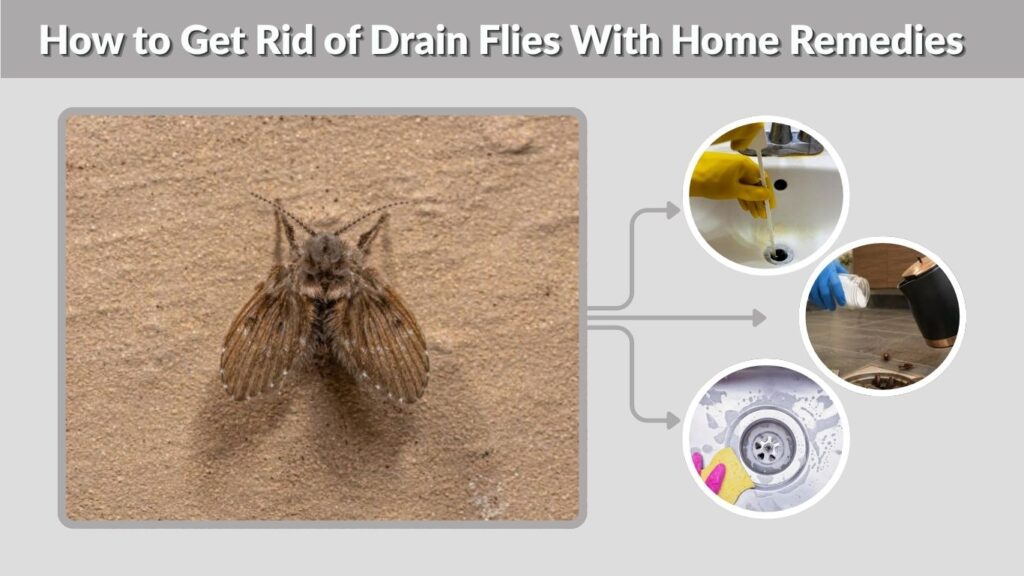
Getting lasting control requires more than pouring a household ingredient into the sink. The objective is to locate the breeding drain, physically remove the slime where larvae are developing, and continue cleaning long enough to interrupt their life cycle. Combining cleaning with adult trapping generally produces much better results than relying on a single homemade treatment.
Step 1: Identify the Problem Drain
Determine which drain is producing the flies before beginning treatment. At night, dry the sink or shower area and place clear tape partially over the drain opening without completely sealing it.
Check the tape the following morning. Drain flies emerging from the drain may become stuck to it.
You may need to test several drains if flies are appearing throughout the room.
Step 2: Scrub Inside the Drain
This is one of the most important steps. Remove the drain cover if practical and use a long drain brush or pipe-cleaning brush to scrub the inner walls.
Pay particular attention to areas close to the opening, underneath the drain cover, and around accessible plumbing surfaces where slime has accumulated.
Running water alone often passes through the center of the pipe without removing material attached to its walls.
Step 3: Flush Away Loosened Debris
After scrubbing, flush the drain thoroughly with hot water. This helps remove organic material loosened by the brush.
A baking soda and vinegar treatment can also be used afterward if desired. Continue cleaning daily for several days if flies remain active.
Step 4: Control the Adult Flies
Adult drain flies usually live only a relatively short time, so removing the breeding material eventually causes their numbers to decline.
During treatment, vinegar traps or sticky traps placed near—but not inside—the drain can help capture remaining adults. Wipe down nearby surfaces and keep sinks dry whenever possible.
Home Remedy for Drain Flies in the Bathroom
Bathrooms provide drain flies with several possible breeding locations, including shower drains, sink drains, floor drains, and plumbing areas affected by leaks. Because soap residue and hair easily accumulate in these locations, treating only the drain where adults are visible may occasionally miss the actual source. Check every consistently damp area in the bathroom.
Clean Shower and Sink Drains Thoroughly
Remove visible hair and debris before treating bathroom drains. Scrub underneath drain covers and inside accessible pipe walls because these areas can hold substantial amounts of organic slime.
After scrubbing, flush with hot water. Keeping the shower and sink relatively dry between uses can make the area less favorable for continuing development.
Check Overflow Openings
Bathroom sinks often contain overflow openings that are easy to overlook. Organic material can accumulate inside the overflow passage, potentially giving drain flies another moist breeding location.
Clean accessible overflow openings carefully using an appropriate narrow brush. Avoid forcing objects deeply into plumbing components where they could become lodged.
Drain Flies in Kitchen Sink: Natural Remedy
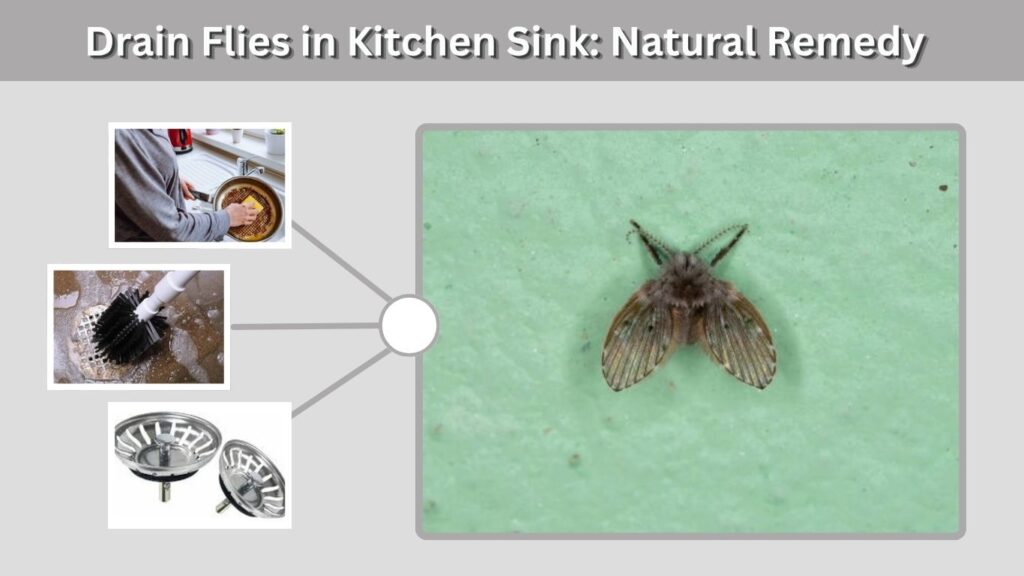
Kitchen drains can develop considerable organic buildup because small amounts of grease, food residue, sauces, and other materials regularly enter the sink. Drain flies may establish themselves when this debris remains along moist pipe surfaces. Eliminating the infestation requires reducing food residue as well as cleaning areas that water normally passes without fully washing.
Remove Food and Grease Buildup
Start by removing accessible food debris from the drain opening, stopper, strainer, and surrounding sink surfaces.
Then:
- Scrub the inside of the drain with a suitable drain brush.
- Rinse away loosened material with hot water.
- Clean sink strainers and stoppers separately.
- Avoid pouring cooking grease down the drain.
- Keep food scraps out of the plumbing whenever possible.
If the sink has a garbage disposal, follow its manufacturer’s cleaning instructions rather than putting hands or cleaning tools into the disposal chamber.
Keep the Kitchen Drain Cleaner
After the infestation has been reduced, regular cleaning can help prevent new buildup. Rinse food residue from the sink promptly, empty strainers frequently, and address slow drainage before large amounts of organic material accumulate.
Do Baking Soda and Vinegar Kill Drain Flies?
Baking soda and vinegar are popular drain fly remedies, but their effectiveness is sometimes overstated. The mixture creates bubbling that can loosen some surface debris, yet it may not penetrate or remove a thick layer of organic slime attached to drain walls. That slime is often exactly where drain fly eggs and larvae are developing.
Why Cleaning Matters More Than the Reaction
The main goal is to eliminate the larval food source and breeding habitat. Mechanical scrubbing generally does this more directly than relying on bubbling alone.
Baking soda and vinegar can therefore be considered a supporting cleaning method rather than the complete solution. If flies continue appearing after repeated treatments, inspect and scrub the drain more thoroughly.
Avoid Mixing Household Chemicals
Never mix vinegar with chlorine bleach. The combination can release dangerous chlorine gas. Similarly, avoid combining homemade remedies with commercial drain cleaners unless the product label specifically states that doing so is safe.
If a chemical drain product has recently been used, follow its label directions before adding anything else to the drain.
What Home Remedies Usually Do Not Fix the Problem?
Some remedies kill or trap visible adult flies while leaving the breeding source untouched. This can make the infestation appear better for a day or two before another generation begins appearing. Understanding this distinction helps prevent endless cycles of spraying, trapping, and pouring household ingredients into a drain without removing the underlying buildup.
Killing Only the Adult Flies
Swatting, vacuuming, or trapping adults can reduce the number flying around the home, but larvae may continue developing inside the drain.
The infestation can therefore return even after most visible flies disappear.
Pouring One Treatment Down the Drain
A single vinegar, baking soda, or hot-water treatment may not remove months of accumulated residue.
Persistent infestations usually require repeated cleaning, especially when several drains or plumbing fixtures provide suitable breeding areas.
How to Prevent Drain Flies From Coming Back
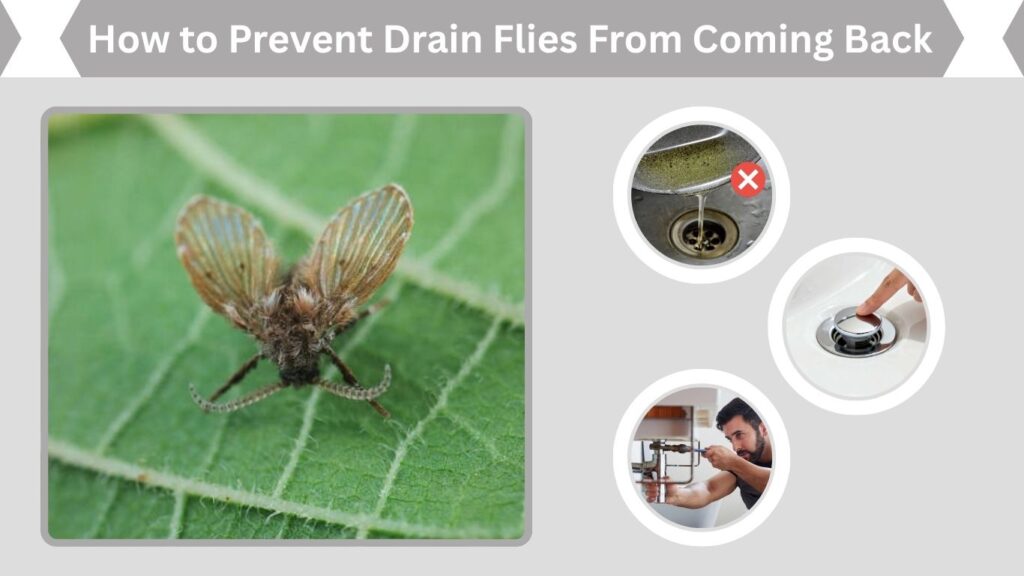
Drain fly prevention mainly involves controlling moisture and organic buildup. Once an infestation disappears, keeping drains clean is usually easier than treating another established population. Pay special attention to drains that are rarely used, slow-draining fixtures, floor drains, and areas with plumbing leaks, because these locations may remain damp enough to support drain flies unnoticed.
Simple Prevention Tips
Use these habits to reduce future problems:
- Clean drain openings and stoppers regularly.
- Remove hair and food debris before buildup becomes heavy.
- Avoid pouring grease into kitchen drains.
- Fix leaking faucets and plumbing connections.
- Address slow or partially clogged drains.
- Run water periodically through infrequently used drains.
- Keep sink and shower surfaces dry when practical.
- Clean floor drains and other overlooked plumbing fixtures.
Regular maintenance reduces both the food and moisture drain fly larvae need.
Watch for Early Signs
Seeing one or two drain flies does not always indicate a major infestation. However, repeatedly finding them around the same drain can indicate an active breeding site.
Early cleaning may prevent a small population from turning into a persistent household problem.
When Home Remedies Are Not Enough
Most minor drain fly problems can improve after thorough cleaning, but persistent activity may indicate a breeding source somewhere other than the visible sink or shower drain. Damaged plumbing, sewage leaks, hidden standing water, floor drains, or contaminated areas beneath fixtures can occasionally support larger infestations.
Consider Professional Help for Persistent Infestations
If drain flies continue appearing after one to two weeks of consistent cleaning, inspect other moisture sources around the property.
A plumber may be needed when there are signs of damaged plumbing, sewage odors, recurring backups, or persistent slow drainage. Pest-management professionals can also help determine whether the insects are actually drain flies and locate less obvious breeding areas.
FAQs
1. What is the best home remedy for drain flies?
The most effective approach is to physically scrub organic slime from inside the affected drain and then flush away the loosened material with hot water. Baking soda, vinegar, and adult traps can support the treatment but should not replace thorough cleaning.
2. Does vinegar kill drain flies?
Vinegar traps may capture adult drain flies, and vinegar can assist with light drain cleaning. However, vinegar alone may not remove the thick organic film where eggs and larvae develop, so the drain should also be scrubbed.
3. How long does it take to get rid of drain flies?
A small infestation may noticeably decline within several days after the breeding material is removed. Some adults may continue appearing for a short period, so cleaning should continue until activity has stopped.
4. Will baking soda and vinegar get rid of drain flies permanently?
They may help loosen debris, but they do not guarantee permanent control. Drain flies can return if organic buildup, standing water, or another breeding source remains inside the plumbing.
5. Why do drain flies keep coming back?
Recurring drain flies usually indicate that some breeding material remains or that another moist location has not been found. Check nearby drains, overflow openings, floor drains, plumbing leaks, slow drains, and other areas containing standing water or decaying organic material.