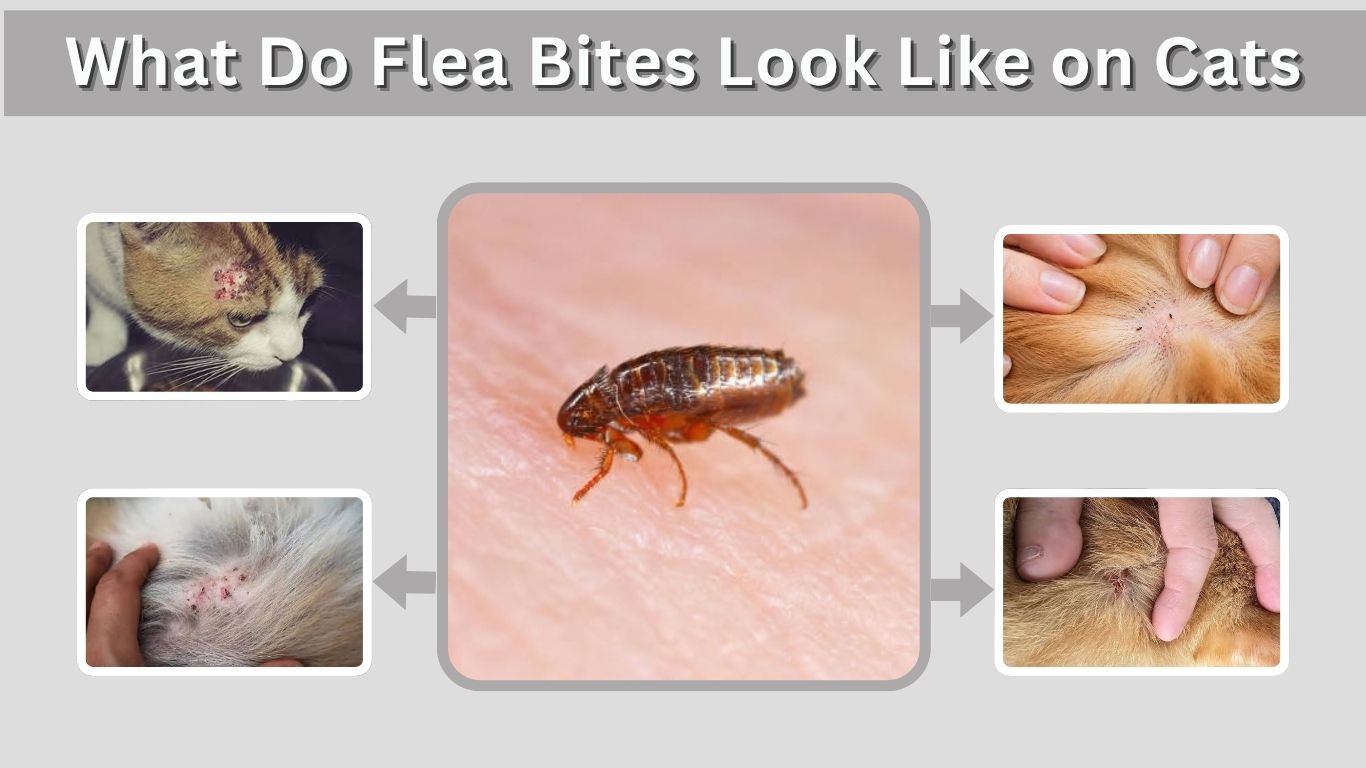
What do flea bites look like on cats? Individual bites can be difficult to see beneath a cat’s fur, but they may cause small raised bumps, crusts, redness, itching, or irritated skin. Cats that are allergic to flea saliva can develop much stronger reactions, including intense scratching, hair loss, and widespread crusty spots. Commonly affected areas include the neck, back, abdomen, thighs, and base of the tail. Recognizing flea dirt and changes in your cat’s behavior can also help confirm an infestation.
What Do Flea Bites Look Like on a Cat?
Flea bites themselves are tiny and frequently hidden by fur. In many cats, owners are more likely to notice the skin’s reaction to flea saliva than the actual puncture. Affected cats may develop small solid bumps, crusts, excessive itching, or self-inflicted scratches. Cats with flea allergy dermatitis can react severely even when relatively few fleas are present.
Common Signs of Flea Bites
When you separate your cat’s fur and examine the skin, possible signs include:
- Small raised bumps
- Reddish or irritated skin
- Tiny crusts or scabs
- Excessive scratching
- Frequent biting or chewing at the coat
- Hair thinning or bald patches
- Small dark specks of flea dirt
- Inflamed areas caused by repeated grooming
The small crusted bumps often seen in flea-allergic cats are commonly called miliary dermatitis. Merck notes that these bumps are an allergic skin reaction rather than simply individual flea punctures.
What Do Fresh Flea Bites Look Like?
A fresh flea bite may cause very little visible change at first. You might see a tiny raised area or mild redness after parting the fur.
However, a sensitive cat can quickly develop itching and inflammation. Scratching may then transform a minor lesion into a larger scab or irritated patch, making it difficult to determine exactly where the original flea bite occurred.
Are Flea Bites Easy to See?
Usually not. Cats have dense coats, and fleas themselves move rapidly through the fur. Cats are also efficient groomers and may remove evidence of fleas before owners find them.
For this reason, flea dirt, itching patterns, and skin lesions can sometimes provide stronger clues than finding an individual bite.
Where Do Flea Bites Usually Appear on Cats?
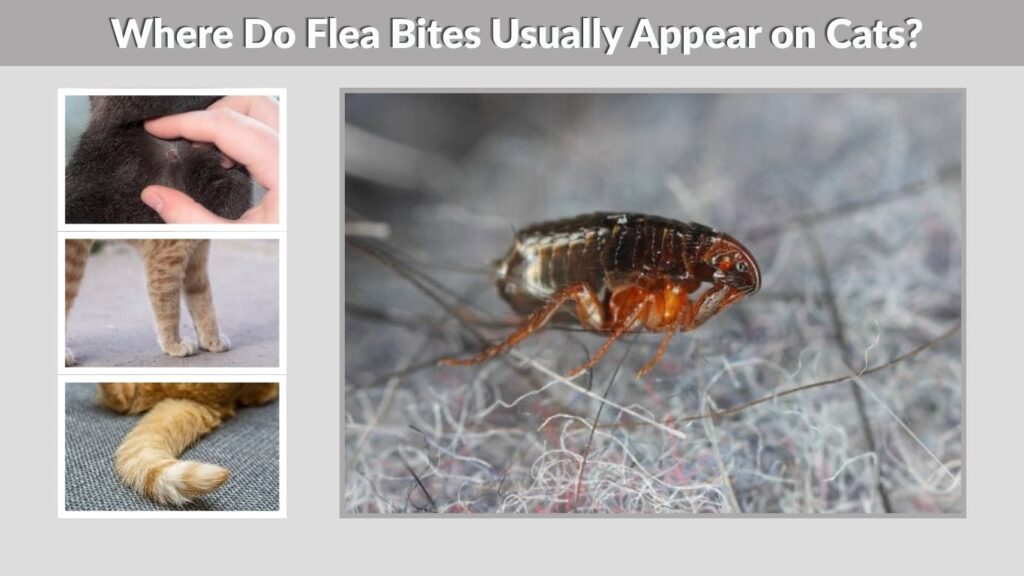
Although fleas can feed almost anywhere on a cat, certain areas are frequently associated with flea-related irritation. Locations that cats have difficulty grooming effectively can be particularly attractive to fleas. Skin damage may also spread beyond the original bite sites when an allergic cat scratches, licks, and chews itself repeatedly.
Common Areas to Check
Pay particular attention to the:
- Back of the neck
- Lower back
- Base of the tail
- Abdomen
- Inner thighs
- Groin
- Head
- Back and sides
Cornell notes that fleas commonly bite around the back of the neck and top of the tail, while flea-allergic cats may show lesions on the lower back, thighs, abdomen, head, and neck.
Flea Bites Near the Tail
The area around the tail base is an especially useful place to inspect. Cats may repeatedly lick or bite this region when fleas are present.
Over time, constant grooming can create thinning hair, bald patches, scabs, and inflamed skin. Merck identifies the back and tailhead among the common locations for flea allergy dermatitis in cats.
Flea Bites on a Cat’s Belly
The abdomen may show redness, small bumps, crusts, or areas where fur has been licked away. Because belly fur can be thinner, skin changes may be easier to notice there.
However, similar belly lesions can result from environmental allergies, food reactions, mites, fungal infections, or other skin diseases, so appearance alone cannot confirm fleas.
What Does Flea Dirt Look Like on Cats?
Flea dirt is often one of the strongest clues that a cat has fleas. It consists largely of flea fecal material containing digested blood. Instead of looking like a skin lesion, flea dirt appears as tiny dark particles scattered through the coat and may resemble black pepper or very small pieces of soil.
How to Check for Flea Dirt
You can inspect your cat by:
- Using a fine-toothed flea comb
- Checking around the tail base and lower back
- Examining the belly and neck
- Looking for reddish-black or black particles
- Placing suspicious particles on damp white tissue
Flea excrement can produce a reddish-brown stain when wet because it contains digested blood.
Can a Cat Have Fleas Without Visible Flea Dirt?
Yes. A cat may have only a small number of fleas, or frequent grooming may remove many fleas and their debris.
This is particularly important in cats with flea allergy dermatitis because only limited flea exposure may produce significant itching and skin disease.
Can You See Adult Fleas?
Adult cat fleas are small, dark, wingless insects that move rapidly through fur. Cornell notes that fleas may sometimes be found on a cat’s belly, back, or near the tail.
A flea comb can make them easier to detect.
Flea Allergy Dermatitis in Cats
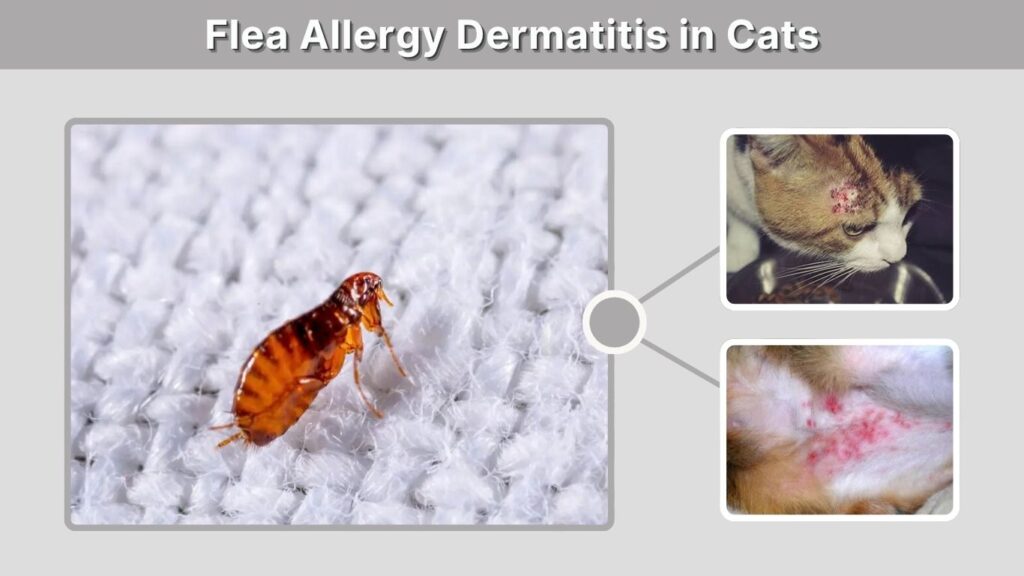
Some cats develop an allergic reaction to proteins in flea saliva known as flea allergy dermatitis (FAD). These cats may show considerably more skin damage than would be expected from the number of fleas present. FAD can cause intense itching, crusted bumps, overgrooming, hair loss, and lesions affecting several areas of the body.
What Does Flea Allergy Look Like?
Common signs may include:
- Very intense itching
- Numerous crusty bumps
- Scabs
- Hair loss from overgrooming
- Scratches around the head and neck
- Inflamed patches
- Lesions around the tail base
- Skin damage on the abdomen or thighs
Merck describes crusted papules, or miliary dermatitis, as a common presentation of flea allergy in cats. Other patterns include head and neck itching, self-induced hair loss, and eosinophilic skin lesions.
Why Can a Few Fleas Cause Severe Symptoms?
An allergic cat is reacting to flea saliva rather than simply to the physical damage caused by each bite.
Consequently, a cat with relatively few fleas may look much worse than another cat with a larger infestation but no flea allergy. Cornell notes that highly sensitive cats can experience disproportionate skin damage from limited flea exposure.
Can Flea Bites Become Infected?
Repeated scratching can damage the skin and create wounds that are vulnerable to secondary infection. Cats with persistent itching may scratch deeply because their claws are sharp.
If lesions become moist, increasingly swollen, painful, foul-smelling, or produce discharge, veterinary examination is appropriate.
Flea Bites vs. Other Cat Skin Problems
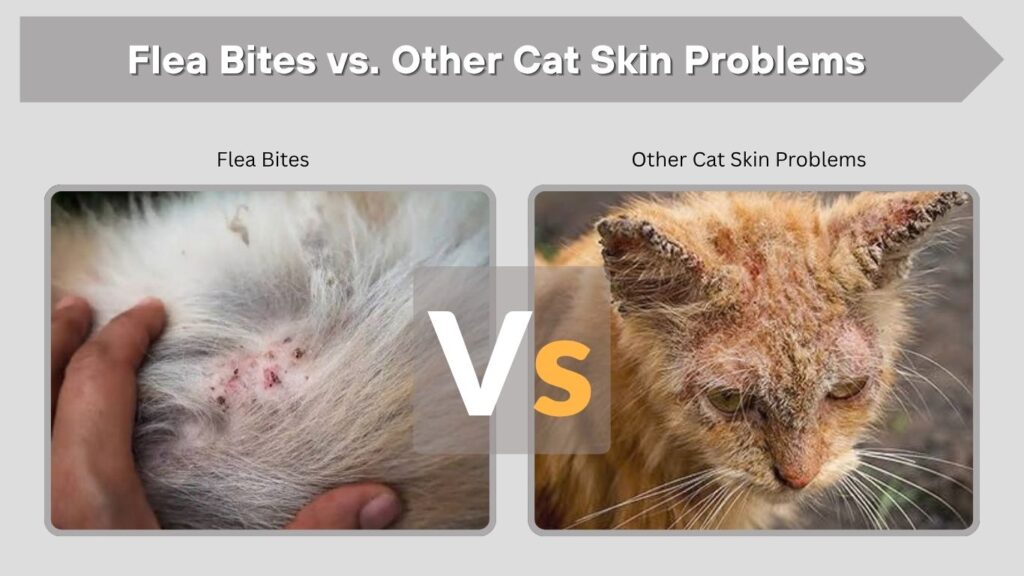
Not every crust, bald patch, or itchy area is caused by fleas. Several feline skin conditions produce remarkably similar signs. Veterinarians therefore consider the distribution of lesions, presence of fleas or flea dirt, preventive history, and response to flea control before determining whether flea allergy is responsible.
Fleas vs. Other Parasites
Mites and other external parasites can also cause severe itching, scabs, and hair loss. Some infestations are difficult to identify without veterinary examination.
Fleas vs. Ringworm
Ringworm is a fungal infection rather than an insect problem. It can cause areas of hair loss, scaling, or broken hairs that may sometimes resemble skin damage caused by scratching.
Fleas vs. Other Allergies
Food allergies and environmental allergies can also produce itching and excessive grooming. Merck specifically lists environmental allergy, food reactions, other parasites, ringworm, and secondary infections among conditions that can resemble flea allergy dermatitis.
How to Treat Flea Bites on Cats
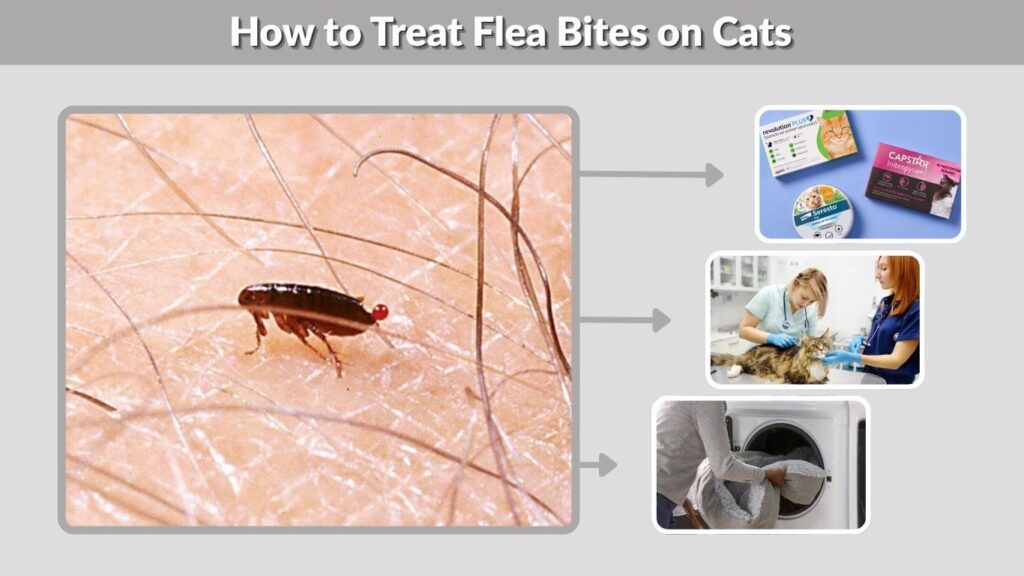
Treating visible skin lesions alone will not resolve flea bites if fleas remain on the animal or in its surroundings. Effective control requires eliminating existing fleas, preventing reinfestation, and managing any secondary skin disease. Because some flea-control chemicals can be dangerous to cats, products should be selected specifically for feline use and applied according to veterinary guidance.
Treat the Cat and Environment
Effective management generally involves:
- Using a veterinarian-recommended cat flea preventive
- Treating other pets in the household appropriately
- Washing pet bedding
- Vacuuming carpets and upholstered furniture
- Cleaning areas where pets sleep
- Maintaining ongoing flea prevention
- Treating secondary skin disease when necessary
Merck recommends controlling the infestation on the affected pet, other household animals, and within the environment.
Never Use Dog Flea Products on a Cat
Do not assume a flea treatment designed for dogs is safe for cats. Some insecticides used in canine flea products can be toxic to cats.
Always verify that the specific product is labeled for cats and suitable for your cat’s age and weight.
When to Contact a Veterinarian
Veterinary attention is particularly important if your cat has severe itching, widespread hair loss, open wounds, pus, weakness, pale gums, or continuing symptoms despite flea control.
Heavy infestations can be especially dangerous for kittens because significant blood loss can contribute to anemia.
FAQs
Flea bites on cats are often difficult to identify because the actual bite is hidden beneath fur and much of the visible damage results from itching or an allergic reaction. Checking for flea dirt, observing where the cat is scratching, and using a flea comb provide useful clues alongside the condition of the skin.
1. What do flea bites look like on cats?
They may cause tiny bumps, redness, crusts, scabs, and irritated skin. Cats with flea allergy dermatitis often develop numerous crusty bumps and hair loss rather than clearly visible individual bites.
2. What do cat flea bites feel like?
They can be extremely itchy, particularly in flea-allergic cats. Affected cats may scratch, lick, chew, or groom themselves excessively.
3. Can my cat have flea bites without seeing fleas?
Yes. Cats frequently groom fleas away, and flea-allergic cats can react strongly to only a few bites. Flea dirt or characteristic skin problems may be present even when no adult flea is immediately visible.
4. Where should I look for fleas on my cat?
Check the neck, back, base of the tail, belly, and thighs. Use a flea comb and look for both moving fleas and dark flea dirt.
5. How do I know if my cat’s skin problem is caused by fleas?
Finding fleas or flea dirt together with itching and typical lesion patterns strongly supports flea involvement. However, mites, ringworm, food allergies, environmental allergies, and infections can look similar, so persistent skin problems should be evaluated by a veterinarian.