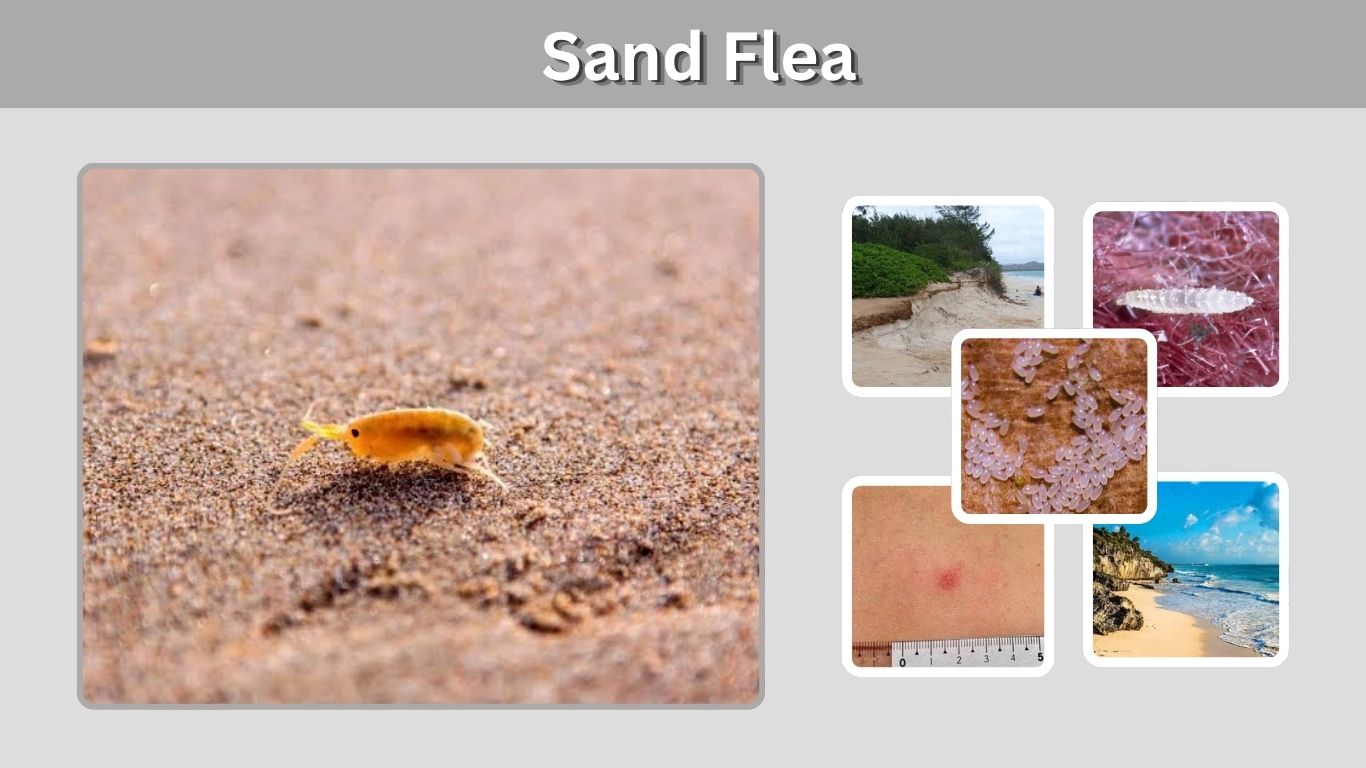
The term sand flea can describe very different creatures, which often causes confusion among beachgoers, anglers, and travelers. On many U.S. beaches, a sand flea is actually a harmless mole crab that burrows into wet sand and makes excellent fishing bait. In tropical regions, however, the name may refer to the chigoe flea, Tunga penetrans, a true parasitic flea whose female can penetrate human skin. Understanding their appearance, size, habitat, bites, eggs, and behavior helps distinguish these completely different animals.
What Is a Sand Flea?
“Sand flea” is a common name rather than one precise scientific identification. Along beaches in places such as Florida, anglers usually use the term for mole crabs in the genus Emerita. In medical discussions, sand flea may instead mean the chigoe flea, which causes tungiasis by embedding in human or animal skin. Knowing the context is therefore essential.
Sand Flea vs Mole Crab
The sand fleas collected by surf fishermen are actually mole crabs, not fleas. They are small crustaceans with oval bodies that burrow backward into wet beach sand.
Florida wildlife authorities describe mole crabs as light brownish-gray animals with five pairs of appendages, a short digging tail, and feathery antennae used for filter feeding. They live mainly in the swash zone where waves repeatedly cover the beach.
The Parasitic Chigoe Sand Flea
The chigoe flea, Tunga penetrans, is a completely different animal. It is a true flea and parasite.
After mating, a female can penetrate the outer layers of a person’s skin, usually around the feet. She remains embedded while feeding and developing eggs. This infestation is known as tungiasis and occurs mainly in tropical and subtropical regions.
What Does a Sand Flea Look Like?
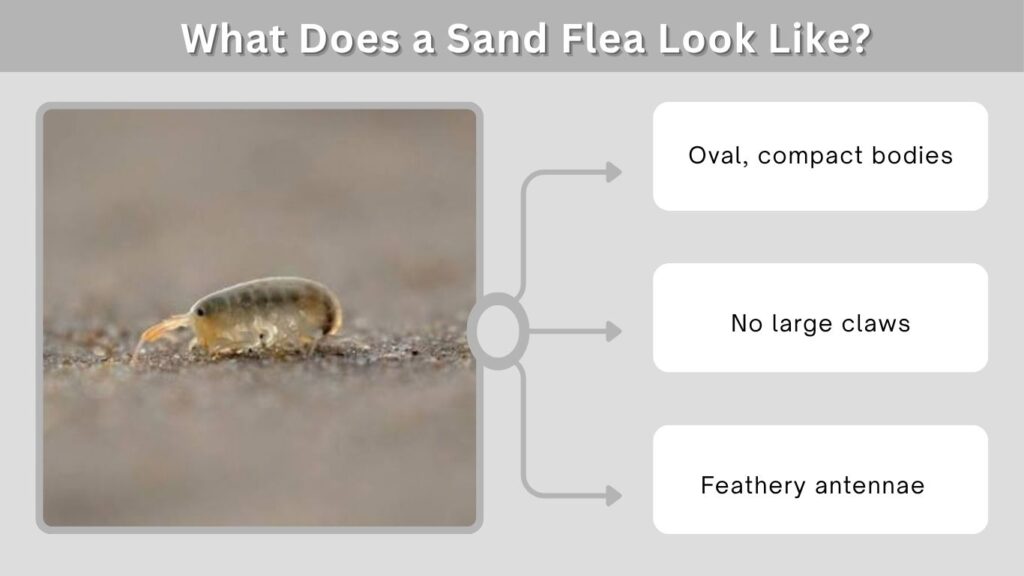
Sand flea appearance depends entirely on which animal is being discussed. A beach mole crab can be easily visible when uncovered from wet sand, whereas an adult chigoe flea is extremely small before entering the skin. Once embedded, the female chigoe flea expands considerably and creates a characteristic skin lesion rather than looking like a typical exposed flea.
Mole Crab Identification
Beach sand fleas or mole crabs typically have:
- Oval, compact bodies
- Light gray or brownish-gray coloration
- No large claws
- Several short legs tucked beneath the body
- Feathery antennae
- A short triangular tail
- A smooth shell adapted for burrowing
- Fast backward digging behavior
Mole crabs can grow up to about 2 inches long, although many encountered on beaches are much smaller.
How Big Is a Chigoe Sand Flea?
Before entering the skin, Tunga penetrans is one of the world’s smallest flea species. The embedded female then expands dramatically as eggs develop.
CDC reports that an engorged female can expand to around 1 centimeter while embedded. Only a small portion of the flea remains exposed through the skin.
Where Do Sand Fleas Live?
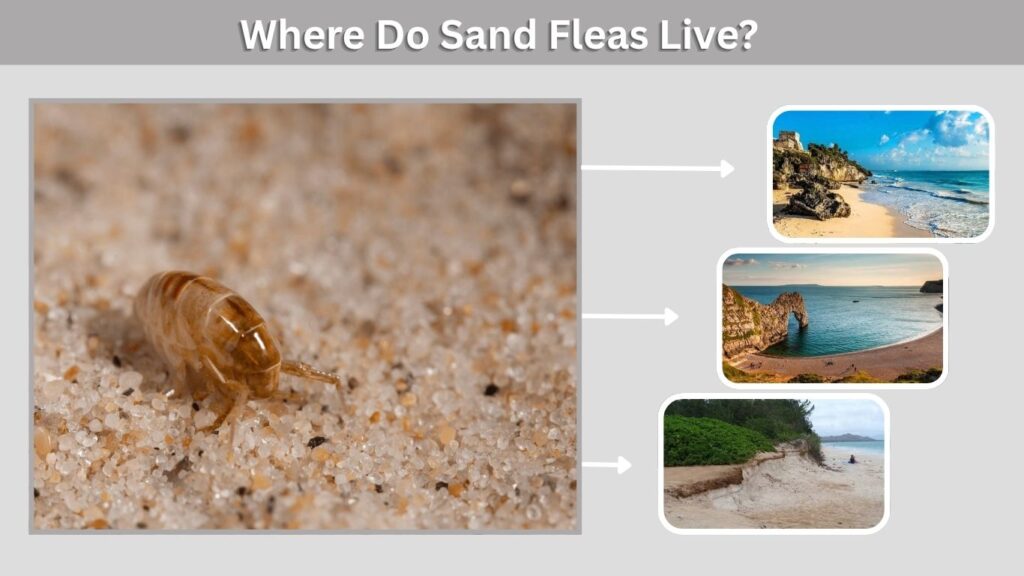
Mole crabs and chigoe fleas occupy very different habitats. Mole crabs live naturally along ocean beaches, while parasitic chigoe fleas develop in dry, loose soil or sand in certain tropical and subtropical environments. Assuming every creature called a “sand flea” lives and behaves the same way can therefore lead to unnecessary concern about ordinary beach wildlife.
Beach Sand Flea Habitat
Mole crabs live in the swash zone, where waves move up and down sandy beaches. They rapidly burrow tail-first whenever the water recedes.
Their antennae remain positioned to filter plankton and organic material from seawater. This constant movement with the waves makes them familiar to surf anglers searching for natural bait.
Where Chigoe Fleas Occur
Chigoe fleas occur mainly in tropical regions of South America, the Caribbean, and sub-Saharan Africa. They can develop in loose sand, dry soil, dusty floors, animal shelters, and similar environments.
WHO notes that human infections frequently involve the feet because contact with contaminated ground gives fleas easy access to exposed skin.
Do Sand Fleas Bite Humans?
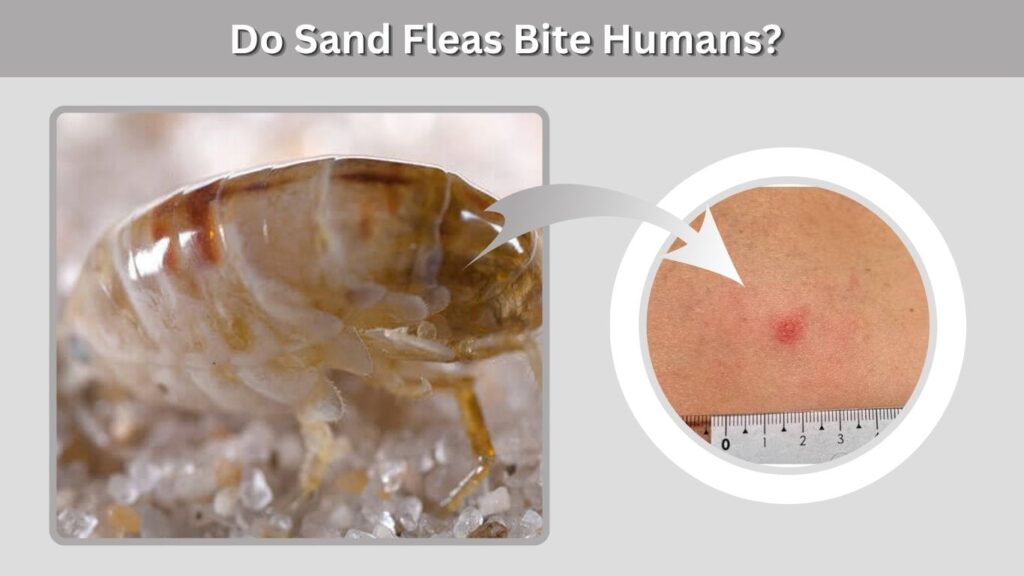
Whether a sand flea bites depends on which “sand flea” you mean. Mole crabs collected from U.S. beaches are harmless to humans. They do not possess claws capable of pinching people and do not feed on blood. Chigoe fleas, however, are parasites, and fertilized females can penetrate human skin and cause an inflammatory condition requiring appropriate care.
Do Mole Crab Sand Fleas Bite?
No. Mole crabs cannot bite or pinch people. They are filter feeders that consume plankton and organic material from seawater.
UF/IFAS specifically notes that these clawless crustaceans are harmless to humans. They may wriggle when handled, but they are not responsible for the itchy bites that beach visitors sometimes call sand flea bites.
What Happens When a Chigoe Flea Enters Skin?
A fertilized female penetrates the outer skin and stays embedded while its abdomen enlarges. The resulting lesion may become itchy, painful, swollen, and inflamed.
A typical lesion can develop a whitish appearance with a small dark opening in the center. Secondary bacterial infection is possible when lesions are scratched or improperly manipulated.
Sand Flea Eggs in Skin
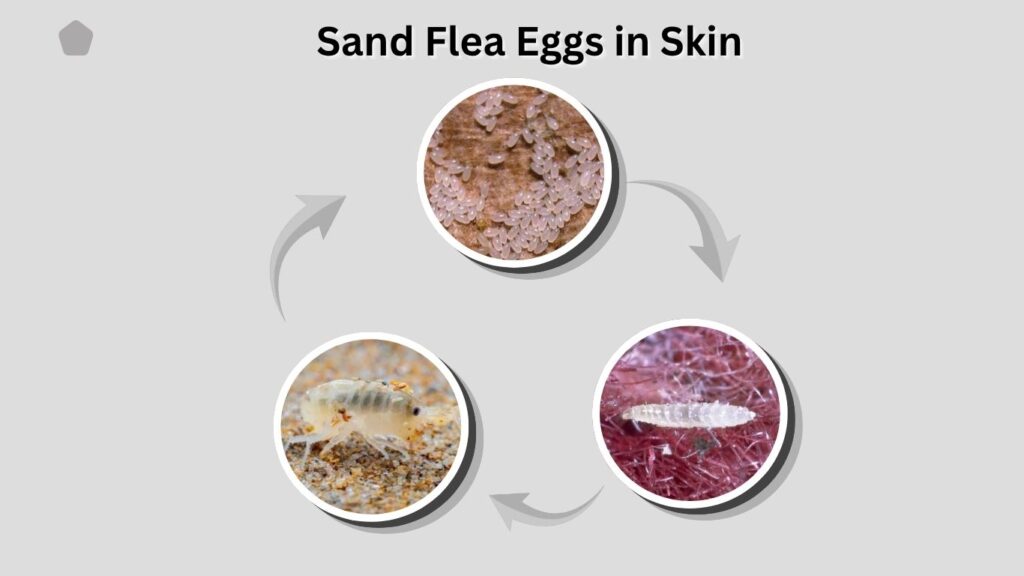
The phrase sand flea eggs in skin usually refers to tungiasis. Importantly, the eggs themselves are not simply deposited throughout a person’s skin. Instead, the female chigoe flea becomes embedded, produces eggs inside its enlarged abdomen, and releases those eggs through an opening onto the surrounding ground, where their development continues.
Chigoe Flea Life Cycle
The basic process includes:
- An adult female attaches to a host.
- The female penetrates the outer skin.
- Her abdomen enlarges while she feeds.
- Eggs develop inside the embedded flea.
- Eggs are released from the lesion into the environment.
- Eggs hatch into larvae in suitable soil.
- Larvae eventually become pupae and then adult fleas.
CDC states that a female may release around 100 eggs during approximately a two-week reproductive period.
Should You Remove an Embedded Sand Flea?
Do not dig into suspected tungiasis lesions with needles, blades, pins, or other nonsterile tools.
WHO warns that improper extraction can cause tissue damage and introduce bacteria. When extraction is required, it should be performed with sterile equipment by someone appropriately trained, with wound care and tetanus protection considered afterward.
Sand Flea Bites and Treatment
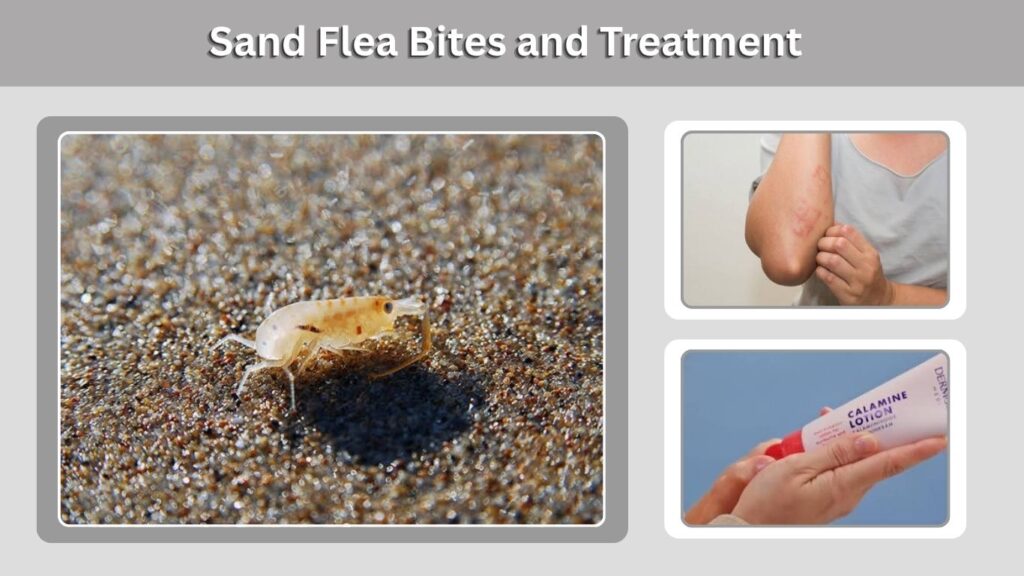
Many itchy bumps blamed on “sand fleas” are not caused by mole crabs. Other biting insects found near beaches can produce red, itchy lesions, while true chigoe flea infestation produces tungiasis. Treatment should therefore depend on the actual cause rather than automatically assuming that every beach-related rash comes from the same animal.
Common Symptoms of Tungiasis
Possible symptoms include:
- Itching
- Localized pain
- Redness
- Swelling
- A whitish raised lesion
- A small dark central opening
- Skin peeling or irritation
- Difficulty walking when numerous foot lesions occur
Secondary bacterial infection can develop, particularly when lesions are scratched or opened using contaminated objects.
Sand Flea Treatment
Suspected tungiasis should be assessed by a healthcare professional, particularly after travel to an endemic region. WHO identifies topical dimeticone preparations as effective treatments and states that sterile extraction may also be appropriate in some circumstances.
Increasing pain, pus, spreading redness, fever, or extensive swelling should receive medical attention rather than continued home treatment.
What Is a Sand Flea Rake?
A sand flea rake is a basket-like beach tool used to collect mole crabs for fishing bait. It has openings that allow sand and water to escape while retaining larger mole crabs. Rakes are particularly popular among surf anglers targeting pompano and other species that naturally feed on mole crabs.
How to Catch Sand Fleas With a Rake
The basic method is:
- Look along the wet swash zone for signs of mole crabs.
- Stand where waves are washing across the sand.
- Drag or scoop the rake through the wet sand.
- Lift the rake as the wave retreats.
- Rinse the collected sand through the basket.
- Check the remaining material for mole crabs.
- Keep only what you legally need for bait.
UF/IFAS describes dragging the rake through sand between the breaking waves and their highest wash point, then rinsing away the sand in water.
Why Anglers Use Sand Fleas
Mole crabs are natural prey for many surf-zone fish. Florida wildlife guidance specifically lists live sand fleas as bait for pompano and other surf fish.
They can be placed on an appropriate fishing hook and presented close to the bottom, where feeding fish naturally search for them.
Sand Flea vs Sand Crab
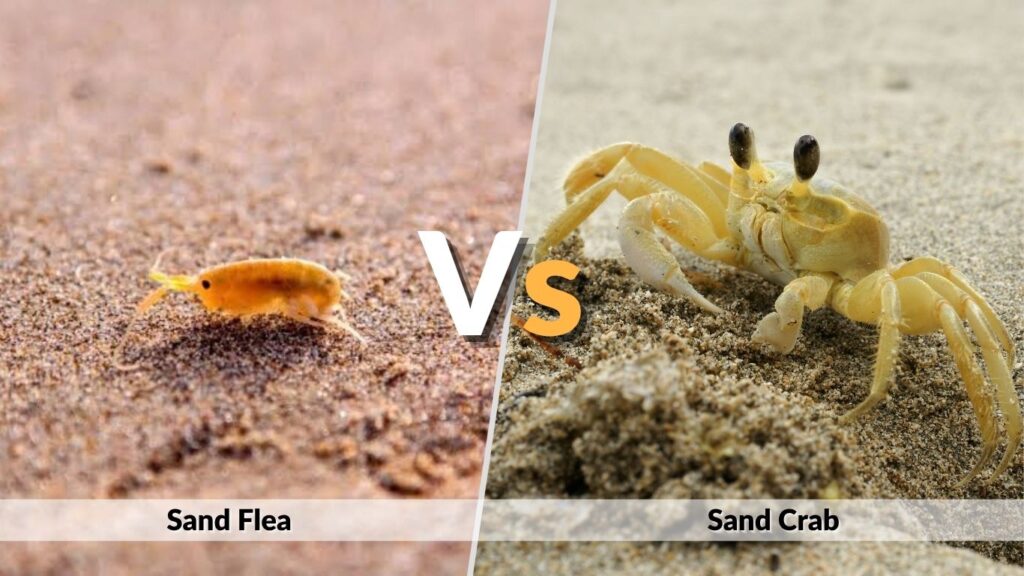
The terms sand flea, mole crab, and sand crab frequently overlap in casual beach and fishing conversations. However, not every animal called a sand crab belongs to exactly the same species. The common mole crab found in surf zones is nevertheless widely known among anglers as both a sand flea and sand crab.
Are Sand Fleas Actually Crabs?
The sand fleas caught for fishing bait are crustaceans and are therefore related to crabs rather than insects or true fleas.
They have ten legs, a hard outer covering, and specialized structures for digging and filter feeding. Their flea-like common name probably comes from their relatively small size and rapid movements beneath beach sand.
Are Giant Sand Fleas Dangerous?
Large mole crabs may look strange when uncovered, but their size does not make them dangerous. They lack the powerful claws found on many familiar crab species.
A genuinely unusual large beach organism should still be identified before handling because many unrelated crustaceans and insects can occur around coastal habitats.
How to Avoid Parasitic Sand Fleas
Prevention is most relevant when traveling to areas where chigoe fleas and tungiasis are known to occur. The greatest risk comes from exposing bare feet to contaminated soil or floors. Wearing appropriate footwear and reducing direct contact with potentially infested ground can significantly reduce opportunities for the flea to penetrate the skin.
Prevention Tips
- Wear closed footwear in high-risk areas.
- Avoid walking barefoot on questionable soil.
- Keep feet clean and inspect them regularly.
- Avoid sitting directly on potentially contaminated ground.
- Seek early treatment for suspicious foot lesions.
- Keep living areas and floors clean where tungiasis occurs.
- Follow local public-health recommendations in endemic regions.
WHO also notes that certain repellents and environmental improvements can reduce transmission in affected communities.
FAQs
1. What is a sand flea?
The term can mean either a mole crab found along ocean beaches or the parasitic chigoe flea, Tunga penetrans. Mole crabs are harmless crustaceans commonly collected as fishing bait. Chigoe fleas are true fleas whose females can penetrate human skin and cause tungiasis in tropical and subtropical regions.
2. Can sand fleas lay eggs in human skin?
A female chigoe flea embeds itself in the skin and develops eggs inside its enlarged abdomen. It then releases those eggs through an opening onto the ground. Therefore, “sand flea eggs in skin” describes an embedded egg-producing female rather than loose eggs multiplying throughout human tissue.
3. Are beach sand fleas dangerous?
The mole crabs commonly called sand fleas on U.S. beaches are harmless and cannot bite or pinch humans. They are small filter-feeding crustaceans. Parasitic chigoe fleas are different and can cause tungiasis, so geographic location and the animal’s appearance are important when determining which “sand flea” is involved.
4. How do you catch sand fleas?
Anglers commonly catch mole-crab sand fleas with a perforated rake or basket in the beach swash zone. The rake is pulled through wet sand as waves recede, then rinsed in the water. Sand passes through the openings while larger mole crabs remain inside for collection.
5. What does a parasitic sand flea look like in skin?
Tungiasis often produces a small, round, whitish raised lesion containing a tiny dark central opening. Lesions usually appear around the toes, soles, heels, or other parts of the feet. Because several skin conditions can look similar, suspicious lesions after tropical travel should be professionally evaluated.