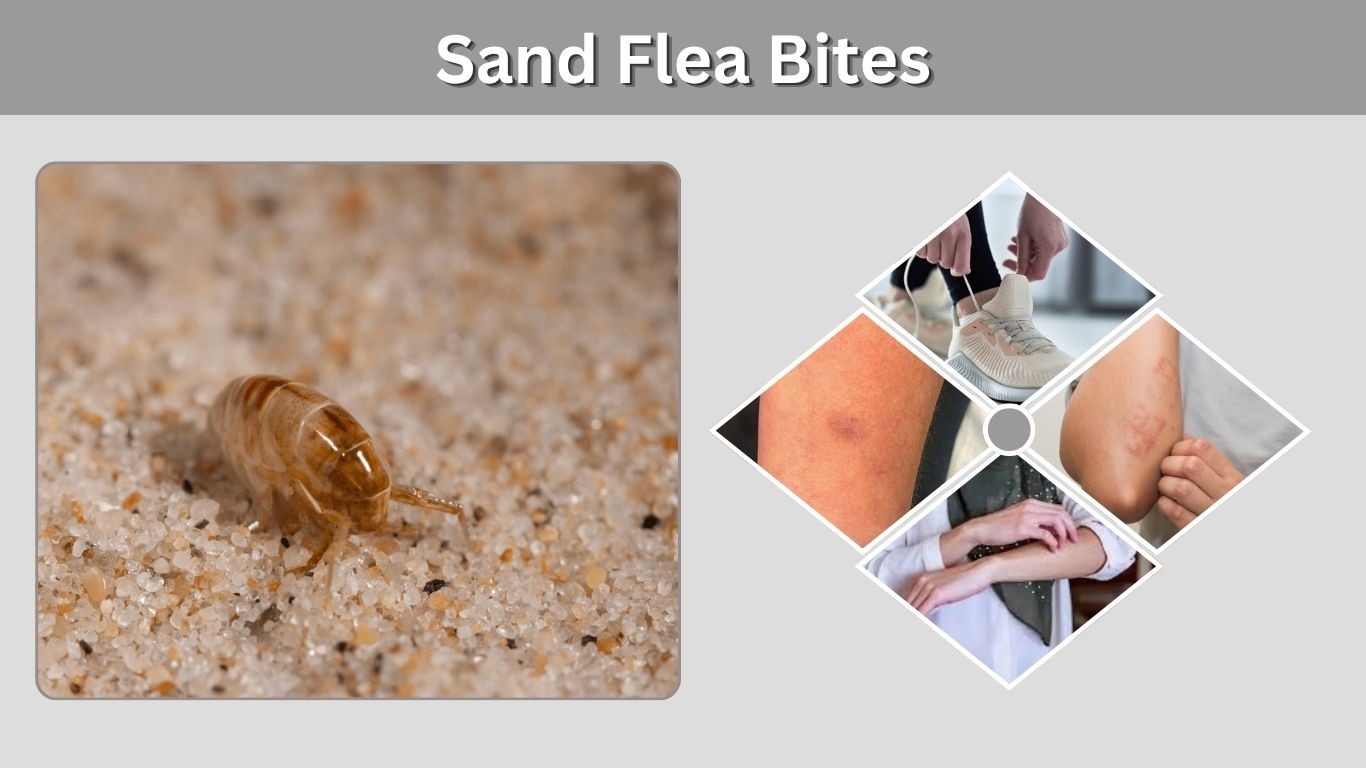
Sand flea bites are commonly described as small, red, intensely itchy bumps that develop after time spent around beaches, sandy ground, or warm coastal areas. However, “sand flea” is a confusing name used for several different creatures. True chigoe sand fleas can burrow into human skin and cause tungiasis, while other beach insects may simply leave temporary itchy bites. Knowing what sand flea bites look like, how long symptoms last, and which treatments provide relief can help you manage mild reactions and recognize problems requiring medical care.
What Are Sand Flea Bites?
The term sand flea bite does not always describe a bite from the same animal. True sand fleas include Tunga penetrans, also called chigoe fleas or jiggers, which can penetrate the skin. In some coastal areas, people also call harmless mole crabs “sand fleas,” even though these crustaceans cannot bite or pinch humans.
What Causes Sand Flea Bites on Humans?
True chigoe flea problems occur when a female flea penetrates the skin, usually around the feet, and remains embedded while developing and laying eggs. This produces a condition called tungiasis.
Many ordinary itchy bumps blamed on “beach sand fleas,” however, may actually come from other biting insects encountered around coastal environments. This is why identifying a skin reaction from appearance alone can be difficult.
Where Do True Sand Fleas Occur?
Chigoe fleas occur mainly in tropical and subtropical areas, including parts of Latin America, the Caribbean, Africa, India, and Pakistan. Cleveland Clinic notes that the species responsible for tungiasis does not normally live in the United States.
Travel history therefore provides an important clue when unexplained lesions appear after a beach vacation.
What Do Sand Flea Bites Look Like?
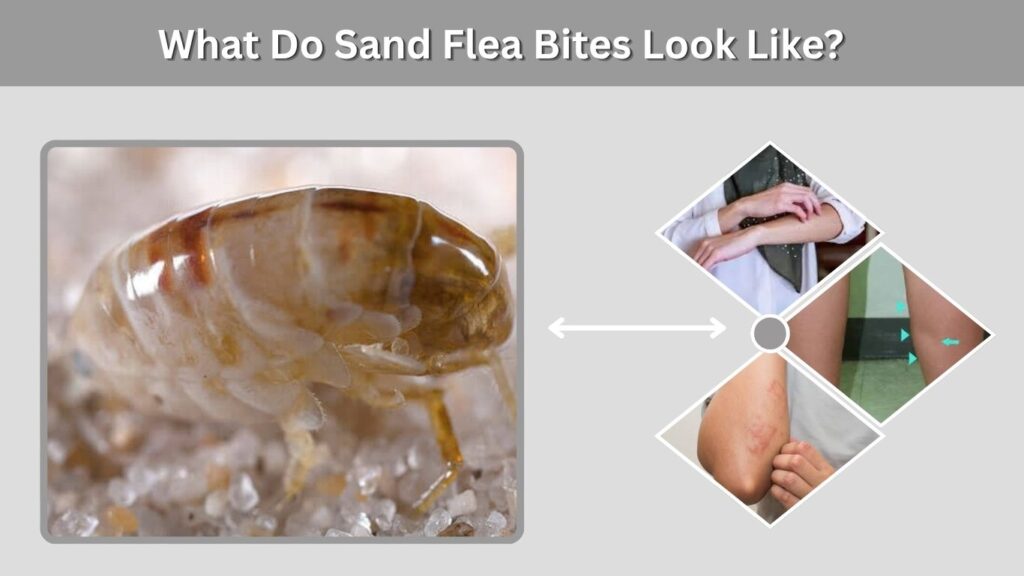
Typical bite-like reactions associated with beach insects may appear as small raised red bumps accompanied by itching and mild inflammation. True chigoe flea lesions can develop a much more distinctive appearance because the female flea becomes embedded inside the skin. Appearance also changes as the lesion progresses, so early lesions can be difficult to distinguish from ordinary bites.
Common Sand Flea Bite Symptoms
Possible symptoms include:
- Small red or raised bumps
- Intense itching
- Mild swelling
- Skin irritation or tenderness
- Several bumps close together
- Redness around the affected area
- Pain in more irritated lesions
- Blistering in some reactions
- Crusting after repeated scratching
Bites and lesions are especially common around the feet and ankles, including between the toes and near the heels.
What Does a Chigoe Sand Flea Lesion Look Like?
Tungiasis looks different as the embedded flea develops. The World Health Organization describes a characteristic whitish lesion with a dark central point. Surrounding redness, swelling, peeling, itching, and pain can occur.
Do not attempt to identify tungiasis solely from an online picture. Other insect bites and skin conditions can produce similar-looking lesions.
How to Treat Sand Flea Bites
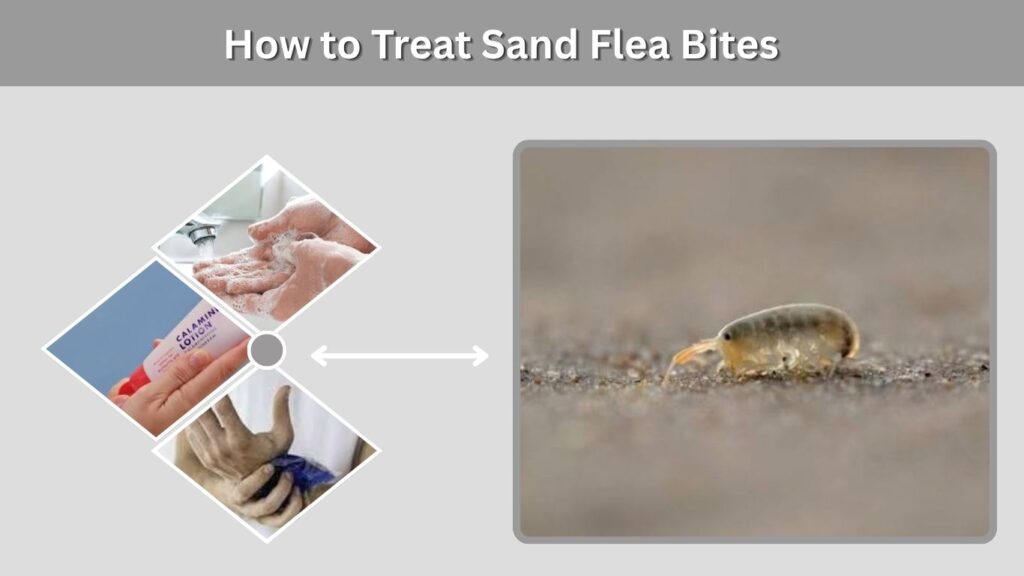
Treatment depends on whether you have a mild itchy reaction or an embedded chigoe flea. Ordinary irritated bites often improve with basic symptom management. Suspected tungiasis should receive medical evaluation because attempting to cut or dig the parasite out yourself can damage the skin and increase infection risk.
Sand Flea Bites Treatment at Home
For uncomplicated itchy bumps, treatment may include:
- Wash the skin gently with soap and water.
- Apply a wrapped cold pack to reduce discomfort.
- Avoid scratching irritated areas.
- Apply calamine lotion for itching.
- Consider an appropriate anti-itch cream.
- Use antihistamines when appropriate and according to directions.
- Keep broken skin clean and protected.
- Watch for increasing redness, warmth, drainage, or pain.
Cleveland Clinic lists cold packs, calamine lotion, antihistamines, and corticosteroid treatments among options that may help manage mild reactions.
Does Calamine Lotion Help Sand Flea Bites?
Calamine lotion can help relieve itching associated with mild bite reactions. It does not remove an embedded chigoe flea or cure an infection.
Apply it according to the product directions and avoid putting it into eyes, mouth, or deep open wounds. Persistent, worsening, or unusual lesions should be evaluated rather than repeatedly treated with anti-itch products.
How Long Do Sand Flea Bites Last?
How long sand flea bites last depends heavily on what actually caused the skin reaction. Mild irritation associated with common beach bites often improves within several days. True chigoe flea infestation follows a different course because the female parasite remains embedded in the skin for weeks unless appropriately managed.
Why Can Bites Seem to Appear Days Later?
Skin reactions to arthropod bites do not always become obvious immediately. Immune responses vary considerably between individuals, and similar bites from other insects can appear later.
Bed bug bites, for example, may not become visible until one or several days after exposure and can occasionally take longer. Therefore, delayed bumps after a beach trip do not automatically prove sand flea exposure.
Can Sand Flea Bites Spread?
Ordinary bite marks do not normally “spread” across the body like a contagious rash. New spots may appear because multiple areas were bitten, because inflammatory reactions emerge at different times, or because scratching irritates surrounding skin.
Increasing redness spreading outward from one lesion can instead suggest infection and deserves medical attention.
Sand Flea Bites vs Bed Bug Bites
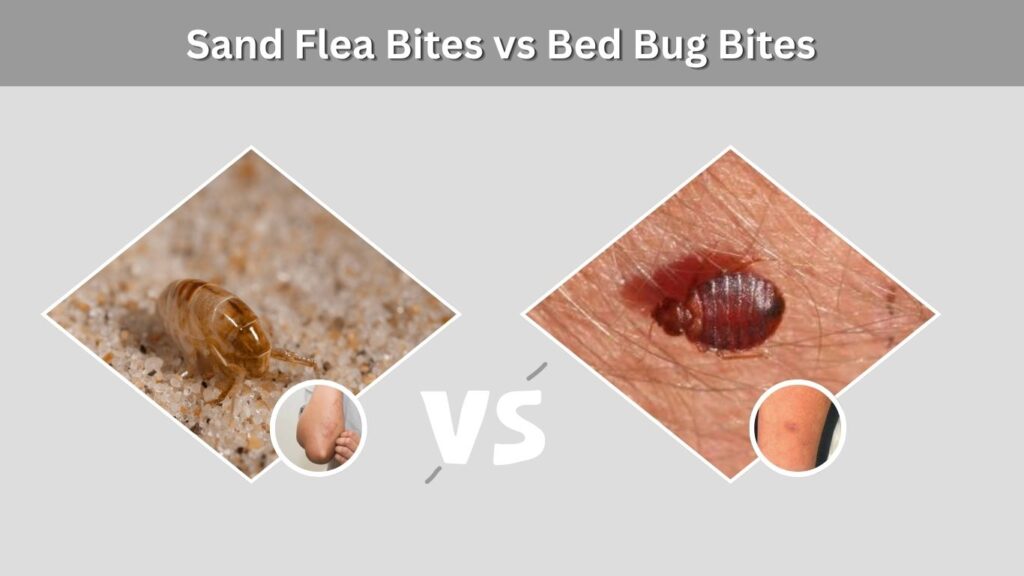
Sand flea and bed bug bites can both produce itchy red bumps, so the skin lesions themselves are often insufficient for identification. Exposure history is more useful. Beach-associated reactions commonly occur after spending time around sand or coastal environments, whereas bed bug bites are associated with sleeping in an infested room and finding additional signs around beds.
Main Differences to Consider
Sand flea or beach-associated bites:
- Often associated with beaches or sandy environments
- Frequently affect feet, ankles, and lower legs
- May occur after walking barefoot
- True chigoe fleas can produce a central dark spot
Bed bug bites:
- Commonly noticed after sleeping
- May affect arms, neck, face, hands, and other exposed skin
- Can occur randomly or in lines
- May appear days after the original exposure
- Often occur alongside signs of bed bugs around mattresses or furniture
CDC emphasizes that bite appearance alone is not a reliable way to confirm bed bugs because the reactions can resemble flea or mosquito bites.
Sand Flea Bites vs Mosquito Bites
Mosquito and beach-associated bites can both become red, raised, swollen, and itchy. Mosquito bites often develop as puffy red bumps soon after exposure, although harder itchy bumps can develop later. Sand flea-related lesions are more strongly associated with ground-level exposure, particularly around feet and ankles.
Location and Exposure Offer Better Clues
A mosquito can bite exposed skin nearly anywhere on the body. In contrast, flea-type bites commonly concentrate around lower legs and ankles because this is where small jumping insects can easily reach the skin.
Neither pattern provides absolute proof. Consider where you were, when the reaction started, and whether other people experienced similar symptoms.
How to Prevent Sand Flea Bites
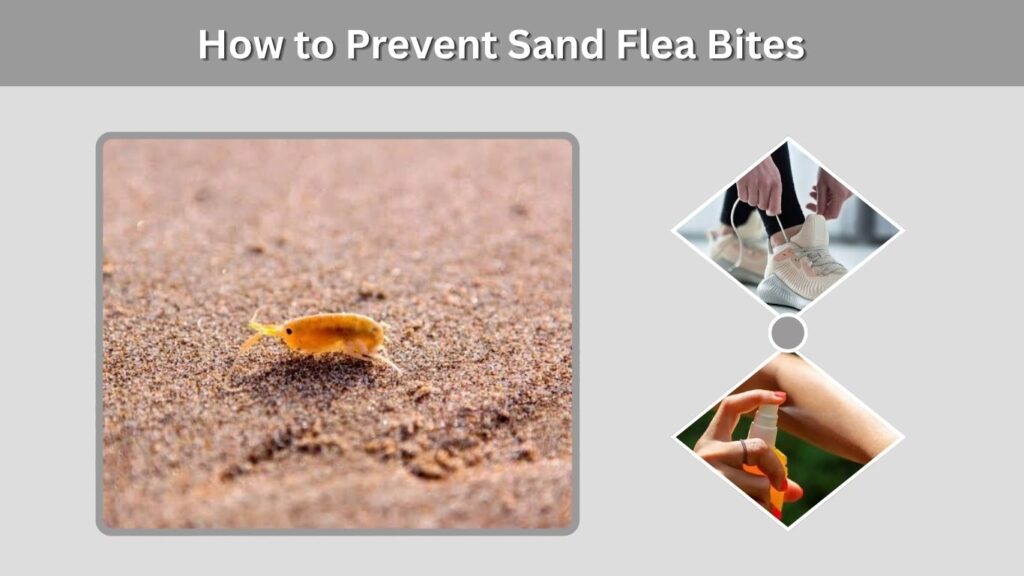
Prevention becomes particularly important when visiting tropical locations where true chigoe fleas occur. Because these fleas commonly attack feet and areas close to the ground, reducing bare-skin exposure can substantially reduce risk. Travelers should also distinguish true sand flea risk from harmless mole crabs commonly found along U.S. beaches.
Ways to Reduce Your Risk
- Avoid walking barefoot in high-risk sandy areas.
- Wear closed shoes when appropriate.
- Avoid sitting directly on questionable sand or soil.
- Use an appropriate insect repellent for other biting insects.
- Wear clothing that covers the ankles and lower legs.
- Use beach towels, mats, or chairs rather than bare ground.
- Pay attention to local insect warnings while traveling.
- Inspect unusual foot lesions after travel to endemic regions.
People traveling to rural tropical communities where tungiasis occurs should take footwear protection particularly seriously.
When Are Sand Flea Bites Dangerous?
Most ordinary itchy beach-associated bites are uncomfortable rather than dangerous. True tungiasis can be more serious because embedded fleas damage tissue and create opportunities for secondary bacterial infection. WHO reports that inflammation, pain, itching, and bacterial superinfection are important complications of the condition.
Signs You Should Seek Medical Care
Contact a healthcare professional if you develop:
- Increasing pain or swelling
- Pus or drainage
- Spreading redness
- Warm skin around the lesion
- An open ulcer
- Fever or other signs of illness
- A white lesion with a dark center after tropical travel
- Symptoms that do not improve after several days
Suspected embedded fleas should not be removed at home with needles, knives, or other sharp objects. Cleveland Clinic specifically advises against trying to surgically remove them yourself.
FAQs
1. How long do sand flea bites last on humans?
Mild bite-like reactions commonly associated with beach insects may improve within a few days, although itching can persist longer in sensitive individuals. True chigoe flea infestation is different because an embedded female can remain in the skin for several weeks. Persistent or worsening lesions should be medically evaluated.
2. What is the best treatment for sand flea bites?
For mild itchy bumps, washing the area, using a cold pack, avoiding scratching, and applying an appropriate anti-itch product such as calamine lotion may provide relief. If you suspect an embedded chigoe flea, infection, severe swelling, or persistent lesions, seek professional medical treatment rather than attempting removal yourself.
3. Are sand flea bites contagious?
No, ordinary insect bite reactions are not contagious and cannot spread from one person to another through normal contact. Multiple bumps may appear at different times after exposure, making the rash seem to spread. True tungiasis involves embedded fleas and requires appropriate evaluation, but the skin reaction itself is not a contagious rash.
4. Can sand flea bites show up days later?
Some arthropod bite reactions can become noticeable after a delay because everyone’s immune response differs. However, delayed bumps do not prove that sand fleas were responsible. Bed bugs and other insects can also produce delayed reactions, so exposure history and other environmental evidence should be considered when identifying the cause.
5. What do infected sand flea bites look like?
An infected lesion may become increasingly red, warm, swollen, painful, or begin producing drainage. Redness that continues spreading rather than improving is another warning sign. Scratching can damage the skin and increase the chance of secondary infection, so worsening symptoms should be evaluated by a healthcare professional.