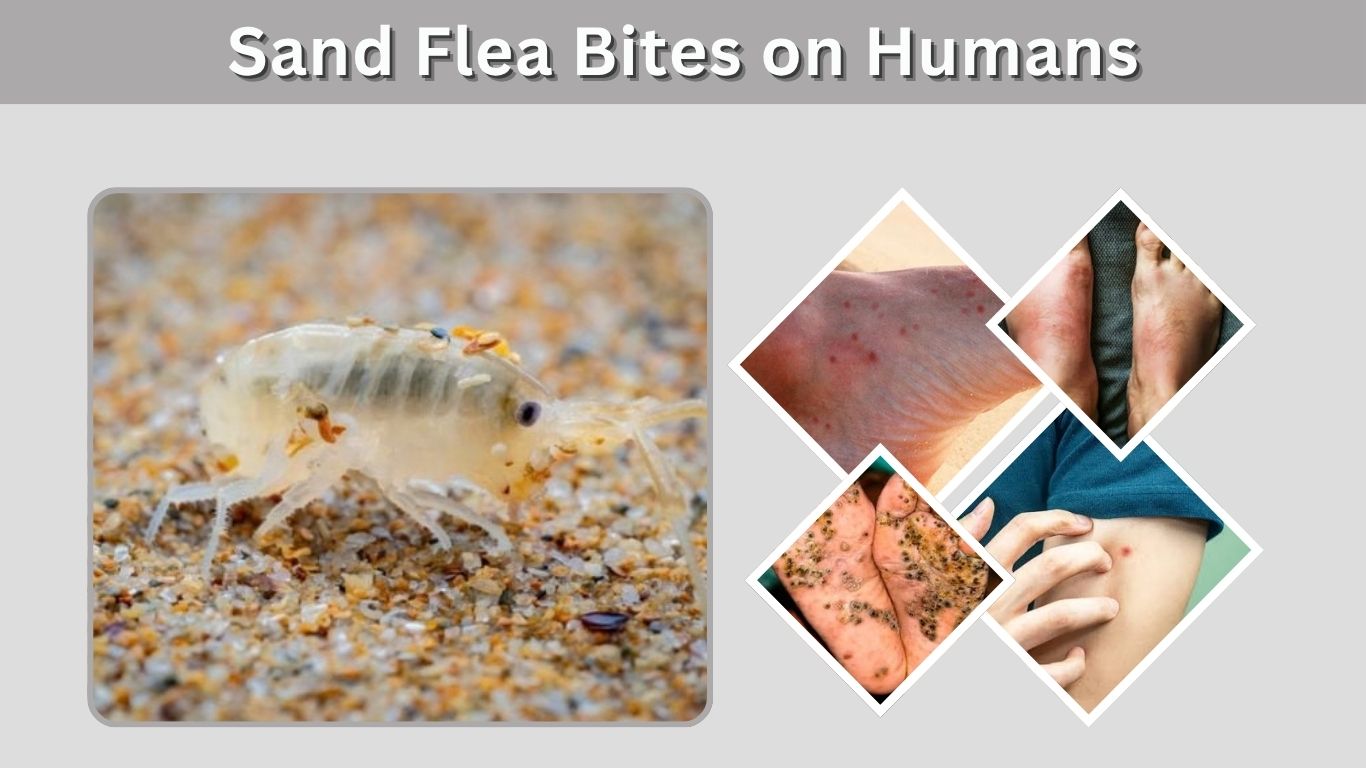
Sand flea bites on humans can cause itchy, red, swollen skin, particularly around the feet, ankles, and lower legs. However, the term “sand flea” is often used for different organisms. True chigoe fleas (Tunga penetrans) can burrow into human skin and cause tungiasis, while many itchy “sand flea bites” reported after beach visits may come from other biting insects. Understanding what the bites look like, how long reactions last, proper treatment, and warning signs can help you manage symptoms safely and prevent complications.
What Do Sand Flea Bites Look Like on Humans?
The appearance of sand flea bites depends on what caused the reaction. Ordinary insect bites around beaches may produce small, itchy red bumps, while true chigoe flea infestation creates a distinctive lesion because the female flea becomes embedded in the skin. Location, travel history, symptoms, and how the lesion changes over time can provide important identification clues.
Common Appearance and Symptoms
Possible signs associated with sand flea bites or tungiasis include:
- Small red or raised bumps
- Intense itching
- Localized swelling
- Tender or painful skin
- Redness around the affected spot
- A whitish lesion with a dark central point in tungiasis
- Crusting after scratching
- Blisters in some reactions
- Multiple lesions around the feet or toes
WHO describes established tungiasis lesions as whitish areas with a dark central point, accompanied by inflammation, swelling, itching, and pain.
Where Do Sand Flea Bites Appear?
True chigoe flea lesions occur overwhelmingly on the feet. The toes, soles, sides of the feet, and heels are particularly common locations because infection often occurs when bare skin contacts contaminated soil.
CDC also notes that chigoe fleas are commonly found between the toes and underneath toenails.
Symptoms of Sand Flea Bites on Humans
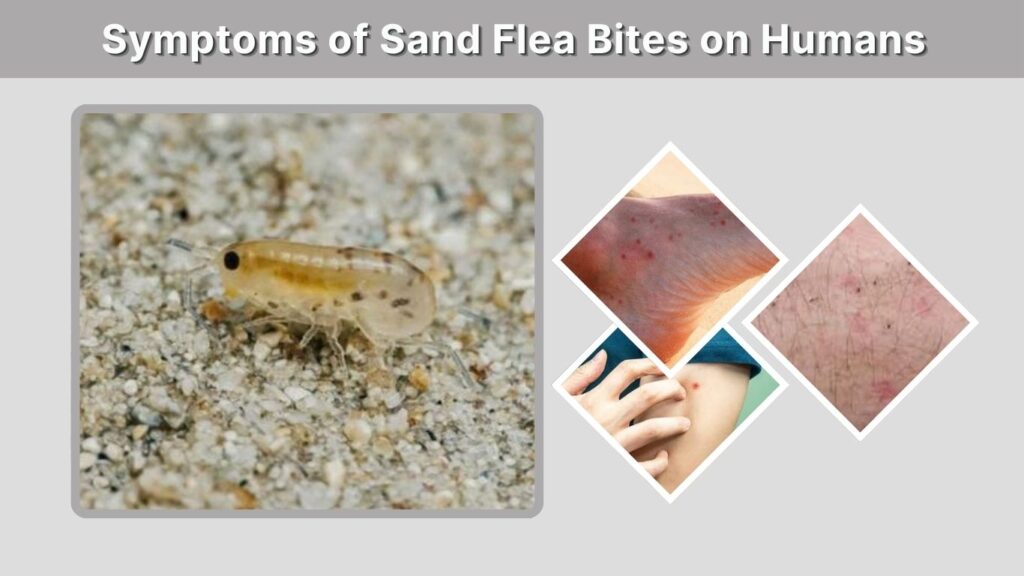
Symptoms range from mild itching to significant inflammation depending on the organism involved and a person’s reaction. With true tungiasis, discomfort develops around an embedded female flea and may worsen as the parasite enlarges. Scratching or improperly opening lesions increases the possibility of secondary bacterial infection, making proper identification and care especially important.
Do Sand Flea Bites Itch?
Yes. Itching is one of the major symptoms of tungiasis, and it can become intense. Pain, redness, swelling, and peeling skin may occur at the same time.
Scratching should be minimized because breaking the skin can introduce bacteria. WHO notes that bacterial superinfection can worsen lesions and sometimes lead to abscess formation.
Can Sand Flea Bites Appear Days Later?
Some reactions to biting insects can become more noticeable after the initial exposure as inflammation develops. However, a delayed rash alone cannot prove that sand fleas were responsible.
With chigoe fleas, the lesion changes as the embedded female enlarges. Travel history and the presence of a central dark point can be more informative than timing alone.
How to Treat Sand Flea Bites on Humans
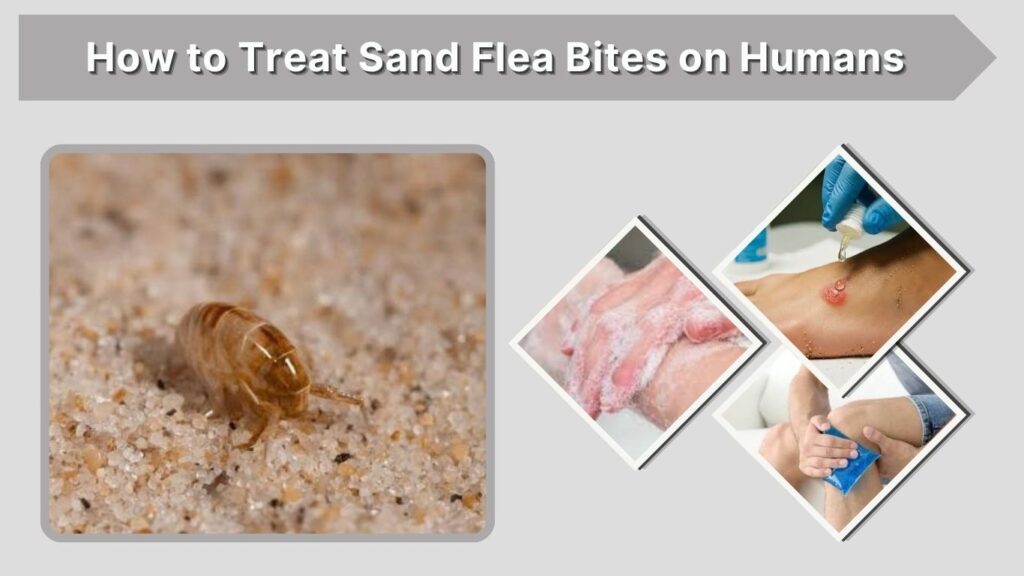
Treatment depends on whether the problem is a simple itchy insect bite or true tungiasis caused by an embedded chigoe flea. Mild bite reactions can often be managed symptomatically. Suspected embedded fleas require greater caution because attempting to cut or dig them out with unsterile tools can cause injury and introduce harmful bacteria.
Treatment for Mild Bite Reactions
For ordinary itchy bite-like reactions:
- Wash the affected area gently with soap and water.
- Apply a cool compress to reduce itching and swelling.
- Avoid scratching or picking at the skin.
- Keep irritated skin clean and dry.
- Consider an appropriate anti-itch lotion or cream.
- Follow medication labels carefully.
- Monitor the area for infection or worsening symptoms.
These measures are intended for uncomplicated skin irritation rather than confirmed embedded chigoe fleas.
What About an Embedded Sand Flea?
Do not attempt to remove a suspected chigoe flea using a needle, pin, knife, or other unsterile object.
WHO advises that mechanical extraction, when used, should be performed under sterile conditions by trained personnel. Improper extraction can rupture the parasite, worsen inflammation, and introduce bacteria into the wound. Tetanus vaccination status may also need review.
How Long Do Sand Flea Bites Last on Humans?
The duration varies because “sand flea bite” may describe several different problems. Mild insect-bite reactions may gradually settle as inflammation decreases. True tungiasis lasts considerably longer because the female flea remains embedded while completing part of its reproductive cycle. Persistent lesions should therefore not simply be treated as ordinary beach bites.
How Long Does Tungiasis Last?
WHO reports that an embedded female chigoe flea typically remains in the skin for approximately four to six weeks while eggs develop and are released.
This is very different from a temporary itchy bump caused by an ordinary biting insect. A persistent lesion with a dark center after travel to an endemic region deserves medical evaluation.
Why Can Symptoms Last Longer?
Continued inflammation, repeated scratching, secondary infection, or multiple lesions can prolong discomfort.
The lesion may also remain irritated after the parasite dies or is removed. If redness, swelling, pain, or drainage becomes progressively worse instead of improving, healthcare evaluation is appropriate.
Are Sand Flea Bites on Humans Dangerous?
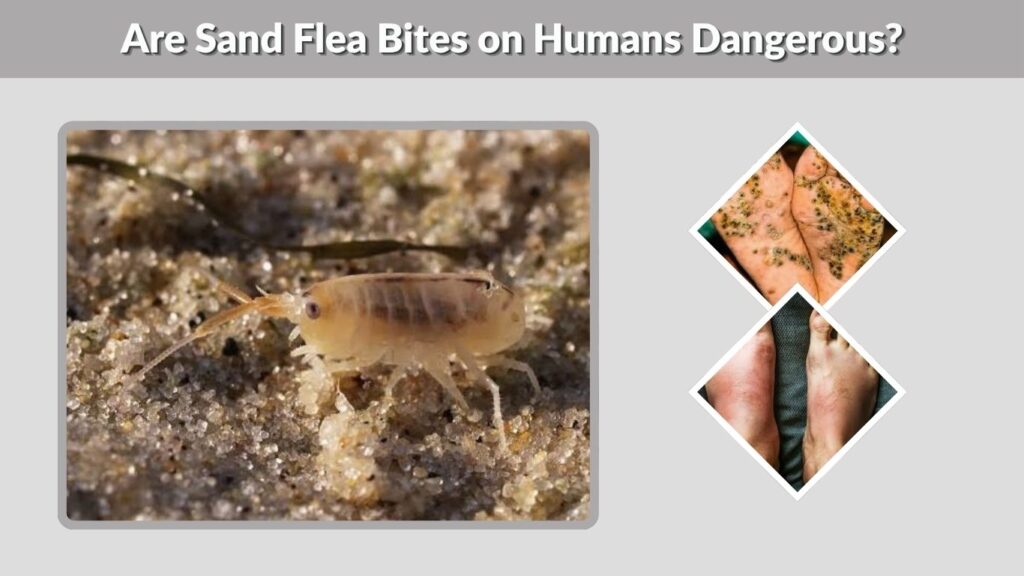
Most simple insect bites cause temporary discomfort. True tungiasis deserves more attention because the embedded flea disrupts the skin barrier and can lead to inflammation and bacterial infection. Multiple untreated lesions can become particularly painful and may interfere with walking. Serious complications are uncommon with proper treatment but should not be ignored.
Warning Signs to Watch For
Seek medical attention for:
- Increasing redness or swelling
- Severe or worsening pain
- Pus or other drainage
- Fever or feeling unusually unwell
- Open sores or ulcers
- Numerous embedded-looking lesions
- Difficulty walking because of foot lesions
- A persistent white lesion with a dark center
- Signs of a severe allergic reaction
CDC notes that severe tungiasis can involve ulceration, bacterial infections, and difficulty walking when numerous foot lesions are present.
Can Sand Flea Bites Become Infected?
Yes. Scratching and improper removal can break or further damage the skin, allowing bacteria to enter.
WHO reports that tungiasis may lead to abscesses and other bacterial complications. Severe untreated cases can have much more serious consequences, reinforcing the importance of clean wound care and appropriate medical treatment.
Sand Flea Bites vs Bed Bug and Mosquito Bites
Skin appearance alone is not always sufficient to determine what caused an insect bite. Several arthropods produce itchy red bumps. Exposure history and bite location are often more useful. Sand flea-related problems are particularly associated with ground exposure around the feet, while mosquitoes can bite exposed areas throughout the body and bed bugs commonly bite during sleep.
Key Differences
Sand flea or tungiasis lesions:
- Often concentrated around feet and toes
- Associated with ground or soil exposure
- True tungiasis may develop a dark central point
- May remain persistent when a flea is embedded
Bed bug bites:
- Common after sleeping in an infested area
- May affect arms, neck, face, legs, or torso
- Can occur in groups or lines
- Do not contain embedded fleas
Mosquito bites:
- Usually produce raised, itchy bumps
- Can occur on almost any exposed skin
- Often follow outdoor mosquito exposure
- Typically lack the characteristic central lesion of tungiasis
How to Prevent Sand Flea Bites on Humans
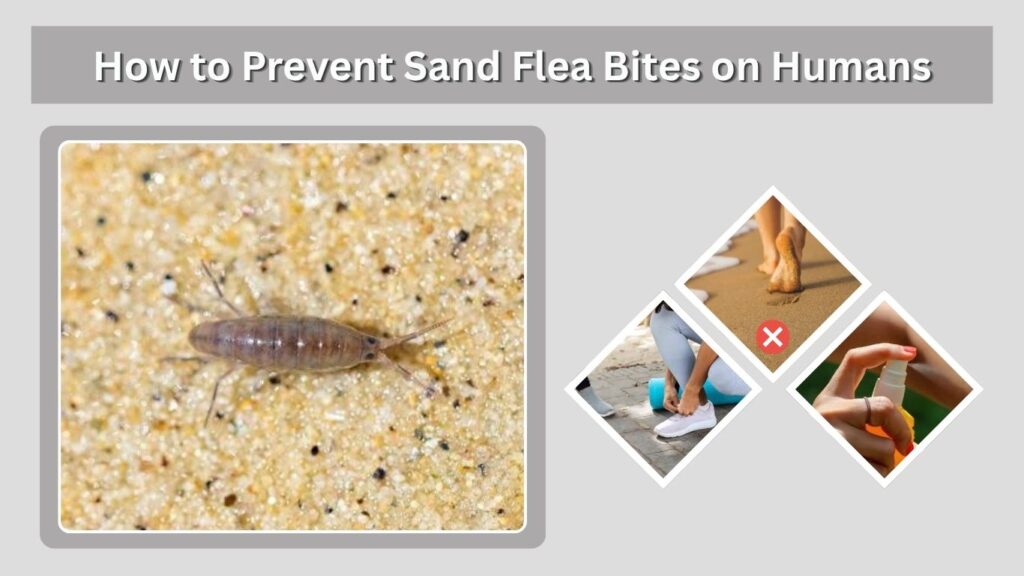
Prevention is especially important when visiting regions where chigoe fleas are endemic. Since the parasite commonly enters through feet contacting contaminated ground, footwear and basic hygiene provide useful protection. Prevention strategies for ordinary beach insects may differ, so travelers should also consider local guidance about the particular biting insects found at their destination.
Ways to Reduce Your Risk
- Wear closed shoes in areas where tungiasis occurs.
- Avoid walking barefoot on questionable soil or sandy ground.
- Keep feet clean and inspect them regularly.
- Avoid prolonged direct contact with contaminated ground.
- Treat suspicious lesions early.
- Follow local recommendations regarding insect repellents.
- Keep sleeping and living environments clean when staying in endemic areas.
- Avoid attempting home extraction of embedded fleas.
WHO identifies regular foot washing, environmental improvements, treatment of infected people and animals, and suitable repellents as useful parts of tungiasis prevention and control.
FAQs
1. What do sand flea bites look like on humans?
They may appear as small, itchy, red or swollen bumps. True chigoe flea infestation looks different and can form a whitish round lesion with a dark central point where the flea remains connected to the outside. Feet, toes, soles, and heels are particularly common locations.
2. How long do sand flea bites last on humans?
Simple insect-bite reactions may improve relatively quickly, but true tungiasis can persist for weeks. WHO reports that an embedded female chigoe flea generally survives for around four to six weeks while producing and releasing eggs. Persistent, painful, or infected-looking lesions should be evaluated professionally.
3. How do you treat sand flea bites on humans?
For uncomplicated itchy bumps, gently clean the skin, use a cool compress, avoid scratching, and consider an appropriate anti-itch treatment. Suspected embedded chigoe fleas should not be dug out at home. Professional evaluation helps reduce tissue injury, infection risk, and complications from improper removal.
4. Can sand flea bites spread from person to person?
Tungiasis is not spread directly from one person’s skin to another through ordinary contact. Female fleas release eggs into the environment, where immature stages develop before adult fleas can infest another host. Multiple lesions appearing over time can therefore reflect repeated environmental exposure rather than a contagious rash spreading across the body.
5. When should I worry about sand flea bites?
Seek medical care when lesions become increasingly painful, hot, swollen, ulcerated, or produce pus, or when numerous lesions make walking difficult. A persistent lesion with a dark central point after travel to a tropical area also deserves evaluation because it may represent tungiasis rather than a routine insect bite.