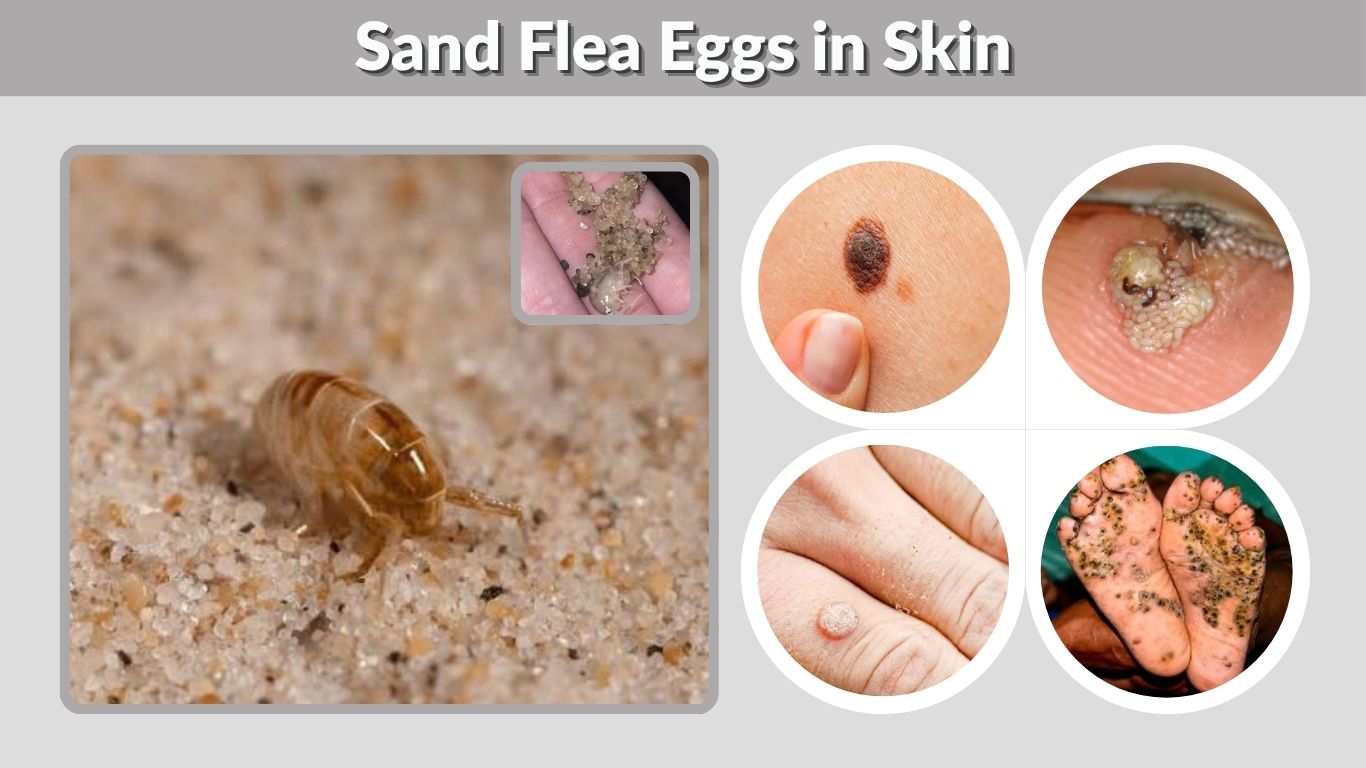
Sand flea eggs in skin usually refers to tungiasis, a parasitic skin condition caused by the female chigoe flea (Tunga penetrans). Contrary to a common misconception, sand fleas do not scatter eggs throughout human skin. Instead, a fertilized female burrows into the outer skin, enlarges as eggs develop inside her body, and eventually releases those eggs into the environment. The condition commonly affects the feet and may cause itching, pain, swelling, and infection if lesions are scratched or improperly removed.
Can Sand Fleas Lay Eggs in Your Skin?
The simple answer is both yes and no. A female chigoe flea can become embedded in human skin while producing eggs, but the eggs are not deposited freely throughout the surrounding tissue. They remain inside the enlarged female until she expels them through a small opening in the skin, allowing the flea’s life cycle to continue outside the body.
What Actually Happens Under the Skin?
After mating, the female Tunga penetrans attaches to a suitable host and penetrates the epidermis. Most of her body becomes embedded, while the rear portion remains connected to the outside environment.
The flea feeds and enlarges dramatically as eggs mature inside its abdomen. According to CDC, an embedded female can expand to approximately 1 centimeter and release about 100 eggs over roughly two weeks.
Do Sand Flea Eggs Hatch Inside Human Skin?
Normally, no. The female releases her eggs through the tiny opening in the lesion. The eggs fall onto soil or other suitable environmental material rather than developing into larvae beneath the person’s skin.
They generally hatch into larvae after several days and continue developing outside the host.
What Do Sand Flea Eggs in Skin Look Like?
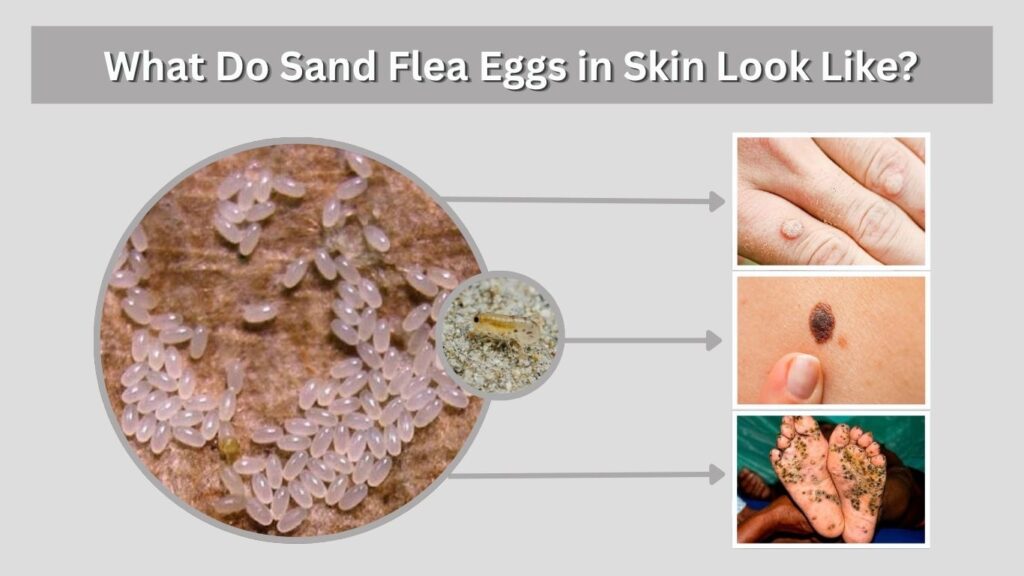
People searching for pictures of sand flea eggs in skin are usually seeing the lesion created by the embedded female flea, not a cluster of visible eggs beneath the skin. Tungiasis has a relatively characteristic appearance as the flea enlarges, although other skin conditions can sometimes look similar and professional diagnosis may be needed.
Common Signs of Tungiasis
A typical lesion may show:
- A small round or raised area
- Whitish or pale skin around the lesion
- A tiny dark spot in the center
- Redness surrounding the area
- Localized swelling
- Significant itching
- Tenderness or pain
- Peeling or irritated skin
- Crusting when lesions are scratched
CDC describes typical tungiasis as a slightly elevated white lesion approximately 5 mm across with a small, frequently black opening in its center.
Why Is There a Black Dot?
The black central point is associated with the exposed posterior end of the embedded flea. Through this opening, the flea breathes, eliminates waste, and releases eggs.
As the flea develops, the lesion can become increasingly noticeable. The dark center therefore does not represent a pile of eggs visible through the skin.
Where Are Sand Fleas Most Likely to Enter Skin?
Chigoe fleas usually penetrate areas that come into direct contact with contaminated soil. Consequently, the feet account for the overwhelming majority of tungiasis lesions. Walking barefoot or wearing very open footwear in endemic environments increases exposure, particularly where the fleas develop in sandy soil or unsealed earthen floors.
Common Areas of the Body
Tungiasis frequently occurs around:
- Toes
- Between the toes
- Soles of the feet
- Heels
- Sides of the feet
- Areas around toenails
WHO reports that approximately 99% of tungiasis lesions occur on the feet. Other body areas can occasionally be affected when they contact contaminated environments.
Where Do Chigoe Sand Fleas Live?
Tunga penetrans occurs primarily in tropical and subtropical parts of the Caribbean, South America, and sub-Saharan Africa. Larvae and pupae develop outside human skin, particularly in dry, shaded soil.
This distinction is important because the harmless mole crabs called “sand fleas” on many beaches are not the parasites responsible for tungiasis.
How to Remove Sand Flea Eggs From Skin
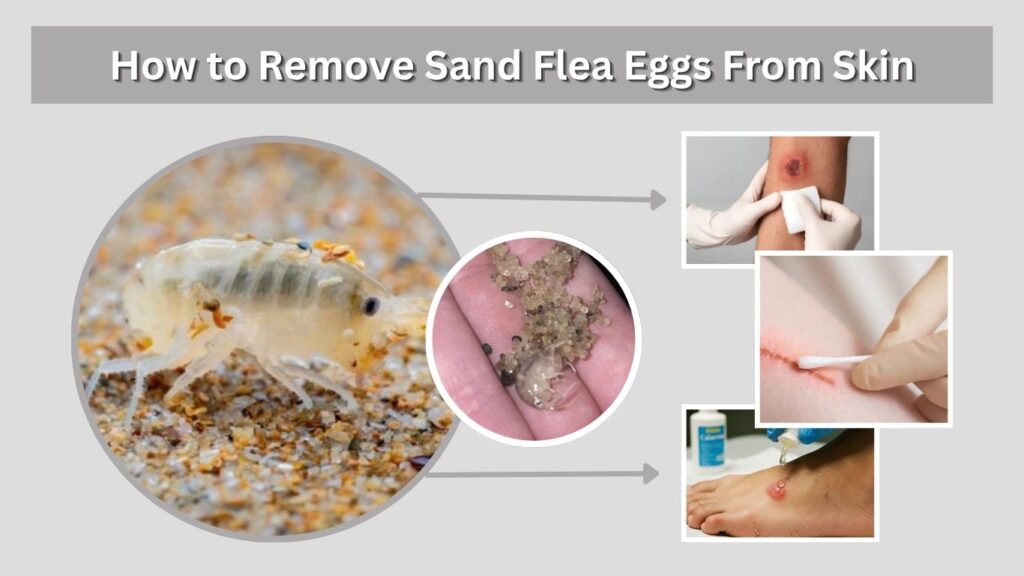
If you suspect tungiasis, the goal is not simply to squeeze out eggs. Treatment focuses on safely eliminating or removing the embedded female flea while preventing bacterial infection and caring for the resulting wound. Attempting to dig into the lesion yourself can rupture the flea, damage tissue, and introduce bacteria.
What You Should Do
For a suspected embedded sand flea:
- Avoid squeezing or cutting into the lesion.
- Keep the affected skin clean.
- Avoid scratching intensely.
- Have suspicious lesions medically evaluated.
- Follow professional treatment instructions.
- Monitor for signs of bacterial infection.
- Check whether tetanus vaccination is current.
WHO recommends that mechanical extraction, when performed, use sterile surgical instruments and be carried out by an experienced healthcare professional.
What You Should Not Use
Do not try to remove the flea using sewing needles, pins, scissors, thorns, knives, or other household objects.
Nonsterile extraction can rupture the embedded parasite and introduce disease-causing bacteria. Reusing contaminated instruments between people can create additional infection risks.
How Is Tungiasis Treated?
Modern treatment aims to kill or safely remove embedded fleas, manage inflammation, prevent bacterial complications, and assess tetanus protection. Treatment varies with the number and condition of lesions. Multiple painful or infected lesions require particular attention because untreated tungiasis can cause significant inflammation and make walking difficult.
Medical Treatment
WHO identifies a topical formulation containing two low-viscosity dimeticone oils as an effective and safe treatment for tungiasis. Sterile mechanical extraction may also be used in appropriate circumstances.
After extraction, the wound should be properly cleaned and dressed. A healthcare professional may evaluate secondary infection and determine whether a tetanus booster is necessary.
How Long Does the Flea Stay in Skin?
The female chigoe flea typically remains embedded for approximately four to six weeks. During this period, it enlarges substantially while developing and releasing eggs.
Eventually, the flea dies and is shed from the skin, but simply waiting is not necessarily advisable because inflammation, pain, infection, and tissue damage can occur.
Are Sand Flea Eggs in Skin Dangerous?
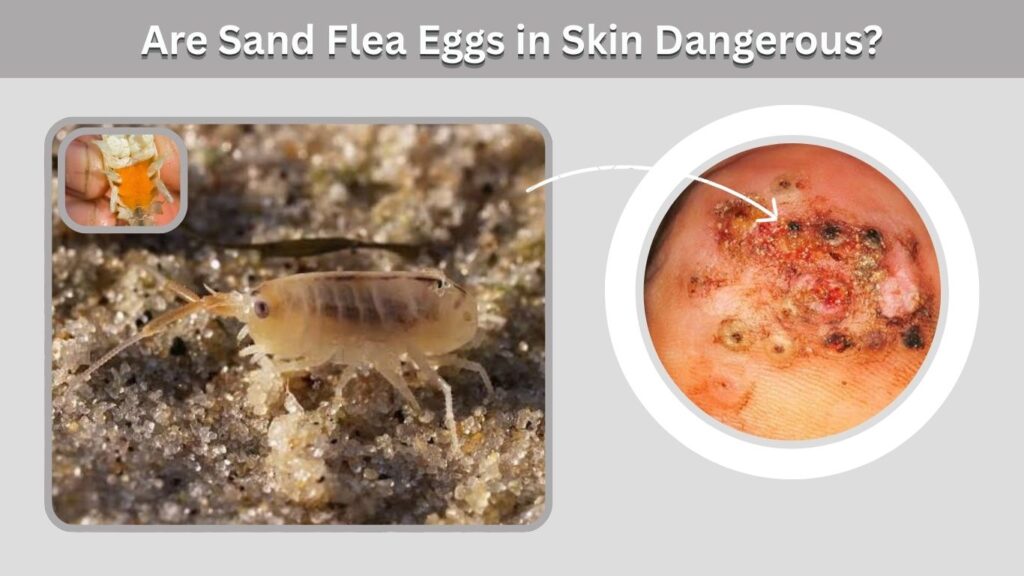
An individual lesion may seem small, but tungiasis can become medically significant when numerous fleas are embedded or when secondary bacterial infection develops. The parasite itself produces inflammation, and intense itching encourages scratching that further damages the skin. Severe or prolonged infestations can therefore produce considerably more than temporary discomfort.
Possible Complications
Complications can include:
- Increasing inflammation
- Pain and severe itching
- Skin ulcers
- Abscess formation
- Secondary bacterial infection
- Nail damage
- Difficulty walking
- Tissue damage in severe cases
- Tetanus or other serious infections in complicated cases
WHO reports that severe bacterial superinfection can result in serious complications, including tetanus and gangrene.
When to See a Doctor
Seek medical attention if you notice a persistent white or raised lesion with a black center after travel to a region where tungiasis occurs, particularly when it involves the feet.
Increasing pain, pus, spreading redness, fever, difficulty walking, multiple lesions, or worsening swelling are additional reasons to obtain medical care rather than attempting home removal.
How to Prevent Sand Fleas From Entering Skin
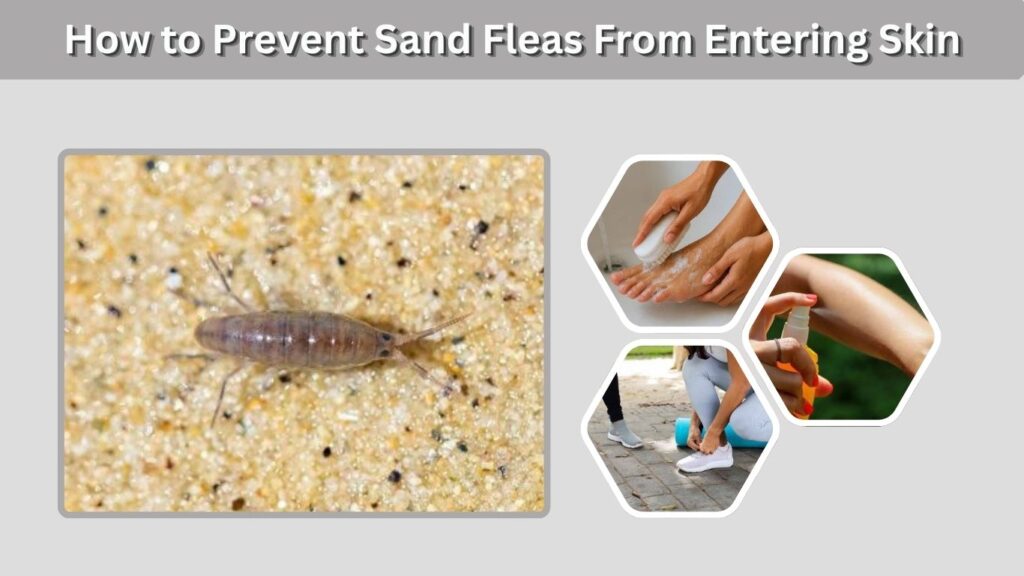
Preventing tungiasis mainly means reducing contact between bare skin and environments containing adult chigoe fleas. Because feet are the primary infection site, footwear is particularly important. Prevention also involves environmental measures because the flea’s eggs, larvae, and pupae develop outside the human body rather than living permanently inside people.
Sand Flea Prevention Tips
- Wear closed shoes in areas where tungiasis occurs.
- Avoid walking barefoot on contaminated soil.
- Avoid sitting directly on questionable sandy ground.
- Wash and inspect feet regularly.
- Treat suspicious lesions early.
- Maintain clean living and sleeping areas.
- Follow local public-health recommendations.
- Manage infected domestic animals where appropriate.
WHO also emphasizes improvements to floors, regular foot washing, treatment of infected animals, and environmental control as parts of community-level prevention.
FAQs
1. Do sand fleas really lay eggs in human skin?
A fertilized female chigoe flea burrows into the outer skin and produces eggs while embedded. However, she does not distribute the eggs throughout human tissue. Instead, the eggs develop inside her enlarged abdomen and are expelled through an opening in the lesion onto the surrounding ground.
2. How do you get rid of sand flea eggs in skin?
Treatment focuses on the embedded female flea rather than individually removing eggs. Do not cut, squeeze, or dig into the lesion yourself. Appropriate treatment may include topical therapy or sterile extraction by a trained healthcare professional, followed by wound care and assessment for infection or tetanus protection.
3. What do sand flea eggs under skin look like?
Usually, you cannot see individual eggs beneath the skin. What is visible is the tungiasis lesion containing the enlarged female flea. It often appears as a small whitish, slightly raised spot with a dark central opening and may be surrounded by redness, itching, swelling, or tenderness.
4. Can sand flea eggs hatch inside your body?
Chigoe flea eggs are normally released from the embedded female onto the environment rather than hatching inside the person’s body. After reaching suitable soil, the eggs hatch into larvae and continue developing outside the host before eventually becoming adult fleas capable of finding another host.
5. How long can a sand flea remain under your skin?
An embedded female chigoe flea typically lives in the skin for around four to six weeks while enlarging and releasing eggs. Because inflammation, secondary infection, ulcers, and pain can develop during infestation, suspected tungiasis should be properly evaluated instead of simply waiting for the flea to disappear.