
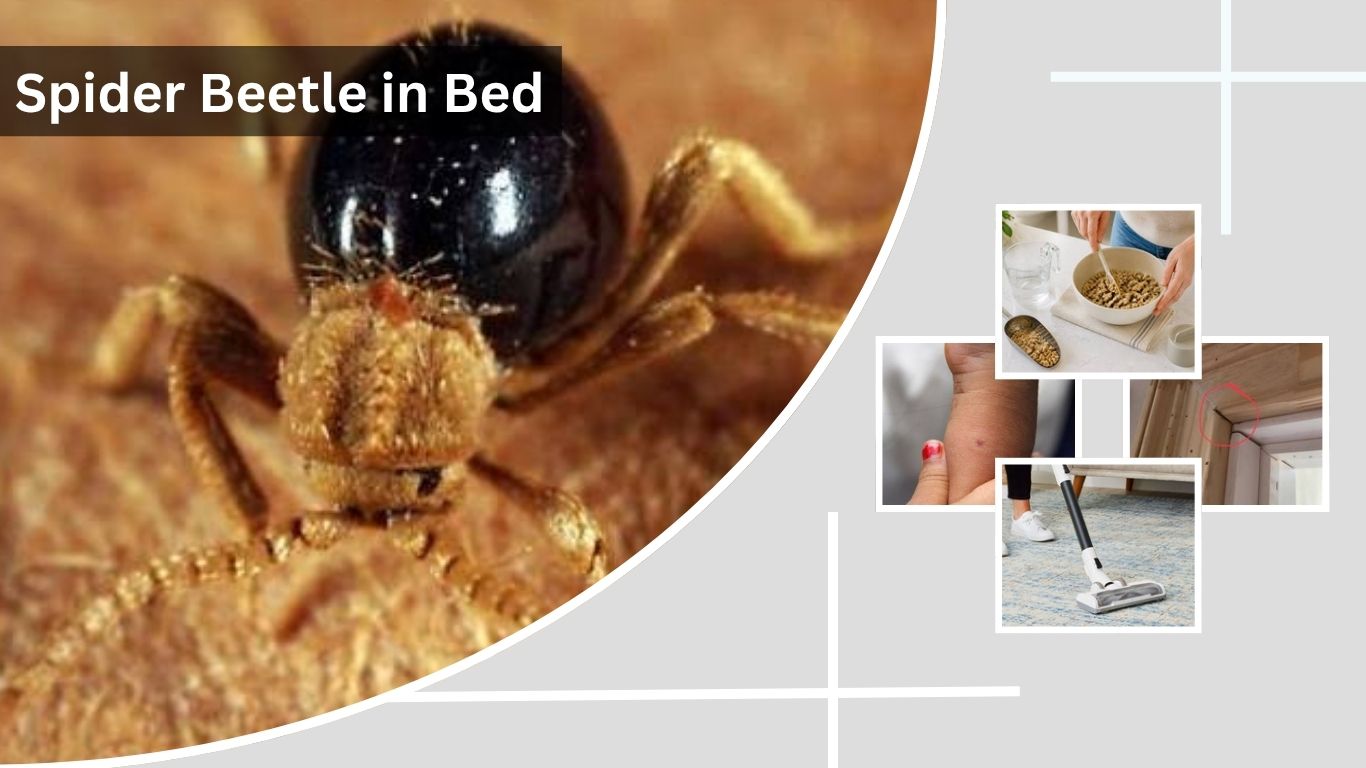
Finding a spider beetle in bed can be unsettling, especially when the tiny brown insect resembles a bed bug. However, spider beetles do not feed on human blood and usually enter bedrooms while wandering from nearby food sources or hidden organic debris. Their rounded bodies, long legs, and shiny appearance often cause confusion with other household pests. Understanding why they appear, how to identify them, and where they breed helps you respond correctly. This guide explains spider beetles in beds, their differences from bed bugs, and practical removal methods.
Why Are Spider Beetles in My Bed?
Spider beetles occasionally appear in bedrooms while searching for food, shelter, or suitable hiding places. Unlike bed bugs, they are not attracted to human blood. These small beetles usually develop in stored organic materials and may wander considerable distances from their original food source. Finding one on your mattress does not necessarily indicate a bedroom infestation.
Spider Beetles Enter From Nearby Storage Areas
Spider beetles often live in stored grains, dried foods, old boxes, or accumulated organic debris. They may move into bedrooms from nearby storage spaces, attics, or wall cavities.
Because many spider beetles are nocturnal, homeowners may notice them crawling across bedding at night.
Hidden Food Sources Attract Spider Beetles
Spider beetles feed on dried plant and animal materials, including seeds, feathers, and dead insects.
Old bird nests, spilled pet food, and forgotten stored products can support infestations. Beetles emerging from these materials may eventually reach bedrooms.
Do Spider Beetles Live in Mattresses?
Spider beetles do not normally establish colonies inside mattresses to feed on sleeping people.
However, they may hide temporarily around bed frames, furniture joints, or surrounding cracks. Repeated sightings suggest that a nearby food source should be investigated.
What Does a Spider Beetle in Bed Look Like?
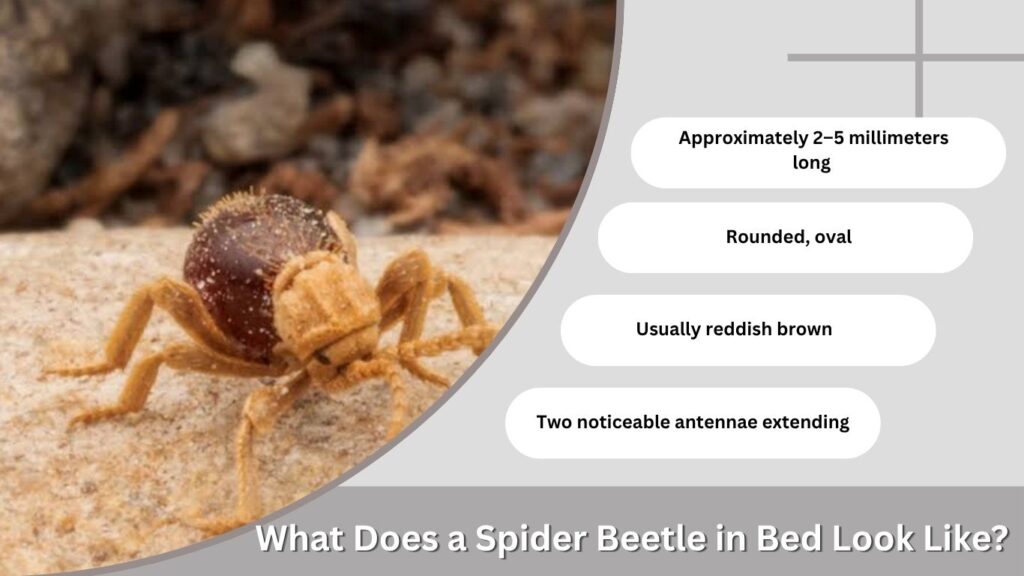
Spider beetles are small insects belonging to the beetle family Ptinidae. Their unusual appearance makes them easy to mistake for ticks, mites, or bed bugs. Most have rounded bodies, relatively long legs, and visible antennae. Some species appear smooth and shiny, while others have fine hairs covering their bodies.
Spider Beetle Identification Features
- Size: Most species measure approximately 2–5 millimeters long.
- Body shape: Rounded, oval, or nearly spherical.
- Color: Usually reddish brown, golden brown, or dark brown.
- Legs: Six slender legs that create a spider-like appearance.
- Antennae: Two noticeable antennae extending from the head.
- Body texture: Smooth, glossy, or covered with fine hairs.
What Does a Shiny Spider Beetle Look Like?
Shiny spider beetles have rounded, glossy bodies that may resemble tiny reddish-brown beads.
Their small size and long legs can make them difficult to identify without magnification. Unlike bed bugs, they generally have strongly raised, dome-shaped bodies.
Spider Beetle vs Bed Bug: How to Tell the Difference
Spider beetles and bed bugs can appear similar at first glance, particularly when both are found around sleeping areas. However, their body shapes, feeding behavior, and preferred habitats are different. Correct identification is important because spider beetles require a different control approach from blood-feeding bed bugs.
Differences in Appearance
Spider beetles generally have rounded, raised bodies with long legs. Bed bugs have flatter, broader, oval bodies, although recently fed bed bugs become more swollen.
Adult bed bugs usually measure around 5–7 millimeters, while many spider beetles are smaller.
Differences in Feeding Behavior
Bed bugs feed on human and animal blood, usually while their hosts are resting.
Spider beetles feed on dried organic materials. They do not need blood meals to survive and are not considered human parasites.
Signs of Bed Bugs Instead of Spider Beetles
Bed bug infestations may leave dark fecal spots, shed skins, eggs, or rusty stains around mattresses and bed frames.
Spider beetle activity is more commonly associated with stored products or organic debris. Skin reactions alone cannot reliably establish which pest is present.
Are Spider Beetles in Bed Dangerous?
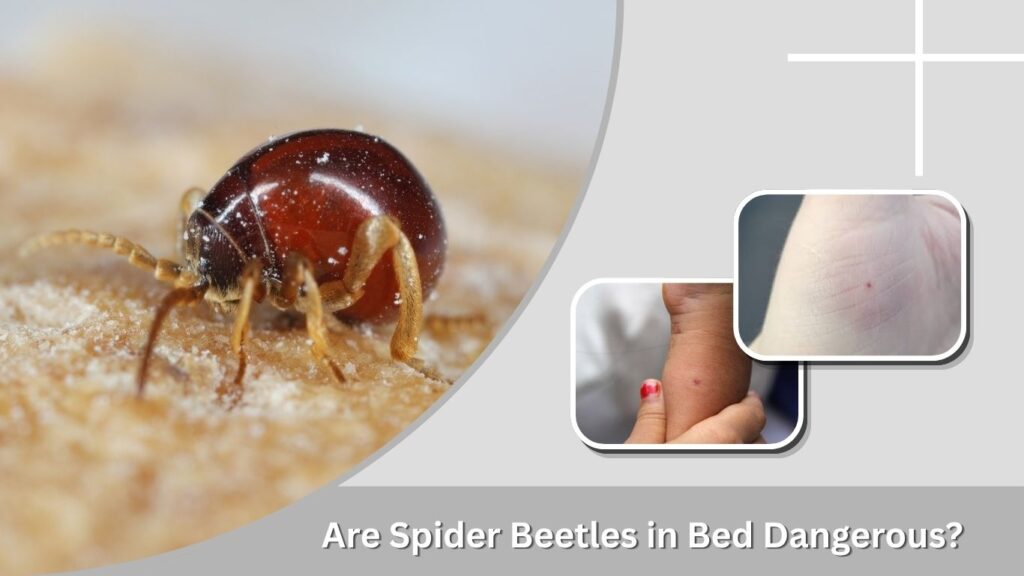
Spider beetles are generally harmless to humans and pets. They are not known to transmit diseases through bites and do not feed on blood. Their main importance comes from contaminating stored foods and sometimes damaging natural materials. Although finding one in bed can be unpleasant, it does not present the same health concerns as finding a biting parasite.
Do Spider Beetles Bite While You Sleep?
Spider beetles do not normally bite people while they sleep. Their mouthparts are adapted for consuming organic materials rather than piercing human skin.
If unexplained bites or irritation occur, investigate other possible causes rather than automatically blaming spider beetles.
Can Spider Beetles Cause Allergic Reactions?
Spider beetles are not commonly associated with significant allergic reactions. However, insect fragments or contaminated materials may contribute to irritation in sensitive individuals.
Persistent skin symptoms should be evaluated by a healthcare professional, especially when the cause remains unclear.
How to Get Rid of Spider Beetles in Bed
Getting rid of spider beetles requires more than removing individual insects from your mattress. These beetles often originate from hidden food sources elsewhere in the house. Cleaning the sleeping area helps eliminate wandering adults, but identifying the source is essential for lasting control. Chemical treatments are usually unnecessary when proper inspection and sanitation address the infestation.
Steps to Remove Spider Beetles From Your Bedroom
- Remove visible beetles: Collect individual insects using a vacuum or tissue.
- Wash bedding: Launder sheets, pillowcases, and blankets according to fabric-care instructions.
- Vacuum the bed area: Clean mattress seams, bed frames, baseboards, and furniture gaps.
- Inspect stored materials: Check boxes, dried decorations, pet food, and nearby stored products.
- Discard infested items: Seal contaminated materials before placing them in outdoor trash.
- Monitor the room: Watch for additional beetles to determine whether the source remains active.
Should You Spray Your Mattress?
Avoid applying household insecticides directly to mattresses unless the product is specifically labeled for that use.
Spider beetle problems are usually better addressed through cleaning and removal of infested materials. Unnecessary spraying may expose occupants to chemicals without eliminating the breeding source.
How to Find a Spider Beetle Infestation
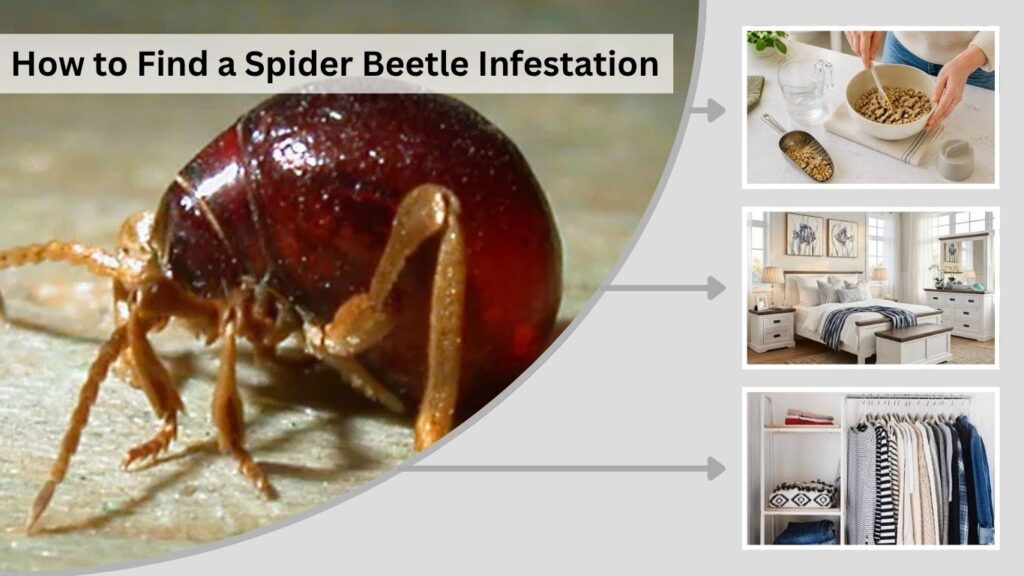
Repeatedly finding spider beetles in bed suggests that insects may be developing somewhere nearby. Their breeding sources can be difficult to locate because they feed on many different dried materials. A careful inspection of the bedroom and adjoining spaces can help identify the source before the infestation spreads.
Common Places to Inspect
- Bedroom furniture: Check drawer corners, storage compartments, and hidden debris.
- Under the bed: Inspect old boxes, forgotten items, and accumulated materials.
- Closets: Examine stored fabrics, natural decorations, and food-containing items.
- Attics: Look for old bird nests or other organic debris.
- Kitchen cabinets: Check dried foods, cereals, seeds, and pet food.
- Wall openings: Watch for beetles emerging from cracks near baseboards.
When Should You Contact Pest Control?
Professional pest control may be useful when beetles continue appearing despite repeated cleaning and careful inspections.
A specialist can help identify the species, locate concealed breeding materials, and recommend targeted control rather than unnecessary whole-room pesticide treatments.
How to Prevent Spider Beetles From Returning
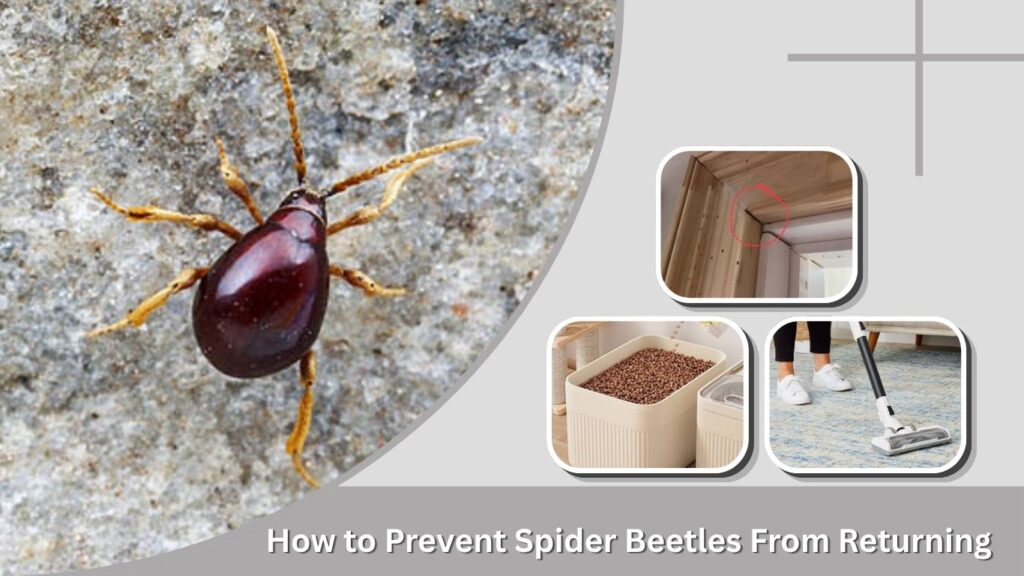
Preventing future spider beetle activity involves eliminating accessible food sources and keeping storage areas clean. These beetles thrive where dried organic materials remain undisturbed. Maintaining good storage practices and inspecting hidden areas can reduce opportunities for infestation throughout your home.
Spider Beetle Prevention Tips
- Store dried food and pet food in airtight containers.
- Vacuum bedroom corners and storage areas regularly.
- Remove unnecessary cardboard boxes and accumulated debris.
- Repair gaps around windows, doors, and baseboards.
- Inspect stored natural materials for insect activity.
- Address abandoned animal nests through appropriate wildlife-control procedures.
FAQs
1. Why did I find a spider beetle in my bed?
Spider beetles may accidentally wander into beds while moving from nearby storage areas or hidden food sources. They do not seek humans for blood meals. Finding one beetle does not necessarily indicate an infestation, but repeated sightings should prompt a careful inspection of surrounding rooms.
2. Can spider beetles bite you in bed?
Spider beetles do not normally bite humans. Unlike bed bugs, they feed on dried organic materials rather than blood. If you experience unexplained itchy marks, inspect for other insects and consider additional causes of skin irritation. Bite marks alone cannot confirm a bed bug infestation.
3. Are spider beetles the same as bed bugs?
No. Spider beetles are scavenging beetles with rounded bodies, while bed bugs are flattened insects that feed on blood. Both may appear reddish brown, but their feeding habits and preferred environments differ. Accurate identification helps determine the correct pest-control approach.
4. Do spider beetles lay eggs in beds?
Spider beetles generally lay eggs near suitable food sources rather than deliberately using bedding as a breeding site. Their larvae develop in stored foods or organic debris. Finding adult beetles on a mattress does not necessarily mean eggs or larvae are present there.
5. How can I permanently get rid of spider beetles?
Long-term control depends on locating and removing infested materials. Thorough vacuuming, checking stored foods, eliminating organic debris, and using sealed containers can reduce populations. If beetles continue appearing, hidden sources may require professional inspection before the infestation can be fully controlled.
