
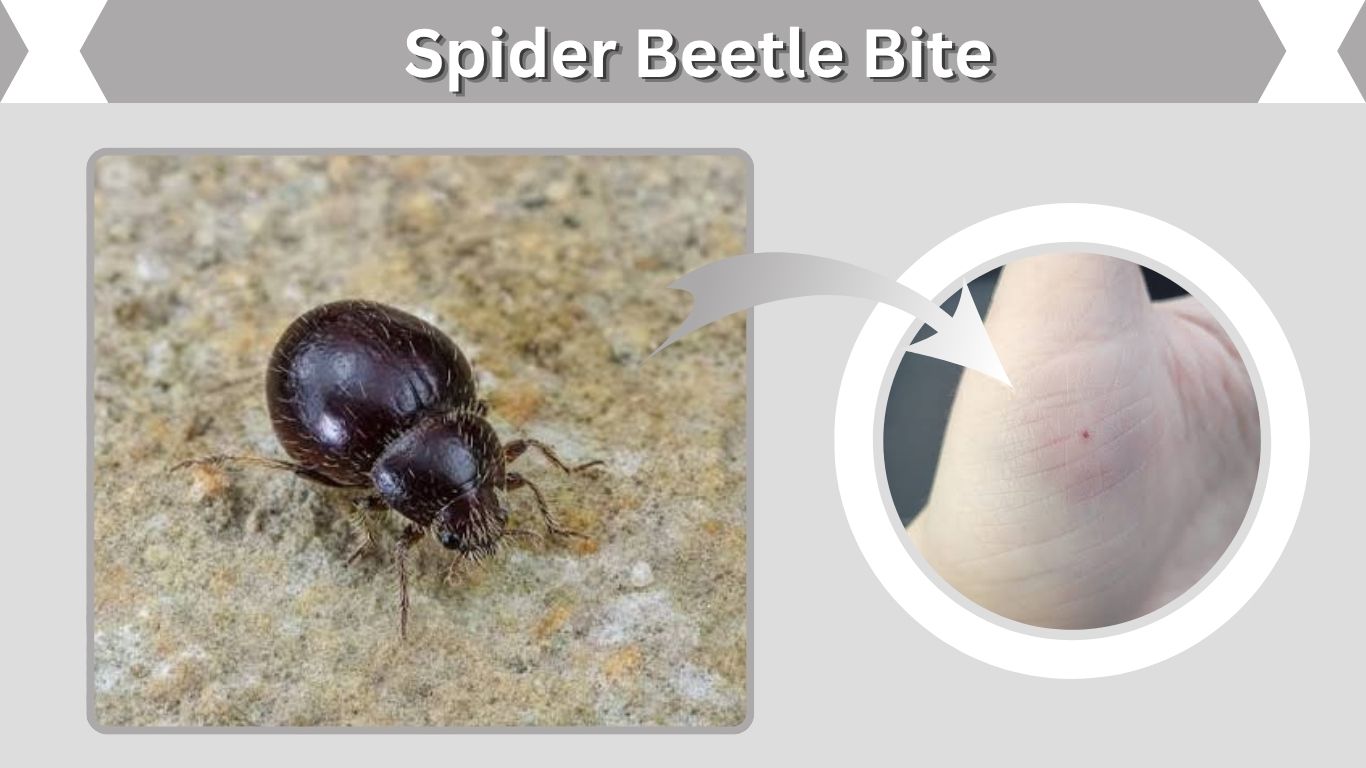
Spider beetles are tiny household insects that resemble spiders or ticks because of their rounded bodies and long legs. Finding one crawling across your skin or bedding may raise concerns about spider beetle bites. However, these beetles do not normally feed on humans, and biting is not part of their usual behavior. Their primary food sources include dried plant materials, stored products, and organic debris. Understanding their behavior helps distinguish harmless encounters from genuine biting pest problems. This guide explains possible spider beetle bites, skin reactions, identification, and prevention.
Do Spider Beetles Bite Humans?
Spider beetles are not normally considered biting household pests. Unlike mosquitoes, ticks, and bed bugs, they do not depend on human or animal blood for survival. Their mouthparts are adapted for feeding on dried organic materials. Although an occasional defensive or accidental nip may be possible, spider beetles do not routinely attack people or cause recognizable bite patterns.
Can Spider Beetles Bite Your Skin?
Spider beetles possess chewing mouthparts, but they are not adapted for piercing skin to obtain blood.
Rare incidental biting may be possible when a beetle is trapped against the skin or handled. However, finding one near a skin mark does not establish that it caused the irritation.
Are Spider Beetle Bites Dangerous?
Spider beetles are not recognized as important disease-transmitting biting pests. Their presence is generally more concerning for stored foods than human health.
If unexplained skin irritation develops, consider other insects, allergies, or medical conditions rather than immediately attributing the symptoms to spider beetles.
What Does a Spider Beetle Bite Look Like?
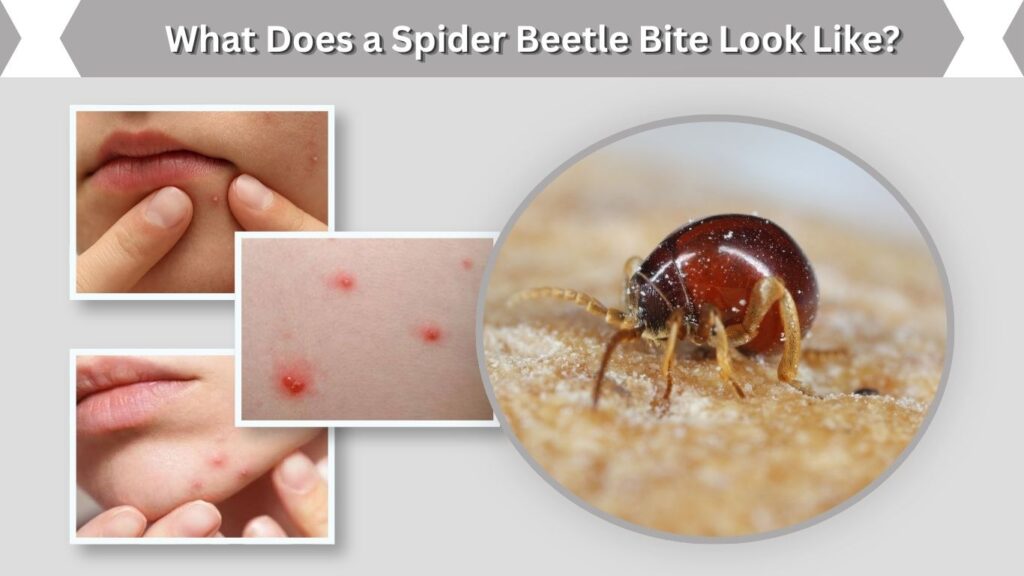
There is no well-established appearance for a spider beetle bite because these insects do not normally bite humans. Red spots, small bumps, or itchy patches cannot reliably be identified as spider beetle bites. Similar reactions can develop from other arthropods or non-insect causes. Proper identification requires examining the insect and considering the surrounding circumstances.
Can Spider Beetles Cause Red Bite Marks?
Spider beetles are not known for producing characteristic red bite marks.
If you notice small reddish spots after finding one, the two events may be unrelated. Skin irritation can have many causes, including other insects, contact reactions, or existing skin conditions.
Do Spider Beetle Bites Itch?
There is no established pattern of itching caused by spider beetle bites. These beetles are not typical blood-feeding insects, so recurring itchy welts should prompt investigation of other causes.
Persistent or worsening symptoms may require medical evaluation.
Why Do People Mistake Spider Beetles for Biting Insects?
Spider beetles are frequently confused with other small household pests because their bodies resemble ticks or engorged bed bugs. Their shiny, reddish-brown appearance can be especially misleading. Finding a spider beetle in a bedroom may lead homeowners to connect it with unexplained skin marks. However, insect appearance and location alone cannot confirm the cause of a suspected bite.
Common Causes of Mistaken Spider Beetle Bites
- Bed bugs: Blood-feeding insects that may cause itchy welts after sleeping.
- Fleas: Small jumping insects that bite humans and other mammals.
- Mosquitoes: Flying insects that commonly cause itchy skin reactions.
- Ticks: Blood-feeding arachnids that attach to people or animals.
- Skin irritation: Contact dermatitis and other skin conditions can resemble insect bites.
Why Are Spider Beetles Found in Bedrooms?
Spider beetles may wander into bedrooms from nearby storage areas, wall cavities, or other locations containing organic materials.
Unlike bed bugs, they do not search for sleeping humans to obtain blood meals. Their presence on bedding does not automatically indicate a biting pest infestation.
Spider Beetle Bites vs. Bed Bug Bites
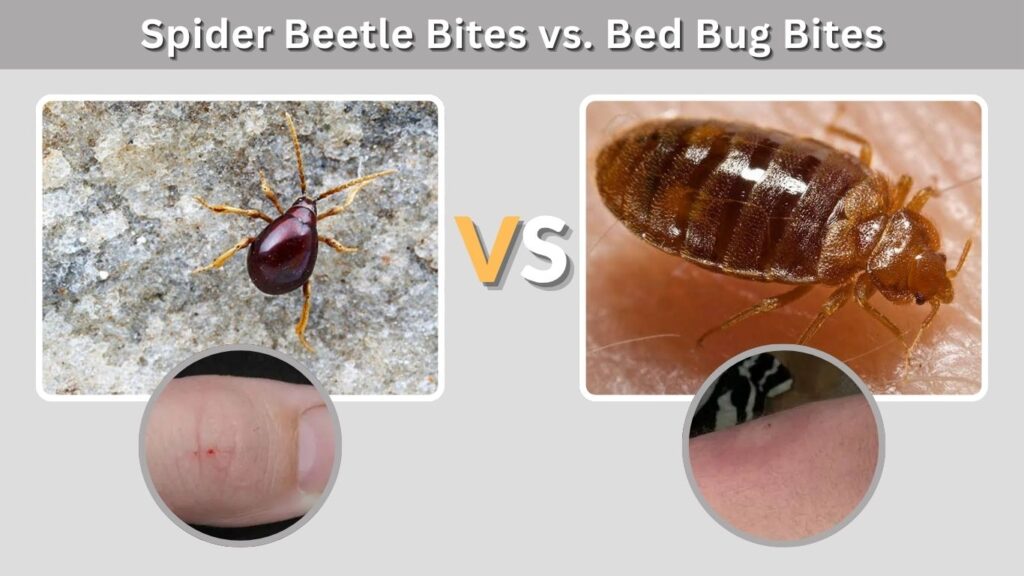
Spider beetles and bed bugs can appear similar because both are small, brownish household insects. However, their feeding behavior differs considerably. Bed bugs are blood-feeding parasites, while spider beetles are scavengers. Understanding their physical characteristics and the signs they leave behind helps determine which insect may actually be present.
How to Tell Spider Beetles From Bed Bugs
- Body shape: Spider beetles generally have rounded, raised bodies, while unfed bed bugs are flattened and oval.
- Size: Spider beetles commonly measure approximately 2–5 mm; adult bed bugs are usually 5–7 mm.
- Feeding: Spider beetles eat organic materials, while bed bugs feed on blood.
- Biting behavior: Bed bugs bite humans regularly; spider beetles do not normally bite.
- Hiding places: Spider beetles occur near stored products and organic debris, while bed bugs often hide around sleeping areas.
Can You Identify Bed Bugs From Bite Marks?
Bite marks alone cannot reliably identify a bed bug infestation. Reactions vary between individuals, and some people develop no visible marks.
Look for live insects, dark fecal spotting, shed skins, and other physical evidence around mattresses and bed frames.
What to Do If You Suspect a Spider Beetle Bite
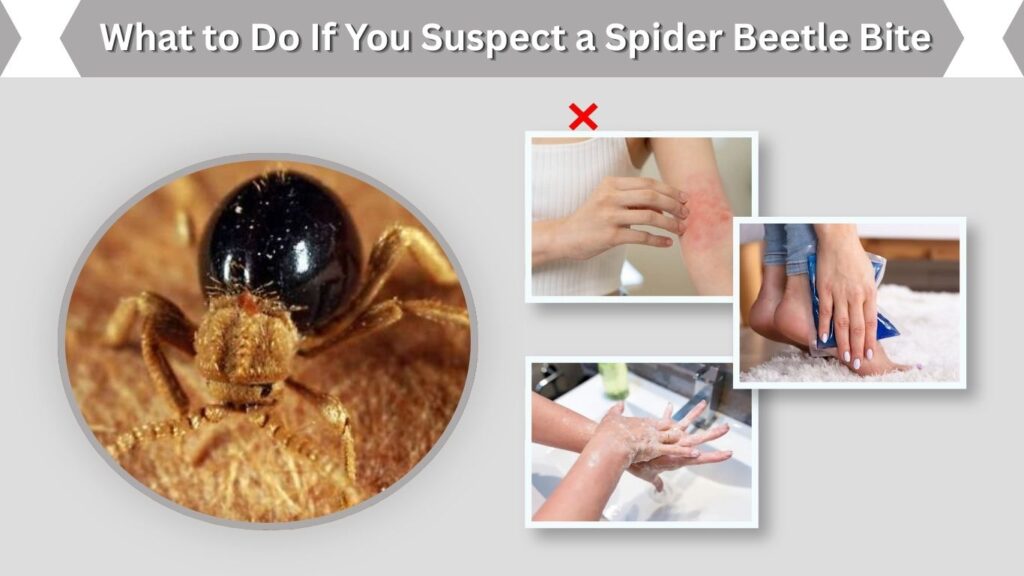
If you develop skin irritation after encountering a spider beetle, avoid assuming that the beetle caused it. Because spider beetles rarely bite, an accurate assessment should consider other potential causes. Mild skin reactions can often be managed with basic care, but persistent symptoms, signs of infection, or severe allergic reactions require medical attention.
Basic Skin Care and Precautions
- Wash the area: Gently clean irritated skin with mild soap and water.
- Apply a cold compress: Use a cool cloth to help relieve temporary itching or swelling.
- Avoid scratching: Scratching may further irritate the skin and increase infection risk.
- Monitor symptoms: Watch for increasing redness, pain, swelling, or unusual changes.
- Identify the insect: Save a photograph or specimen if possible to help determine whether another pest is involved.
When Should You See a Doctor?
Seek medical advice if a skin reaction becomes increasingly painful, swollen, warm, or develops drainage.
Emergency medical care is necessary for breathing difficulties, swelling of the throat, faintness, or other symptoms of a severe allergic reaction.
How to Identify a Spider Beetle Correctly
Correct identification is essential when investigating possible insect bites. Spider beetles belong to the beetle family Ptinidae and are not true spiders. Their long legs and antennae make them appear spider-like, while their rounded bodies can resemble small ticks. Looking closely at their physical features helps avoid unnecessary treatment for the wrong household pest.
Common Spider Beetle Identification Features
Spider beetles typically have six legs, two antennae, and a rounded or oval abdomen. Many species are reddish brown, although coloration varies.
Smooth spider beetles have glossy, bead-like bodies, while other species may have fine hairs or textured wing covers.
Do Smooth and Shiny Spider Beetles Bite?
Smooth and shiny spider beetles do not normally feed on people or seek blood meals.
Although incidental biting cannot be ruled out completely, neither type is recognized as a common cause of human bite marks. Finding one on the skin does not prove it caused an injury.
How to Prevent Spider Beetles in Your Home
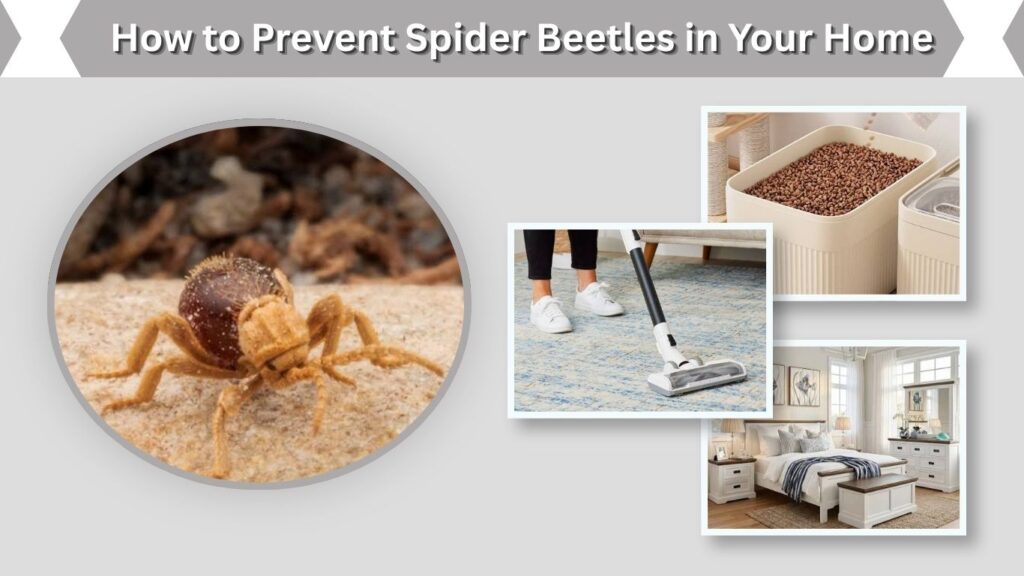
Preventing spider beetles involves reducing accessible food sources and eliminating suitable hiding places. These insects often develop in dried food products, accumulated debris, or animal nesting materials. When populations grow, adults may wander into bedrooms and other living spaces. Regular inspection and cleaning are usually more useful than unnecessary chemical treatments.
Effective Spider Beetle Prevention Tips
- Inspect stored food: Check grains, cereals, flour, seeds, and pet food for signs of infestation.
- Use airtight containers: Keep dry food products in tightly sealed containers.
- Vacuum regularly: Remove crumbs, insect remains, and debris from corners and storage areas.
- Discard infested materials: Seal contaminated items before disposing of them.
- Check hidden spaces: Inspect attics, closets, and unused storage areas for organic debris.
- Monitor activity: Investigate repeated beetle sightings to identify their breeding source.
FAQs
1. Do American spider beetles bite humans?
American spider beetles are not normally biting pests. They feed primarily on dried organic materials rather than human blood. Although rare incidental biting may be possible, they are not recognized as a significant human biting hazard. Repeated skin marks should prompt investigation of other possible causes.
2. What do spider beetle bite marks look like?
There is no established visual pattern for spider beetle bite marks because these beetles rarely bite people. Small red bumps or itchy patches cannot be confidently attributed to spider beetles based on appearance alone. Identifying the actual insect is more reliable than examining skin marks.
3. Can spider beetles bite you while sleeping?
Spider beetles may wander across bedding, but they do not deliberately seek sleeping people for blood meals. They are not considered typical nighttime biting pests. If unexplained skin irritation occurs after sleeping, inspect for bed bugs, fleas, and other possible causes.
4. Are spider beetle bites poisonous?
Spider beetles are not venomous, and they are not known to inject toxins through bites. They are primarily household scavengers rather than medically important biting insects. If an unusual skin reaction develops, do not assume a spider beetle caused it without reliable identification.
5. How can I stop spider beetles from coming into my bed?
Inspect nearby storage areas, remove accumulated debris, vacuum bedroom corners, and check dry foods for infestation. Spider beetles may wander into bedrooms from distant breeding sources. Finding and removing those sources is more effective than spraying mattresses or repeatedly removing individual beetles.
