
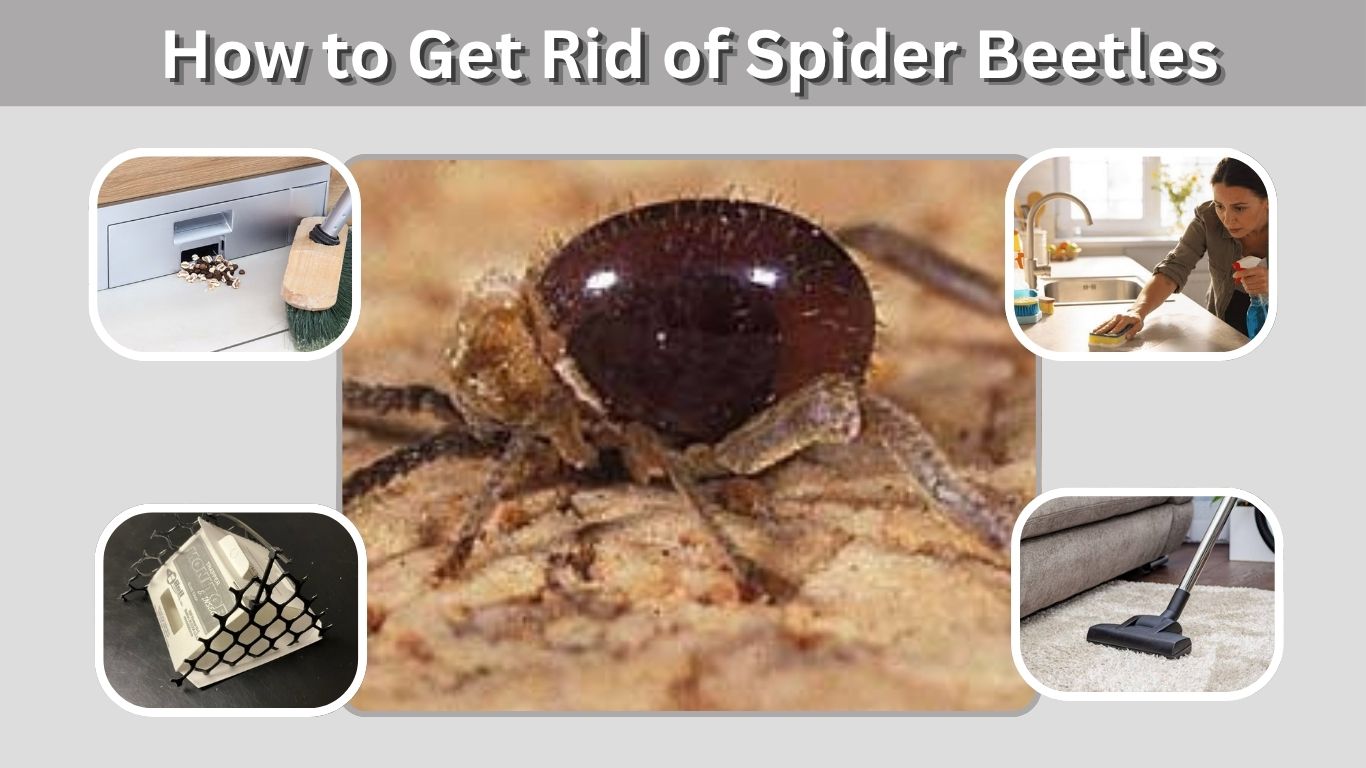
Spider beetles are tiny household pests that often appear in kitchens, bedrooms, bathrooms, and storage areas. Their rounded bodies and long legs make them look like miniature spiders, but they are actually beetles that feed on dried foods and organic debris. Although they rarely threaten human health, spider beetles can contaminate stored products and become difficult to control when their breeding sources remain hidden. Learning how to get rid of spider beetles involves proper identification, thorough cleaning, and removing infested materials. This guide explains effective control methods and prevention tips.
Why Are Spider Beetles in Your House?
Spider beetles usually enter homes through infested products or find suitable breeding materials inside buildings. They feed on dried plant and animal matter, including grains, seeds, feathers, and dead insects. Because these beetles prefer sheltered environments, they may remain unnoticed until adults begin wandering through living spaces in search of additional food.
Where Do Spider Beetles Come From?
Spider beetles commonly originate from contaminated food packages, forgotten storage materials, or accumulated organic debris.
Old bird nests, rodent remains, and spilled pet food can also support their development. Their presence may indicate a food source hidden somewhere inside the building.
Where Do Spider Beetles Hide?
These insects prefer dark, quiet places where food and shelter are available. They may hide behind cabinets, beneath appliances, inside cracks, or around storage boxes.
Adults often wander away from their breeding sites, making the original infestation difficult to locate.
How to Get Rid of Spider Beetles Step by Step
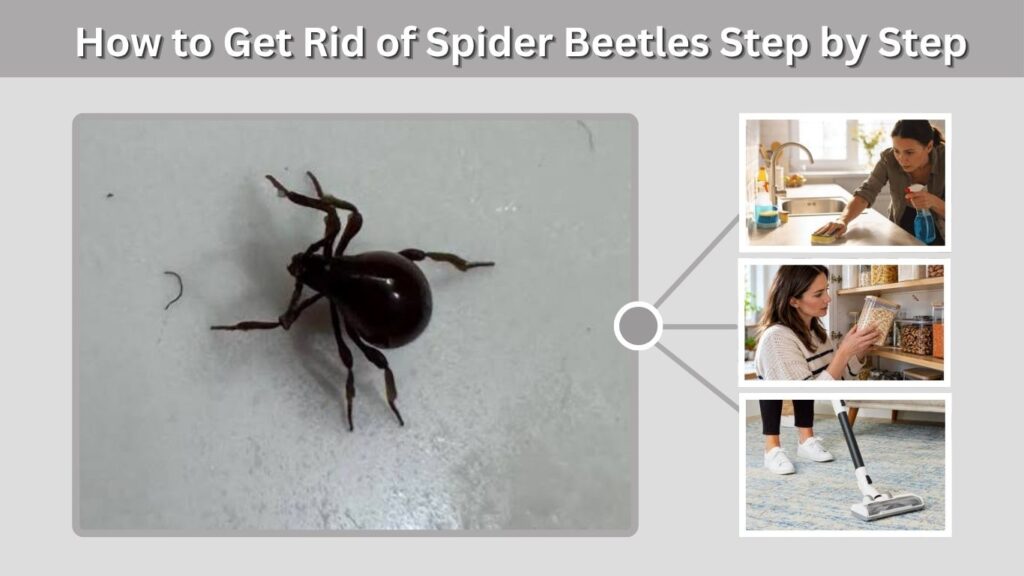
Successful spider beetle removal begins with finding the source of the infestation. Killing visible beetles may provide temporary relief, but hidden larvae can continue developing inside contaminated materials. The most reliable approach combines careful inspection, disposal of infested products, thorough vacuuming, and proper food storage.
Steps to Eliminate Spider Beetles
- Identify the insect: Confirm that the pest is a spider beetle rather than a tick or bed bug.
- Inspect stored foods: Check flour, cereals, grains, spices, seeds, and pet food.
- Remove infested materials: Seal contaminated products in bags and dispose of them outside.
- Vacuum thoroughly: Clean shelves, cupboards, corners, and cracks where beetles or food particles accumulate.
- Clean storage surfaces: Wash affected shelves with warm, soapy water after removing debris.
- Store food properly: Transfer unaffected dry products into airtight containers.
- Monitor activity: Continue inspecting affected areas to determine whether additional breeding sources remain.
Why Is Removing Infested Food Important?
Spider beetle larvae may develop inside food packages where ordinary surface cleaning cannot reach them.
Removing the contaminated products eliminates a major breeding source. If beetles continue appearing, inspect nearby materials and other storage areas.
How to Get Rid of Spider Beetles in Different Rooms
Spider beetles can appear throughout a home even when their breeding source is located elsewhere. Their presence in a particular room does not necessarily mean they are reproducing there. Understanding the possible sources in bedrooms, bathrooms, and kitchens helps homeowners investigate the problem more effectively.
How to Get Rid of Spider Beetles in Bedrooms
Begin by vacuuming beneath beds, behind furniture, and along baseboards. Examine storage boxes, drawers, and nearby closets for old organic materials.
Spider beetles do not normally feed on people or infest mattresses like bed bugs. Repeated bedroom sightings may indicate a hidden source in an adjoining space.
How to Get Rid of Spider Beetles in Bathrooms
Remove visible beetles using a vacuum or tissue. Clean cabinet corners, floor edges, and accumulated debris around bathroom fixtures.
Inspect nearby wall openings and storage spaces. If moisture problems are present, repair leaks and improve ventilation, although moisture reduction alone will not eliminate the infestation.
How to Remove Spider Beetles From Kitchens
Inspect all dry food packages, including unopened products with damaged packaging. Check behind appliances and beneath shelving for spilled food.
Discard contaminated products, vacuum thoroughly, and store unaffected foods in tightly sealed containers.
How to Get Rid of Spider Beetles Naturally
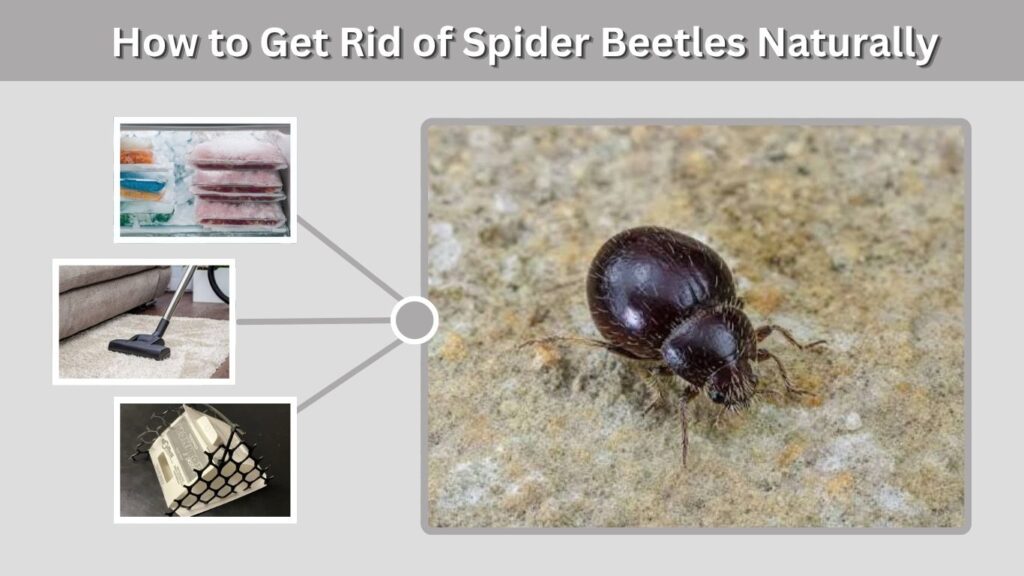
Natural spider beetle control focuses on sanitation, physical removal, and eliminating breeding materials rather than applying pesticides. These methods are often sufficient for household infestations when the source can be identified. Regular cleaning also reduces the possibility of additional beetles developing inside overlooked food packages or organic debris.
Natural Spider Beetle Control Methods
- Vacuuming: Remove adult beetles, larvae, and accessible debris from cracks and storage areas.
- Freezing suitable items: Nonfood materials that tolerate freezing can be treated in a freezer at 0°F (-18°C) for at least four days.
- Airtight storage: Keep grains, cereals, and pet food in sealed containers.
- Removing debris: Dispose of infested organic materials and clean surrounding surfaces.
- Sticky traps: Place monitoring traps along walls to identify areas with repeated beetle activity.
Does Vinegar Kill Spider Beetles?
Vinegar is not a proven solution for eliminating spider beetle infestations.
Cleaning surfaces may remove food residues, but vinegar does not reliably reach larvae developing inside infested materials. Removing breeding sources and vacuuming are more dependable approaches.
How to Identify a Spider Beetle Infestation
Spider beetle infestations sometimes remain hidden because the insects can develop in small quantities of stored food or organic material. Adults may wander into visible areas long before the breeding source is discovered. Recognizing recurring activity helps distinguish an isolated beetle from a developing household problem.
Common Signs of Spider Beetles
Spider beetles are usually small, rounded insects measuring approximately 2–5 millimeters. Many have reddish-brown bodies, slender legs, and prominent antennae.
Repeated adult sightings, larvae inside stored products, or beetles gathering near storage areas may indicate an infestation.
When Are Spider Beetles Most Active?
Many spider beetles are active at night and remain hidden during daylight hours.
Their activity and development depend on temperature, available food, and environmental conditions. Some species can remain active in relatively cool buildings.
How to Prevent Spider Beetles From Returning
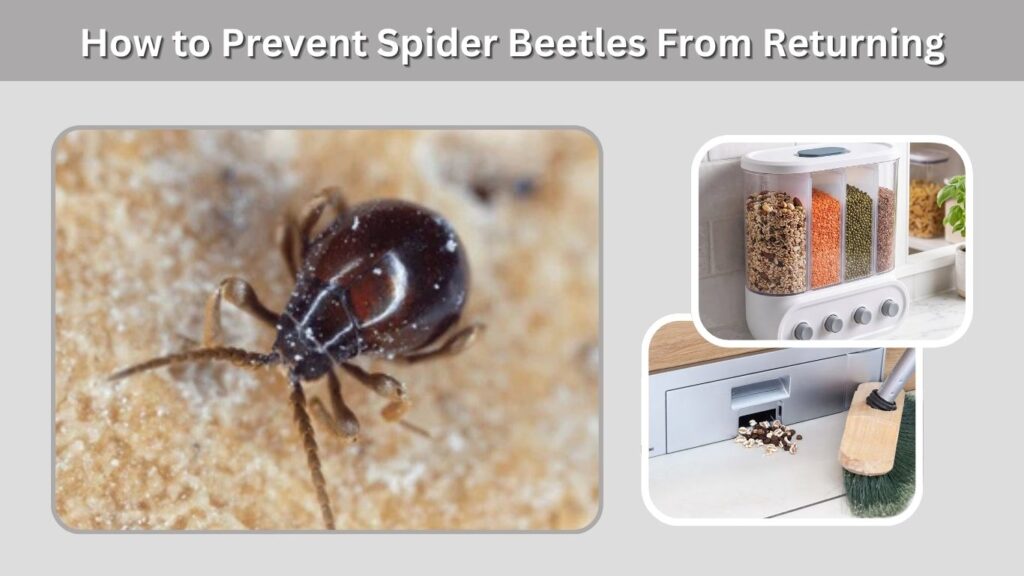
Preventing spider beetles requires maintaining clean storage areas and reducing access to suitable breeding materials. Since these beetles feed on many dried organic substances, food storage alone may not resolve every infestation. Regular inspections and prompt removal of accumulated debris provide effective long-term protection.
Effective Spider Beetle Prevention Tips
- Store cereals, grains, seeds, and pet food in airtight containers.
- Inspect newly purchased dry foods before storing them.
- Vacuum kitchen cabinets and storage spaces regularly.
- Remove forgotten food packages and spilled materials.
- Seal structural gaps after confirming they contain no active pest source.
- Inspect accessible attics and utility areas for old animal nests or organic remains.
When Should You Call Professional Pest Control?
Professional assistance may be necessary when beetles continue appearing despite careful cleaning and removal of infested products.
A pest control specialist can investigate concealed sources, including wall cavities and inaccessible storage areas. Insecticides are not recommended for routine spraying in food cupboards, and chemical treatments cannot replace locating the infestation source.
FAQs
1. What is the fastest way to get rid of spider beetles?
The most effective approach is to locate and remove their breeding source. Discard infested products, vacuum affected areas, and store remaining foods in airtight containers. Removing visible adults without addressing hidden larvae usually provides only temporary relief.
2. Can spider beetles live in bedrooms?
Yes, spider beetles may appear in bedrooms, particularly when nearby storage areas contain suitable food sources. However, they do not normally live in mattresses or feed on sleeping people. Repeated sightings should prompt an inspection of furniture, closets, and adjoining rooms.
3. Do spider beetles go away on their own?
Spider beetles may disappear if their food source becomes unavailable, but established infestations can continue while hidden breeding materials remain. Cleaning, removing infested products, and inspecting storage spaces provide a more reliable solution than simply waiting for the insects to disappear.
4. Can insecticide sprays eliminate spider beetles?
Some appropriately labeled insecticides may kill exposed beetles, but spraying alone rarely eliminates an infestation. Hidden larvae can survive inside contaminated materials. Pesticides should not be sprayed onto food or used in food-storage areas contrary to label instructions.
5. How long does it take to get rid of spider beetles?
The time required depends on infestation size and how quickly the breeding source is located. Small infestations may improve after thorough cleaning and disposal of contaminated materials. Hidden sources can cause continuing activity and may require professional inspection.
