
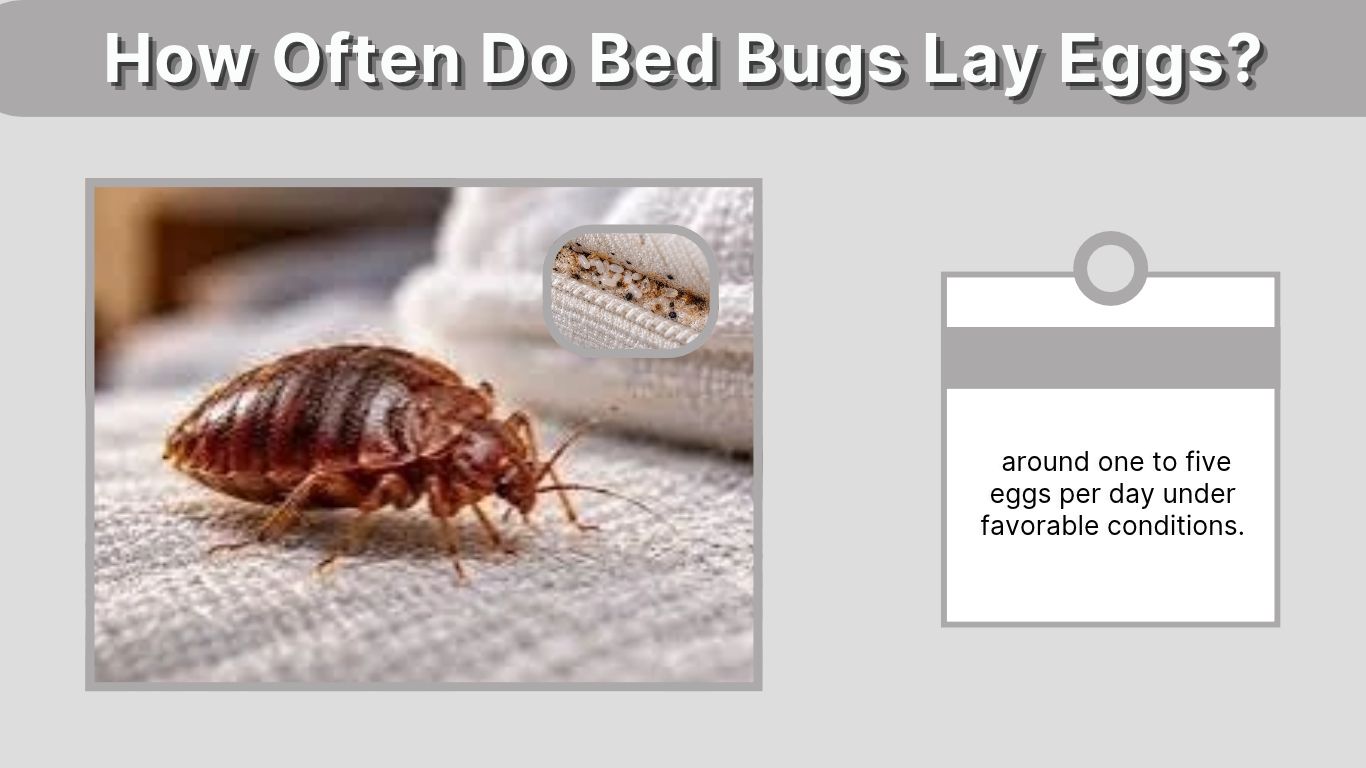
Bed bugs reproduce quickly, making even a small infestation difficult to control without proper treatment. A female bed bug can lay several eggs daily when conditions are favorable, allowing populations to grow rapidly inside homes, hotels, and apartments. Understanding how often bed bugs lay eggs, how many eggs they produce, and where they hide them is essential for preventing infestations. Their reproductive cycle depends on blood meals, mating, temperature, and environmental conditions. This guide explains bed bug egg-laying habits, reproduction timelines, common nesting locations, and practical prevention methods.
How Often Do Bed Bugs Lay Eggs?
Female bed bugs can lay eggs regularly throughout their adult lives when they have access to blood meals and suitable temperatures. Under favorable conditions, females commonly produce approximately one to five eggs daily, although actual production varies. Egg-laying activity may decrease when feeding opportunities become limited or environmental conditions change. Understanding this reproductive behavior helps explain why infestations can expand rapidly.
How Many Eggs Does a Bed Bug Lay Per Day?
An adult female bed bug typically lays around one to five eggs per day under favorable conditions. However, egg production is not necessarily consistent every day.
A female may produce several eggs after obtaining a blood meal and then experience periods of reduced activity. Temperature, nutrition, reproductive condition, and mating history all influence daily production.
How Often Do Bed Bugs Lay Eggs After Feeding?
Female bed bugs require blood meals to sustain egg production. After feeding and mating, they can continue depositing eggs as their reproductive system develops them.
The timing varies between individual insects. A regular food supply allows sustained reproduction, while prolonged food deprivation eventually reduces or stops egg production.
How Many Eggs Do Bed Bugs Lay in Their Lifetime?
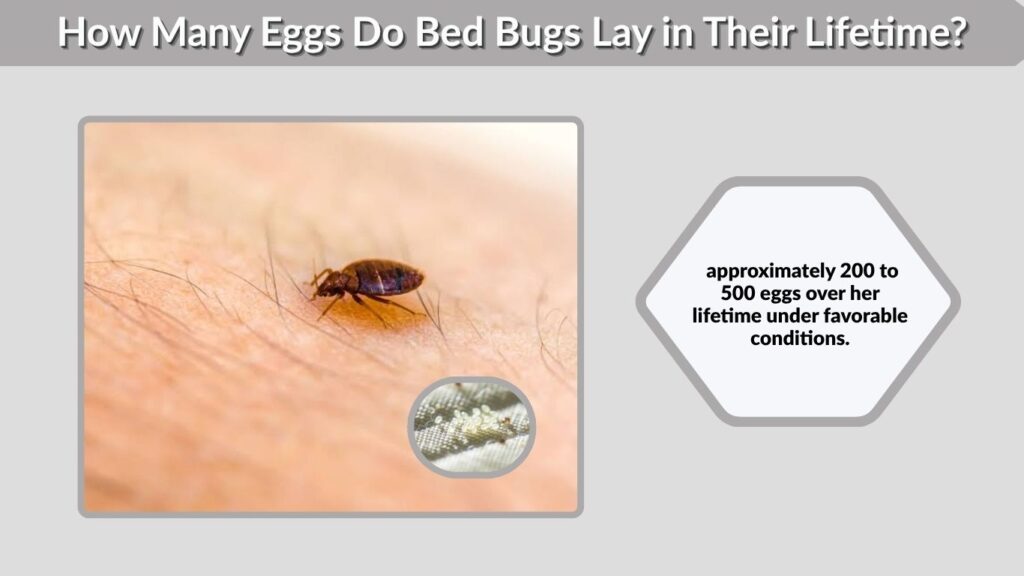
Bed bugs have considerable reproductive potential, especially in warm indoor environments where hosts are readily available. A female may produce hundreds of eggs throughout her lifetime, allowing a relatively small population to become established. However, not every female reaches maximum reproductive capacity. Lifespan, temperature, mating opportunities, and access to blood meals determine the total number of eggs produced.
How Many Eggs Can One Bed Bug Lay?
A female bed bug may lay approximately 200 to 500 eggs over her lifetime under favorable conditions. Some estimates are lower because actual reproductive output varies considerably.
These eggs are deposited individually or in small groups within protected hiding places. A single previously mated female can potentially establish an infestation when appropriate conditions support the survival of her offspring.
Factors That Affect Bed Bug Egg Production
Several environmental and biological conditions influence how frequently bed bugs reproduce:
- Temperature: Warm, suitable indoor conditions generally promote faster development and egg production.
- Blood availability: Females require blood meals to maintain reproductive activity.
- Mating opportunities: Successful mating is necessary for producing fertilized eggs.
- Female age: Reproductive performance can change as females mature and age.
- Environmental conditions: Unfavorable temperatures and limited shelter can interfere with normal development.
Do Bed Bugs Die After Laying Eggs?
No. Female bed bugs do not normally die immediately after laying eggs. They can continue feeding, mating, and reproducing throughout their adult lives.
Unlike insects that reproduce only once, female bed bugs may deposit eggs repeatedly. Their survival and reproductive success depend on environmental conditions and continued access to suitable hosts.
When Do Bed Bugs Start Laying Eggs?
Bed bugs cannot reproduce immediately after hatching. They must pass through five immature growth stages before reaching adulthood. During development, young bed bugs require blood meals to molt successfully. Once females reach sexual maturity, mate, and obtain sufficient nutrition, they can begin producing eggs. The time required to reach this stage varies with temperature and food availability.
At What Stage Do Bed Bugs Lay Eggs?
Only sexually mature female bed bugs lay eggs. Immature insects, called nymphs, cannot reproduce because their reproductive systems are not fully developed.
Bed bugs develop through five nymphal stages before becoming adults. Under favorable conditions, development from egg to reproductive adult can take approximately four to six weeks.
How Long Does It Take Bed Bug Eggs to Hatch?
Bed bug eggs typically hatch within approximately five to ten days under favorable indoor conditions, although incubation time varies with temperature.
The newly emerged nymphs are tiny, pale insects that require blood meals to continue developing. Cooler conditions can delay hatching and slow the reproductive cycle.
Can Bed Bugs Lay Eggs Without Feeding or Mating?
Female bed bugs need blood meals to sustain normal egg production. Without continued feeding, their reproductive output eventually decreases.
Mating is also necessary for producing fertilized eggs. A previously mated female may continue laying eggs for some time without a male nearby, but unmated females cannot independently establish a reproducing population.
Where Do Bed Bugs Lay Their Eggs?
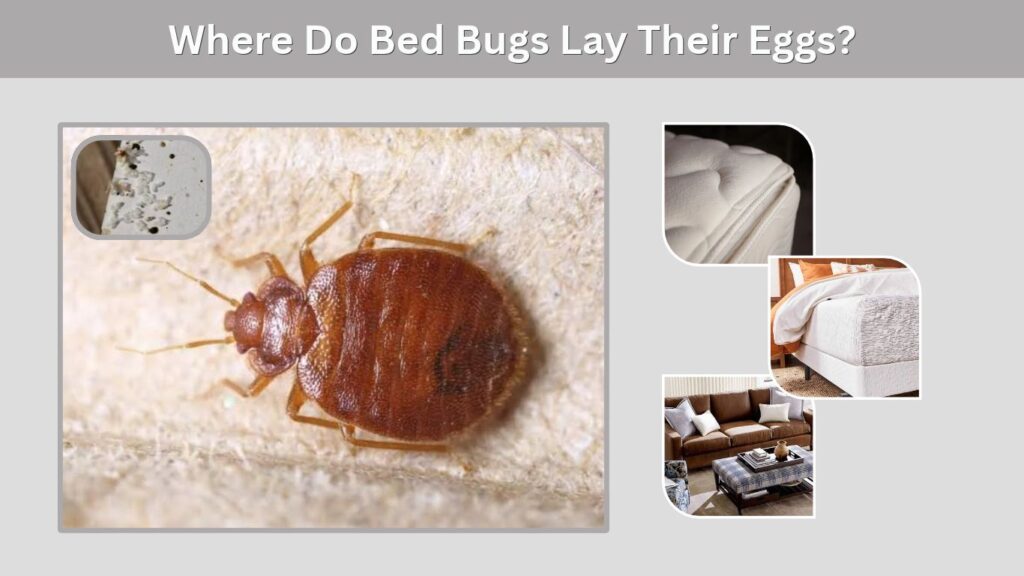
Female bed bugs prefer protected hiding places close to areas where humans sleep or rest. These locations offer shelter and convenient access to blood meals after eggs hatch. Because bed bug eggs are approximately one millimeter long and often attached inside narrow crevices, they can be difficult to discover during ordinary cleaning. Careful inspection of likely hiding places is essential.
Common Places Bed Bugs Lay Eggs
Bed bug eggs may occur in several locations throughout an infested room:
- Mattress seams: Stitching, piping, and folded edges provide concealed egg-laying sites.
- Box springs: Fabric coverings and wooden frames contain protected hiding places.
- Bed frames: Small cracks, joints, and screw holes can conceal eggs.
- Headboards: Narrow spaces behind headboards are common bed bug hiding areas.
- Couches and chairs: Upholstery seams and furniture joints may contain eggs.
- Carpets and baseboards: Protected edges and adjacent cracks can provide additional shelter.
- Books and luggage: Eggs can occasionally be attached to concealed surfaces inside infested belongings.
Do Bed Bugs Lay Eggs in Clothes?
Yes, bed bugs can occasionally deposit eggs on clothing, particularly when garments remain undisturbed near established hiding places.
However, clothing is not their primary egg-laying location. Bed bugs usually prefer protected spaces close to sleeping areas. Clothes, luggage, and personal belongings can also transport insects or eggs between locations.
Do Bed Bugs Lay Eggs in Clusters?
Bed bug eggs may occur individually or in small groups. Females attach them to surfaces using a sticky substance that helps keep them in place.
Several eggs in one location may indicate repeated egg-laying activity. However, the number of visible eggs does not reliably reveal the total size of an infestation.
Can Bed Bugs Lay Eggs on Humans?
Bed bugs feed on human blood, but they are not permanent parasites that normally remain attached to people. Unlike head lice, bed bugs generally leave their hosts after feeding and return to nearby hiding places. Their eggs are typically deposited on stationary surfaces rather than human bodies. Understanding this distinction helps prevent unnecessary concern about insects reproducing in skin or hair.
Can Bed Bugs Lay Eggs in Your Skin?
No. Bed bugs do not lay eggs inside or beneath human skin. Their mouthparts are adapted for piercing the skin and feeding on blood, not depositing eggs.
Small bumps following bites are usually skin reactions rather than developing bed bug eggs. Persistent or unusual skin symptoms should be assessed by a healthcare professional.
Can Bed Bugs Lay Eggs in Your Hair?
Bed bugs do not normally live or lay eggs in human hair. They lack the specialized adaptations that allow head lice to cling to hair shafts.
Although a bed bug may occasionally crawl across the scalp, it generally seeks a protected hiding place after feeding. Finding eggs firmly attached to hair is more consistent with a different condition, such as head lice.
Can Male Bed Bugs Lay Eggs?
No. Only female bed bugs possess the reproductive organs necessary to produce eggs. Male bed bugs participate in mating but cannot lay eggs themselves.
Likewise, immature bed bugs cannot reproduce. A population requires reproductive females and successful mating to produce new generations.
How to Prevent Bed Bugs From Laying More Eggs
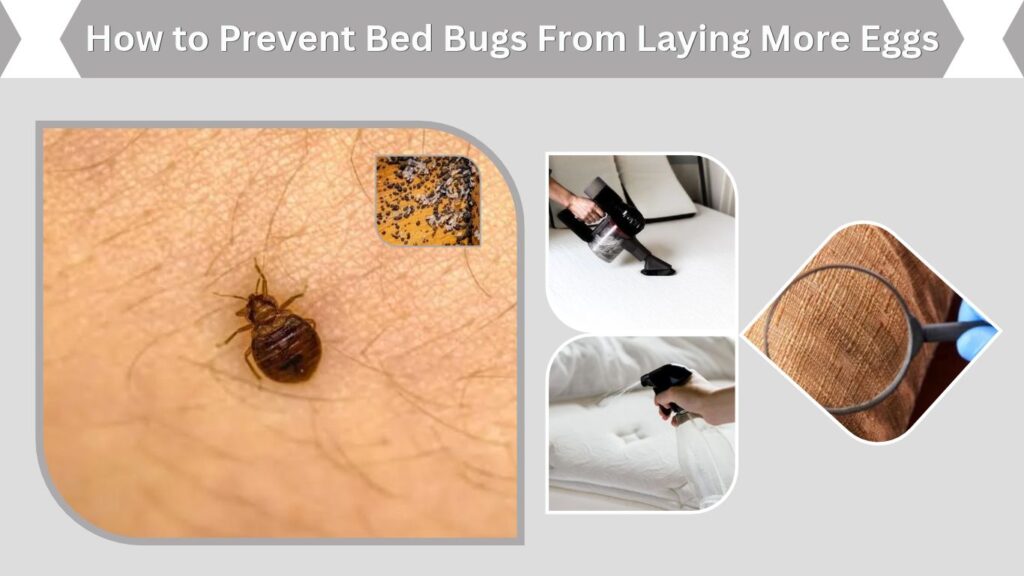
Preventing additional egg production requires controlling adult bed bugs, particularly reproductive females. Removing visible eggs alone will not stop an infestation if mature insects remain hidden. Effective management combines careful inspection, cleaning, heat treatment, and appropriate pest-control measures. Continued monitoring is necessary because overlooked eggs may hatch after an initial treatment.
Practical Ways to Reduce Bed Bug Reproduction
Several preventive measures can help manage an infestation:
- Inspect mattresses, bed frames, and nearby furniture for insects and eggs.
- Heat-dry suitable bedding and clothing to eliminate bed bugs and eggs.
- Vacuum cracks, furniture seams, and other accessible hiding places.
- Install bed bug-proof mattress and box spring encasements.
- Reduce unnecessary clutter around sleeping areas.
- Use professional pest-control services when infestations persist.
Why Early Treatment Is Important
Bed bug populations can increase rapidly when females continue reproducing and newly hatched insects survive to adulthood.
Addressing an infestation early reduces opportunities for further reproduction. Treatment should target eggs, nymphs, and adults because surviving insects can restart the population.
FAQs
1. Do Bed Bugs Lay Eggs Every Day?
Female bed bugs can lay eggs daily under favorable conditions, but reproduction is not necessarily continuous. Blood availability, temperature, mating status, and individual health influence egg production. A well-fed female may produce several eggs per day.
2. Can One Female Bed Bug Start an Infestation?
Yes. A previously mated female bed bug may establish an infestation if she obtains blood meals and deposits viable eggs. However, a single unmated female cannot independently produce fertilized offspring without mating.
3. Do Bed Bugs Lay Eggs on Dogs or Cats?
Bed bugs do not normally remain on pets or deposit eggs in their fur. Although they may occasionally feed on dogs and cats, they generally return to protected hiding places around furniture and sleeping areas.
4. Can Bed Bug Eggs Remain Dormant for Months?
Bed bug eggs do not normally remain dormant for months under typical indoor conditions. They generally hatch within days when temperatures are favorable. Cooler conditions can delay development, but this should not be mistaken for indefinite dormancy.
5. Do Bed Bugs Reproduce Faster in Warm Weather?
Bed bugs generally develop and reproduce faster under suitable warm conditions. However, excessively high temperatures can be harmful or lethal. In temperature-controlled homes, reproduction may continue throughout the year regardless of outdoor seasons.
