
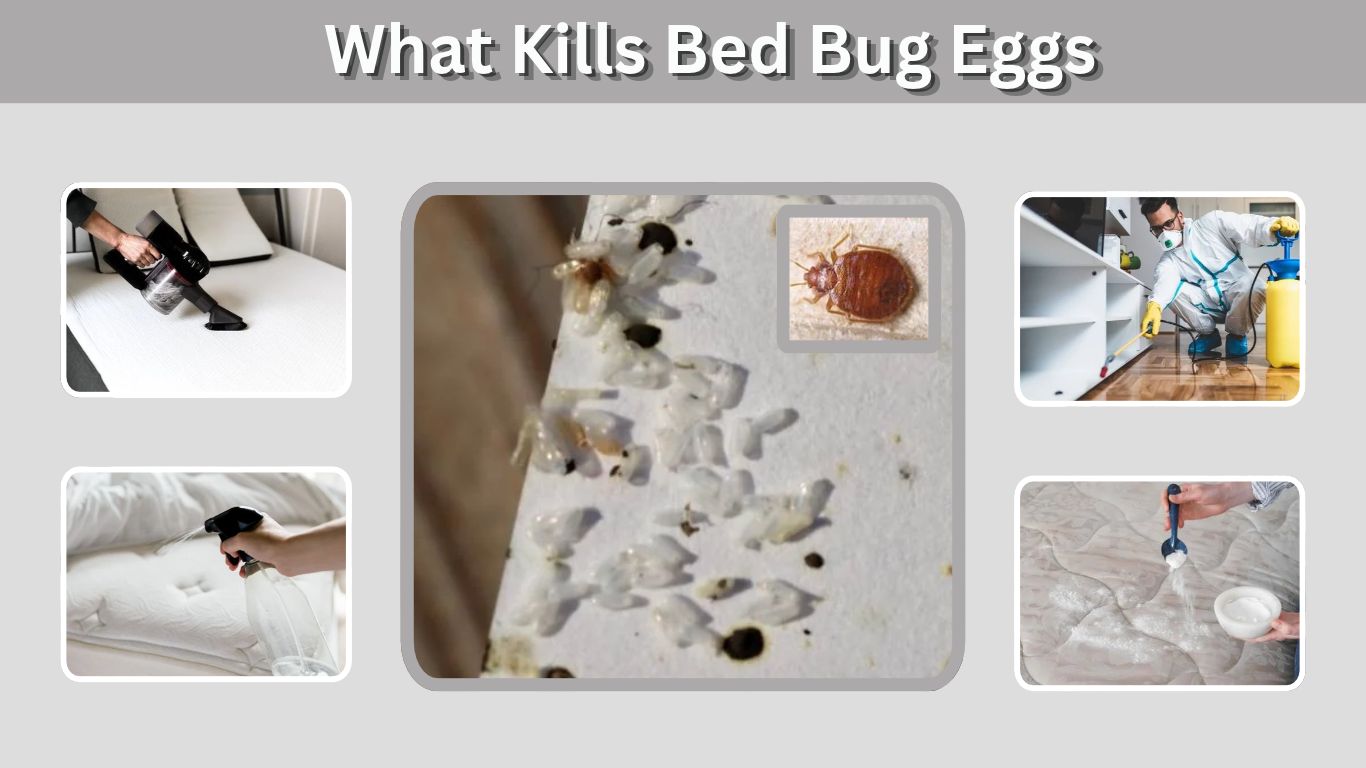
Bed bug eggs are difficult to eliminate because they are tiny, sticky, and often hidden inside furniture cracks, mattress seams, and other protected areas. Many household sprays kill adult bed bugs but fail to destroy their eggs, allowing infestations to return after treatment. Fortunately, certain registered pesticides, controlled heat, and steam can effectively target bed bug eggs. Understanding what chemicals kill bed bugs and their eggs, which home remedies actually work, and how to prevent newly hatched insects from surviving can help you choose safer, more effective pest-control methods.
What Chemical Kills Bed Bugs and Their Eggs?
Several types of pesticides are registered for bed bug control, but their effectiveness against eggs varies. Some formulations can prevent eggs from hatching, while others primarily target adult insects and developing nymphs. Choosing the correct treatment requires checking the product label, understanding its active ingredients, and considering whether insects have developed resistance. Chemical treatment is usually most successful when combined with physical control methods.
Pesticides That Can Kill Bed Bug Eggs
Certain EPA-registered pesticide formulations have demonstrated effectiveness against bed bug eggs. Products containing cold-pressed neem oil have shown egg-control activity in laboratory testing.
However, not every neem oil product provides equivalent results. Home-prepared mixtures and ordinary garden sprays should not be assumed to work against bed bug eggs.
When selecting an insecticide, check that the label specifically supports the intended application and, when egg control is the goal, provides an appropriate claim concerning eggs.
Pyrethroids, Neonicotinoids, and Chlorfenapyr
Several chemical classes are used against bed bug infestations:
- Pyrethroids: Common insecticides that affect the nervous system, although resistant bed bug populations may survive.
- Neonicotinoids: Insecticides that target nerve receptors and can help control certain resistant populations.
- Chlorfenapyr: A pyrrole insecticide that disrupts essential cellular processes in bed bugs.
- Insect growth regulators: Chemicals that interfere with insect development rather than necessarily killing eggs immediately.
These treatments may contribute to infestation management, but their effectiveness against eggs depends on the specific formulation and approved label claims.
Does Diatomaceous Earth Kill Bed Bug Eggs?
Diatomaceous earth is a desiccant that damages the protective outer coating of bed bugs, eventually causing dehydration.
It primarily controls exposed, mobile insects rather than reliably destroying intact eggs. Newly hatched nymphs may encounter properly applied dust, making it useful within a broader treatment plan.
Only use pesticide-grade products registered and labeled for bed bug control. Food-grade and pool-grade diatomaceous earth are not appropriate substitutes.
What Temperature Kills Bed Bug Eggs?
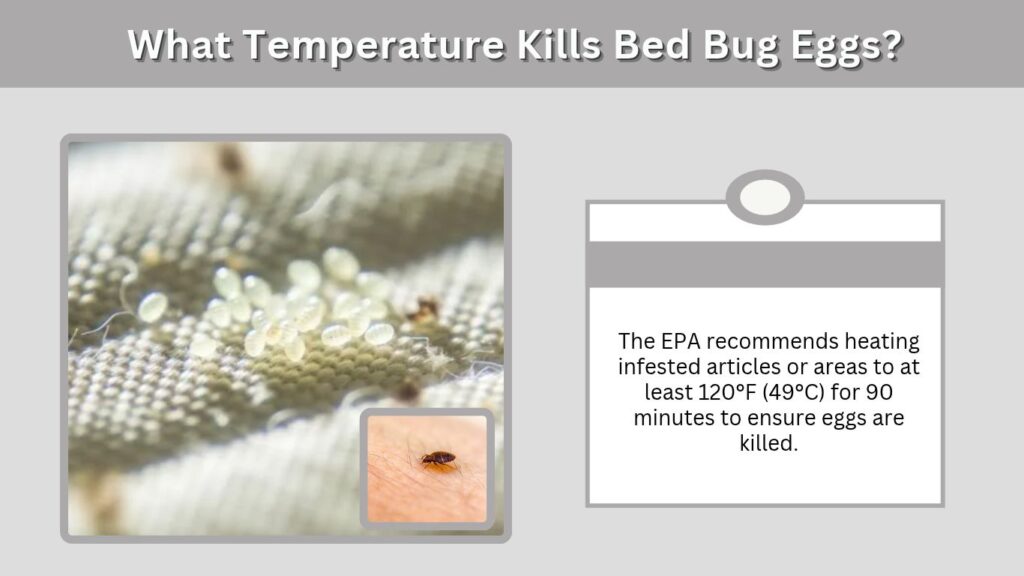
Heat is among the most reliable nonchemical methods for destroying bed bug eggs. Unlike many insecticides, sufficient heat can kill eggs, nymphs, and adult insects. Successful treatment depends on the temperature reaching the insects themselves and remaining high enough for the required duration. Professional equipment helps ensure that heat penetrates mattresses, furniture, and other concealed hiding places.
Does Heat Kill Bed Bug Eggs?
Yes. Controlled heat treatment can eliminate bed bug eggs when sufficient temperatures are maintained.
The EPA recommends heating infested articles or areas to at least 120°F (49°C) for 90 minutes to ensure eggs are killed. The temperature must reach the eggs, including those concealed inside materials.
Professional whole-room treatments use specialized equipment to distribute and monitor heat. Raising a household thermostat or using portable space heaters is not an effective or safe substitute.
Clothes Dryers and Steam Treatment
Heat from a clothes dryer can destroy bed bugs and their eggs on suitable fabrics. Steam can also treat certain surfaces and crevices where insects hide.
Effective approaches include:
- High-heat drying: Place dryer-safe bedding and clothing in a dryer on high heat for at least 30 minutes.
- Steam cleaning: Use an appropriate steamer that delivers at least 130°F (54°C) steam to the treatment surface.
- Professional heat treatment: Use trained pest-control professionals for larger infestations and difficult-to-treat furniture.
- Careful handling: Store treated fabrics in clean, sealed bags to prevent reinfestation.
Avoid forceful steam airflow that could scatter insects, and follow equipment instructions to prevent burns or material damage.
Can Freezing Kill Bed Bug Eggs?
Freezing can kill bed bug eggs when sufficiently low temperatures are maintained for an adequate period.
The EPA identifies temperatures below 0°F (-19°C) for at least four days as a potential control method. The items themselves must reach the required temperature.
Many household freezers are not consistently cold enough, so freezing should not be considered a guaranteed solution without temperature verification.
Do Alcohol, Bleach, and Home Remedies Kill Bed Bug Eggs?
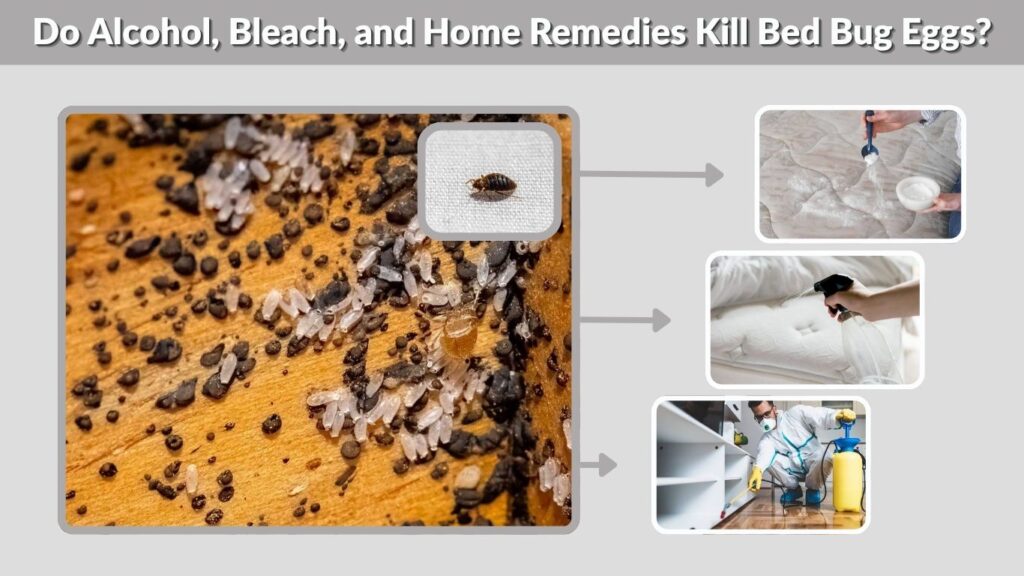
Many household products are promoted as inexpensive alternatives to professional bed bug treatments. Unfortunately, substances that appear effective against exposed adult insects may not destroy hidden eggs. Some chemicals also create significant fire, inhalation, or skin-exposure risks. Understanding these limitations helps homeowners avoid ineffective remedies that may delay proper treatment and allow infestations to spread.
Does Rubbing Alcohol Kill Bed Bug Eggs?
Rubbing alcohol may kill some exposed bed bugs through direct contact, but it is not a reliable method for destroying eggs or eliminating an infestation.
Eggs hidden inside mattress seams and furniture joints may remain unaffected. Alcohol also evaporates quickly and offers little lasting protection.
Most importantly, rubbing alcohol is highly flammable. Spraying it onto mattresses, furniture, or bedding creates unnecessary fire hazards.
Does Bleach Kill Bed Bug Eggs?
Bleach may damage insects or eggs through direct exposure, but it is not a recommended bed bug treatment.
It can discolor fabrics, damage furniture, and produce harmful fumes when improperly used. Spraying bleach around sleeping areas does not reliably reach concealed eggs.
Other common household remedies have similar limitations:
- Vinegar: No dependable evidence supports it as a complete egg treatment.
- Baking soda: Not proven to eliminate bed bug eggs or infestations.
- Lysol: Household disinfectants are not substitutes for pesticides specifically labeled for bed bugs.
- Ammonia: Not recommended because of chemical exposure hazards and uncertain effectiveness.
Never mix household cleaning chemicals in an attempt to improve bed bug control.
What Kills Bed Bug Eggs Instantly?
Direct exposure to sufficiently intense heat or steam can kill bed bug eggs quickly. However, there is no universally reliable household spray that instantly destroys every hidden egg.
Even products marketed as contact killers must reach the target and work as described on their labels.
Effective pest control should focus on thoroughly treating hiding places rather than relying on promises of instant elimination.
Best Way to Kill Bed Bugs and Their Eggs Permanently
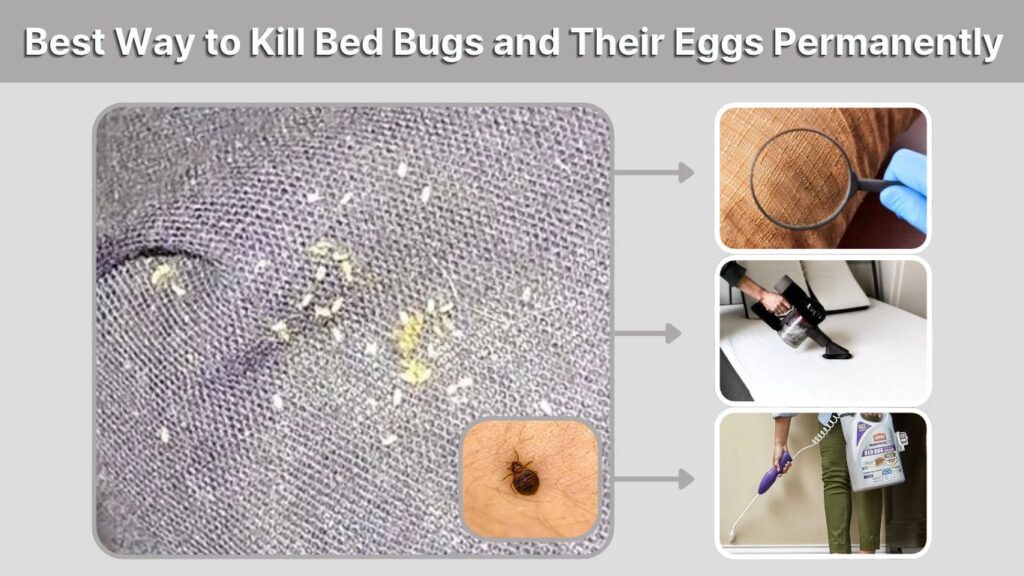
Eliminating bed bugs requires treating every life stage, including eggs, nymphs, and adults. A single pesticide application may leave viable eggs behind, allowing new insects to emerge days later. Integrated pest management combines inspection, heat, cleaning, targeted pesticide use, and monitoring. This approach is generally more effective than depending entirely on one chemical product or household remedy.
How to Choose a Bed Bug Egg Killer Spray
Commercial products are available under brands such as Harris, Hot Shot, and Crossfire. However, individual formulations differ, and a product’s name does not guarantee that it kills eggs.
When evaluating a spray, check the following:
- Confirm that it is registered by the appropriate pesticide regulator.
- Verify that bed bugs are included on the product label.
- Look for specific claims about egg control when required.
- Check whether the intended surface is approved for treatment.
- Follow all application, ventilation, reentry, and retreatment instructions.
For U.S. consumers, the EPA’s registered bed bug pesticide search tool can help identify suitable products.
How to Remove Bed Bug Eggs From Your Home
Begin by inspecting mattresses, box springs, bed frames, headboards, and surrounding furniture. Look for pale eggs, shed skins, dark fecal spots, and living insects.
Clean and treat affected areas systematically:
- Vacuum accessible eggs and insects from seams and cracks.
- Seal and dispose of vacuum contents outside the home.
- Heat-dry suitable bedding, clothing, and other washable fabrics.
- Use steam on compatible surfaces where eggs may be concealed.
- Install bed bug-proof mattress and box spring encasements.
- Reduce clutter and inspect nearby furniture for hidden insects.
Vacuuming alone may miss firmly attached eggs, so combine it with other appropriate treatments.
Why Follow-Up Treatments Are Important
Many insecticides do not reliably kill bed bug eggs. Consequently, surviving eggs may hatch after the original treatment.
Regular inspections help detect newly emerged nymphs before another generation develops. Follow-up pesticide applications should occur only at intervals permitted by the product label.
Persistent infestations may require professional pest-control services, particularly when bugs are present across multiple rooms or neighboring apartments.
FAQs
1. What Chemical Kills Bed Bugs and Their Eggs?
Certain EPA-registered cold-pressed neem oil formulations have demonstrated effectiveness against bed bug eggs. Other insecticide formulations may also provide egg control when supported by their labels. No single chemical is guaranteed to eliminate an entire infestation.
2. Does 90% Rubbing Alcohol Kill Bed Bug Eggs?
High-concentration rubbing alcohol is not a dependable bed bug egg treatment. It may affect exposed insects, but concealed eggs can survive. Because rubbing alcohol is highly flammable, it should not be sprayed on mattresses or furniture.
3. Does Steam Kill Bed Bugs and Their Eggs?
Yes. Steam can kill bed bugs and eggs when sufficient heat reaches them. Appropriate steam equipment must be used carefully, particularly around mattress seams, upholstery, and wooden furniture, to avoid burns and damage.
4. Do Bed Bug Egg Killer Sprays Really Work?
Some registered products can control eggs, but results depend on the formulation, application, and infestation conditions. Products advertised as bed bug killers do not necessarily have proven egg-killing effectiveness. Always check the product’s approved label.
5. Can Bed Bug Eggs Survive Pesticide Treatment?
Yes. Some bed bug eggs survive pesticide applications because certain chemicals primarily target mobile insects or fail to reach concealed eggs. Follow-up inspections and an integrated treatment plan are essential for preventing the infestation from returning.
