
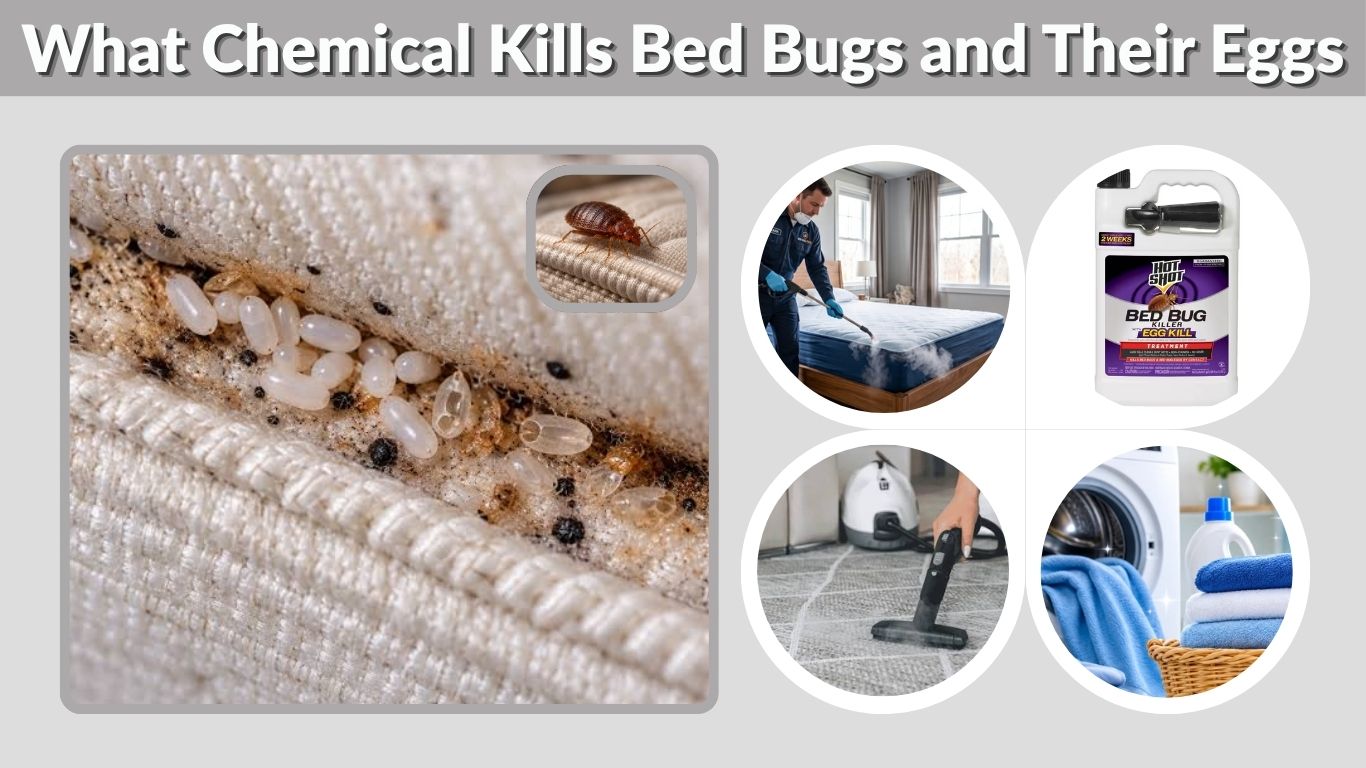
Bed bugs can quickly become a serious household problem, especially when their eggs remain hidden in mattresses, furniture, and small cracks. Many insecticides kill adult bed bugs but fail to destroy their eggs, allowing infestations to return. So, what chemical kills bed bugs and their eggs effectively?
Certain EPA-registered bed bug sprays, including products with proven egg-killing claims and cold-pressed neem oil formulations, can help. However, chemical treatments work best when combined with heat, vacuuming, and careful monitoring. Understanding the available options makes eliminating bed bugs much easier.
What Chemical Kills Bed Bugs and Their Eggs?
Several chemical treatments can eliminate bed bugs, but their effectiveness against eggs varies considerably. Some insecticides kill adult insects immediately after contact, while others continue working as newly hatched bed bugs emerge.
Choosing the right treatment requires understanding the active ingredients, the product’s approved uses, and whether its label specifically claims effectiveness against eggs.
1. Pyrethrins and Pyrethroids
Pyrethrins are natural insecticides derived from chrysanthemum flowers, while pyrethroids are synthetic chemicals with similar effects. Common pyrethroids include deltamethrin, permethrin, and cypermethrin.
These chemicals attack the nervous systems of bed bugs, causing paralysis and death. They are commonly used in household pest-control products.
However, many bed bug populations have developed resistance to pyrethroids. Their effectiveness against eggs also varies by formulation, making them less dependable as a standalone treatment.
2. Neonicotinoid Insecticides
Neonicotinoids are another group of chemicals used to control bed bugs. Imidacloprid and acetamiprid are examples of this insecticide class.
They affect insect nerve receptors differently from pyrethroids, making them useful against some resistant populations.
Certain bed bug products combine neonicotinoids with other insecticides to improve control. However, neonicotinoids do not automatically guarantee egg destruction. Always check whether the specific product is labeled to kill bed bug eggs.
3. Chlorfenapyr
Chlorfenapyr belongs to a chemical group called pyrroles. Unlike conventional nerve-targeting insecticides, it interferes with essential cellular processes.
This chemical is particularly useful for controlling some bed bugs that have developed resistance to traditional treatments.
Chlorfenapyr generally works more slowly than immediate-contact sprays. It should not be assumed to kill eggs directly, and products containing it may require professional application. Follow the approved product label and combine treatment with methods that eliminate eggs.
4. Cold-Pressed Neem Oil
Cold-pressed neem oil is a botanical pesticide derived from neem seeds. Certain EPA-registered formulations have demonstrated effectiveness against adult bed bugs, nymphs, and eggs.
These formulations can provide an alternative to conventional synthetic insecticides.
However, ordinary homemade neem mixtures or cosmetic neem oils are not equivalent to tested pesticide products. For reliable results, choose a registered bed bug treatment with an approved label.
5. Silica Gel and Diatomaceous Earth
Silica-based dusts and pesticide-grade diatomaceous earth work by damaging the protective outer coating of bed bugs. This causes the insects to lose moisture and eventually die.
These substances are useful because their physical action reduces the likelihood of conventional insecticide resistance.
However, desiccant dusts primarily kill mobile bed bugs rather than reliably destroying eggs. Newly hatched insects may be affected when they contact treated areas. Use only products registered for bed bugs, and follow label restrictions for cracks and crevices to avoid inhaling dust.
What Kills Bed Bug Eggs Most Effectively?
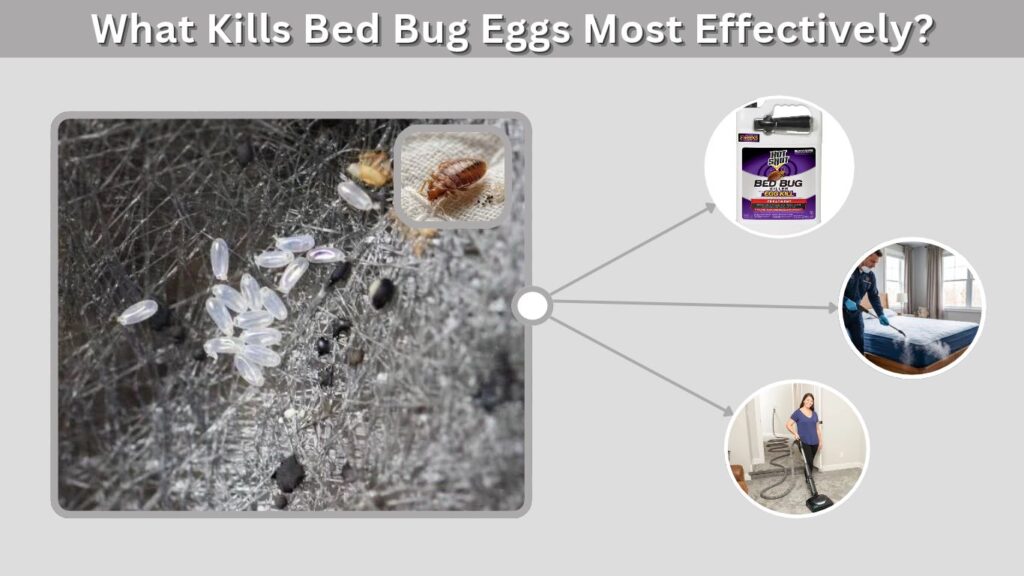
Bed bug eggs are harder to eliminate than adult insects because their protective outer structure can limit exposure to insecticides. Eggs are also extremely small, making them difficult to discover in furniture joints, mattress seams, and wall openings.
The most effective approach combines verified egg-killing treatments with thorough cleaning and temperature control.
Heat Treatment
Heat is one of the most dependable methods for destroying bed bug eggs. Unlike chemical insecticides, properly applied heat can kill every developmental stage, including eggs hidden within treated objects.
Professional heat treatments use specialized equipment to raise temperatures throughout infested spaces while monitoring difficult-to-reach areas.
Steam Treatment
Steam cleaners can help destroy exposed bed bugs and eggs on mattresses, bed frames, upholstery, and other suitable surfaces.
The steam must deliver sufficient heat directly to the insects and eggs. A low-pressure attachment helps prevent bed bugs from scattering.
Steam should never be directed into electrical outlets or applied to surfaces that cannot safely tolerate moisture and heat.
Vacuuming and Physical Removal
Vacuuming removes visible bed bugs, eggs, shed skins, and other infestation evidence.
Use an appropriate attachment to clean mattress seams, furniture joints, baseboards, and surrounding areas. Afterward, seal and dispose of the vacuum contents outside.
Vacuuming alone cannot guarantee complete elimination because eggs may remain attached inside inaccessible spaces.
What Temperature Kills Bed Bugs and Their Eggs?
Temperature is an important factor in bed bug control. Both adult bed bugs and eggs can be destroyed by sufficient heat, but eggs generally require greater exposure than mobile insects.
The following temperature guidelines help explain how heat treatment works.
| Temperature or method | Effect on bed bug eggs |
| 113°F (45°C) | May require several hours of direct exposure |
| 120°F (49°C) | About 90 minutes of effective exposure |
| 122°F (50°C) | Can kill eggs rapidly under controlled exposure |
| Clothes dryer on high heat | Approximately 30 minutes for suitable items |
| Steam at 130°F (54°C) or higher | Can kill directly exposed eggs when sufficient heat reaches them |
Actual results depend on how long the eggs themselves remain at the target temperature. Heating the surrounding air or the outside of furniture is not necessarily enough.
Does Heat Kill Bed Bug Eggs Instantly?
Sufficiently high temperatures can kill bed bug eggs very quickly. Research indicates that direct exposure around 122°F can be lethal within a short period under controlled conditions.
However, household heat treatments are not instantaneous because thick fabrics, furniture, and hidden spaces take time to reach the necessary temperature.
Professional treatments are generally more reliable for widespread infestations.
Can a Clothes Dryer Kill Bed Bug Eggs?
Yes. A clothes dryer operating on high heat can kill bed bugs and their eggs in clothing, bedding, and other heat-safe items.
The EPA recommends approximately 30 minutes on high heat. Avoid overloading the dryer because crowded items may not heat evenly.
After treatment, place clean belongings into sealed containers or bags to prevent reinfestation.
How to Kill Bed Bug Eggs at Home
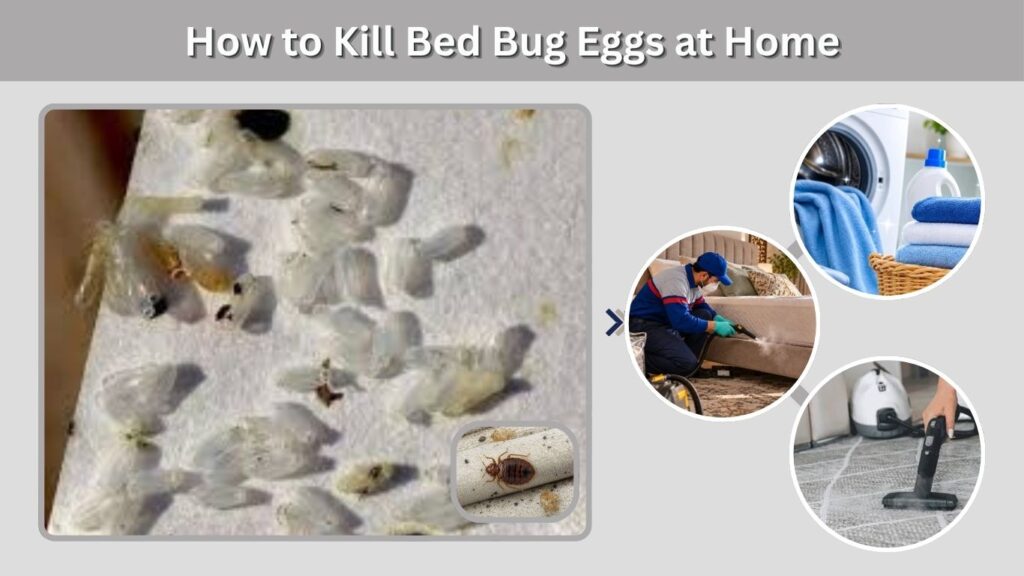
Successfully eliminating bed bug eggs requires more than applying an insecticide once. Because eggs may be distributed throughout a room, treatment should target existing insects and newly emerging nymphs.
A combination of sanitation, appropriate pesticide use, and regular inspections offers the best opportunity for long-term control.
Step 1: Identify Infested Areas
Carefully inspect mattresses, box springs, bed frames, upholstered furniture, and nearby cracks.
Bed bug eggs are usually tiny, whitish, and approximately 1 millimeter long. They may appear in clusters or individually within protected hiding places.
Step 2: Use an Appropriate Bed Bug Treatment
Select an EPA-registered pesticide specifically labeled for bed bugs. If your goal is egg destruction, verify that the product also claims to control eggs.
Apply it only to approved surfaces and locations, following every label direction. Never spray people, pets, bedding, or entire mattress surfaces unless the label expressly permits that use.
Step 3: Wash and Heat-Treat Fabrics
Place infested clothing and bedding into sealed bags before transporting them.
Treat dryer-safe belongings using high heat. Washing alone may not destroy every egg, so adequate drying temperatures are especially important.
Step 4: Vacuum and Apply Steam Where Appropriate
Vacuum visible insects and eggs from accessible seams and crevices. Use a suitable steam cleaner on heat-tolerant surfaces when needed.
These methods help remove eggs that chemical applications might miss.
Step 5: Monitor and Repeat Treatment When Necessary
Inspect treated locations every few days for surviving bed bugs or newly hatched nymphs.
Additional pesticide treatment may be necessary, but always follow the product’s permitted reapplication interval. Persistent or widespread infestations should be handled by a qualified pest-control professional.
Does Harris Egg Kill & Resistant Bed Bug Killer Work?
Harris Egg Kill & Resistant Bed Bug Killer is a commercially available pesticide marketed for controlling resistant bed bugs and their eggs.
The product’s liquid spray formulation combines insecticidal ingredients designed to address bed bugs that may survive conventional pyrethroid-only treatments.
According to the manufacturer, it provides contact-killing activity and residual control when applied correctly.
However, success depends on reaching infested areas, following label directions, and combining insecticide use with other control methods. Harris also sells multiple bed bug formulations, so their active ingredients and directions should not be treated as interchangeable.
Most importantly, even a product labeled to kill eggs cannot eliminate eggs that remain completely inaccessible to the treatment.
What Chemicals Do Not Reliably Kill Bed Bug Eggs?
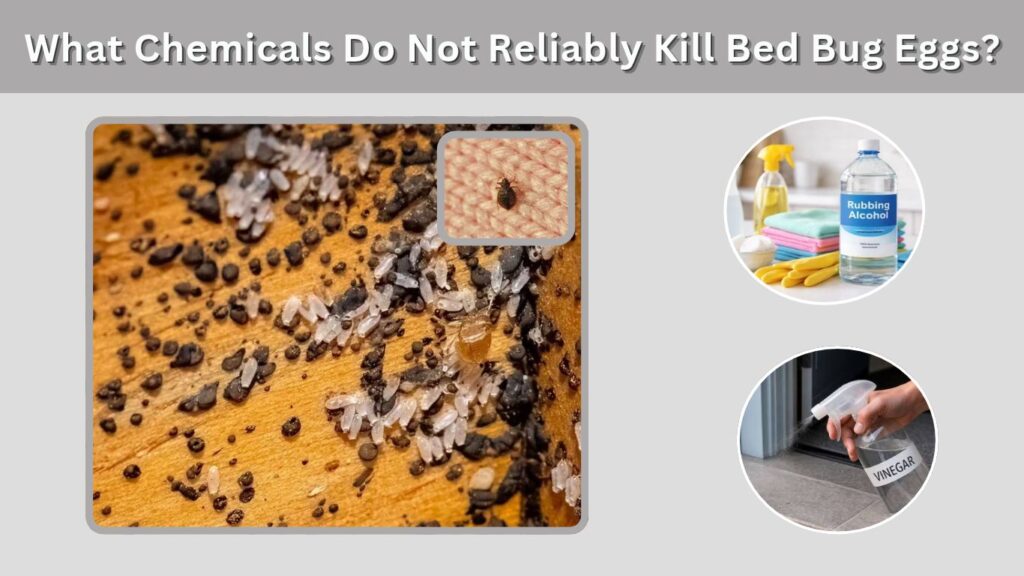
Some household substances are commonly recommended online for bed bug infestations, but they are not dependable substitutes for registered pesticides or properly conducted heat treatment.
Rubbing alcohol may kill directly contacted insects, but it is highly flammable and unsuitable for controlling a household infestation. Bleach can damage fabrics and furnishings, and there is no dependable basis for using it as an egg-eradication treatment.
Vinegar, essential oils, and ordinary household cleaning sprays also should not be relied upon to kill hidden eggs.
Bug bombs and total-release foggers are particularly limited because their insecticides often fail to reach the cracks and crevices where bed bugs lay eggs.
FAQs
1. What Kills Bed Bug Eggs Instantly?
Sufficiently high heat can kill directly exposed bed bug eggs rapidly. Steam treatment can also be effective when adequate heat reaches the eggs. However, no ordinary household spray should be assumed to destroy every hidden egg instantly, even when it kills adult bed bugs on contact.
2. What Chemical Kills Bed Bugs and Their Eggs Permanently?
No single chemical guarantees permanent elimination. Certain registered insecticides have demonstrated egg-killing effectiveness, while other chemicals primarily target adults and nymphs. Successful long-term control requires eliminating hidden infestations, monitoring for surviving insects, and preventing bed bugs from being reintroduced.
3. Can Bleach Kill Bed Bug Eggs?
Bleach may damage exposed insects or eggs on direct contact, but it is not a recommended bed bug treatment. It can discolor or damage household materials and does not reliably reach hidden eggs. Registered pest-control products and controlled heat treatments are safer, more dependable choices.
4. How Long Does It Take to Kill Bed Bug Eggs?
The time depends on the treatment. Adequate heat can kill eggs within minutes under controlled conditions, while lower temperatures require longer exposure. Chemical treatments vary considerably, and some do not kill eggs directly. Follow-up inspections are necessary to identify eggs that survived and subsequently hatched.
5. Does Diatomaceous Earth Kill Bed Bug Eggs?
Diatomaceous earth mainly affects mobile bed bugs by damaging their protective coating and causing dehydration. It is not a reliable direct egg-killing treatment. However, appropriately applied pesticide-grade products can help control newly hatched bed bugs that move through treated cracks and crevices.
