
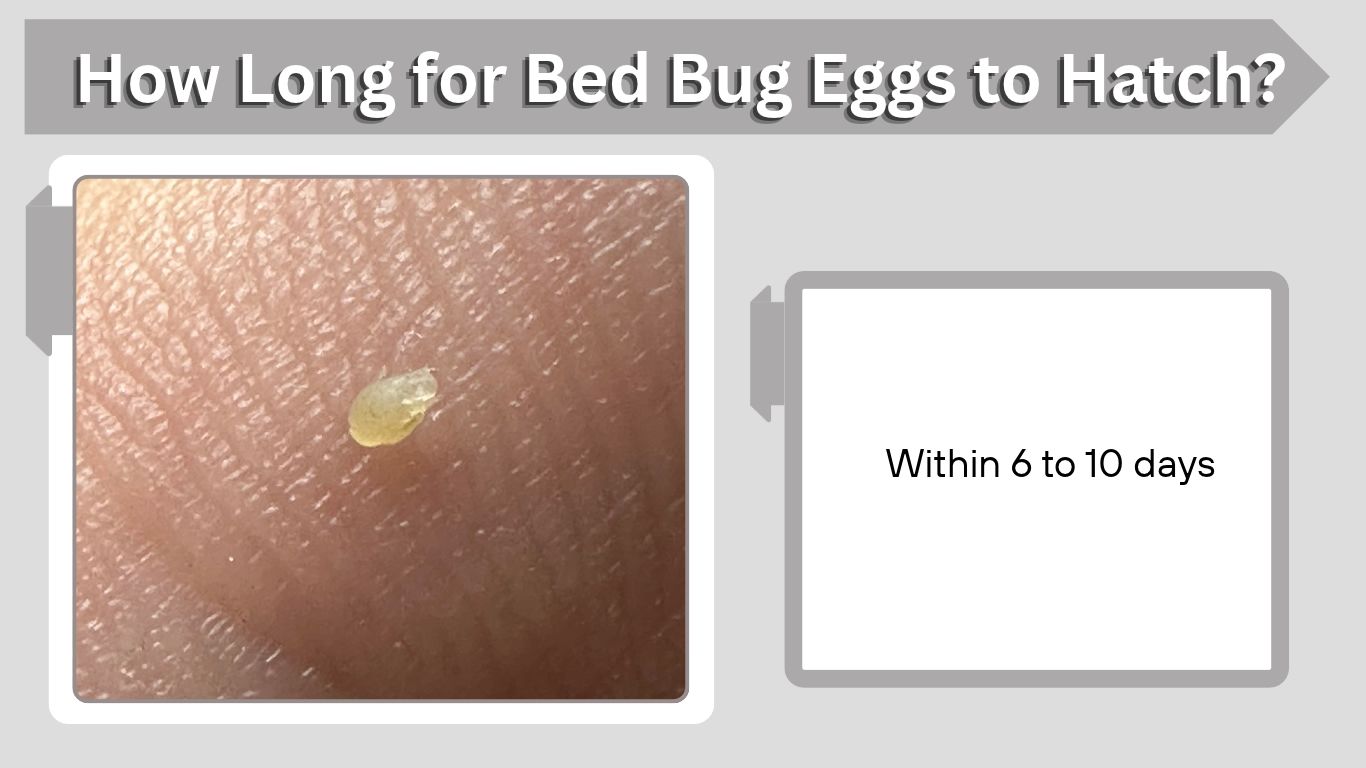
Bed bugs reproduce quickly, making their eggs a major concern during an infestation. These tiny, white eggs are often hidden in mattress seams, bed frames, and furniture cracks, where they can survive unnoticed. So, how long for bed bug eggs to hatch?
Bed bug eggs typically hatch within 6 to 10 days under favorable conditions. However, some eggs may take approximately two weeks or longer, depending on temperature and environmental conditions. Understanding their hatching period, survival time, and development can help homeowners identify infestations early and choose effective treatment methods.
How Long for Bed Bug Eggs to Hatch?
Most bed bug eggs hatch within approximately one to two weeks after being laid. The exact incubation period depends largely on temperature, with warmer conditions generally supporting faster development. Eggs are attached to protected surfaces by a sticky substance, allowing them to remain in place until the young bed bugs emerge.
Average Bed Bug Egg Hatching Time
Under favorable indoor conditions, bed bug eggs generally hatch in 6 to 10 days. Some may require 10 to 15 days, particularly when temperatures are cooler.
During incubation, the developing insect grows inside a protective shell. Once development is complete, the tiny nymph emerges through a small opening at one end of the egg.
Newly hatched nymphs are pale, nearly translucent, and approximately 1.5 millimeters long. They soon begin searching for blood meals.
How Temperature Affects Hatching
Temperature plays an important role in bed bug egg development. Warm indoor conditions can accelerate incubation, while cooler environments slow the process.
At normal household temperatures, eggs generally hatch within one or two weeks. In cooler conditions, viable eggs may remain unhatched for several additional weeks.
However, extreme temperatures can prevent eggs from developing successfully. Sufficiently high heat or controlled freezing can destroy eggs before they hatch.
How Long Do Bed Bug Eggs Live?
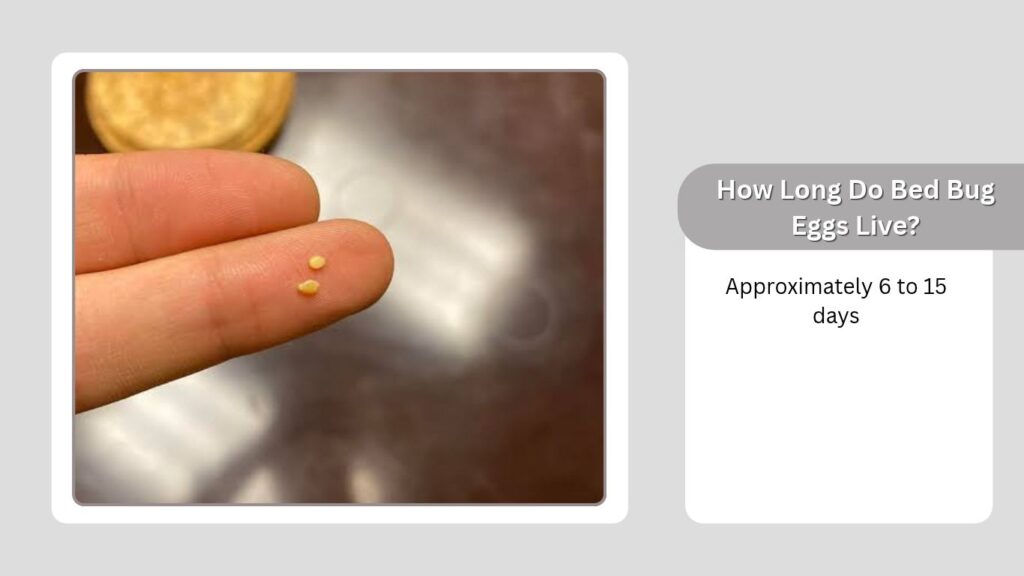
Bed bug eggs do not have a lifespan comparable to adult bed bugs. Instead, they remain in the egg stage until they hatch or die. Their survival depends on whether environmental conditions support embryonic development. Under suitable conditions, this stage is relatively short, but unfavorable temperatures can delay hatching.
How Long Can Bed Bug Eggs Survive Before Hatching?
Bed bug eggs typically remain viable for approximately 6 to 15 days under ordinary indoor conditions. Cooler environments may extend their incubation period.
Some viable eggs can persist for several weeks, and university extension guidance indicates that eggs may occasionally last around a month.
However, bed bug eggs should not be confused with adult bed bugs, which can survive for months without feeding. Eggs do not normally remain viable indefinitely.
Can Bed Bug Eggs Survive Without Humans?
Yes, bed bug eggs can develop without humans being present. The developing embryo receives nutrients from materials already stored inside the egg.
Therefore, temporarily leaving a room empty does not necessarily prevent eggs from hatching. Newly emerged nymphs may remain hidden while waiting for an opportunity to feed.
The absence of humans can slow further population development, but it is not a dependable method for eliminating an infestation.
How Long Can Bed Bug Eggs Survive Without Blood?
Bed bug eggs do not need external blood meals during incubation. Their development relies on nutrients contained within the egg.
After hatching, nymphs must eventually obtain blood to continue growing. Each of their five immature stages requires a blood meal before the next molt.
Although newly hatched bed bugs can survive for some time without feeding, their development and reproduction cannot continue normally without access to a suitable host.
What Factors Affect Bed Bug Egg Survival?
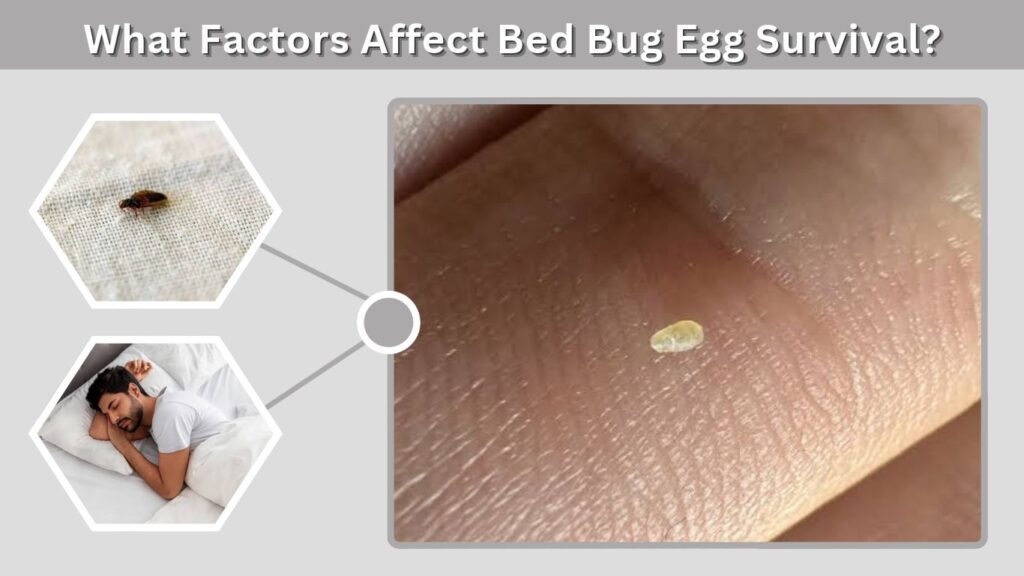
Several environmental factors influence how quickly bed bug eggs hatch and whether they successfully develop. Temperature is the most important, but moisture conditions and the location of the eggs also matter. Protected hiding places can reduce disturbance and make eggs harder to eliminate during cleaning or pesticide treatments.
1. Room Temperature
Bed bugs develop most successfully in comfortable indoor environments. Temperatures commonly found in occupied bedrooms generally support egg incubation.
Warmer conditions within the insects’ tolerable range tend to shorten development, while cooler conditions slow it.
However, excessive heat is lethal. Professional heat treatments use controlled temperatures to destroy eggs, nymphs, and adults throughout infested areas.
2. Humidity Levels
Humidity can influence insect egg survival by affecting moisture loss. Bed bug eggs need suitable environmental conditions to develop normally.
Extremely dry conditions may increase the risk of desiccation, while ordinary indoor humidity often supports development.
Nevertheless, adjusting household humidity alone is not a reliable bed bug treatment. Eggs can remain protected in narrow crevices where conditions differ from the surrounding room.
3. Egg-Laying Locations
Female bed bugs typically deposit eggs inside protected spaces near sleeping and resting areas. Common locations include mattress seams, box springs, wooden bed frames, and upholstered furniture.
These areas protect eggs from disturbance and make them difficult to detect.
Because eggs are attached to surfaces, ordinary sweeping or light cleaning may fail to remove them. Thorough inspection and targeted treatment are necessary.
What Happens After Bed Bug Eggs Hatch?
After hatching, bed bugs enter the first nymphal stage. These insects resemble miniature adults but are much smaller and lighter in color. They must obtain blood meals to develop through five immature stages before reaching adulthood. Under favorable conditions, this process can happen relatively quickly.
Newly Hatched Bed Bug Nymphs
Freshly hatched bed bugs are typically pale yellowish-white or nearly transparent. Their bodies are flat and oval, making them difficult to see against light-colored bedding.
After feeding, their abdomens become visibly darker or reddish as they fill with blood.
These young insects commonly hide in the same cracks and crevices occupied by adults. Their presence after treatment may indicate that eggs survived or that an infestation remains active.
How Long Until Bed Bugs Become Adults?
Under favorable conditions, bed bugs can develop from eggs into reproductive adults in approximately five to eight weeks.
The process involves five nymphal stages, with a blood meal required before each molt.
Cool temperatures and limited access to blood can extend development considerably. This explains why bed bug populations may grow rapidly in occupied homes but develop more slowly in vacant properties.
How to Prevent Bed Bug Eggs From Hatching
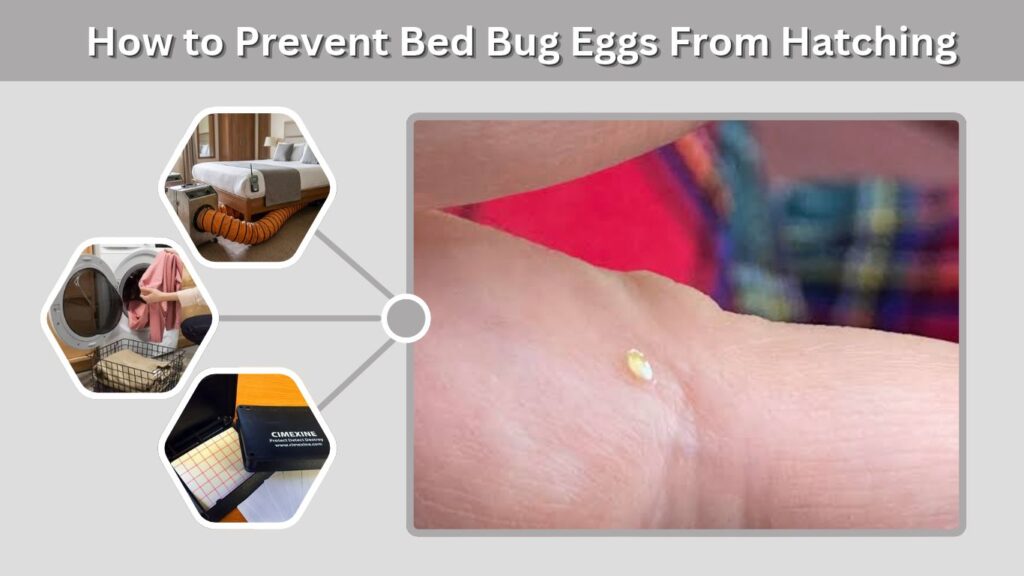
Preventing bed bug eggs from hatching requires treatments that reach their protected hiding places. Many insecticides kill adult bed bugs but do not reliably destroy eggs. Combining heat, physical removal, appropriate insecticide applications, and monitoring offers a better approach than relying on one method.
Use Heat Treatment
Heat is one of the most effective methods for eliminating bed bug eggs. The EPA recommends heating infested items or areas to at least 120°F (49°C) for 90 minutes to ensure eggs are killed.
For clothing and other dryer-safe fabrics, a high-heat dryer cycle lasting approximately 30 minutes can be effective.
The important factor is ensuring that heat penetrates every potentially infested location, including thick fabrics and hidden crevices.
Apply Steam Carefully
Steam treatment can destroy bed bug eggs when sufficient heat reaches them directly. It is useful for suitable mattress seams, upholstered furniture, and bed frames.
Use a suitable steam cleaner and move it slowly enough to heat the treated surfaces.
Avoid electrical outlets, moisture-sensitive materials, and excessive steam pressure that could scatter bed bugs. Steam should be combined with other control methods when infestations extend beyond accessible surfaces.
Remove Eggs and Monitor Activity
Vacuuming can remove visible eggs and insects from accessible surfaces. After cleaning, immediately seal and dispose of vacuum contents outside.
Use bed bug interceptor traps and inspect likely hiding places at least every seven days after treatment.
If live bed bugs or newly hatched nymphs continue appearing, additional treatment may be necessary. Follow pesticide label instructions or consult a qualified pest-control professional.
FAQs
1. Can Bed Bug Eggs Hatch in 3 Days?
Bed bug eggs do not normally hatch within three days under ordinary indoor conditions. Most require approximately 6 to 10 days, although the period varies with temperature. Unusually warm conditions may accelerate development, but extremely high temperatures can kill the eggs instead of helping them hatch.
2. How Long Can Bed Bug Eggs Survive Without Hatching?
Under favorable conditions, bed bug eggs generally hatch within one or two weeks. Cooler temperatures can delay development, sometimes allowing viable eggs to remain unhatched for several weeks. Unlike adult bed bugs, eggs are not normally capable of surviving for many months without developing.
3. Do Bed Bug Eggs Hatch All at Once?
No, bed bug eggs do not necessarily hatch simultaneously. Females lay eggs over multiple days, and individual eggs may develop at slightly different rates. This means newly hatched nymphs can continue appearing over time, even when some eggs have already hatched.
4. Can Bed Bug Eggs Survive After Pest Control?
Yes, bed bug eggs can survive incomplete treatments, especially when pesticides do not kill eggs or cannot reach their hiding places. Newly hatched nymphs may appear afterward. Regular monitoring and properly timed follow-up treatments are important for eliminating the remaining infestation.
5. How Do You Know Bed Bug Eggs Have Hatched?
Hatched bed bug eggs usually leave behind tiny, translucent shells with openings at one end. These shells often remain attached to surfaces. You may also notice pale, newly emerged nymphs nearby. However, empty shells alone cannot confirm whether an infestation is still active.
