
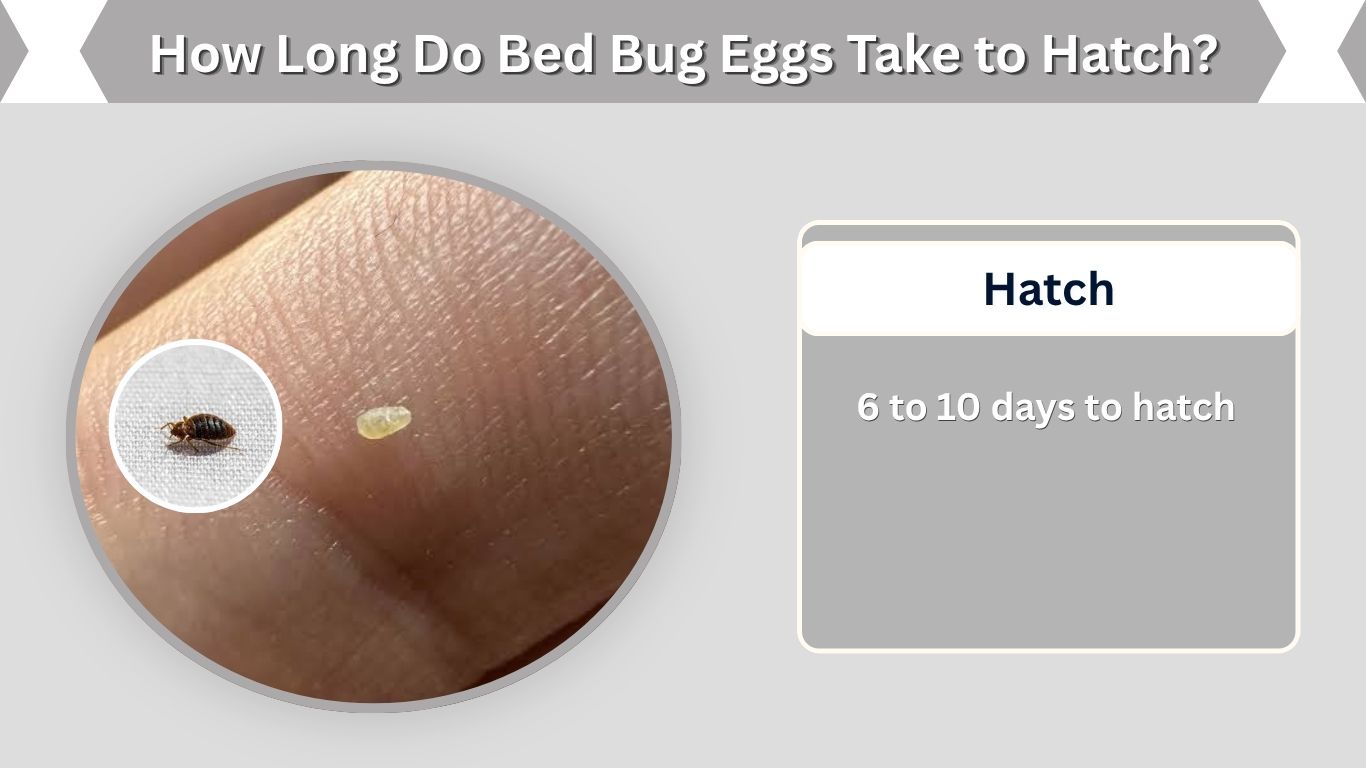
Bed bug eggs usually take 6 to 10 days to hatch under favorable indoor conditions. However, temperature, humidity, and environmental conditions can influence how quickly the eggs develop. These tiny, pearl-white eggs are often hidden in mattress seams, furniture cracks, and other difficult-to-reach areas. Once they hatch, young bed bugs immediately begin searching for a blood meal. Understanding the bed bug egg hatching timeline can help you identify an infestation early and take effective steps to prevent these pests from multiplying throughout your home.
How Long Do Bed Bug Eggs Take to Hatch?
Most bed bug eggs hatch within 6 to 10 days after being laid. Some may hatch sooner, while others take longer depending on their surroundings. The CDC describes a broader hatching period of approximately 4 to 12 days. In warm indoor environments, eggs generally develop faster than in cooler locations. Understanding this timeline is important because eggs may survive treatments that kill adult bed bugs.
How Fast Do Bed Bug Eggs Hatch?
Under favorable conditions, bed bug eggs may hatch in approximately six days. Warm temperatures encourage embryo development, allowing the tiny insects to complete their early life stage relatively quickly.
However, not every egg in an infestation hatches simultaneously. Female bed bugs lay eggs on different days, creating overlapping hatching periods. This means newly hatched bed bugs may continue appearing even after the first eggs have opened.
How Does Temperature Affect Bed Bug Egg Hatching?
Temperature plays an important role in determining how long bed bug eggs take to hatch. Warmer environments generally accelerate development, while cooler conditions slow it down.
In heated bedrooms, eggs often hatch within the usual 6-to-10-day period. Cooler conditions can delay development, although extreme temperatures may prevent eggs from surviving altogether. Humidity and other environmental factors can also affect egg survival.
What Happens During the Bed Bug Egg Hatching Cycle?
The bed bug egg hatching cycle begins when a fertilized female deposits tiny eggs in protected hiding places. Each egg contains a developing embryo that gradually grows until it is ready to emerge. Once hatching occurs, a first-stage nymph leaves the shell. The newly emerged insect resembles a miniature adult bed bug but has a lighter, more translucent appearance.
Bed Bug Egg Development Stages
Bed bugs pass through several stages before reaching adulthood.
- Egg laying: A female deposits tiny, oval, whitish eggs in protected cracks and crevices.
- Embryo development: The developing insect grows inside the egg over several days.
- Egg hatching: The nymph emerges through a small opening at one end of the shell.
- First-stage nymph: The young bed bug begins searching for its first blood meal.
- Growth and molting: The nymph passes through five immature stages before becoming an adult.
Each nymph must take a blood meal before molting to the next stage. Under favorable conditions, bed bugs can complete their development from egg to adult in several weeks.
Do Bed Bug Eggs Hatch on Their Own?
Yes, bed bug eggs hatch naturally once the developing insects are mature and environmental conditions support their survival. They do not require assistance from adult bed bugs to open.
When development is complete, the young insect pushes through the small cap at one end of the egg. The empty shell usually remains attached to the surface where it was deposited.
What Do Bed Bug Eggs Look Like Before and After Hatching?
Bed bug eggs are extremely small, measuring approximately 1 millimeter long. Their tiny size and pale coloring make them difficult to notice without careful inspection. Before hatching, they generally appear pearly white and oval-shaped. After hatching, the empty shells become translucent and may look slightly collapsed. Examining the differences can help homeowners recognize possible bed bug activity.
What Do Bed Bug Eggs Look Like Before They Hatch?
Unhatched bed bug eggs resemble tiny white grains of rice, although they are considerably smaller. Their surfaces are smooth, and the eggs are often attached firmly to furniture, fabric, or wood.
Older developing eggs may show a small dark eye spot. According to the EPA, this feature can become visible after an egg is more than five days old.
What Do Hatched Bed Bug Eggs Look Like?
Hatched bed bug eggs appear as tiny, pale, empty shells. They usually retain their elongated shape but have an opening where the newly developed insect emerged.
The shells may be translucent, flattened, or slightly damaged. They are delicate rather than hard like seeds. Finding empty shells does not necessarily mean the infestation has ended because living bed bugs and unhatched eggs may still be nearby.
How Many Bed Bugs Hatch From One Egg?
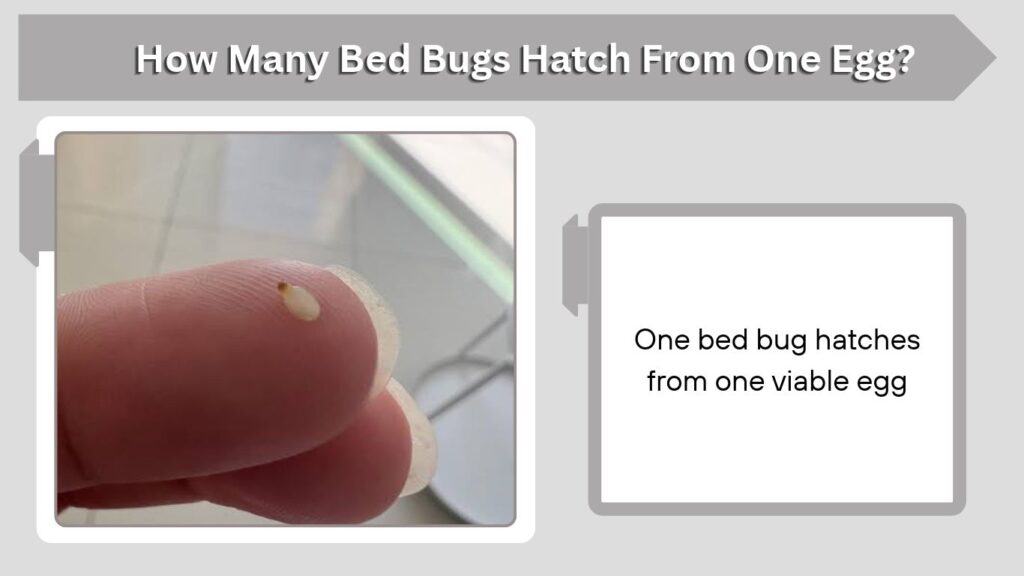
Normally, one bed bug hatches from one viable egg. Unlike some insects that produce multiple offspring from a single egg, bed bugs develop individually inside separate eggs. However, a female may lay several eggs over a short period, allowing populations to increase rapidly. A female bed bug can produce hundreds of eggs during her lifetime under suitable conditions.
How Many Bed Bug Eggs Hatch at a Time?
There is no fixed number of bed bug eggs that hatch simultaneously. Eggs laid around the same time and exposed to similar environmental conditions may hatch close together.
However, females deposit eggs repeatedly rather than in a single large batch. Consequently, hatchlings can appear across several days or weeks in an active infestation.
How Often Do Bed Bug Eggs Hatch?
Bed bug eggs do not follow a weekly or monthly hatching schedule. Each viable egg hatches once after completing its development.
Because female bed bugs continue producing eggs, new nymphs may emerge regularly. This ongoing reproduction explains why infestations can persist when treatment fails to eliminate every life stage.
How to Prevent Bed Bug Eggs From Hatching
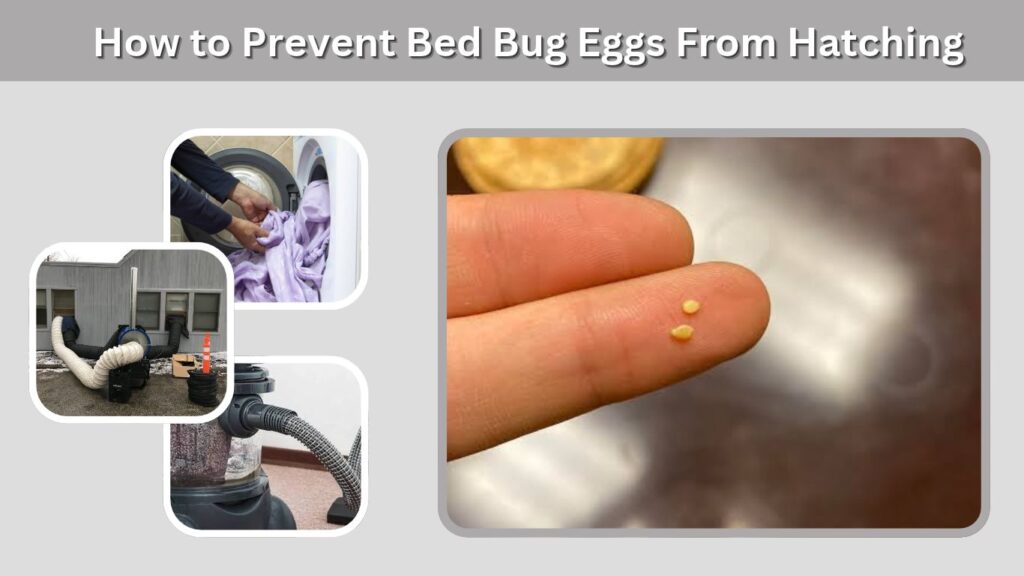
Preventing bed bug eggs from successfully hatching requires eliminating the eggs or making sure newly emerged nymphs cannot survive. Eggs are often protected inside narrow cracks, mattress seams, and furniture joints. Some insecticides that kill adult bed bugs may not effectively destroy eggs. Therefore, a combination of inspection, cleaning, heat treatment, and appropriate pest management techniques is generally more effective than relying on a single treatment.
1. Use Proper Heat Treatment
Heat is one of the most effective ways to kill bed bug eggs when the correct temperature and exposure time are achieved.
The EPA recommends heating infested items to at least 120°F (approximately 49°C) for 90 minutes to ensure eggs are killed. Professional whole-room treatments require specialized equipment to maintain effective temperatures throughout hiding places.
2. Wash and Dry Infested Bedding
Place potentially infested bedding, pillowcases, and washable clothing into sealed bags before transporting them to the laundry area.
Drying suitable items on high heat for at least 30 minutes can kill bed bugs and their eggs. Washing alone may not eliminate every insect, especially when water temperatures are insufficient.
3. Vacuum and Inspect Hidden Areas
Carefully vacuum mattress seams, bed frames, furniture joints, and nearby cracks to remove accessible bed bugs and debris.
Because eggs can adhere firmly to surfaces, vacuuming may not remove all of them. Immediately seal and dispose of the vacuum contents outside your living space to reduce the risk of surviving insects escaping.
4. Use Appropriate Bed Bug Treatments
Use only pesticides specifically labeled for bed bugs, and follow every product instruction carefully. Some treatments affect mobile bed bugs but do not reliably kill their eggs.
Professional pest control services can combine approved treatments with targeted heat, steam, and monitoring. Avoid homemade chemical mixtures or relying on bug bombs, which may fail to reach hidden eggs.
What to Do After Bed Bug Eggs Hatch
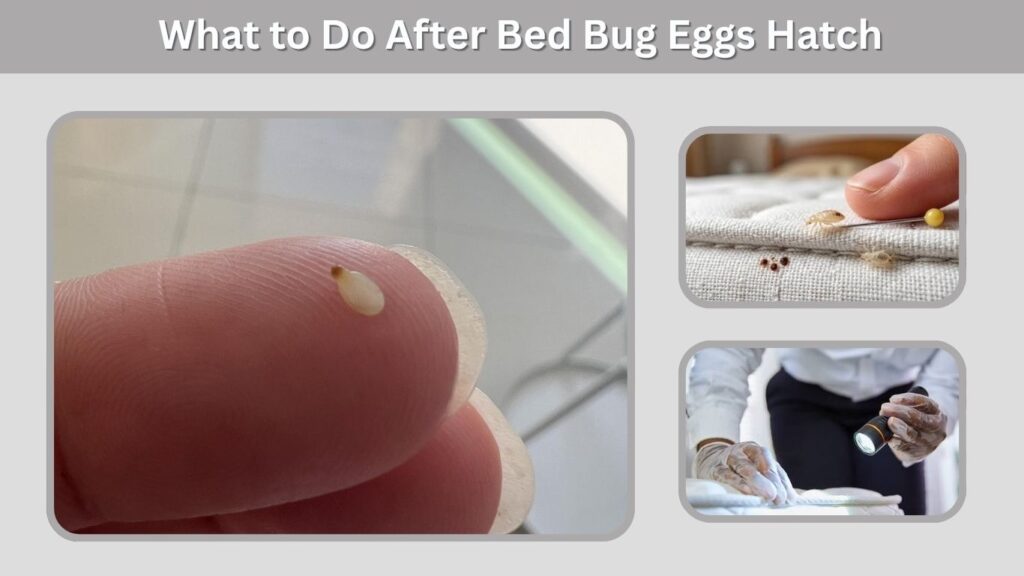
Once bed bug eggs hatch, the young insects begin searching for blood meals. They are small, pale, and difficult to spot, making early detection challenging. Discovering hatched eggs should prompt a careful inspection of nearby sleeping and resting areas. Empty shells alone cannot establish whether bed bugs remain active, so additional monitoring is necessary.
Look for Newly Hatched Bed Bugs
Check mattress seams, bed frames, upholstered furniture, baseboards, and other protected spaces. Newly hatched nymphs measure approximately 1.5 millimeters and may be nearly transparent before feeding.
Also look for dark fecal marks, shed skins, and living insects. These signs can provide stronger evidence of an active infestation than empty egg shells alone.
Continue Monitoring After Treatment
Continue inspecting affected areas even when adult bed bugs are no longer visible. Previously hidden eggs may still hatch if the original treatment did not kill them.
The EPA recommends inspecting for bed bug activity at least every seven days after treatment. Follow-up treatments may be necessary according to the chosen control method and product instructions.
FAQs
1. Can Bed Bug Eggs Hatch in 3 Days?
Bed bug eggs generally do not hatch within three days under ordinary indoor conditions. The typical period is approximately 6 to 10 days, although the CDC reports a broader range of 4 to 12 days. Temperature and other environmental conditions influence their development.
2. Can Bed Bug Eggs Hatch After 14 Days?
Yes, delayed hatching may occur under cooler or otherwise less favorable conditions. Although many eggs hatch within 6 to 10 days, development does not always follow an exact schedule. Finding no hatchlings after two weeks does not guarantee that an infestation has been eliminated.
3. Do Bed Bug Eggs Hatch Without Blood?
Yes. Developing bed bug embryos do not need a blood meal to hatch. The necessary resources are already contained within the egg. However, after hatching, the young nymph must obtain blood to complete its next developmental stage and continue growing.
4. How Long Can Bed Bug Eggs Survive Before Hatching?
Viable bed bug eggs generally hatch within days under suitable conditions. Cooler temperatures may delay development, but eggs cannot remain viable indefinitely under all environmental conditions. Their survival depends on temperature, humidity, and exposure to treatments or other harmful conditions.
5. Does Finding Hatched Bed Bug Eggs Mean an Active Infestation?
Not necessarily. Empty egg shells indicate that bed bugs hatched at some point, but the insects may no longer be present. However, finding hatched eggs alongside living nymphs, adults, or fresh fecal marks suggests ongoing activity and warrants further inspection or professional treatment.
